AN IOT SECURITY DEVICE
TO PROTECT AN ATM
Group 3
Colella Roberto r.colella17@studenti.uniba.it
Forleo Giovanni g.forleo3@studenti.uniba.it
Gasparro Paolo p.gasparro4@studenti.uniba.it
Piccininni Giuseppe g.piccininni5@studenti.uniba.it
Ardavan Shahoveisi a.shahoveisi@uniba.studenti.it
INTRODUCTION
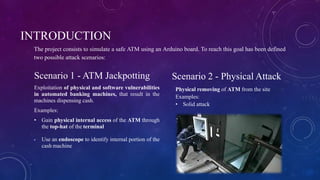
Scenario 1 - ATM Jackpotting
Exploitation of physical and software vulnerabilities
in automated banking machines, that result in the
machines dispensing cash.
Examples:
• Gain physical internal access of the ATM through
the top-hat of the terminal
• Use an endoscope to identify internal portion of the
cash machine
Scenario 2 - Physical Attack
Physical removing of ATM from the site
Examples:
• Solid attack
The project consists to simulate a safe ATM using an Arduino board. To reach this goal has been defined
two possible attack scenarios:
RULES FOR SCENARIO 1
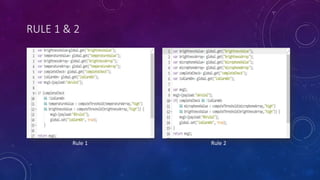
 Rule 1: brightness & temperature both greater than the highest value of the threshold calculated in the array
of values ​​from the sensors through the interquartile range.
 Rule 2: microphone & brightness temperature both greater than the highest value of the threshold calculated
in the array of values ​​from the sensors through the interquartile range.
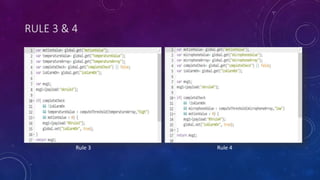
 Rule 3: motion must be higher than 0, and temperature greater than the highest value of the threshold
calculated in the array of values ​​from the sensors through the interquartile range.
 Rule 4: motion must be higher than 0, and microphone greater than the highest value of the threshold
calculated in the array of values ​​from the sensors through the interquartile range.
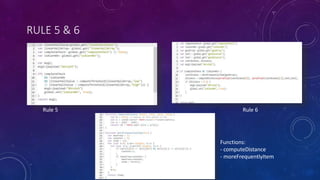
 Rule 5: the magnetic linear hall value must be between the highest and lowest value calculated by the
interquartile algorithm inside arrays of values from the sensor.
RULES FOR SCENARIO 2
 Rule 6: find the most frequent value from GPS inside the pre-sized array and compute if the distance
from this point is bigger than 200 meters.
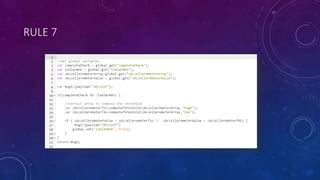
 Rule 7: accelerometer value from the sensor has to be greater than the highest value of the threshold
or less than the lowest value of the threshold calculated in the array of values ​​from the sensors
through the interquartile range.
HARDWARE
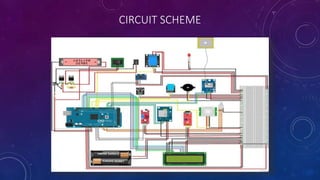
CIRCUIT SCHEME
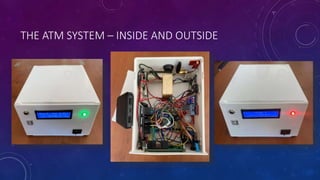
THE ATM SYSTEM – INSIDE AND OUTSIDE
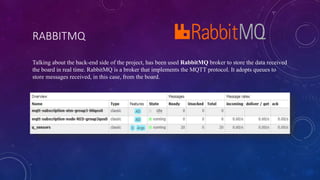
RABBITMQ
Talking about the back-end side of the project, has been used RabbitMQ broker to store the data received
the board in real time. RabbitMQ is a broker that implements the MQTT protocol. It adopts queues to
store messages received, in this case, from the board.
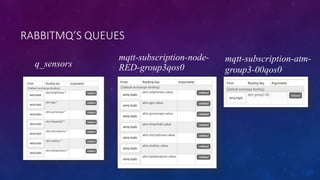
RABBITMQ’S QUEUES
q_sensors
mqtt-subscription-atm-
group3-00qos0
mqtt-subscription-node-
RED-group3qos0
NODE RED
It’s a browser-based web application in which it’s possible to create a flow using nodes and create
real rules in JavaScript for processing the whole data.
During the project the main steps that the team has focus were:
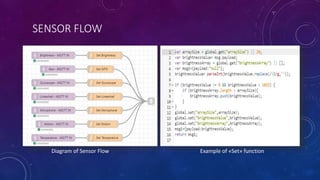
• take the data sent from Arduino to RabbitMQ using the MQTT IN nodes
• find a way to format these data and collect them to manage all with the rules
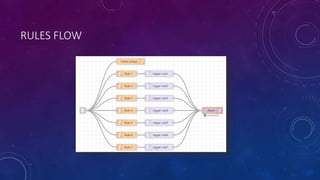
• design the smart rules
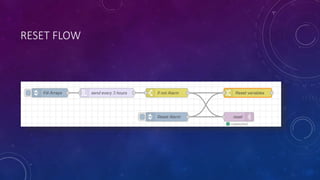
• define a methodology to reset the system after an alarm state or dynamically update after a
specific time
SENSOR FLOW
Example of «Set» function
Diagram of Sensor Flow
RULES FLOW
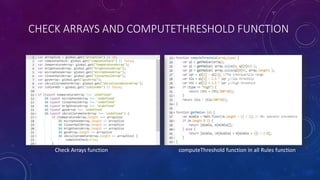
CHECK ARRAYS AND COMPUTETHRESHOLD FUNCTION
Check Arrays function computeThreshold function in all Rules function
RULE 1 & 2
Rule 1 Rule 2
RULE 3 & 4
Rule 3 Rule 4
RULE 5 & 6
Rule 5 Rule 6
Functions:
- computeDistance
- moreFrequentlyItem
RULE 7
RESET FLOW
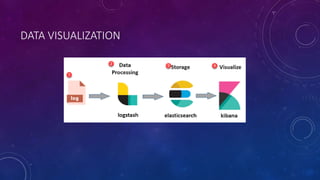
DATA VISUALIZATION
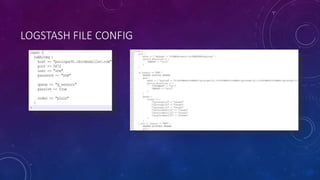
LOGSTASH FILE CONFIG
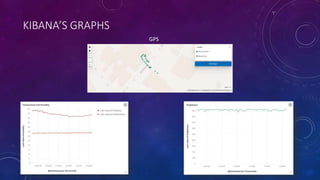
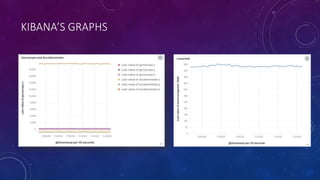
KIBANA’S GRAPHS
GPS
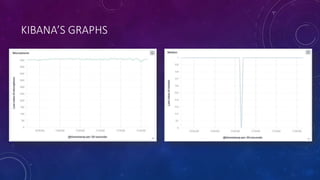
KIBANA’S GRAPHS
KIBANA’S GRAPHS
Presentation iot

Presentation iot

  • 1.
    AN IOT SECURITYDEVICE TO PROTECT AN ATM Group 3 Colella Roberto r.colella17@studenti.uniba.it Forleo Giovanni g.forleo3@studenti.uniba.it Gasparro Paolo p.gasparro4@studenti.uniba.it Piccininni Giuseppe g.piccininni5@studenti.uniba.it Ardavan Shahoveisi a.shahoveisi@uniba.studenti.it
  • 2.
    INTRODUCTION Scenario 1 -ATM Jackpotting Exploitation of physical and software vulnerabilities in automated banking machines, that result in the machines dispensing cash. Examples: • Gain physical internal access of the ATM through the top-hat of the terminal • Use an endoscope to identify internal portion of the cash machine Scenario 2 - Physical Attack Physical removing of ATM from the site Examples: • Solid attack The project consists to simulate a safe ATM using an Arduino board. To reach this goal has been defined two possible attack scenarios:
  • 3.
    RULES FOR SCENARIO1  Rule 1: brightness & temperature both greater than the highest value of the threshold calculated in the array of values ​​from the sensors through the interquartile range.  Rule 2: microphone & brightness temperature both greater than the highest value of the threshold calculated in the array of values ​​from the sensors through the interquartile range.  Rule 3: motion must be higher than 0, and temperature greater than the highest value of the threshold calculated in the array of values ​​from the sensors through the interquartile range.  Rule 4: motion must be higher than 0, and microphone greater than the highest value of the threshold calculated in the array of values ​​from the sensors through the interquartile range.  Rule 5: the magnetic linear hall value must be between the highest and lowest value calculated by the interquartile algorithm inside arrays of values from the sensor.
  • 4.
    RULES FOR SCENARIO2  Rule 6: find the most frequent value from GPS inside the pre-sized array and compute if the distance from this point is bigger than 200 meters.  Rule 7: accelerometer value from the sensor has to be greater than the highest value of the threshold or less than the lowest value of the threshold calculated in the array of values ​​from the sensors through the interquartile range.
  • 5.
  • 6.
  • 7.
    THE ATM SYSTEM– INSIDE AND OUTSIDE
  • 8.
    RABBITMQ Talking about theback-end side of the project, has been used RabbitMQ broker to store the data received the board in real time. RabbitMQ is a broker that implements the MQTT protocol. It adopts queues to store messages received, in this case, from the board.
  • 9.
  • 10.
    NODE RED It’s abrowser-based web application in which it’s possible to create a flow using nodes and create real rules in JavaScript for processing the whole data. During the project the main steps that the team has focus were: • take the data sent from Arduino to RabbitMQ using the MQTT IN nodes • find a way to format these data and collect them to manage all with the rules • design the smart rules • define a methodology to reset the system after an alarm state or dynamically update after a specific time
  • 11.
    SENSOR FLOW Example of«Set» function Diagram of Sensor Flow
  • 12.
  • 13.
    CHECK ARRAYS ANDCOMPUTETHRESHOLD FUNCTION Check Arrays function computeThreshold function in all Rules function
  • 14.
    RULE 1 &2 Rule 1 Rule 2
  • 15.
    RULE 3 &4 Rule 3 Rule 4
  • 16.
    RULE 5 &6 Rule 5 Rule 6 Functions: - computeDistance - moreFrequentlyItem
  • 17.
  • 18.
  • 19.
  • 20.
  • 21.
  • 22.
  • 23.