Northrop Grumman Australia
Williams Foundation
‘The Requirements of 5th
Generation Manoeuvre’
- An Industry Perspective
24 October 2019
Chris Deeble
NGA Chief Executive
Enabling the ADF’s 5th Gen Capability
3
Provides innovative ‘SOS’ solutions for the Australian DoD
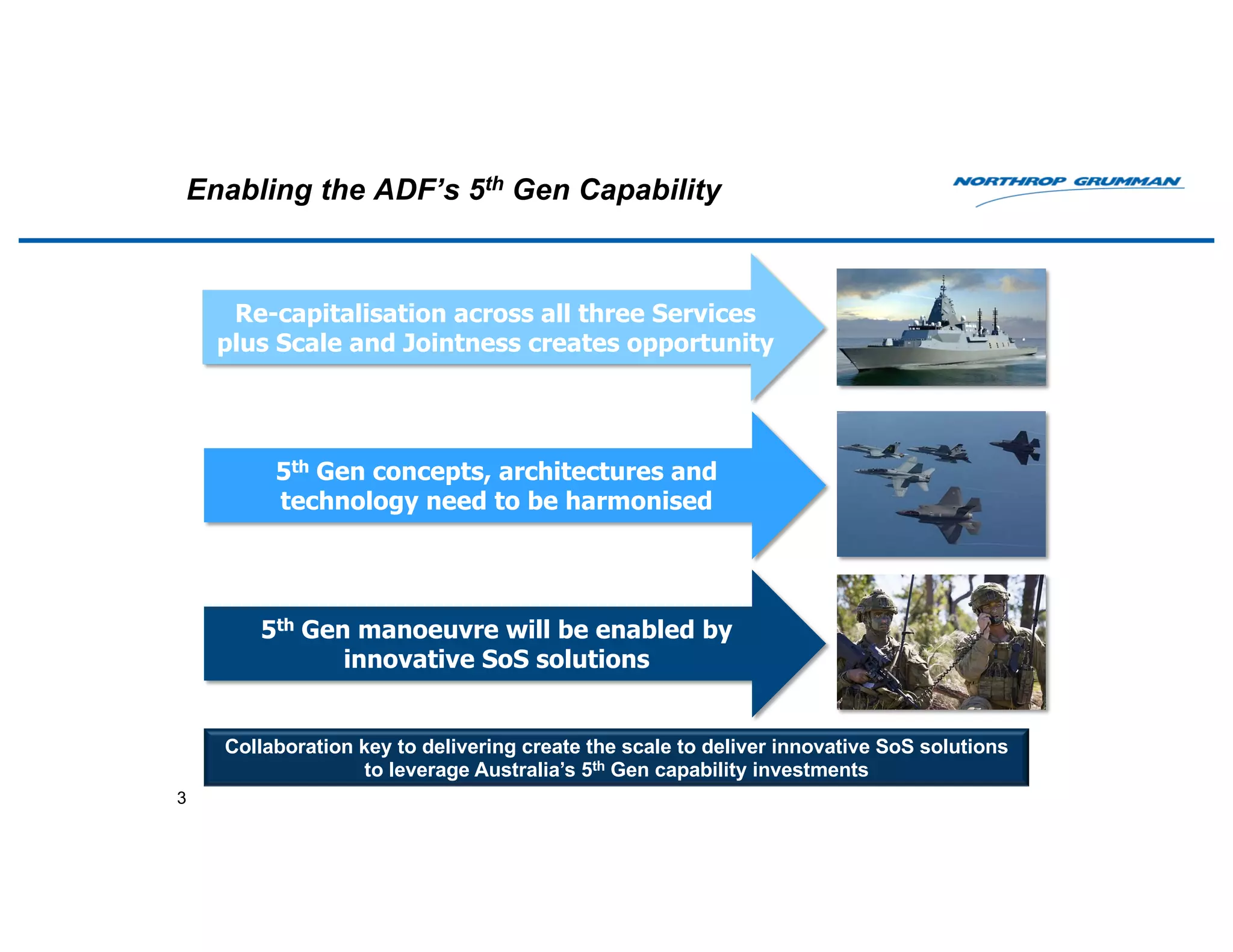
Collaboration key to delivering create the scale to deliver innovative SoS solutions
to leverage Australia’s 5th Gen capability investments
Re-capitalisation across all three Services
plus Scale and Jointness creates opportunity
5th Gen manoeuvre will be enabled by
innovative SoS solutions
5th Gen concepts, architectures and
technology need to be harmonised
Fundamental Input to Capability
Innovation Drivers
4
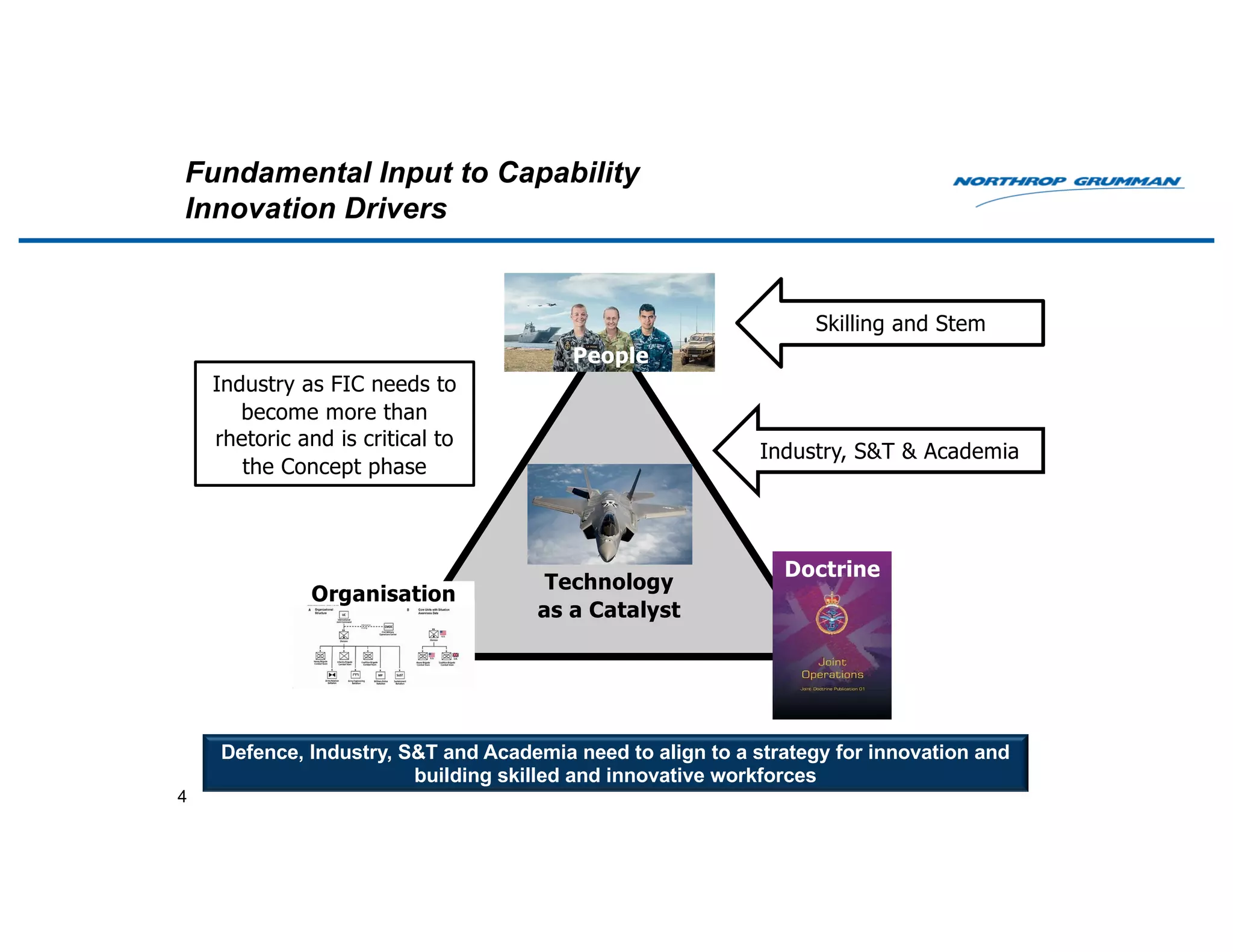
Doctrine
Organisation
Technology
as a Catalyst
Industry, S&T & Academia
Skilling and Stem
Defence, Industry, S&T and Academia need to align to a strategy for innovation and
building skilled and innovative workforces
Industry as FIC needs to
become more than
rhetoric and is critical to
the Concept phase
People
5th Gen Manoeuvre Innovation
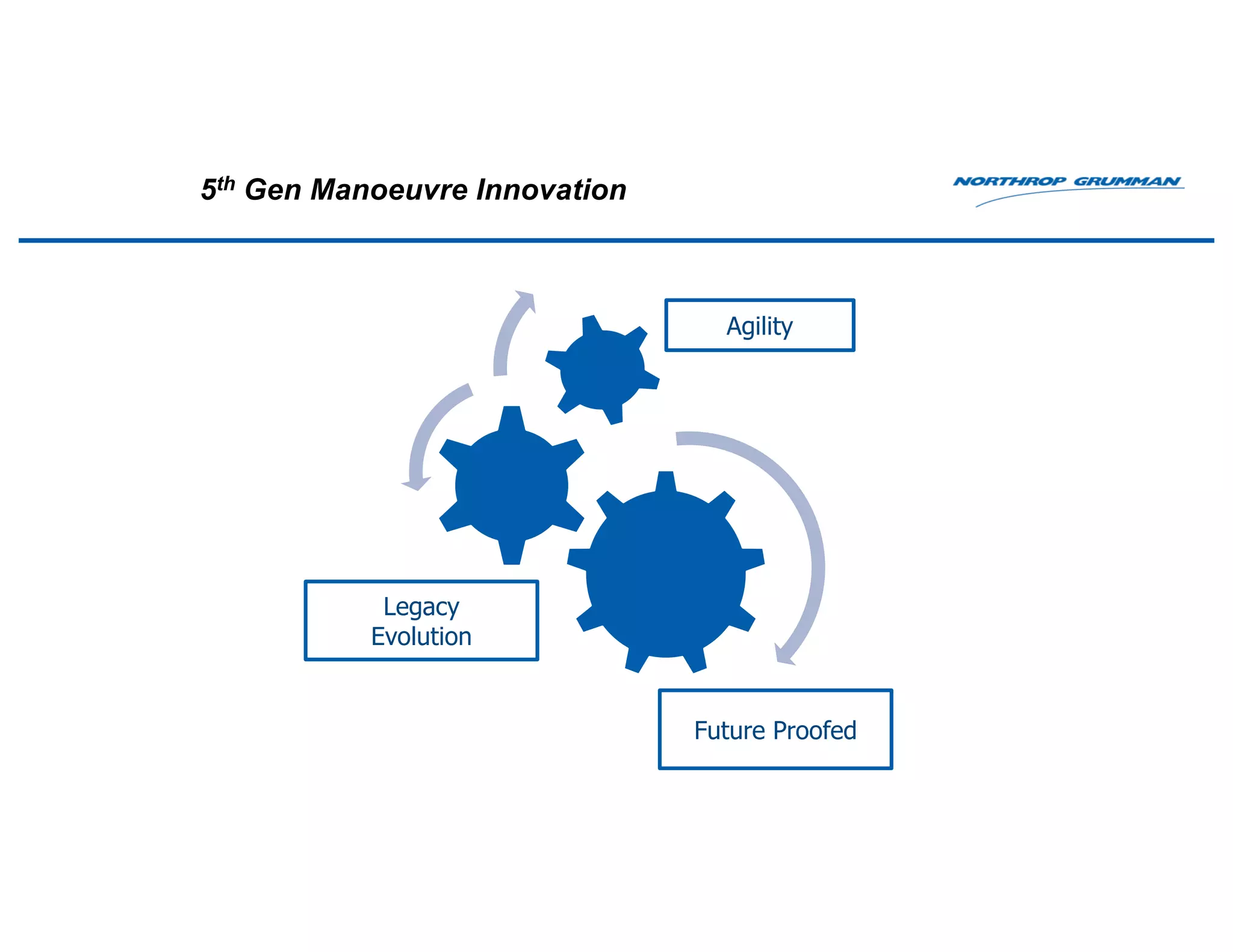
Agility
Future Proofed
Legacy
Evolution
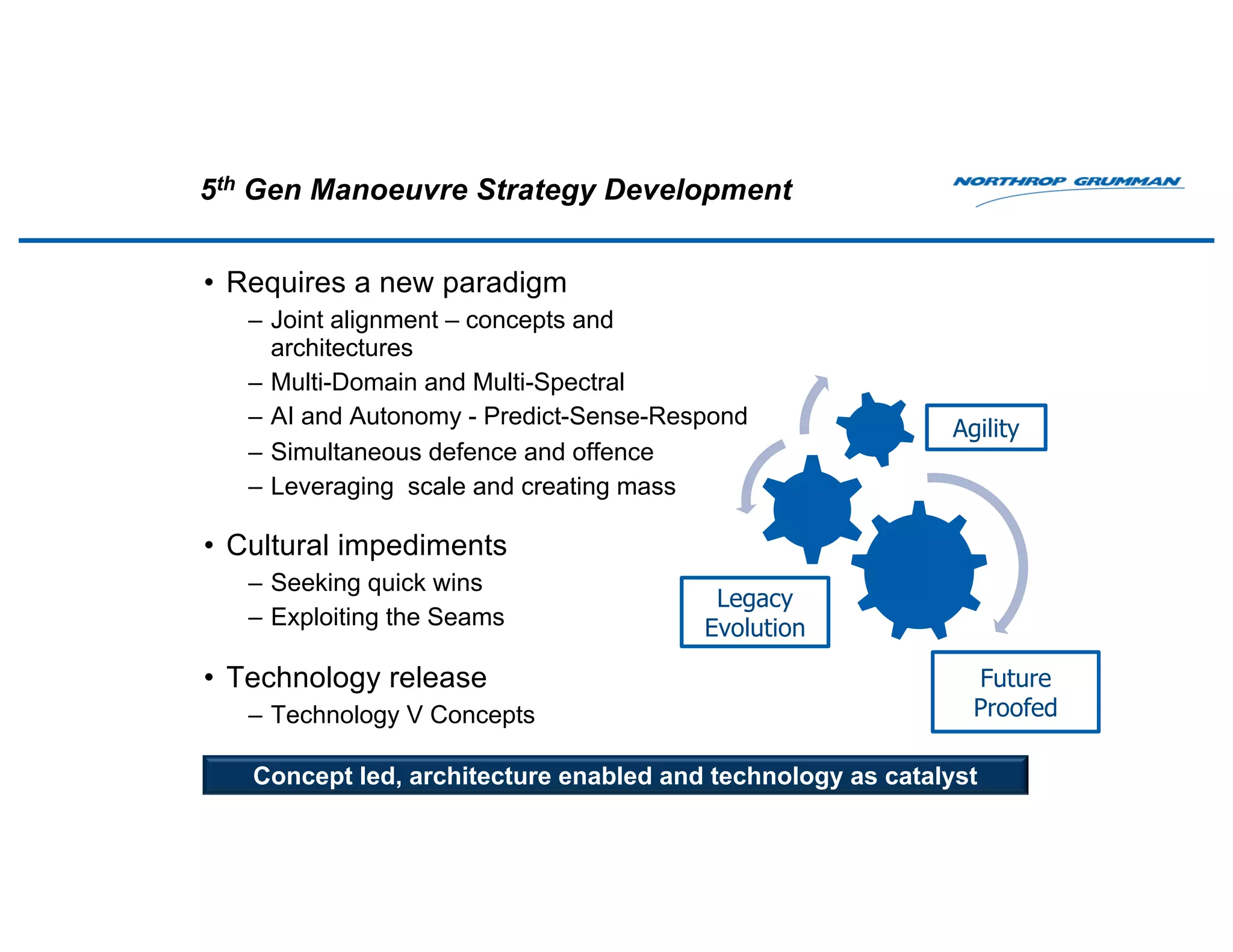
5th Gen Manoeuvre Strategy Development
• Requires a new paradigm
– Joint alignment – concepts and
architectures
– Multi-Domain and Multi-Spectral
– AI and Autonomy - Predict-Sense-Respond
– Simultaneous defence and offence
– Leveraging scale and creating mass
• Cultural impediments
– Seeking quick wins
– Exploiting the Seams
• Technology release
– Technology V Concepts
Agility
Future
Proofed
Legacy
Evolution
Concept led, architecture enabled and technology as catalyst
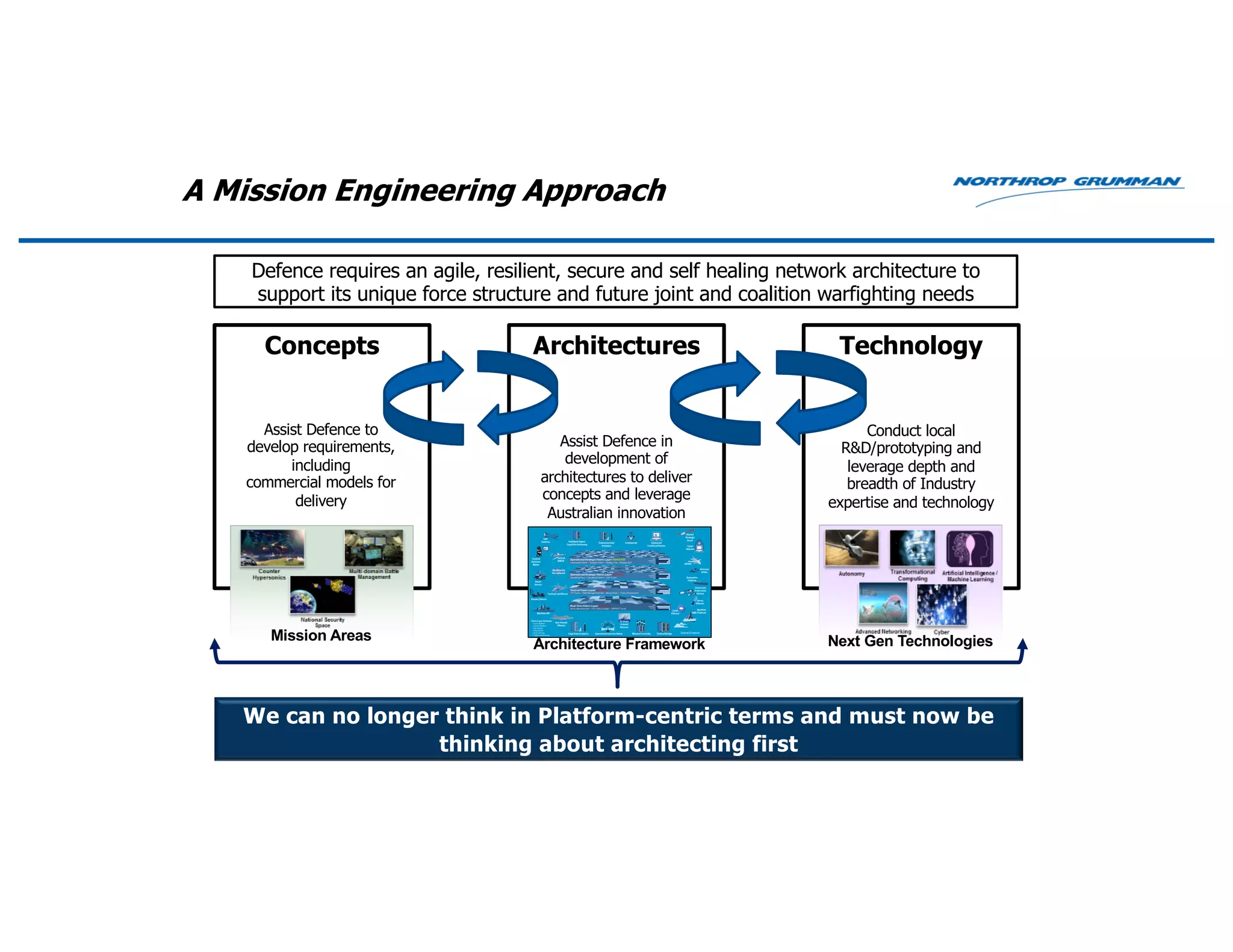
A Mission Engineering Approach
Concepts TechnologyArchitectures
We can no longer think in Platform-centric terms and must now be
thinking about architecting first
Conduct local
R&D/prototyping and
leverage depth and
breadth of Industry
expertise and technology
Assist Defence to
develop requirements,
including
commercial models for
delivery
Assist Defence in
development of
architectures to deliver
concepts and leverage
Australian innovation
Defence requires an agile, resilient, secure and self healing network architecture to
support its unique force structure and future joint and coalition warfighting needs
Mission Areas Next Gen TechnologiesArchitecture Framework
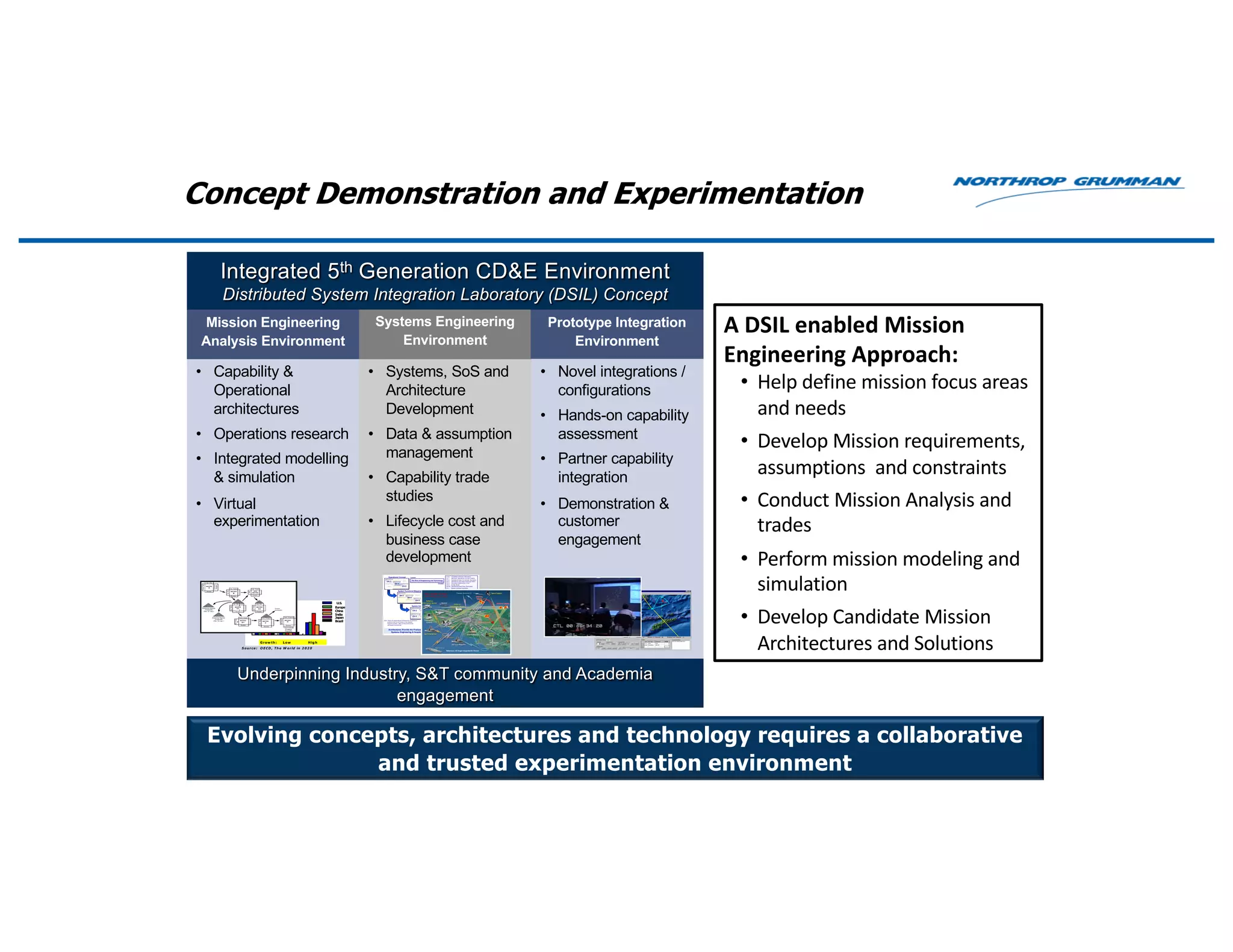
Concept Demonstration and Experimentation
• Novel integrations /
configurations
• Hands-on capability
assessment
• Partner capability
integration
• Demonstration &
customer
engagement
• Capability &
Operational
architectures
• Operations research
• Integrated modelling
& simulation
• Virtual
experimentation
• Systems, SoS and
Architecture
Development
• Data & assumption
management
• Capability trade
studies
• Lifecycle cost and
business case
development
Mission Engineering
Analysis Environment
Systems Engineering
Environment
Prototype Integration
Environment
Integrated 5th Generation CD&E Environment
Distributed System Integration Laboratory (DSIL) Concept
Using Architectures in Systems Engineering & Acquisition
Operational Concept
System Functional Mapping
System Interface Mapping
OV-1
OV-4
OV-5
SV-3
SV-4
SV-5
OV-2
OV-3
SV-1 TV-1
SV-2 SV-6
Architecture Performance
and Behavior
OV-6C
SV-7
Executable
Model
CV-6 Capabilities Evolution Description
OV-1 High-level Operational Concept Graphic
OV-2 Operational Node Connectivity Description
OV-3 Operational Information Exchange Matrix
OV-4 Command Relationships Chart
OV-5 Activity Model
OV-6C Operational Event/Trace Description
SV-1 System Interface Description
SV-2 Systems Communication Description
SV-3 Systems Matrix
SV-4 System Functionality Description
SV-5 Operational Activity to System Function
Traceability Matrix
SV-6 System Information Exchange Matrix
SV-7 System Performance Parameters Matrix
SV-8 System Evolution Description
SV-9 System Technology Forecast
SV-10 System Activity Sequence & Timing
TV-1 Technical Architecture Profile
TV-2 Standards Technology Forecast
The Role of Engineering and Technology
Lesser
Greater
1st Order Analysis:
Functionality--
2nd Order Analysis:
Static Interoperability
3rd Order Analysis:
Dynamic Interoperability
OV-3
Note: There are dependencies between the Architecture
products that are not shown in the System
Engineering flow. Many of the products are
developed concurrently.
Architectures Provide the Framework for
Systems Engineering & Acquisition
SV-8
TV-2
CV-6
Acquisition Strategy
SV-9
SV-10
DRM
OpSits
TTP
Rev 4 (1)
22 Apr 02
INCOSE Draft (10 May 02)
7
SIAP Operational Concept
Need to populate with specific
coalition platforms and systems
Reference: US Single Integrated Air Picture
% of Glob al GD P25
0
U.S.
Europe
China
India
Japan
Brazil
‘95 ‘20 ‘20
Low H ig hGrow th:
Source: OECD , The W orld in 2020
% of Glob al GD P25
0
U.S.
Europe
China
India
Japan
Brazil
‘95 ‘20 ‘20
Low H ig hGrow th:
Source: OECD , The W orld in 2020
Op. Obj.
Cmpn.Obj.
2-Scenario
Weights
Scores
MATRIX
A
Op. Tasks
Op.Obj.
Scores
MATRIX
B
Log. Tasks
AGS
Scores
AGS
MATRIX
Op. Attr. AGS
Op.Tasks
Scores
MATRIX
C1
Log. Attr.
Log.Tasks
Scores
MATRIX
C2
Tech. Areas
Op.&Log.
Attr.
Scores
MATRIX
D1
Tech. Projects
Tech.Areas
Scores
MATRIX
F
Attribute Design
Tradeoffs
(Op. & Log.)
Attribute Rqmts
Tradeoffs
(Op. & Log.)
Tech. Projects
Affordability
Scores
MATRIX
G
Technology
Project
Payoffs
Project
Synergies
Underpinning Industry, S&T community and Academia
engagement
A DSIL enabled Mission
Engineering Approach:
• Help define mission focus areas
and needs
• Develop Mission requirements,
assumptions and constraints
• Conduct Mission Analysis and
trades
• Perform mission modeling and
simulation
• Develop Candidate Mission
Architectures and Solutions
Evolving concepts, architectures and technology requires a collaborative
and trusted experimentation environment
Presentation By Air Vice Marshal (Retd.) Chris Deeble

Presentation By Air Vice Marshal (Retd.) Chris Deeble

  • 1.
    Northrop Grumman Australia WilliamsFoundation ‘The Requirements of 5th Generation Manoeuvre’ - An Industry Perspective 24 October 2019 Chris Deeble NGA Chief Executive
  • 2.
    Enabling the ADF’s5th Gen Capability 3 Provides innovative ‘SOS’ solutions for the Australian DoD Collaboration key to delivering create the scale to deliver innovative SoS solutions to leverage Australia’s 5th Gen capability investments Re-capitalisation across all three Services plus Scale and Jointness creates opportunity 5th Gen manoeuvre will be enabled by innovative SoS solutions 5th Gen concepts, architectures and technology need to be harmonised
  • 3.
    Fundamental Input toCapability Innovation Drivers 4 Doctrine Organisation Technology as a Catalyst Industry, S&T & Academia Skilling and Stem Defence, Industry, S&T and Academia need to align to a strategy for innovation and building skilled and innovative workforces Industry as FIC needs to become more than rhetoric and is critical to the Concept phase People
  • 4.
    5th Gen ManoeuvreInnovation Agility Future Proofed Legacy Evolution
  • 5.
    5th Gen ManoeuvreStrategy Development • Requires a new paradigm – Joint alignment – concepts and architectures – Multi-Domain and Multi-Spectral – AI and Autonomy - Predict-Sense-Respond – Simultaneous defence and offence – Leveraging scale and creating mass • Cultural impediments – Seeking quick wins – Exploiting the Seams • Technology release – Technology V Concepts Agility Future Proofed Legacy Evolution Concept led, architecture enabled and technology as catalyst
  • 6.
    A Mission EngineeringApproach Concepts TechnologyArchitectures We can no longer think in Platform-centric terms and must now be thinking about architecting first Conduct local R&D/prototyping and leverage depth and breadth of Industry expertise and technology Assist Defence to develop requirements, including commercial models for delivery Assist Defence in development of architectures to deliver concepts and leverage Australian innovation Defence requires an agile, resilient, secure and self healing network architecture to support its unique force structure and future joint and coalition warfighting needs Mission Areas Next Gen TechnologiesArchitecture Framework
  • 7.
    Concept Demonstration andExperimentation • Novel integrations / configurations • Hands-on capability assessment • Partner capability integration • Demonstration & customer engagement • Capability & Operational architectures • Operations research • Integrated modelling & simulation • Virtual experimentation • Systems, SoS and Architecture Development • Data & assumption management • Capability trade studies • Lifecycle cost and business case development Mission Engineering Analysis Environment Systems Engineering Environment Prototype Integration Environment Integrated 5th Generation CD&E Environment Distributed System Integration Laboratory (DSIL) Concept Using Architectures in Systems Engineering & Acquisition Operational Concept System Functional Mapping System Interface Mapping OV-1 OV-4 OV-5 SV-3 SV-4 SV-5 OV-2 OV-3 SV-1 TV-1 SV-2 SV-6 Architecture Performance and Behavior OV-6C SV-7 Executable Model CV-6 Capabilities Evolution Description OV-1 High-level Operational Concept Graphic OV-2 Operational Node Connectivity Description OV-3 Operational Information Exchange Matrix OV-4 Command Relationships Chart OV-5 Activity Model OV-6C Operational Event/Trace Description SV-1 System Interface Description SV-2 Systems Communication Description SV-3 Systems Matrix SV-4 System Functionality Description SV-5 Operational Activity to System Function Traceability Matrix SV-6 System Information Exchange Matrix SV-7 System Performance Parameters Matrix SV-8 System Evolution Description SV-9 System Technology Forecast SV-10 System Activity Sequence & Timing TV-1 Technical Architecture Profile TV-2 Standards Technology Forecast The Role of Engineering and Technology Lesser Greater 1st Order Analysis: Functionality-- 2nd Order Analysis: Static Interoperability 3rd Order Analysis: Dynamic Interoperability OV-3 Note: There are dependencies between the Architecture products that are not shown in the System Engineering flow. Many of the products are developed concurrently. Architectures Provide the Framework for Systems Engineering & Acquisition SV-8 TV-2 CV-6 Acquisition Strategy SV-9 SV-10 DRM OpSits TTP Rev 4 (1) 22 Apr 02 INCOSE Draft (10 May 02) 7 SIAP Operational Concept Need to populate with specific coalition platforms and systems Reference: US Single Integrated Air Picture % of Glob al GD P25 0 U.S. Europe China India Japan Brazil ‘95 ‘20 ‘20 Low H ig hGrow th: Source: OECD , The W orld in 2020 % of Glob al GD P25 0 U.S. Europe China India Japan Brazil ‘95 ‘20 ‘20 Low H ig hGrow th: Source: OECD , The W orld in 2020 Op. Obj. Cmpn.Obj. 2-Scenario Weights Scores MATRIX A Op. Tasks Op.Obj. Scores MATRIX B Log. Tasks AGS Scores AGS MATRIX Op. Attr. AGS Op.Tasks Scores MATRIX C1 Log. Attr. Log.Tasks Scores MATRIX C2 Tech. Areas Op.&Log. Attr. Scores MATRIX D1 Tech. Projects Tech.Areas Scores MATRIX F Attribute Design Tradeoffs (Op. & Log.) Attribute Rqmts Tradeoffs (Op. & Log.) Tech. Projects Affordability Scores MATRIX G Technology Project Payoffs Project Synergies Underpinning Industry, S&T community and Academia engagement A DSIL enabled Mission Engineering Approach: • Help define mission focus areas and needs • Develop Mission requirements, assumptions and constraints • Conduct Mission Analysis and trades • Perform mission modeling and simulation • Develop Candidate Mission Architectures and Solutions Evolving concepts, architectures and technology requires a collaborative and trusted experimentation environment