PHYSIOLOGICAL
EFFECTS OF MASSAGE
Harishini M.G
2nd year bpt
CONTENT
1. Massage
2. Physiological effects of massage
◦ Effects on circulatory system
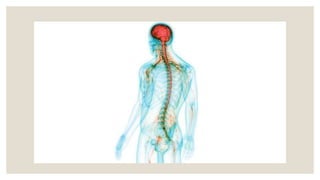
◦ Effects on nervous system
◦ Effects on muscular system
◦ Effects on metabolic system
◦ Effects on respiratory system
◦ Effects on excretory system
◦ Skin
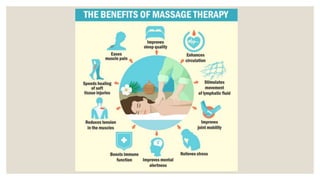
Massage
1. Massage is a scientific treatment, by certain passive systemic manipulation upon the
skin of the human body
2. Act of rubbing, kneading, or stroking
3. It is for the purpose of modifying nutrition, restoring power of movement
4. Used to manipulate the body’s tissue
Technique
1. Stroking manipulation
◦ Superficial Stroking
◦ Deep Stroking
1. Pressure manipulation
◦ Kneading
◦ Petrissage
◦ Friction
Cont....
1. Vibratory manipulation
◦ Vibratory
◦ Shaking
1. Percussion manipulation
◦ Hacking
◦ Beating
◦ Pounding
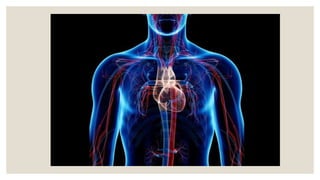
Effects on circulatory system
1. Change in skin color due to increased circulatory flow, blood velocity & blood
viscosity.
2. Effect on BP, HR, skin temperature & oxygen consumption.
3. Increased release of histamine from mast cells , basophills , platelets from blood
initiates triple
4. response :
◦ 1. Dilation of minute blood vessels
◦ 2. Flush (flare of redness) around area
◦ 3. Slight swelling
Effects on nervous system
1. Spinal motor neuron excitability of spinal reflex pathways is reduced due to
decreased H-reflex.
2. Inhibitory influence on alpha motor neuron excitability but no carryover effect.
3. Releases endorphine – reduces chronic pain
Effects of muscular system
1. Affects muscle fatigue
2. Affects degree of muscle tone
3. Excite muscular contraction
4. Increase the electro excitability of the muscle
Effects on metabolic system
1. Increase blood flow
2. Increase oxygen supply
3. Provides proper nutrition supply to the system
4. Removal of waste product
5. Increase arterial blood flow and venous drainage
6. Increase various metabolic activities
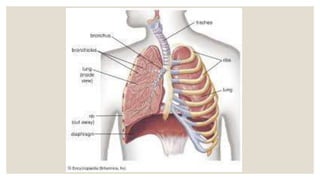
Effects on respiratory system
1. Encourages deeper breathing
2. Calms the nervous system down
3. Loosening the intercostal muscles allowing the rib cage to expand
4. Lowers blood pressure and moves congestion
5. Generates heat to raise the respiratory rate and body temperature
6. Stimulates proprioceptors in the joints and increases respiration
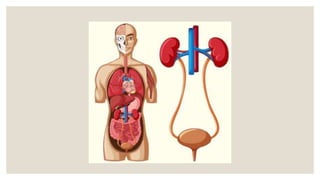
Effects on excretory system
1. Kidney :
By deep abdominal and lumbar massage stimulates the renal plexus (which
supplies the kidneys). This will result in increased blood supply to the kidneys and there
by it helps in improving functions of the kidney.
2. Activities the urinary system.
Skin
1. Massage has shown increase in skin temperature, increase sweating and decrease
resistance to electrical current
2. It softens the skin
3. It directly acts on the skin causes removal of dead cells
4. Release tension and relax the muscles, reducing the appearance and development of
wrinkles
Thank you.......

Presentation 3.pptx

  • 1.
  • 2.
    CONTENT 1. Massage 2. Physiologicaleffects of massage ◦ Effects on circulatory system ◦ Effects on nervous system ◦ Effects on muscular system ◦ Effects on metabolic system ◦ Effects on respiratory system ◦ Effects on excretory system ◦ Skin
  • 3.
    Massage 1. Massage isa scientific treatment, by certain passive systemic manipulation upon the skin of the human body 2. Act of rubbing, kneading, or stroking 3. It is for the purpose of modifying nutrition, restoring power of movement 4. Used to manipulate the body’s tissue
  • 5.
    Technique 1. Stroking manipulation ◦Superficial Stroking ◦ Deep Stroking 1. Pressure manipulation ◦ Kneading ◦ Petrissage ◦ Friction
  • 6.
    Cont.... 1. Vibratory manipulation ◦Vibratory ◦ Shaking 1. Percussion manipulation ◦ Hacking ◦ Beating ◦ Pounding
  • 8.
    Effects on circulatorysystem 1. Change in skin color due to increased circulatory flow, blood velocity & blood viscosity. 2. Effect on BP, HR, skin temperature & oxygen consumption. 3. Increased release of histamine from mast cells , basophills , platelets from blood initiates triple 4. response : ◦ 1. Dilation of minute blood vessels ◦ 2. Flush (flare of redness) around area ◦ 3. Slight swelling
  • 10.
    Effects on nervoussystem 1. Spinal motor neuron excitability of spinal reflex pathways is reduced due to decreased H-reflex. 2. Inhibitory influence on alpha motor neuron excitability but no carryover effect. 3. Releases endorphine – reduces chronic pain
  • 12.
    Effects of muscularsystem 1. Affects muscle fatigue 2. Affects degree of muscle tone 3. Excite muscular contraction 4. Increase the electro excitability of the muscle
  • 13.
    Effects on metabolicsystem 1. Increase blood flow 2. Increase oxygen supply 3. Provides proper nutrition supply to the system 4. Removal of waste product 5. Increase arterial blood flow and venous drainage 6. Increase various metabolic activities
  • 14.
    Effects on respiratorysystem 1. Encourages deeper breathing 2. Calms the nervous system down 3. Loosening the intercostal muscles allowing the rib cage to expand 4. Lowers blood pressure and moves congestion 5. Generates heat to raise the respiratory rate and body temperature 6. Stimulates proprioceptors in the joints and increases respiration
  • 16.
    Effects on excretorysystem 1. Kidney : By deep abdominal and lumbar massage stimulates the renal plexus (which supplies the kidneys). This will result in increased blood supply to the kidneys and there by it helps in improving functions of the kidney. 2. Activities the urinary system.
  • 18.
    Skin 1. Massage hasshown increase in skin temperature, increase sweating and decrease resistance to electrical current 2. It softens the skin 3. It directly acts on the skin causes removal of dead cells 4. Release tension and relax the muscles, reducing the appearance and development of wrinkles
  • 19.

Editor's Notes