Presented by
Dr.Rupa Sarker
&
Dr.Dibya Jyoti Paul
Department of Physiology,PAHMC.
Pancreas
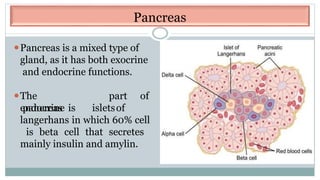
⚫Pancreas is a mixed type of
gland, as it has both exocrine
and endocrine functions.
⚫The
endocrine
part of
pancreas is isletsof
langerhans in which 60% cell
is beta cell that secretes
mainly insulin and amylin.
Structure of insulin
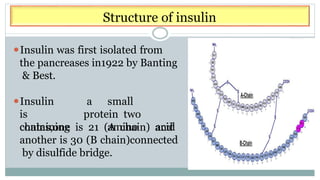
⚫Insulin was first isolated from
the pancreases in1922 by Banting
& Best.
⚫Insulin
is
containing
a small
protein two
amino acid
chains,one is 21 (A chain) and
another is 30 (B chain)connected
by disulfide bridge.
Synthesis of Insulin
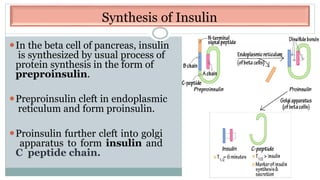
⚫In the beta cell of pancreas, insulin
is synthesized by usual process of
protein synthesis in the form of
preproinsulin.
⚫Preproinsulin cleft in endoplasmic
reticulum and form proinsulin.
⚫Proinsulin further cleft into golgi
apparatus to form insulin and
C peptide chain.
Importance of C-peptide
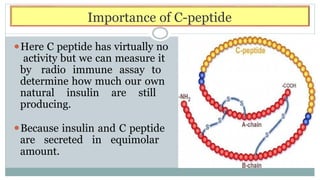
⚫Here C peptide has virtually no
activity but we can measure it
by radio immune assay to
determine how much our own
natural insulin are still
producing.
⚫Because insulin and C peptide
are secreted in equimolar
amount.
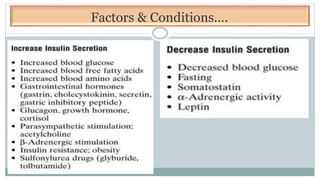
Factors & Conditions….
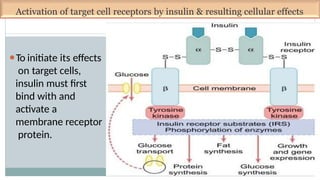
Activation of target cell receptors by insulin & resulting cellular effects
⚫To initiate its effects
on target cells,
insulin must first
bind with and
activate a
membrane receptor
protein.
Physiological functions of Insulin
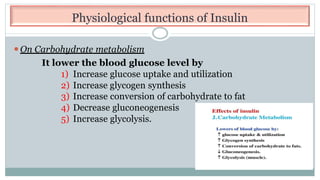
⚫On Carbohydrate metabolism
It lower the blood glucose level by
1) Increase glucose uptake and utilization
2) Increase glycogen synthesis
3) Increase conversion of carbohydrate to fat
4) Decrease gluconeogenesis
5) Increase glycolysis.
Physiological functions of Insulin
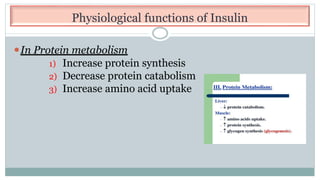
⚫In Protein metabolism
1) Increase protein synthesis
2) Decrease protein catabolism
3) Increase amino acid uptake
Physiological functions of Insulin
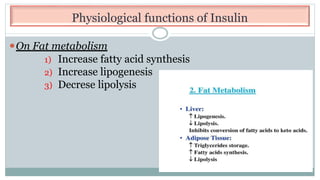
⚫On Fat metabolism
1) Increase fatty acid synthesis
2) Increase lipogenesis
3) Decrese lipolysis
Energy abundance
⚫When we intake, increase amount of energy giving food, it
causes increase insulin secretion which ultimately store
the excess energy.
⚫This function of insulin is called energy abundance.
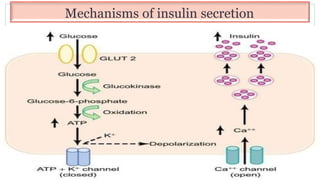
Mechanisms of insulin secretion
⚫Insulin secretion is mainly controlled by the blood
sugar concentration.
⚫Normally the fasting level of blood glucose is 80-
90 mg/100ml.
⚫If the blood glucose level rises above 100mg/100ml
of blood, the rate of insulin secretion increase rapidly.
Mechanisms of insulin secretion
Abnormalities of insulin secretion
increases, it
causes
A. In blood when insulin
secretion hyperinsulinaemia
which causes :--
a) Insulin shock and
b) Hypoglycaemia.
B. When total absent or deficiency of insulin secretion occur, it
causes diabetes mellitus.
Hypoglycaemi
a
• Hypoglycemia occurs when blood glucose levels fall below 4
mmol/L (normal fasting blood glucose level is 3-5 mmol/l) which
is a very dangerous and sometimes fatal condition.
The most important causes of hypoglycaemia are:
 Hypoglycemia is most common in diabetic patient
whoare treated by insulin, glinides, and sulfonylureas.
 Hypoglycemia is rare in those without diabetes, because there
are many regulatory mechanisms.
 B-Islet cell adenoma or hyperplasia (in infants of
diabetic mothers).
Diabetes mellitus
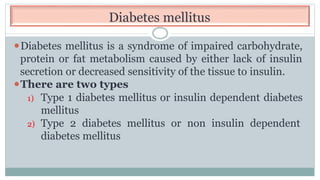
⚫Diabetes mellitus is a syndrome of impaired carbohydrate,
protein or fat metabolism caused by either lack of insulin
secretion or decreased sensitivity of the tissue to insulin.
⚫There are two types
1) Type 1 diabetes mellitus or insulin dependent diabetes
mellitus
2) Type 2 diabetes mellitus or non insulin dependent
diabetes mellitus
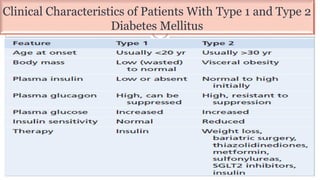
Clinical Characteristics of Patients With Type 1 and Type 2
Diabetes Mellitus
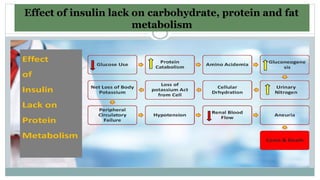
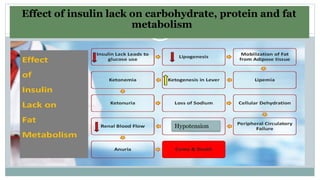
Effect of insulin lack on carbohydrate, protein and fat metabolism
Effect of insulin lack on carbohydrate, protein and fat
metabolism
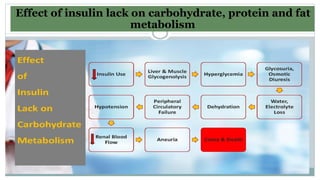
Effect of insulin lack on carbohydrate,protein and fat metabolism
Effect of insulin lack on carbohydrate, protein and fat
metabolism
Effect of insulin lack on carbohydrate,protein and fat metabolism
Effect of insulin lack on carbohydrate, protein and fat
metabolism
Hypotension
Importance
⚫Glucose is the only nutrient that normally can be used by the
brain, retina and germinal epithelium of the gonads.
⚫So it is important to maintain a constant blood glucose
concentration at a level, sufficient to provide necessary
nutrition.
⚫Reference
1. Guyton & Hall Textbook Of Medical Physiology
2. Samson Wright‘s Applied Physiology
Presentation (1).pptxwerrdsddfhjjjhbvvvvgg

Presentation (1).pptxwerrdsddfhjjjhbvvvvgg

  • 2.
    Presented by Dr.Rupa Sarker & Dr.DibyaJyoti Paul Department of Physiology,PAHMC.
  • 3.
    Pancreas ⚫Pancreas is amixed type of gland, as it has both exocrine and endocrine functions. ⚫The endocrine part of pancreas is isletsof langerhans in which 60% cell is beta cell that secretes mainly insulin and amylin.
  • 4.
    Structure of insulin ⚫Insulinwas first isolated from the pancreases in1922 by Banting & Best. ⚫Insulin is containing a small protein two amino acid chains,one is 21 (A chain) and another is 30 (B chain)connected by disulfide bridge.
  • 5.
    Synthesis of Insulin ⚫Inthe beta cell of pancreas, insulin is synthesized by usual process of protein synthesis in the form of preproinsulin. ⚫Preproinsulin cleft in endoplasmic reticulum and form proinsulin. ⚫Proinsulin further cleft into golgi apparatus to form insulin and C peptide chain.
  • 6.
    Importance of C-peptide ⚫HereC peptide has virtually no activity but we can measure it by radio immune assay to determine how much our own natural insulin are still producing. ⚫Because insulin and C peptide are secreted in equimolar amount.
  • 7.
  • 8.
    Activation of targetcell receptors by insulin & resulting cellular effects ⚫To initiate its effects on target cells, insulin must first bind with and activate a membrane receptor protein.
  • 9.
    Physiological functions ofInsulin ⚫On Carbohydrate metabolism It lower the blood glucose level by 1) Increase glucose uptake and utilization 2) Increase glycogen synthesis 3) Increase conversion of carbohydrate to fat 4) Decrease gluconeogenesis 5) Increase glycolysis.
  • 10.
    Physiological functions ofInsulin ⚫In Protein metabolism 1) Increase protein synthesis 2) Decrease protein catabolism 3) Increase amino acid uptake
  • 11.
    Physiological functions ofInsulin ⚫On Fat metabolism 1) Increase fatty acid synthesis 2) Increase lipogenesis 3) Decrese lipolysis
  • 12.
    Energy abundance ⚫When weintake, increase amount of energy giving food, it causes increase insulin secretion which ultimately store the excess energy. ⚫This function of insulin is called energy abundance.
  • 13.
    Mechanisms of insulinsecretion ⚫Insulin secretion is mainly controlled by the blood sugar concentration. ⚫Normally the fasting level of blood glucose is 80- 90 mg/100ml. ⚫If the blood glucose level rises above 100mg/100ml of blood, the rate of insulin secretion increase rapidly.
  • 14.
  • 15.
    Abnormalities of insulinsecretion increases, it causes A. In blood when insulin secretion hyperinsulinaemia which causes :-- a) Insulin shock and b) Hypoglycaemia. B. When total absent or deficiency of insulin secretion occur, it causes diabetes mellitus.
  • 16.
    Hypoglycaemi a • Hypoglycemia occurswhen blood glucose levels fall below 4 mmol/L (normal fasting blood glucose level is 3-5 mmol/l) which is a very dangerous and sometimes fatal condition. The most important causes of hypoglycaemia are:  Hypoglycemia is most common in diabetic patient whoare treated by insulin, glinides, and sulfonylureas.  Hypoglycemia is rare in those without diabetes, because there are many regulatory mechanisms.  B-Islet cell adenoma or hyperplasia (in infants of diabetic mothers).
  • 17.
    Diabetes mellitus ⚫Diabetes mellitusis a syndrome of impaired carbohydrate, protein or fat metabolism caused by either lack of insulin secretion or decreased sensitivity of the tissue to insulin. ⚫There are two types 1) Type 1 diabetes mellitus or insulin dependent diabetes mellitus 2) Type 2 diabetes mellitus or non insulin dependent diabetes mellitus
  • 18.
    Clinical Characteristics ofPatients With Type 1 and Type 2 Diabetes Mellitus
  • 19.
    Effect of insulinlack on carbohydrate, protein and fat metabolism Effect of insulin lack on carbohydrate, protein and fat metabolism
  • 20.
    Effect of insulinlack on carbohydrate,protein and fat metabolism Effect of insulin lack on carbohydrate, protein and fat metabolism
  • 21.
    Effect of insulinlack on carbohydrate,protein and fat metabolism Effect of insulin lack on carbohydrate, protein and fat metabolism Hypotension
  • 22.
    Importance ⚫Glucose is theonly nutrient that normally can be used by the brain, retina and germinal epithelium of the gonads. ⚫So it is important to maintain a constant blood glucose concentration at a level, sufficient to provide necessary nutrition.
  • 23.
    ⚫Reference 1. Guyton &Hall Textbook Of Medical Physiology 2. Samson Wright‘s Applied Physiology