1
An IoT Based Smart Dustbin
2
Title: An IOT Based Smart Dustbin
Group Members
Afshan Bashir 13
Anum Bashir 23
Khansa Nadeem 44
Supervisor: Engr.Aamir Aziz Butt
Department of Computer science & Information
Technology Woman University of Bagh AJK
3
Contents:
 Problem statement
 Introduction
 Literature survey
 Objectives/Goals
 Existing system
 Proposed System
 Methodology
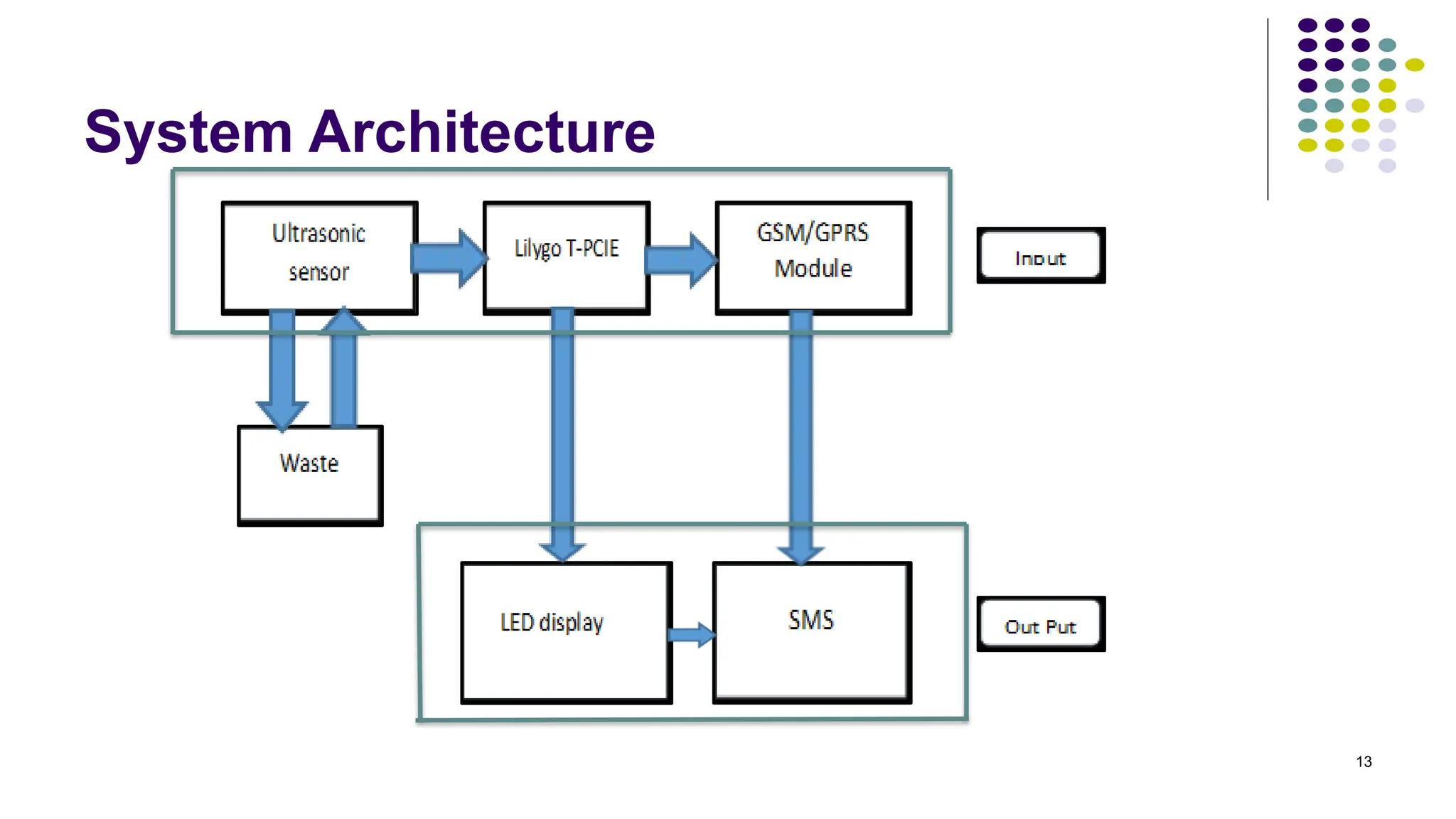
 System Architecture
 System Design
 Implementation
 Advantages and disadvantages
 Future scope
 Conclusion
 References
4
Problem statement
 Lack of suitable garbage collection method
 Sanitation crews visiting empty trash bins generate unnecessary costs
 Wastage of time and fuel
 Overflowing of garbage increase pollution and reduces an area’s natural beauty
 Unhealthy environment
5
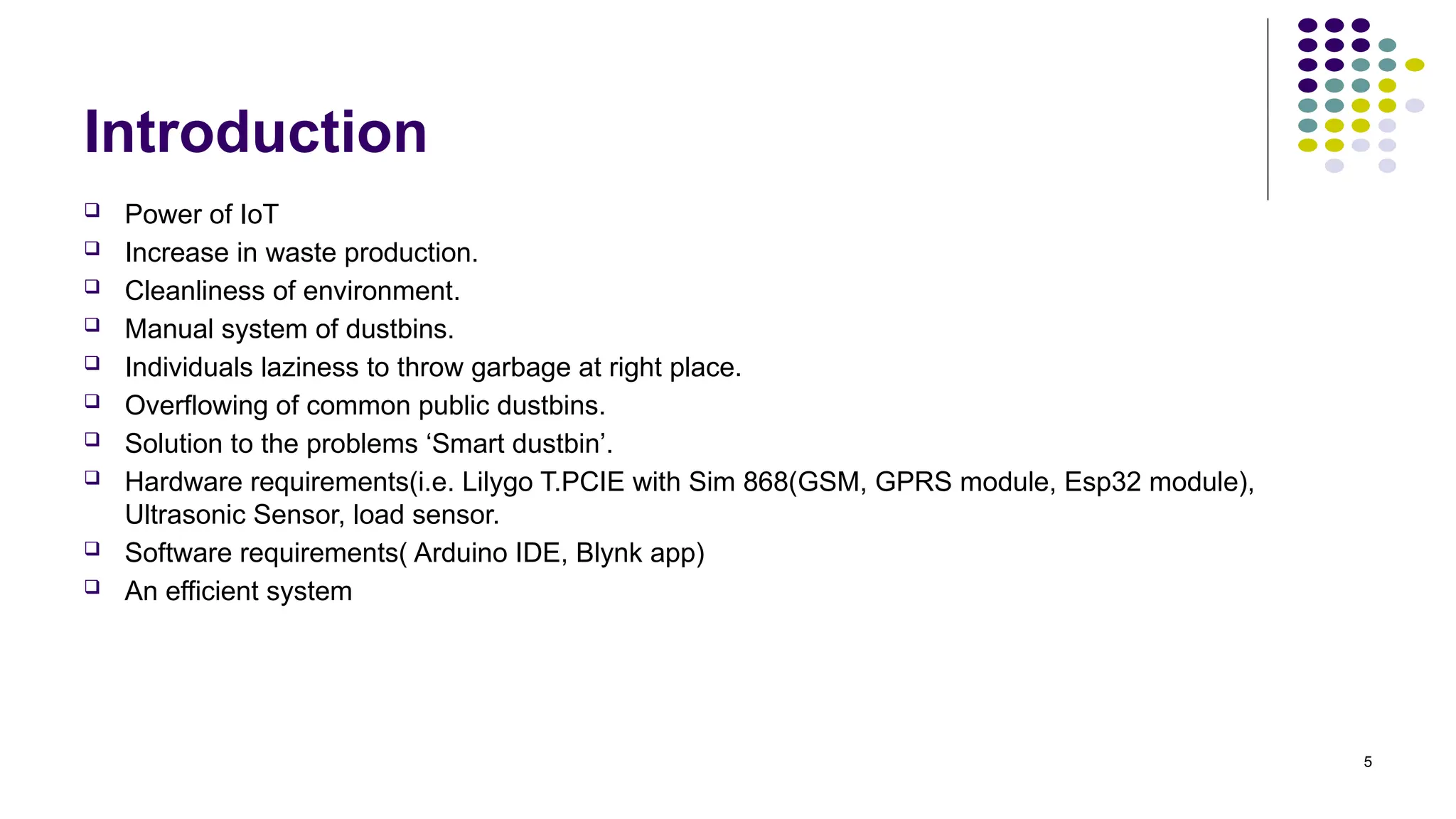
Introduction
 Power of IoT
 Increase in waste production.
 Cleanliness of environment.
 Manual system of dustbins.
 Individuals laziness to throw garbage at right place.
 Overflowing of common public dustbins.
 Solution to the problems ‘Smart dustbin’.
 Hardware requirements(i.e. Lilygo T.PCIE with Sim 868(GSM, GPRS module, Esp32 module),
Ultrasonic Sensor, load sensor.
 Software requirements( Arduino IDE, Blynk app)
 An efficient system
6
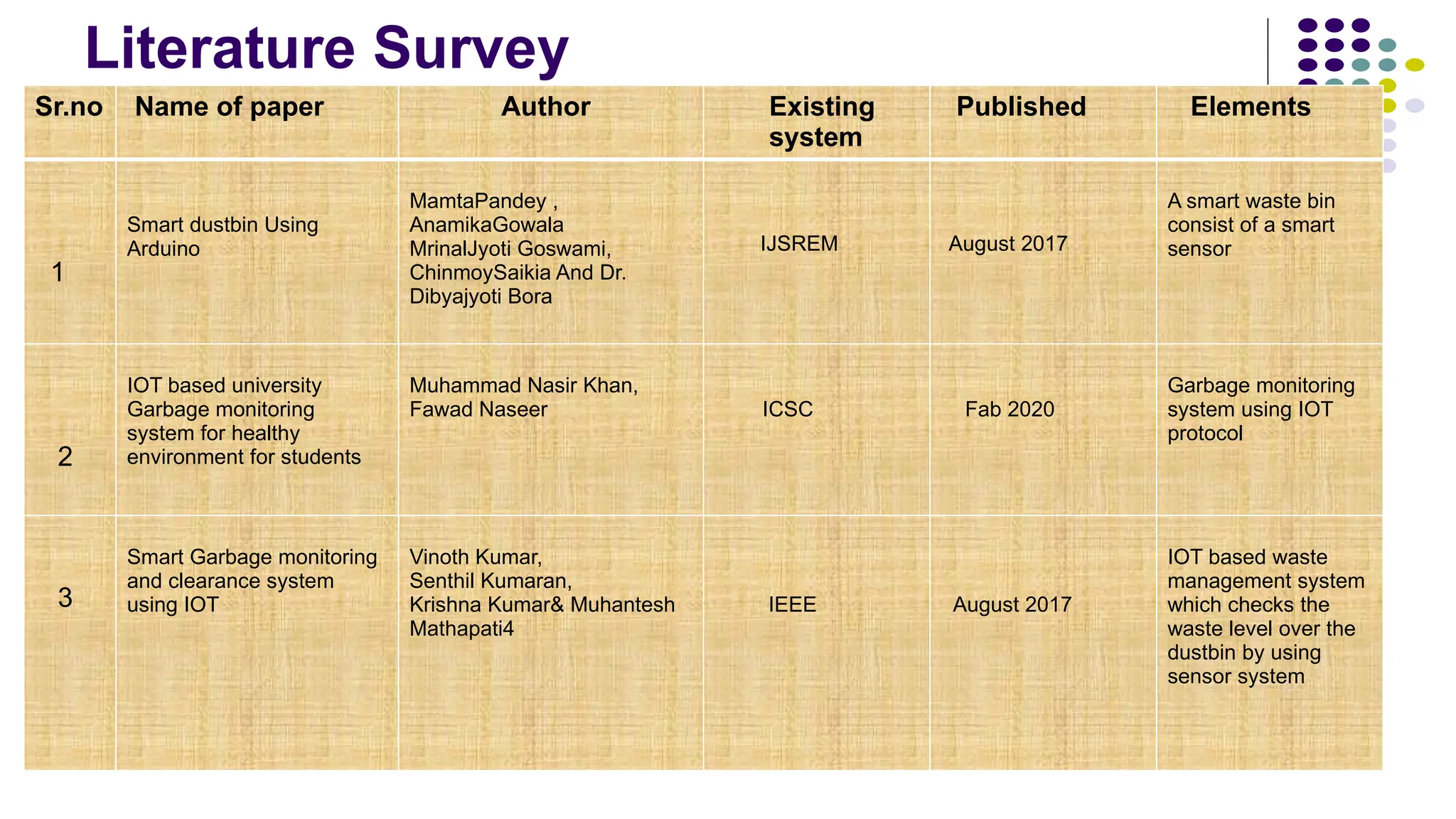
Literature Survey
Sr.no Name of paper Author Existing
system
Published Elements
1
Smart dustbin Using
Arduino
MamtaPandey ,
AnamikaGowala
MrinalJyoti Goswami,
ChinmoySaikia And Dr.
Dibyajyoti Bora
IJSREM August 2017
A smart waste bin
consist of a smart
sensor
2
IOT based university
Garbage monitoring
system for healthy
environment for students
Muhammad Nasir Khan,
Fawad Naseer ICSC Fab 2020
Garbage monitoring
system using IOT
protocol
3
Smart Garbage monitoring
and clearance system
using IOT
Vinoth Kumar,
Senthil Kumaran,
Krishna Kumar& Muhantesh
Mathapati4
IEEE August 2017
IOT based waste
management system
which checks the
waste level over the
dustbin by using
sensor system
7
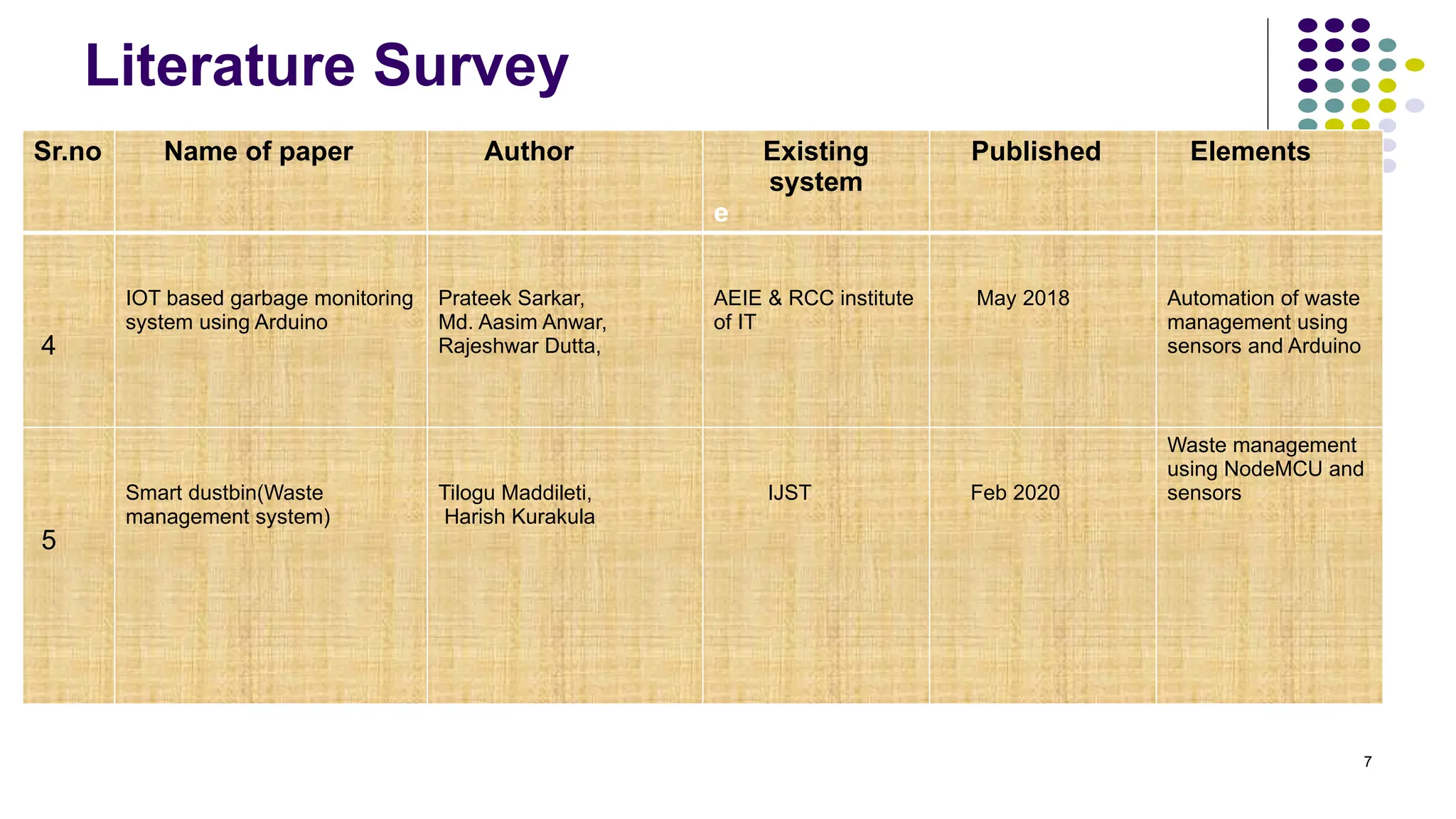
Literature Survey
Sr.no Name of paper Author Existing
system
e
Published Elements
4
IOT based garbage monitoring
system using Arduino
Prateek Sarkar,
Md. Aasim Anwar,
Rajeshwar Dutta,
AEIE & RCC institute
of IT
May 2018 Automation of waste
management using
sensors and Arduino
5
Smart dustbin(Waste
management system)
Tilogu Maddileti,
Harish Kurakula
IJST Feb 2020
Waste management
using NodeMCU and
sensors
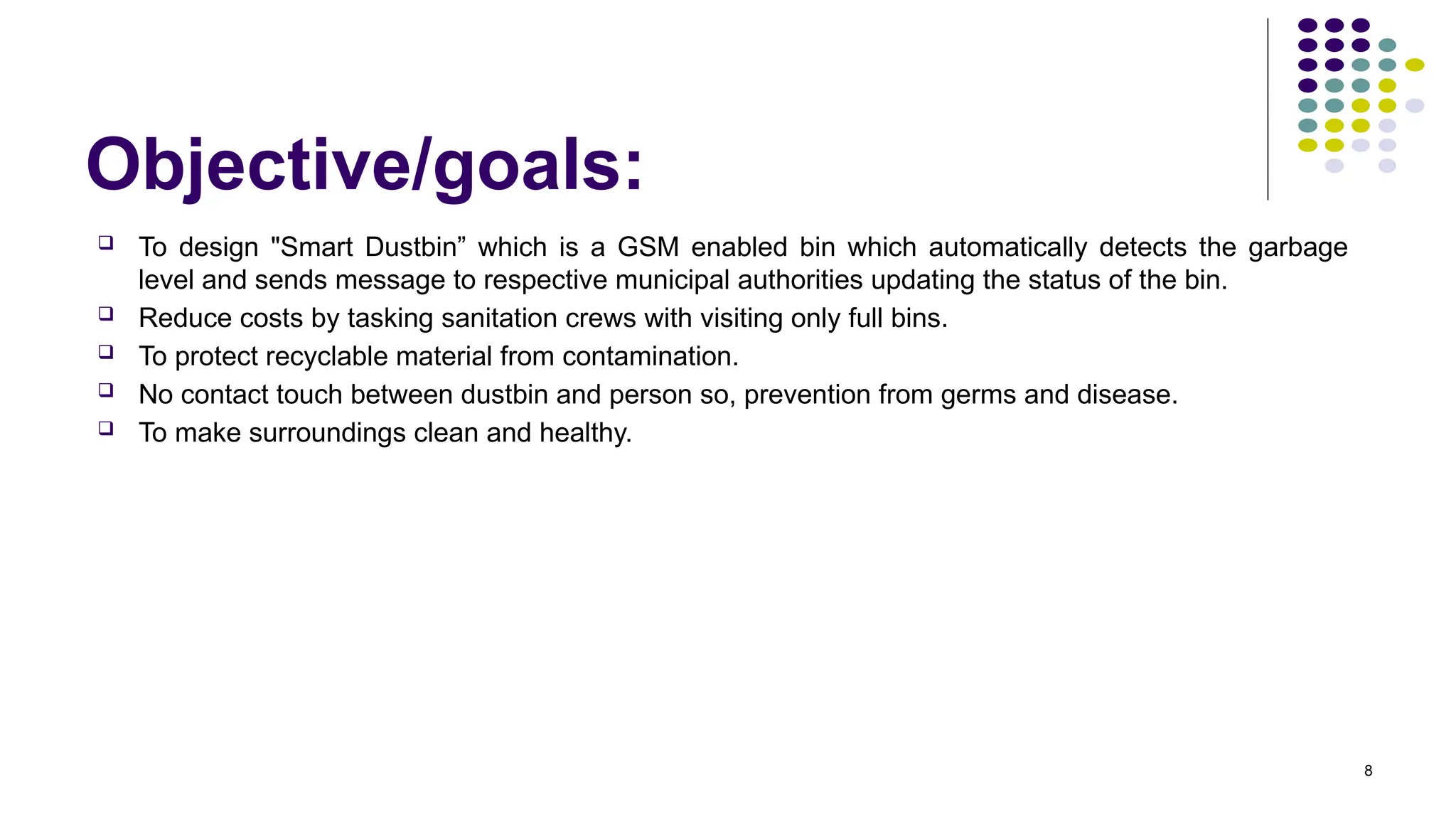
Objective/goals:
 To design "Smart Dustbin” which is a GSM enabled bin which automatically detects the garbage
level and sends message to respective municipal authorities updating the status of the bin.
 Reduce costs by tasking sanitation crews with visiting only full bins.
 To protect recyclable material from contamination.
 No contact touch between dustbin and person so, prevention from germs and disease.
 To make surroundings clean and healthy.
8
9
Existing System
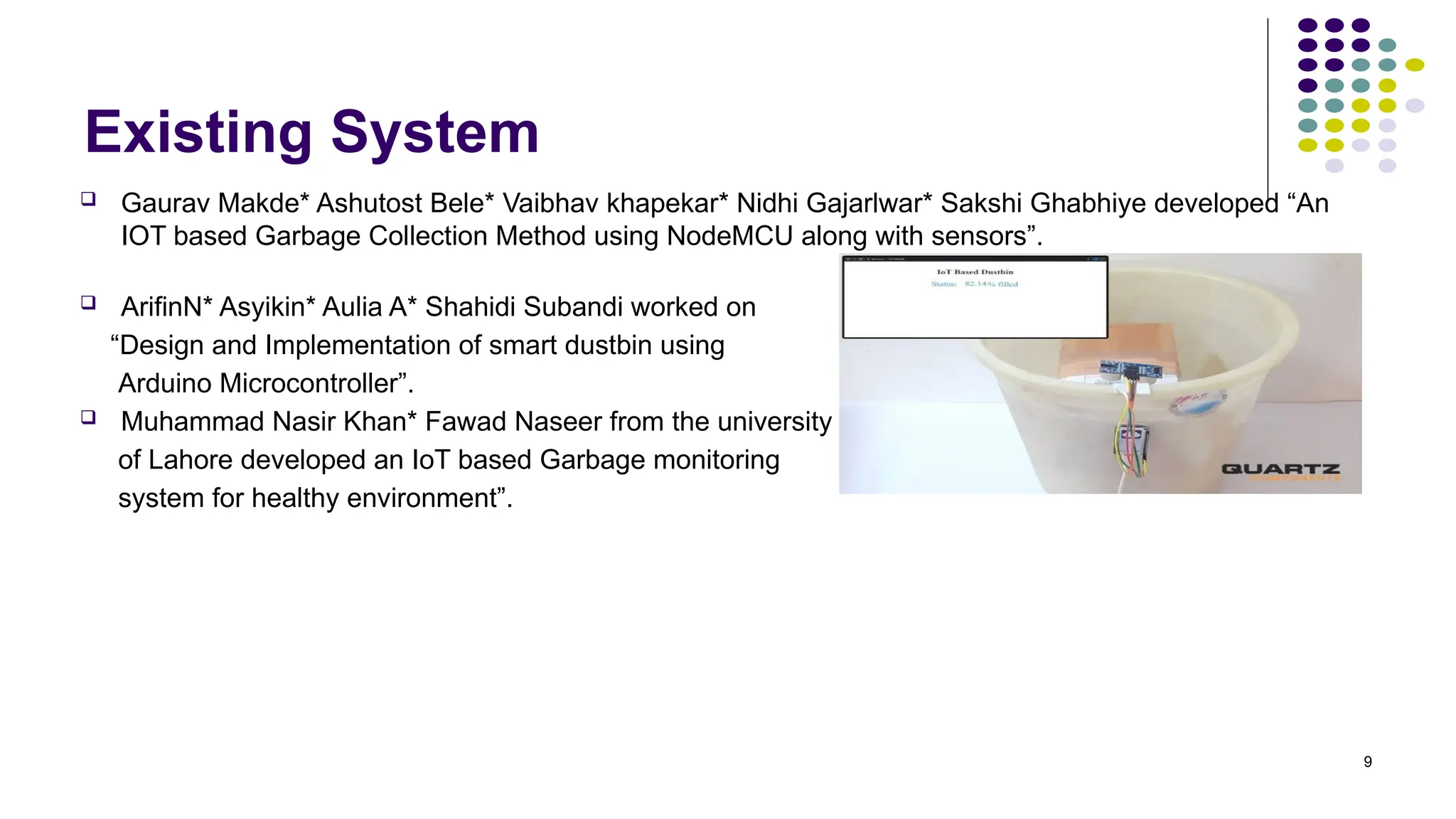
 Gaurav Makde* Ashutost Bele* Vaibhav khapekar* Nidhi Gajarlwar* Sakshi Ghabhiye developed “An
IOT based Garbage Collection Method using NodeMCU along with sensors”.
 ArifinN* Asyikin* Aulia A* Shahidi Subandi worked on
“Design and Implementation of smart dustbin using
Arduino Microcontroller”.
 Muhammad Nasir Khan* Fawad Naseer from the university
of Lahore developed an IoT based Garbage monitoring
system for healthy environment”.
10
Proposed System
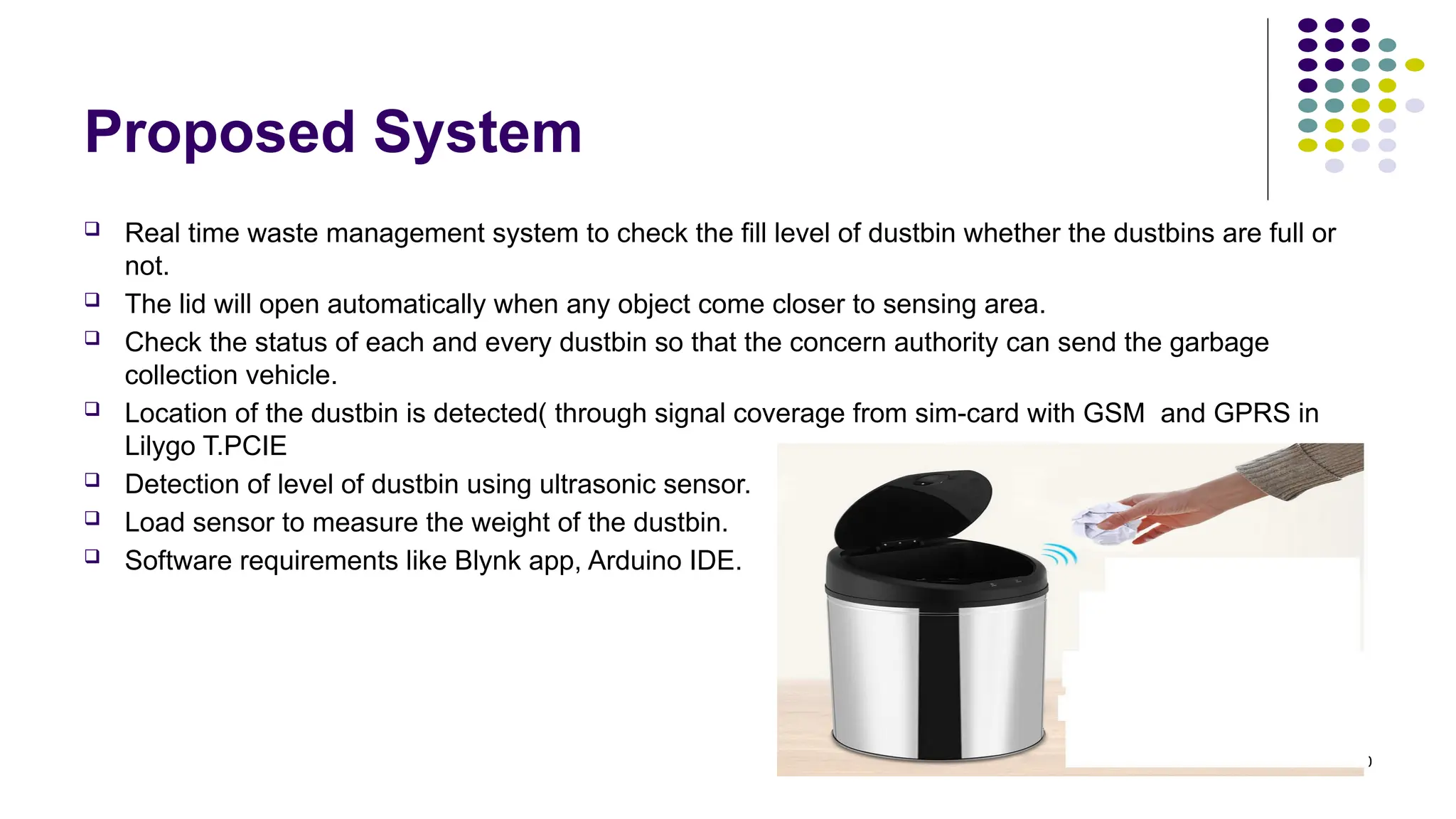
 Real time waste management system to check the fill level of dustbin whether the dustbins are full or
not.
 The lid will open automatically when any object come closer to sensing area.
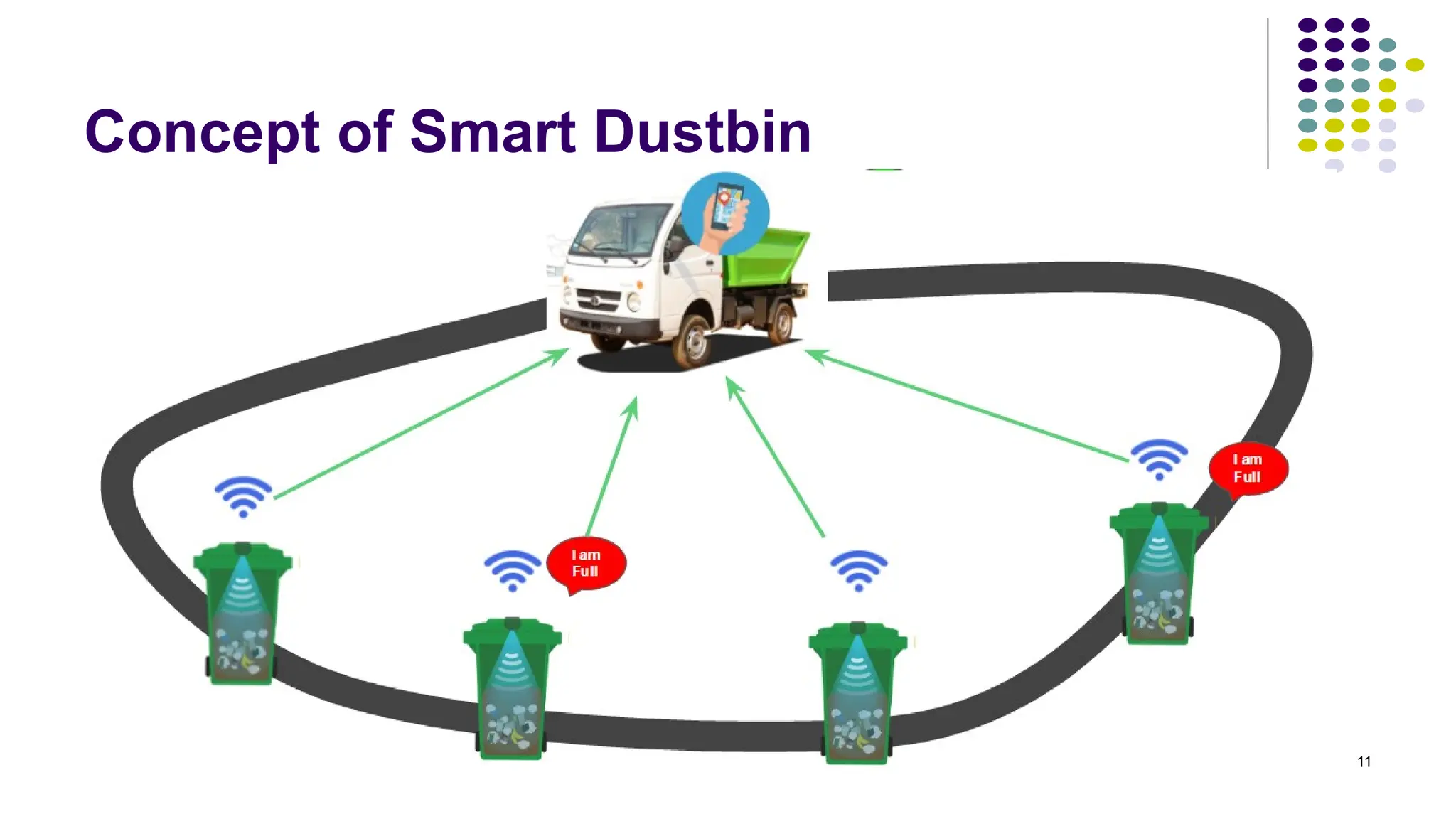
 Check the status of each and every dustbin so that the concern authority can send the garbage
collection vehicle.
 Location of the dustbin is detected( through signal coverage from sim-card with GSM and GPRS in
Lilygo T.PCIE
 Detection of level of dustbin using ultrasonic sensor.
 Load sensor to measure the weight of the dustbin.
 Software requirements like Blynk app, Arduino IDE.
11
Concept of Smart Dustbin
12
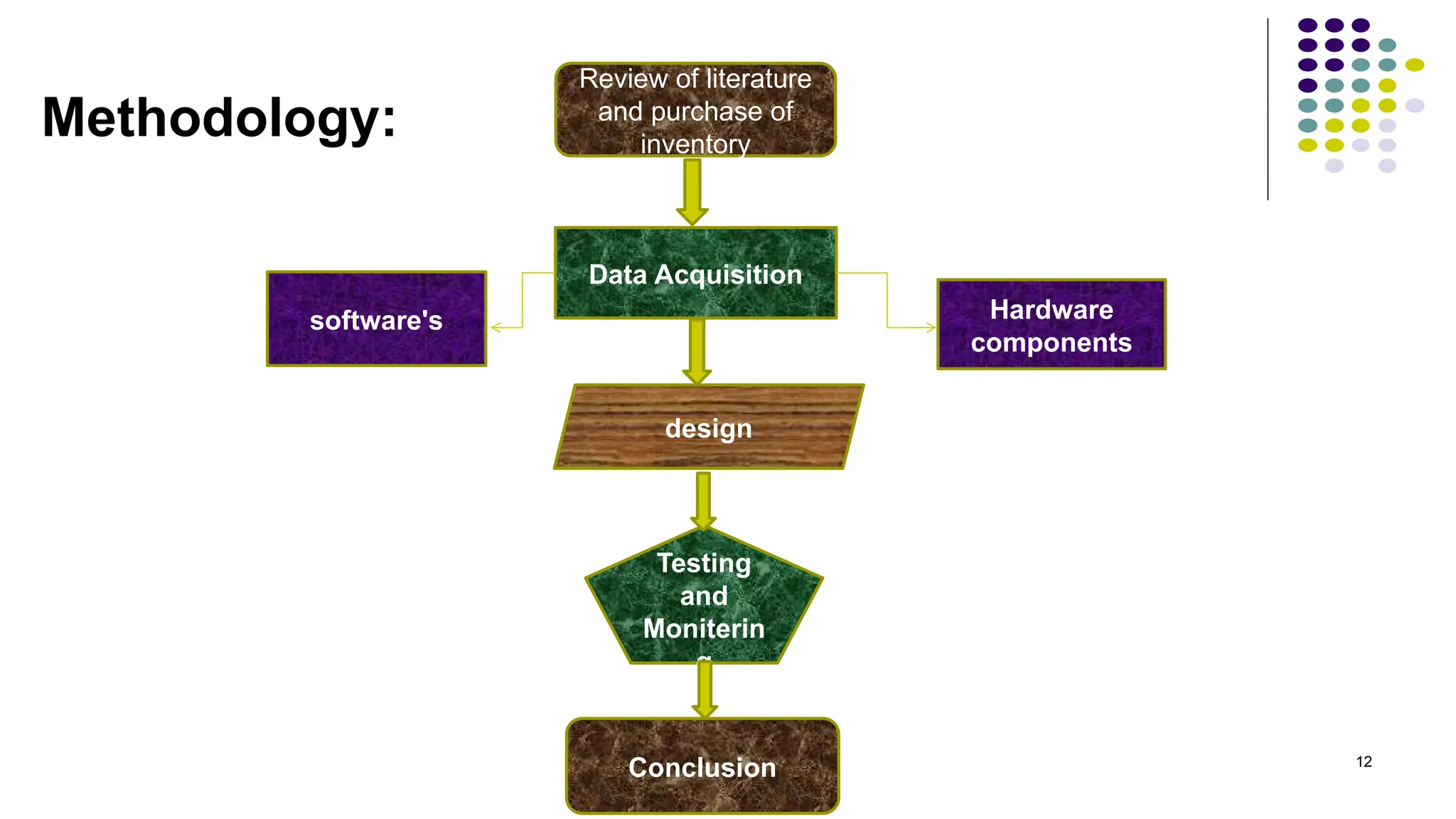
Methodology:
Data Acquisition
design
Testing
and
Moniterin
g
software's Hardware
components
Review of literature
and purchase of
inventory
Conclusion
13
System Architecture
14
System Design
15
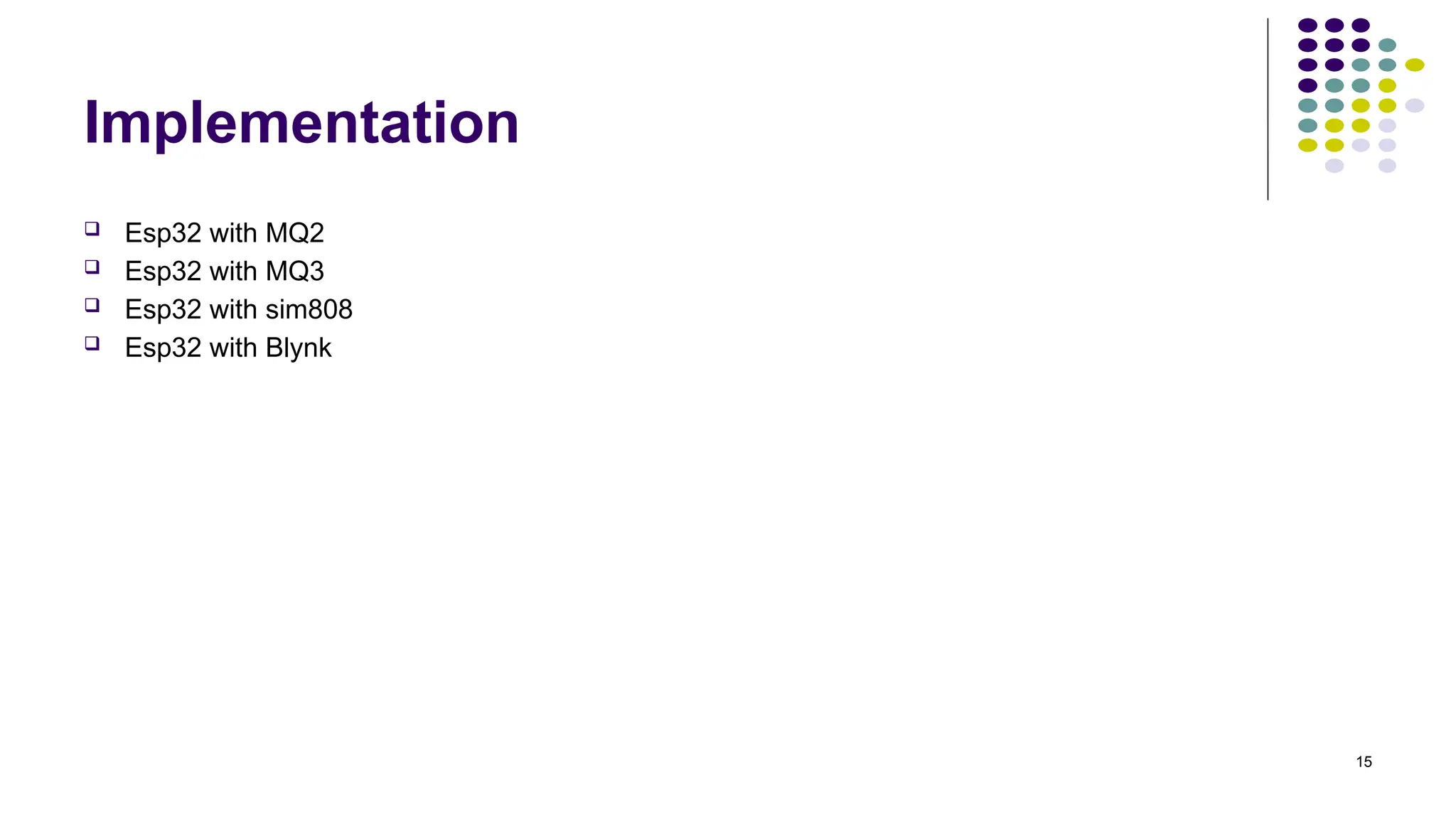
Implementation
 Esp32 with MQ2
 Esp32 with MQ3
 Esp32 with sim808
 Esp32 with Blynk
16
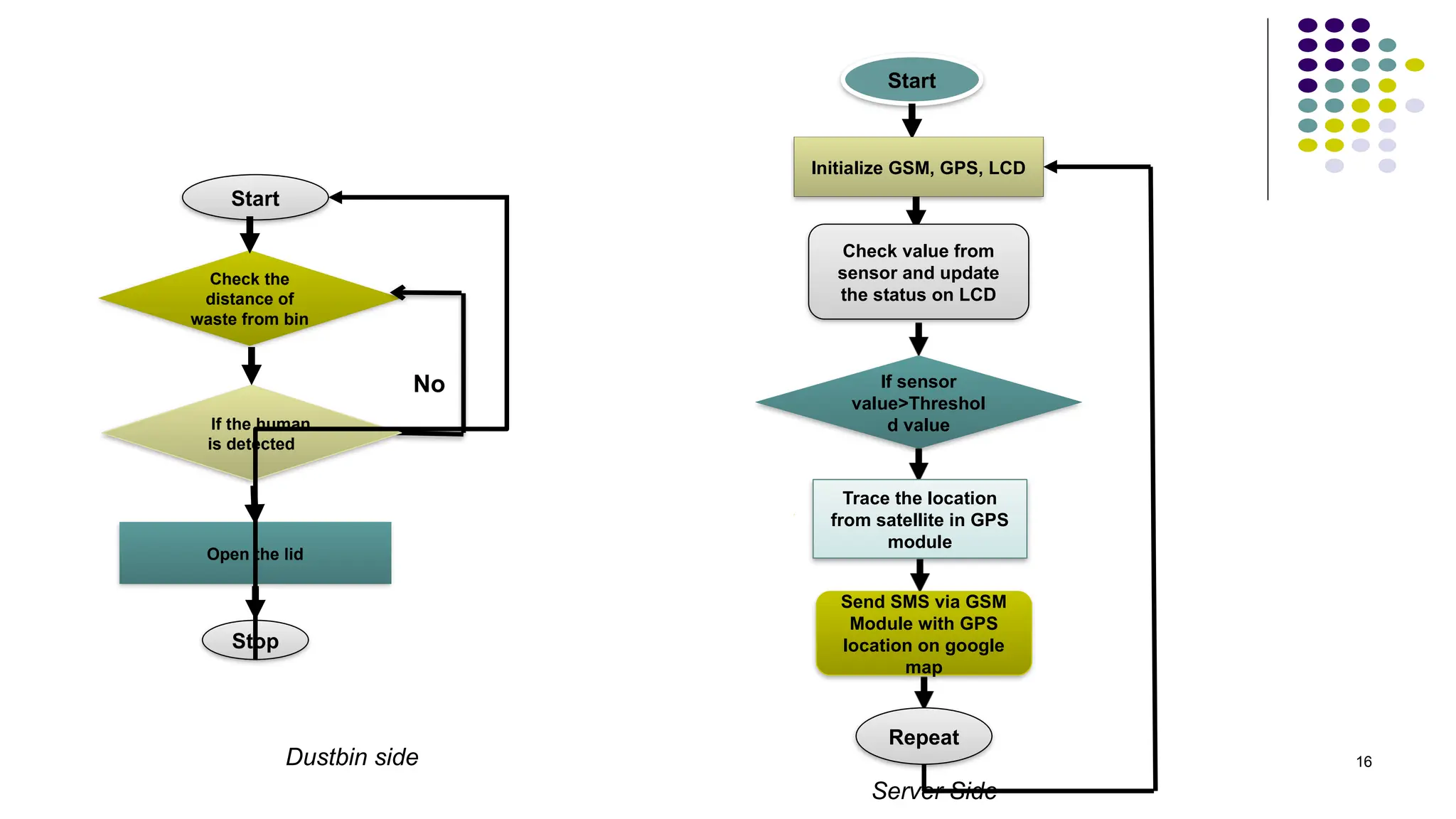
No
Yes
Yes
Dustbin side
Server Side
Start
Check the
distance of
waste from bin
Open the lid
If the human
is detected
Stop
Start
Initialize GSM, GPS, LCD
Check value from
sensor and update
the status on LCD
If sensor
value>Threshol
d value
Trace the location
from satellite in GPS
module
Send SMS via GSM
Module with GPS
location on google
map
Repeat
17
Advantages:
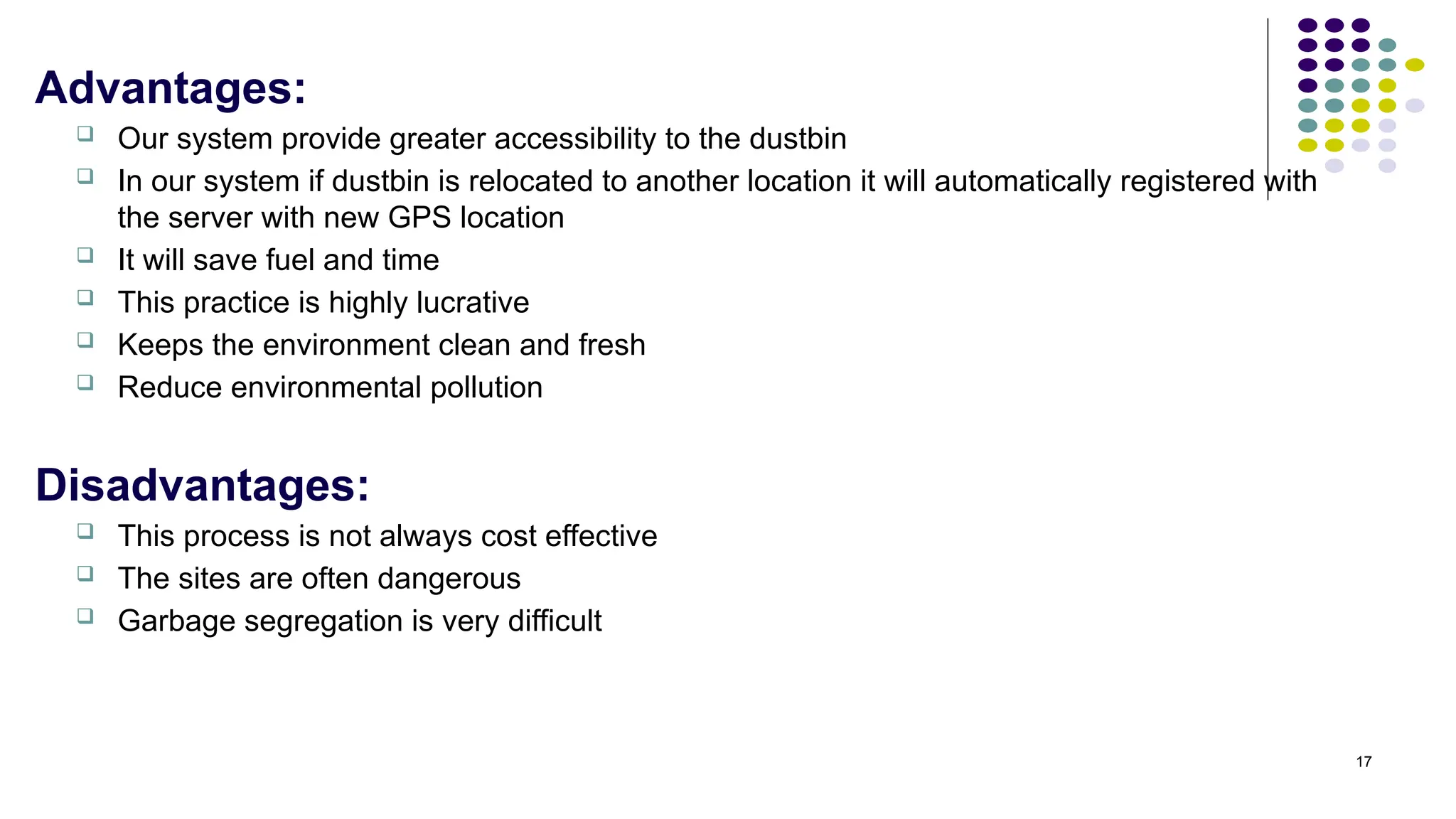
 Our system provide greater accessibility to the dustbin
 In our system if dustbin is relocated to another location it will automatically registered with
the server with new GPS location
 It will save fuel and time
 This practice is highly lucrative
 Keeps the environment clean and fresh
 Reduce environmental pollution
Disadvantages:
 This process is not always cost effective
 The sites are often dangerous
 Garbage segregation is very difficult
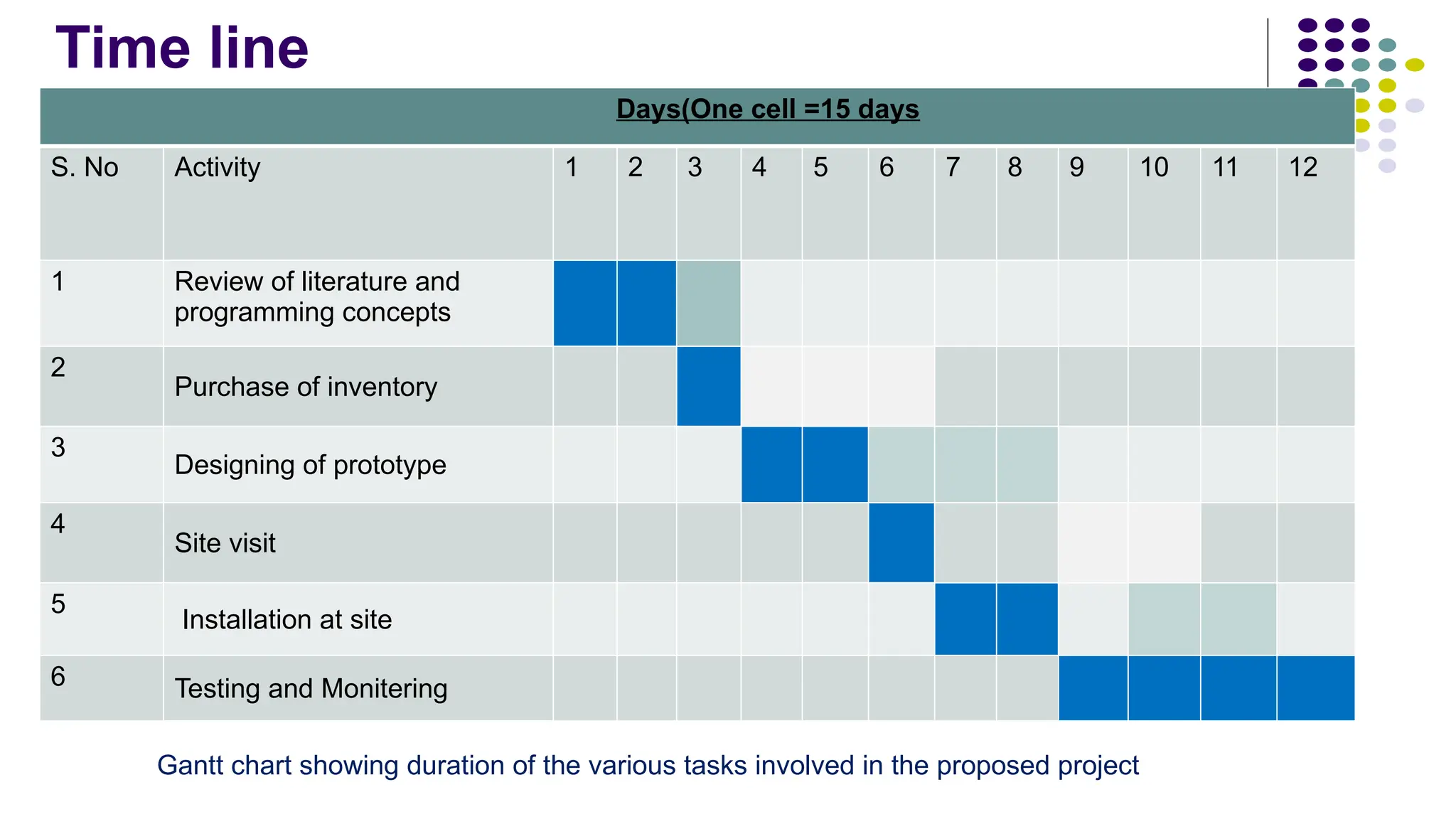
Time line
Days(One cell =15 days
S. No Activity 1 2 3 4 5 6 7 8 9 10 11 12
1 Review of literature and
programming concepts
2
Purchase of inventory
3
Designing of prototype
4
Site visit
5
Installation at site
6 Testing and Monitering
Gantt chart showing duration of the various tasks involved in the proposed project
19
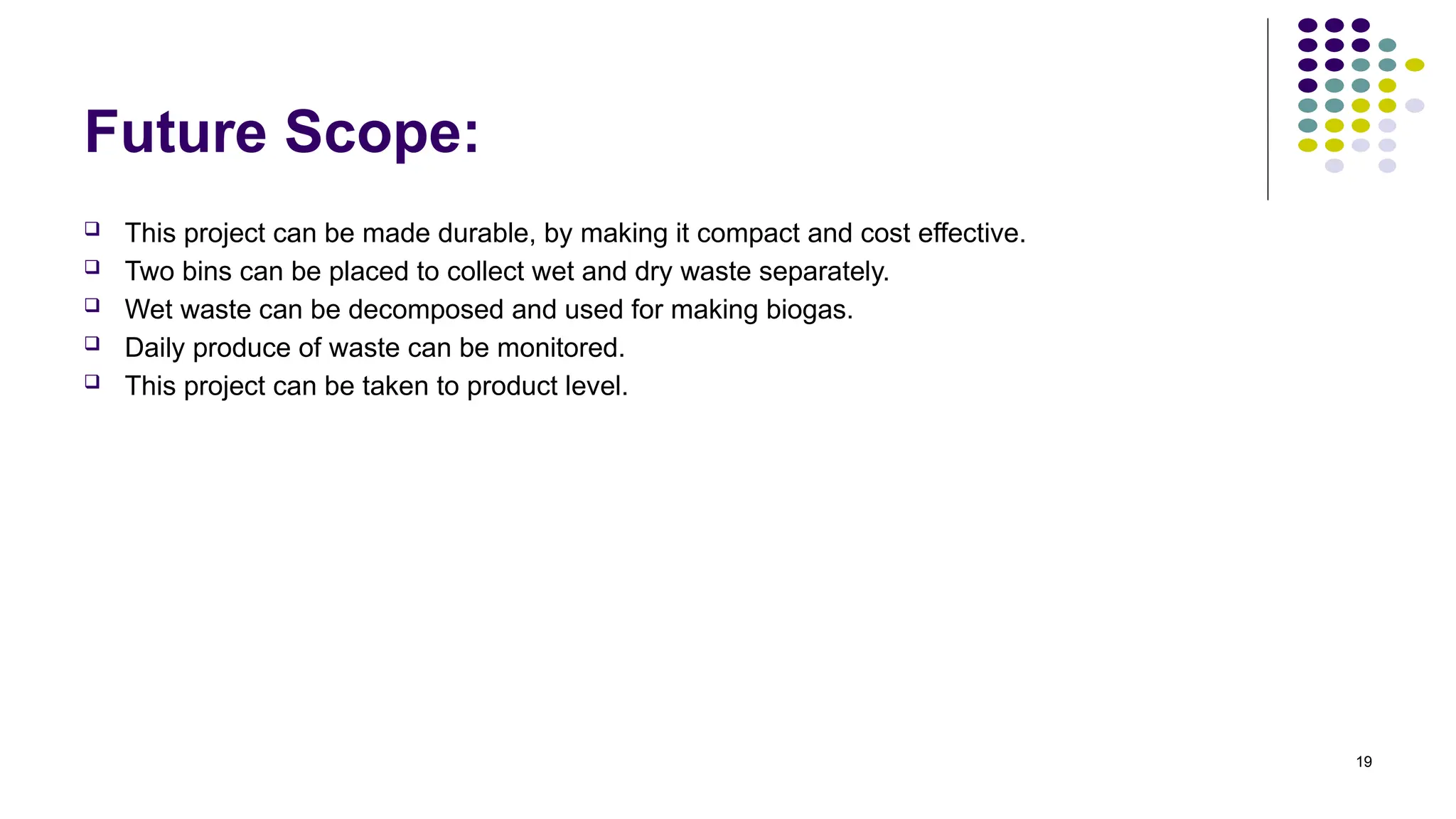
Future Scope:
 This project can be made durable, by making it compact and cost effective.
 Two bins can be placed to collect wet and dry waste separately.
 Wet waste can be decomposed and used for making biogas.
 Daily produce of waste can be monitored.
 This project can be taken to product level.
20
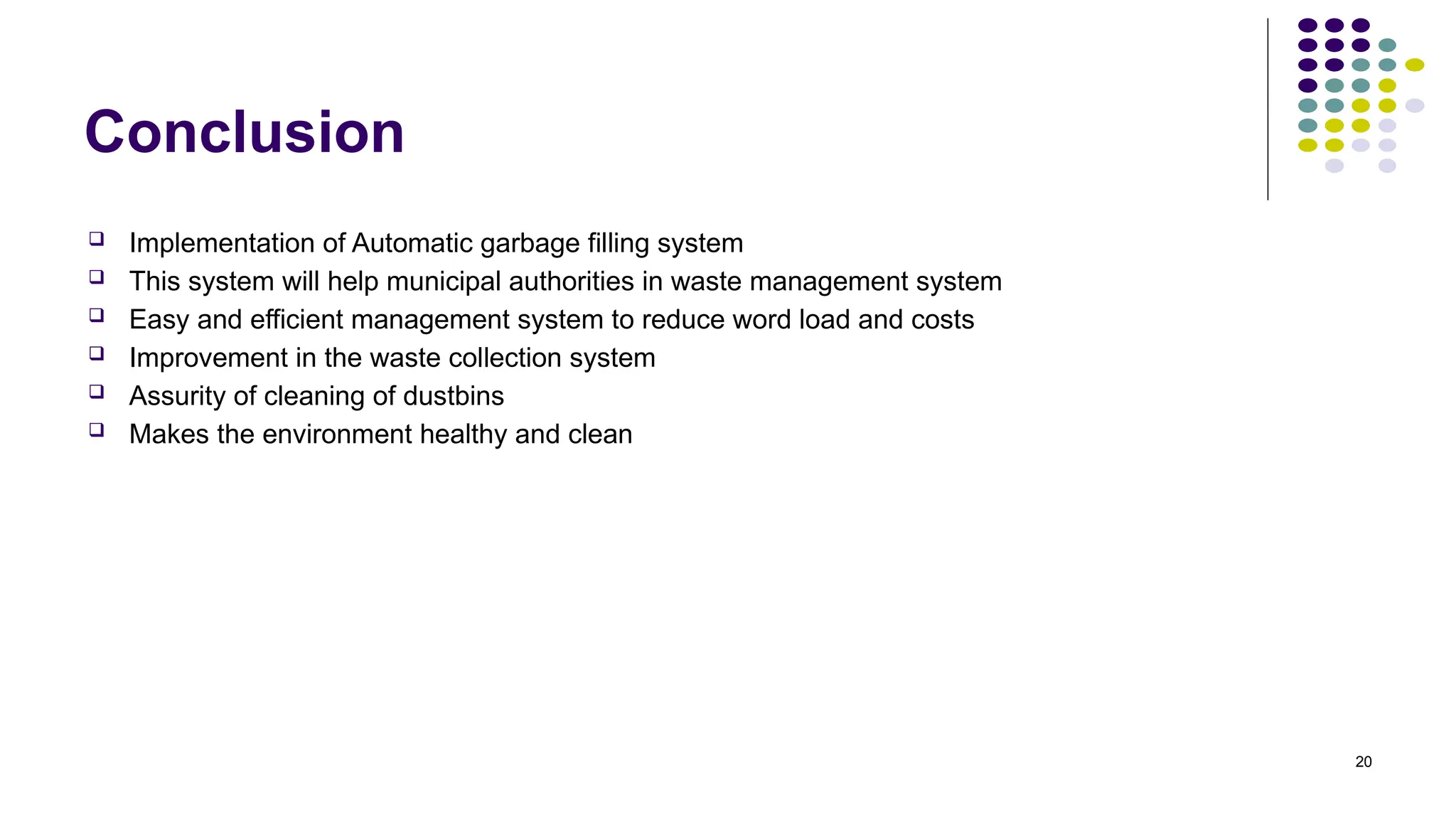
Conclusion
 Implementation of Automatic garbage filling system
 This system will help municipal authorities in waste management system
 Easy and efficient management system to reduce word load and costs
 Improvement in the waste collection system
 Assurity of cleaning of dustbins
 Makes the environment healthy and clean
21
Reference
 Project under Unnat Bharat Abhiyan 2.0 by JSS Academy of Technical Education, Noida UBA
Coordinator. Dr. Baidyanath Ram Prajpati.
 A project report by U. NAGRAJU(16MCM0004), RITU MISHRA(16MCM0003),
(RAJKUMAR(16MCM0001) VIT University.
 S.S . Navghane, M.S. Killedar, Dr.V.M Rohokale,l IoT based garbage and waste collection Binl,
May2016
 Meghana K C Dr. K R Nataraj, IOT based intelligent bin for smart cities
 http://circuitdigest.com/microcontroller-project/iotsmart dustbin using esp8266.
 http://www.instructable.com/id/smart dustbin using IOT.
 [7] Selvaraj K, Chakrapani A. Smart dustbin monitoring system using LAN Server and Arduino.
International Journal of Advances in Computer and Electronics Engineering. 2017 Apr;2(4):20-3.
 [4] Anushri G, Manikandan A, Nivas P, Vignesh K. Garbage Monitoring System Using Arduino
 https://github.com/sourabhdeshmukh/Smart-Dustbin
 http://help.blynk.cc/how-to-connect-different-hardware-with-blynk/esp8266/nodemcu
 http://help.blynk.cc/getting-started-library-auth-token-code-examples/blynk-basics/howto-dis play-any-
sensor-data-in-blynk app
22

Presentation 1. an lot based smart dustbinpptx

  • 1.
    1 An IoT BasedSmart Dustbin
  • 2.
    2 Title: An IOTBased Smart Dustbin Group Members Afshan Bashir 13 Anum Bashir 23 Khansa Nadeem 44 Supervisor: Engr.Aamir Aziz Butt Department of Computer science & Information Technology Woman University of Bagh AJK
  • 3.
    3 Contents:  Problem statement Introduction  Literature survey  Objectives/Goals  Existing system  Proposed System  Methodology  System Architecture  System Design  Implementation  Advantages and disadvantages  Future scope  Conclusion  References
  • 4.
    4 Problem statement  Lackof suitable garbage collection method  Sanitation crews visiting empty trash bins generate unnecessary costs  Wastage of time and fuel  Overflowing of garbage increase pollution and reduces an area’s natural beauty  Unhealthy environment
  • 5.
    5 Introduction  Power ofIoT  Increase in waste production.  Cleanliness of environment.  Manual system of dustbins.  Individuals laziness to throw garbage at right place.  Overflowing of common public dustbins.  Solution to the problems ‘Smart dustbin’.  Hardware requirements(i.e. Lilygo T.PCIE with Sim 868(GSM, GPRS module, Esp32 module), Ultrasonic Sensor, load sensor.  Software requirements( Arduino IDE, Blynk app)  An efficient system
  • 6.
    6 Literature Survey Sr.no Nameof paper Author Existing system Published Elements 1 Smart dustbin Using Arduino MamtaPandey , AnamikaGowala MrinalJyoti Goswami, ChinmoySaikia And Dr. Dibyajyoti Bora IJSREM August 2017 A smart waste bin consist of a smart sensor 2 IOT based university Garbage monitoring system for healthy environment for students Muhammad Nasir Khan, Fawad Naseer ICSC Fab 2020 Garbage monitoring system using IOT protocol 3 Smart Garbage monitoring and clearance system using IOT Vinoth Kumar, Senthil Kumaran, Krishna Kumar& Muhantesh Mathapati4 IEEE August 2017 IOT based waste management system which checks the waste level over the dustbin by using sensor system
  • 7.
    7 Literature Survey Sr.no Nameof paper Author Existing system e Published Elements 4 IOT based garbage monitoring system using Arduino Prateek Sarkar, Md. Aasim Anwar, Rajeshwar Dutta, AEIE & RCC institute of IT May 2018 Automation of waste management using sensors and Arduino 5 Smart dustbin(Waste management system) Tilogu Maddileti, Harish Kurakula IJST Feb 2020 Waste management using NodeMCU and sensors
  • 8.
    Objective/goals:  To design"Smart Dustbin” which is a GSM enabled bin which automatically detects the garbage level and sends message to respective municipal authorities updating the status of the bin.  Reduce costs by tasking sanitation crews with visiting only full bins.  To protect recyclable material from contamination.  No contact touch between dustbin and person so, prevention from germs and disease.  To make surroundings clean and healthy. 8
  • 9.
    9 Existing System  GauravMakde* Ashutost Bele* Vaibhav khapekar* Nidhi Gajarlwar* Sakshi Ghabhiye developed “An IOT based Garbage Collection Method using NodeMCU along with sensors”.  ArifinN* Asyikin* Aulia A* Shahidi Subandi worked on “Design and Implementation of smart dustbin using Arduino Microcontroller”.  Muhammad Nasir Khan* Fawad Naseer from the university of Lahore developed an IoT based Garbage monitoring system for healthy environment”.
  • 10.
    10 Proposed System  Realtime waste management system to check the fill level of dustbin whether the dustbins are full or not.  The lid will open automatically when any object come closer to sensing area.  Check the status of each and every dustbin so that the concern authority can send the garbage collection vehicle.  Location of the dustbin is detected( through signal coverage from sim-card with GSM and GPRS in Lilygo T.PCIE  Detection of level of dustbin using ultrasonic sensor.  Load sensor to measure the weight of the dustbin.  Software requirements like Blynk app, Arduino IDE.
  • 11.
  • 12.
  • 13.
  • 14.
  • 15.
    15 Implementation  Esp32 withMQ2  Esp32 with MQ3  Esp32 with sim808  Esp32 with Blynk
  • 16.
    16 No Yes Yes Dustbin side Server Side Start Checkthe distance of waste from bin Open the lid If the human is detected Stop Start Initialize GSM, GPS, LCD Check value from sensor and update the status on LCD If sensor value>Threshol d value Trace the location from satellite in GPS module Send SMS via GSM Module with GPS location on google map Repeat
  • 17.
    17 Advantages:  Our systemprovide greater accessibility to the dustbin  In our system if dustbin is relocated to another location it will automatically registered with the server with new GPS location  It will save fuel and time  This practice is highly lucrative  Keeps the environment clean and fresh  Reduce environmental pollution Disadvantages:  This process is not always cost effective  The sites are often dangerous  Garbage segregation is very difficult
  • 18.
    Time line Days(One cell=15 days S. No Activity 1 2 3 4 5 6 7 8 9 10 11 12 1 Review of literature and programming concepts 2 Purchase of inventory 3 Designing of prototype 4 Site visit 5 Installation at site 6 Testing and Monitering Gantt chart showing duration of the various tasks involved in the proposed project
  • 19.
    19 Future Scope:  Thisproject can be made durable, by making it compact and cost effective.  Two bins can be placed to collect wet and dry waste separately.  Wet waste can be decomposed and used for making biogas.  Daily produce of waste can be monitored.  This project can be taken to product level.
  • 20.
    20 Conclusion  Implementation ofAutomatic garbage filling system  This system will help municipal authorities in waste management system  Easy and efficient management system to reduce word load and costs  Improvement in the waste collection system  Assurity of cleaning of dustbins  Makes the environment healthy and clean
  • 21.
    21 Reference  Project underUnnat Bharat Abhiyan 2.0 by JSS Academy of Technical Education, Noida UBA Coordinator. Dr. Baidyanath Ram Prajpati.  A project report by U. NAGRAJU(16MCM0004), RITU MISHRA(16MCM0003), (RAJKUMAR(16MCM0001) VIT University.  S.S . Navghane, M.S. Killedar, Dr.V.M Rohokale,l IoT based garbage and waste collection Binl, May2016  Meghana K C Dr. K R Nataraj, IOT based intelligent bin for smart cities  http://circuitdigest.com/microcontroller-project/iotsmart dustbin using esp8266.  http://www.instructable.com/id/smart dustbin using IOT.  [7] Selvaraj K, Chakrapani A. Smart dustbin monitoring system using LAN Server and Arduino. International Journal of Advances in Computer and Electronics Engineering. 2017 Apr;2(4):20-3.  [4] Anushri G, Manikandan A, Nivas P, Vignesh K. Garbage Monitoring System Using Arduino  https://github.com/sourabhdeshmukh/Smart-Dustbin  http://help.blynk.cc/how-to-connect-different-hardware-with-blynk/esp8266/nodemcu  http://help.blynk.cc/getting-started-library-auth-token-code-examples/blynk-basics/howto-dis play-any- sensor-data-in-blynk app
  • 22.