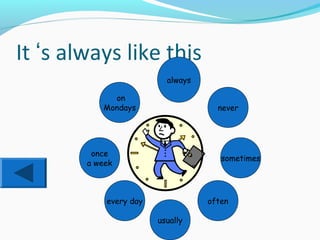
It ‘s always like this
always
on
Mondays
sometimes
never
often
once
a week
usually
every day
PRESENT SIMPLE
We use the Present Simple to describe
habits, facts, states and regular
actions.
It is the most common tense in English.
First:
We will divide the Pronouns into 2 groups.
I You We They
He She It
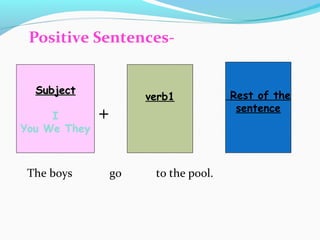
Positive Sentences-
+ +
The boys go to the pool.
SubjectSubject
I
You We They
verb1 Rest of the
sentence
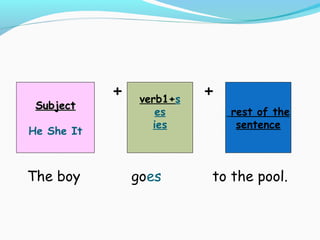
+ +
The boy goes to the pool.
SubjectSubject
He She It
verb1+s
es
ies
rest of the
sentence
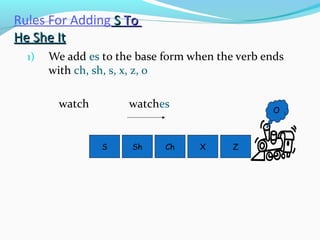
Rules For Adding SS ToTo
He She ItHe She It
1) We add es to the base form when the verb ends
with ch, sh, s, x, z, o
watch watches
S ZSh XCh
O
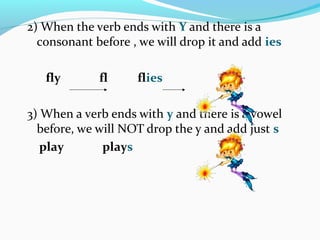
2) When the verb ends with Y and there is a
consonant before , we will drop it and add ies
fly fl flies
3) When a verb ends with y and there is a vowel
before, we will NOT drop the y and add just s
play plays
LETLET’’S PRACTISES PRACTISE
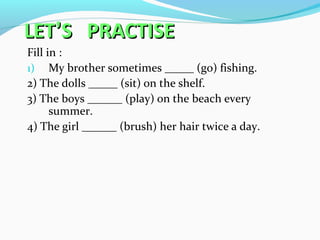
Fill in :
1) My brother sometimes _____ (go) fishing.
2) The dolls _____ (sit) on the shelf.
3) The boys ______ (play) on the beach every
summer.
4) The girl ______ (brush) her hair twice a day.
LETLET’’S CHECKS CHECK
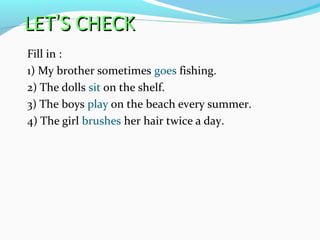
Fill in :
1) My brother sometimes goes fishing.
2) The dolls sit on the shelf.
3) The boys play on the beach every summer.
4) The girl brushes her hair twice a day.
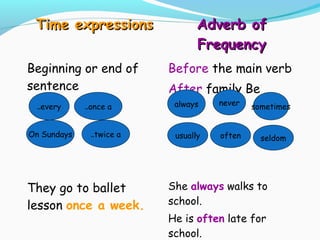
Time expressionsTime expressions Adverb ofAdverb of
FrequencyFrequency
Beginning or end of
sentence
They go to ballet
lesson once a week.
Before the main verb
After family Be
She always walks to
school.
He is often late for
school.
always never sometimes
oftenusually seldom
every.. once a..
On Sundays twice a..
Check YourselfCheck Yourself
Double click on the sites
www.homepages.ihug.com.au/%7Eadelegc/grammar/present_simple/pres_simple3.html
http://www.homepages.ihug.com.au/%7Eadelegc/grammar/present_simple/pres_simple4.html
http://www.agendaweb.org/verb.htm

Present simple

  • 2.
    It ‘s alwayslike this always on Mondays sometimes never often once a week usually every day
  • 3.
    PRESENT SIMPLE We usethe Present Simple to describe habits, facts, states and regular actions. It is the most common tense in English.
  • 4.
    First: We will dividethe Pronouns into 2 groups. I You We They He She It
  • 5.
    Positive Sentences- + + Theboys go to the pool. SubjectSubject I You We They verb1 Rest of the sentence
  • 6.
    + + The boygoes to the pool. SubjectSubject He She It verb1+s es ies rest of the sentence
  • 7.
    Rules For AddingSS ToTo He She ItHe She It 1) We add es to the base form when the verb ends with ch, sh, s, x, z, o watch watches S ZSh XCh O
  • 8.
    2) When theverb ends with Y and there is a consonant before , we will drop it and add ies fly fl flies 3) When a verb ends with y and there is a vowel before, we will NOT drop the y and add just s play plays
  • 9.
    LETLET’’S PRACTISES PRACTISE Fillin : 1) My brother sometimes _____ (go) fishing. 2) The dolls _____ (sit) on the shelf. 3) The boys ______ (play) on the beach every summer. 4) The girl ______ (brush) her hair twice a day.
  • 10.
    LETLET’’S CHECKS CHECK Fillin : 1) My brother sometimes goes fishing. 2) The dolls sit on the shelf. 3) The boys play on the beach every summer. 4) The girl brushes her hair twice a day.
  • 11.
    Time expressionsTime expressionsAdverb ofAdverb of FrequencyFrequency Beginning or end of sentence They go to ballet lesson once a week. Before the main verb After family Be She always walks to school. He is often late for school. always never sometimes oftenusually seldom every.. once a.. On Sundays twice a..
  • 12.
    Check YourselfCheck Yourself Doubleclick on the sites www.homepages.ihug.com.au/%7Eadelegc/grammar/present_simple/pres_simple3.html http://www.homepages.ihug.com.au/%7Eadelegc/grammar/present_simple/pres_simple4.html http://www.agendaweb.org/verb.htm