The Colon: a sentence 
gateway 
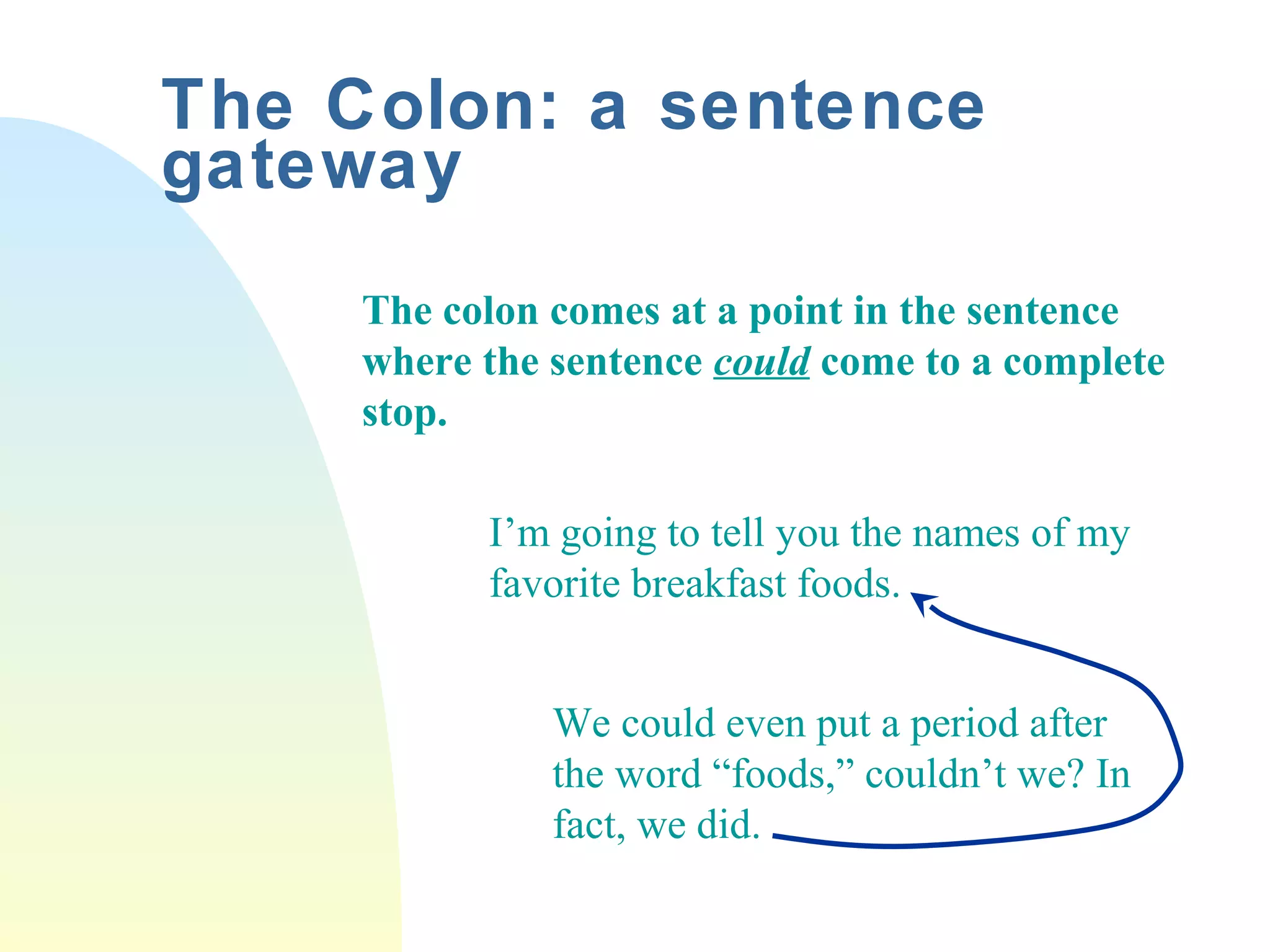
The colon comes at a point in the sentence 
where the sentence could come to a complete 
stop. 
I’m going to tell you the names of my 
favorite breakfast foods. 
We could even put a period after 
the word “foods,” couldn’t we? In 
fact, we did.
The Colon: a 
sentence 
gateway 
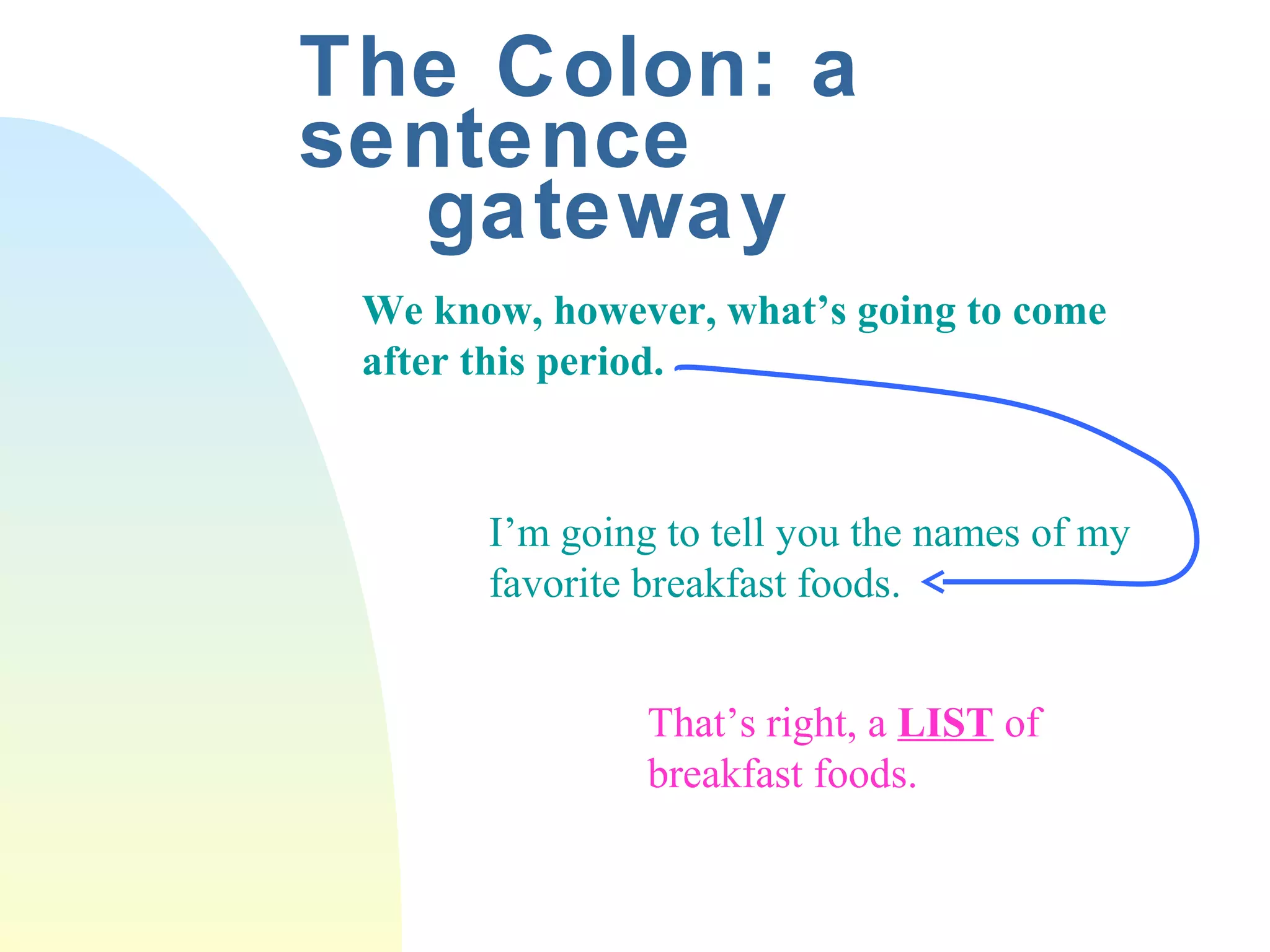
We know, however, what’s going to come 
after this period. 
I’m going to tell you the names of my 
favorite breakfast foods. 
That’s right, a LIST of 
breakfast foods.
The Colon: a 
sentence 
gateway 
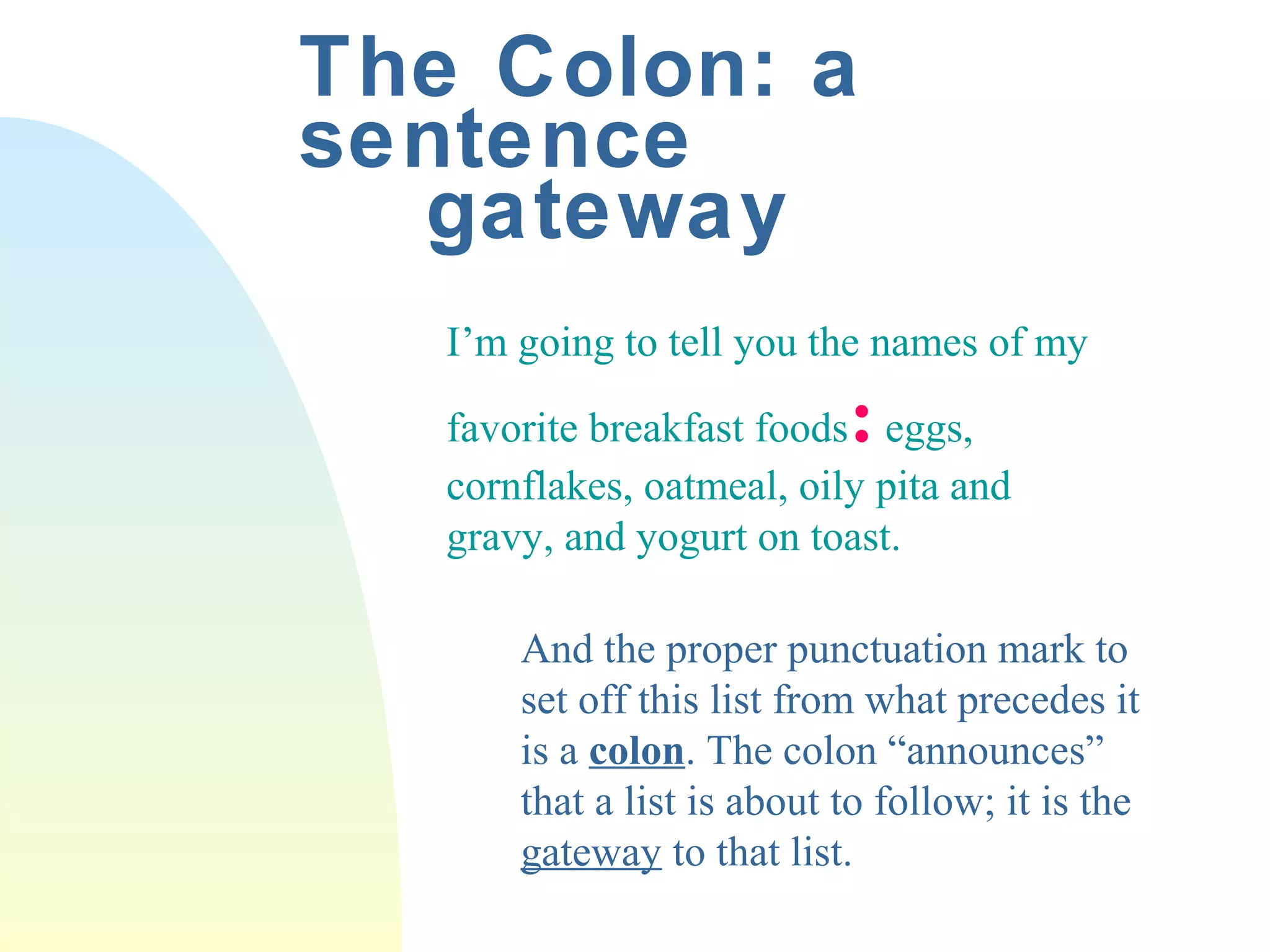
I’m going to tell you the names of my 
favorite breakfast foods: eggs, 
cornflakes, oatmeal, oily pita and 
gravy, and yogurt on toast. 
And the proper punctuation mark to 
set off this list from what precedes it 
is a colon. The colon “announces” 
that a list is about to follow; it is the 
gateway to that list.
The Colon: a 
sentence 
gateway 
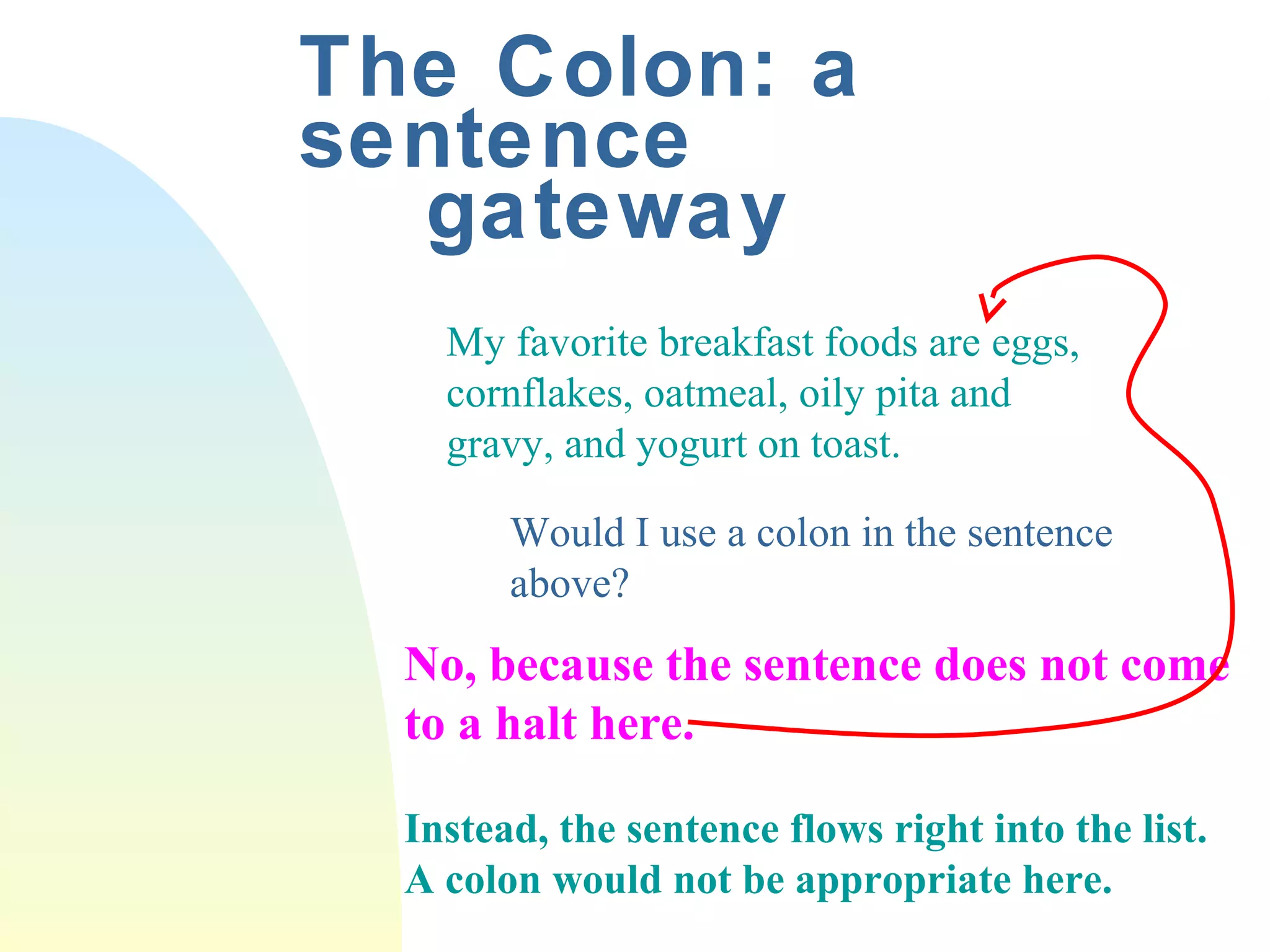
My favorite breakfast foods are eggs, 
cornflakes, oatmeal, oily pita and 
gravy, and yogurt on toast. 
Would I use a colon in the sentence 
above? 
No, because the sentence does not come 
to a halt here. 
Instead, the sentence flows right into the list. 
A colon would not be appropriate here.
The Colon: a 
sentence 
gateway 
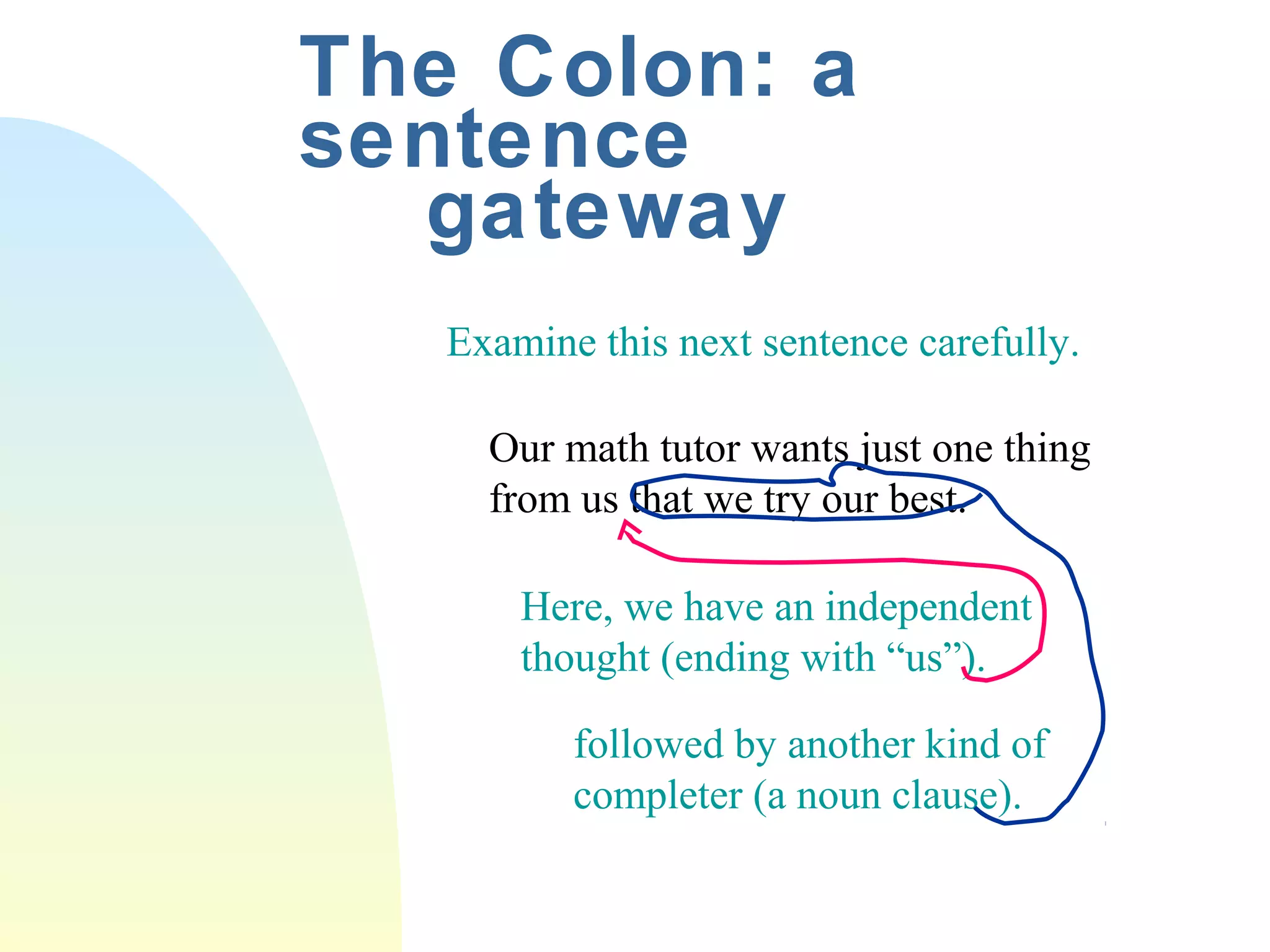
Examine this next sentence carefully. 
Our math tutor wants just one thing 
from us that we try our best. 
Here, we have an independent 
thought (ending with “us”). 
followed by another kind of 
completer (a noun clause).
The Colon: a 
sentence 
gateway 
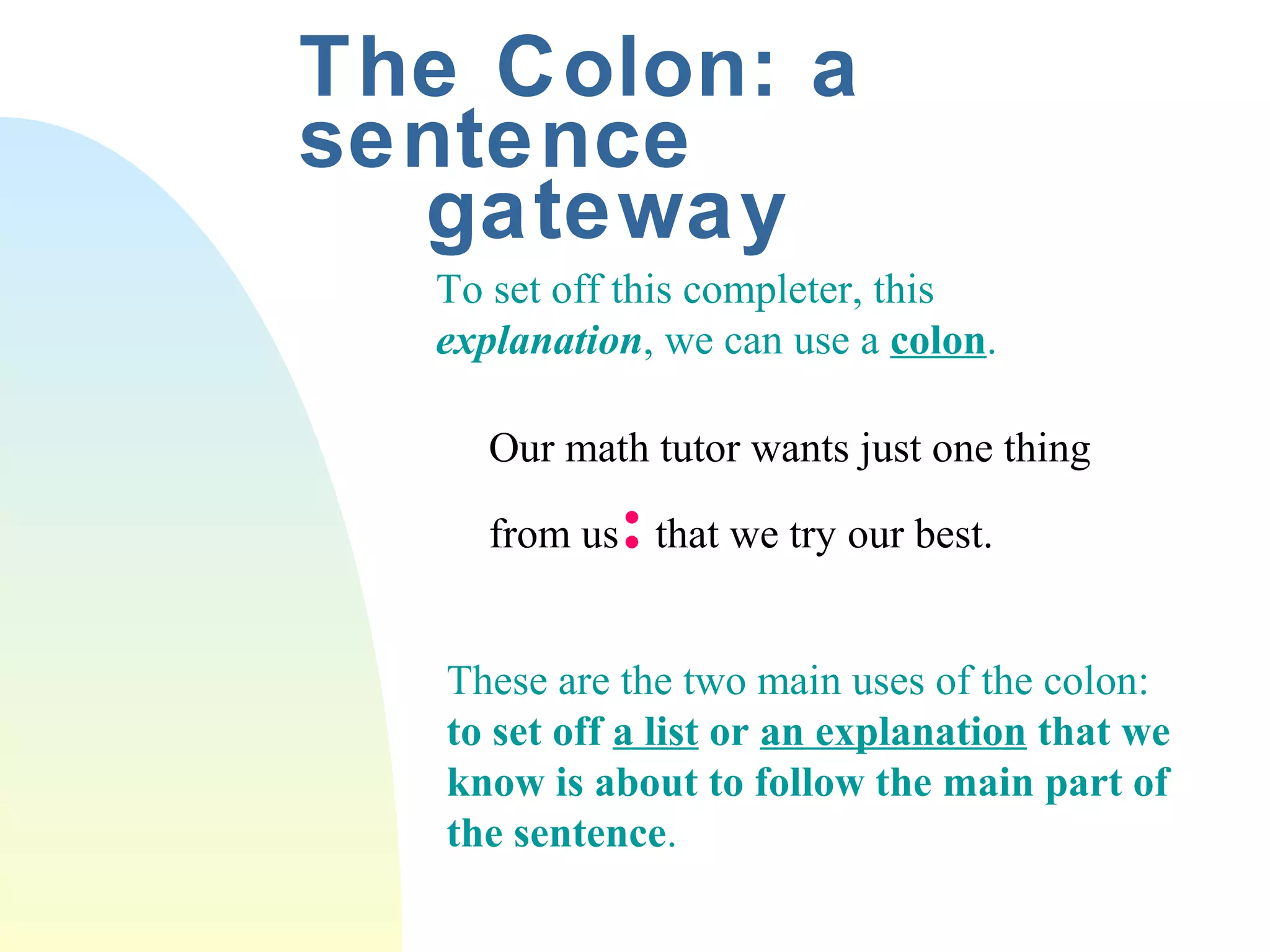
To set off this completer, this 
explanation, we can use a colon. 
Our math tutor wants just one thing 
from us: that we try our best. 
These are the two main uses of the colon: 
to set off a list or an explanation that we 
know is about to follow the main part of 
the sentence.
The Colon: a 
sentence 
gateway 
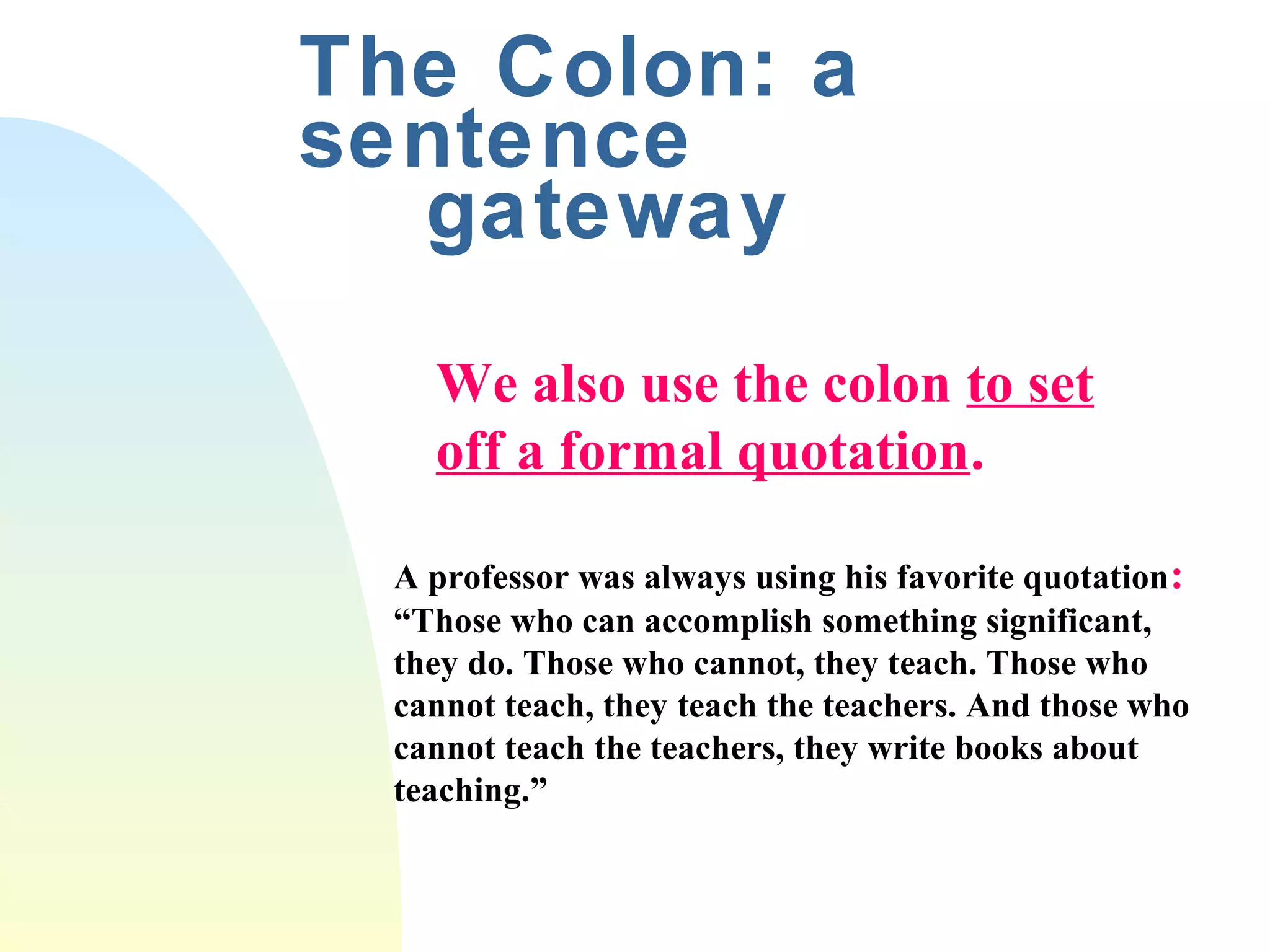
We also use the colon to set 
off a formal quotation. 
A professor was always using his favorite quotation: 
“Those who can accomplish something significant, 
they do. Those who cannot, they teach. Those who 
cannot teach, they teach the teachers. And those who 
cannot teach the teachers, they write books about 
teaching.”
The Colon: a 
sentence 
gateway 
Just remember that you usually know what 
is going to follow a colon: a list, an 
explanation, or a formal quotation. 
You have now mastered the uses of the colon, a 
very handy device in the punctuation of your 
sentences.

The colon

  • 1.
    The Colon: asentence gateway The colon comes at a point in the sentence where the sentence could come to a complete stop. I’m going to tell you the names of my favorite breakfast foods. We could even put a period after the word “foods,” couldn’t we? In fact, we did.
  • 2.
    The Colon: a sentence gateway We know, however, what’s going to come after this period. I’m going to tell you the names of my favorite breakfast foods. That’s right, a LIST of breakfast foods.
  • 3.
    The Colon: a sentence gateway I’m going to tell you the names of my favorite breakfast foods: eggs, cornflakes, oatmeal, oily pita and gravy, and yogurt on toast. And the proper punctuation mark to set off this list from what precedes it is a colon. The colon “announces” that a list is about to follow; it is the gateway to that list.
  • 4.
    The Colon: a sentence gateway My favorite breakfast foods are eggs, cornflakes, oatmeal, oily pita and gravy, and yogurt on toast. Would I use a colon in the sentence above? No, because the sentence does not come to a halt here. Instead, the sentence flows right into the list. A colon would not be appropriate here.
  • 5.
    The Colon: a sentence gateway Examine this next sentence carefully. Our math tutor wants just one thing from us that we try our best. Here, we have an independent thought (ending with “us”). followed by another kind of completer (a noun clause).
  • 6.
    The Colon: a sentence gateway To set off this completer, this explanation, we can use a colon. Our math tutor wants just one thing from us: that we try our best. These are the two main uses of the colon: to set off a list or an explanation that we know is about to follow the main part of the sentence.
  • 7.
    The Colon: a sentence gateway We also use the colon to set off a formal quotation. A professor was always using his favorite quotation: “Those who can accomplish something significant, they do. Those who cannot, they teach. Those who cannot teach, they teach the teachers. And those who cannot teach the teachers, they write books about teaching.”
  • 8.
    The Colon: a sentence gateway Just remember that you usually know what is going to follow a colon: a list, an explanation, or a formal quotation. You have now mastered the uses of the colon, a very handy device in the punctuation of your sentences.