Present Indefinite Tense
Pro-Active (English Language)
Shaikh Waqas Ahmed Behzad Prin.waqas@gmail.com
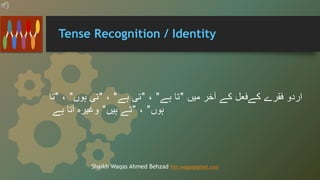
Tense Recognition / Identity
‫اردو‬
‫فقرے‬
‫کےفعل‬
‫کے‬
‫آخر‬
‫میں‬
"
‫تا‬
‫ہے‬
"
،
"
‫تی‬
‫ہے‬
"
،
"
‫تی‬
‫ہوں‬
"
،
"
‫تا‬
‫ہوں‬
"
،
"
‫تے‬
‫ہیں‬
"
‫وغیرہ‬
‫آتا‬
‫ہے‬
Shaikh Waqas Ahmed Behzad Prin.waqas@gmail.com
01
02
03
04
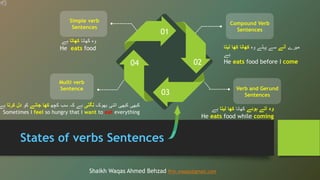
Simple verb
Sentences
Compound Verb
Sentences
Verb and Gerund
Sentences
Multi verb
Sentence
States of verbs Sentences
‫میرے‬
‫آنے‬
‫سے‬
‫پہلے‬
‫وہ‬
‫کھانا‬
‫کھا‬
‫لیتا‬
‫ہے‬
He eats food before I come
‫وہ‬
‫کھانا‬
‫کھاتا‬
‫ہے‬
He eats food
‫وہ‬
‫آتے‬
‫ہوئے‬
‫کھانا‬
‫کھا‬
‫لیتا‬
‫ہے‬
He eats food while coming
‫کبھی‬
‫کبھی‬
‫اتنی‬
‫بھوک‬
‫لگتی‬
‫ہے‬
‫کہ‬
‫سب‬
‫کچھ‬
‫کھا‬
‫جانے‬
‫کو‬
‫دل‬
‫کرتا‬
‫ہے‬
Sometimes I feel so hungry that I want to eat everything
Shaikh Waqas Ahmed Behzad Prin.waqas@gmail.com
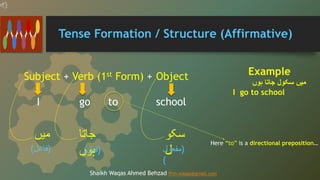
Tense Formation / Structure (Affirmative)
Subject + Verb (1st Form) + Object
I go to school
Shaikh Waqas Ahmed Behzad Prin.waqas@gmail.com
Example
‫میں‬
‫سکول‬
‫جاتا‬
‫ہوں‬
I go to school
Here “to” is a directional preposition…
‫میں‬ ‫سکو‬
‫ل‬
‫جاتا‬
‫ہوں‬ (
‫مفعول‬
)
(
‫فعل‬
)
(
‫فاعل‬
)
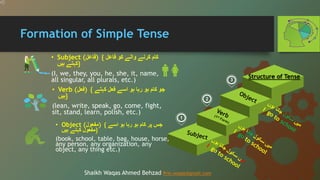
Formation of Simple Tense
• Subject (
‫فاعل‬
) { ‫فاعل‬ ‫کو‬ ‫والے‬ ‫کرنے‬ ‫کام‬
‫ہیں‬ ‫}کہتے‬
(I, we, they, you, he, she, it, name,
all singular, all plurals, etc.)
2
1
3
Structure of Tense
• Verb (
‫فعل‬
) { ‫کہتے‬ ‫فعل‬ ‫اسے‬ ‫ہو‬ ‫رہا‬ ‫ہو‬ ‫کام‬ ‫جو‬
‫}ہیں‬
(lean, write, speak, go, come, fight,
sit, stand, learn, polish, etc.)
• Object (
‫مفعول‬
) { ‫اسے‬ ‫ہو‬ ‫رہا‬ ‫ہو‬ ‫کام‬ ‫پر‬ ‫جس‬
‫کہتے‬ ‫مفعول‬
‫ہیں‬ }
(book, school, table, bag, house, horse,
any person, any organization, any
object, any thing etc.)
Shaikh Waqas Ahmed Behzad Prin.waqas@gmail.com
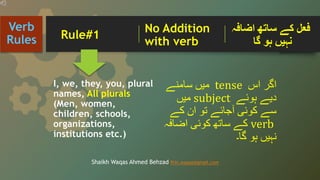
No Addition
with verb
I, we, they, you, plural
names, All plurals
(Men, women,
children, schools,
organizations,
institutions etc.)
‫اض‬ ‫ساتھ‬ ‫کے‬ ‫فعل‬
‫ا‬
‫فہ‬
‫گا‬ ‫ہو‬ ‫نہیں‬
‫اس‬ ‫اگر‬
tense
‫سامنے‬ ‫میں‬
‫ہوئے‬ ‫دیے‬
subject
‫میں‬
‫کے‬ ‫ان‬ ‫تو‬ ‫آجائے‬ ‫کوئی‬ ‫سے‬
verb
‫اضاف‬ ‫کوئی‬ ‫ساتھ‬ ‫کے‬
‫ہ‬
‫گا۔‬ ‫ہو‬ ‫نہیں‬
Verb
Rules
Shaikh Waqas Ahmed Behzad Prin.waqas@gmail.com
Rule#1
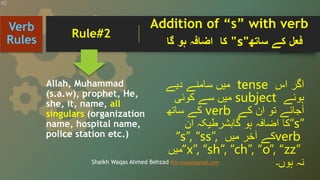
Allah, Muhammad
(s.a.w), prophet, He,
she, it, name, all
singulars (organization
name, hospital name,
police station etc.)
‫اگر‬
‫اس‬
tense
‫میں‬
‫سامنے‬
‫دیے‬
‫ہوئے‬
subject
‫میں‬
‫سے‬
‫کوئی‬
‫آجائے‬
‫تو‬
‫ان‬
‫کے‬
verb
‫کے‬
‫ساتھ‬
“s”
‫کا‬
‫اضافہ‬
‫ہو‬
‫گابشرطیکہ‬
‫ان‬
verb
‫کے‬
‫آخر‬
‫میں‬
“s”, “ss”,
“x”, “sh”, “ch”, “o”, “zz”
‫میں‬
‫نہ‬
‫ہوں۔‬
Verb
Rules
Shaikh Waqas Ahmed Behzad Prin.waqas@gmail.com
‫فعل‬
‫کے‬
‫ساتھ‬
"
s
"
‫کا‬
‫اضافہ‬
‫ہو‬
‫گا‬
Rule#2
Addition of “s” with verb
Allah, Muhammad (s.a.w),
prophet, Darood,
He, she, it, name, all
singulars (organization
name, hospital name,
police station etc.)
‫اگر‬
‫اس‬
tense
‫میں‬
‫سامنے‬
‫دیے‬
‫ہوئے‬
subject
‫میں‬
‫سے‬
‫کوئی‬
‫آجائے‬
‫اور‬
verb
‫کے‬
‫آخر‬
‫میں‬
“s”,
“ss”, “x”, “sh”, “ch”, “o”, “zz”
‫کا‬
‫اضافہ‬
‫ہو‬
‫تو‬
verb
‫کے‬
‫ساتھ‬
es
‫کا‬
‫اضافہ‬
‫ہو‬
‫گا۔‬
Verb
Rules
Shaikh Waqas Ahmed Behzad Prin.waqas@gmail.com
‫فعل‬
‫کے‬
‫ساتھ‬
“
es
"
‫کا‬
‫اضافہ‬
‫ہو‬
‫گا‬
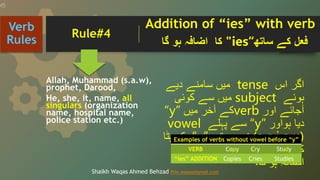
Rule#3
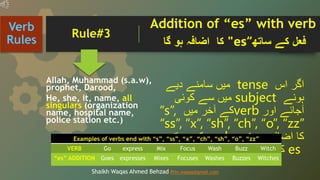
Addition of “es” with verb
Examples of verbs end with “s”, “ss”, “x”, “ch”, “sh”, “o”, “zz”
VERB Go express Mix Focus Wash Buzz Witch
“es” ADDITION Goes expresses Mixes Focuses Washes Buzzes Witches
Allah, Muhammad (s.a.w),
prophet, Darood,
He, she, it, name, all
singulars (organization
name, hospital name,
police station etc.)
‫اگر‬
‫اس‬
tense
‫میں‬
‫سامنے‬
‫دیے‬
‫ہوئے‬
subject
‫میں‬
‫سے‬
‫کوئی‬
‫آجائے‬
‫اور‬
verb
‫کے‬
‫آخر‬
‫میں‬
“y”
‫دیا‬
‫ہواور‬
“y”
‫سے‬
‫پہلے‬
vowel
(a,e,i,o,u)
‫نہ‬
‫ہو‬
‫تو‬
“y”
‫کو‬
‫ہٹا‬
‫کر‬
verb
‫کے‬
‫ساتھ‬
ies
‫کا‬
‫اضافہ‬
‫ہو‬
‫گا۔‬
Verb
Rules
Shaikh Waqas Ahmed Behzad Prin.waqas@gmail.com
‫فعل‬
‫کے‬
‫ساتھ‬
“
ies
"
‫کا‬
‫اضافہ‬
‫ہو‬
‫گا‬
Rule#4
Addition of “ies” with verb
Examples of verbs without vowel before “y”
VERB Copy Cry Study
“ies” ADDITION Copies Cries Studies
Present Indefinite Tense
After taking all the lectures on Present Indefinite Tense you will be able to make any sentence of
this Tense easily.
So you are requested to watch all the lectures of this Tense and like this video, share and subscribe
this channel.
Present Indefinite Tense
‫اس‬ ‫کہ‬ ‫گے‬ ‫جائیں‬ ‫ہو‬ ‫قابل‬ ‫اس‬ ‫آپ‬ ‫بعد‬ ‫کے‬ ‫لینے‬ ‫لیکچرز‬ ‫تمام‬ ‫کے‬
Tense
‫بھی‬ ‫کوئی‬ ‫کا‬
sentence
‫سے‬ ‫آسانی‬
‫سکیں۔‬ ‫بنا‬
‫اس‬ ‫کہ‬ ‫ہے‬ ‫گزارش‬ ‫سے‬ ‫آپ‬ ‫لیے‬ ‫اس‬
Tense
‫کو‬ ‫چینل‬ ‫اس‬ ‫اور‬ ‫کریں‬ ‫شئیر‬ ، ‫کریں‬ ‫الئیک‬ ‫کو‬ ‫ویڈیو‬ ‫اس‬ ‫اور‬ ‫دیکھیں‬ ‫ضرور‬ ‫لیکچرز‬ ‫تمام‬ ‫کے‬
‫کریں۔‬ ‫سبسکرائب‬

Present Indefinite Tense lec 1.pptx

  • 2.
    Present Indefinite Tense Pro-Active(English Language) Shaikh Waqas Ahmed Behzad Prin.waqas@gmail.com
  • 3.
    Tense Recognition /Identity ‫اردو‬ ‫فقرے‬ ‫کےفعل‬ ‫کے‬ ‫آخر‬ ‫میں‬ " ‫تا‬ ‫ہے‬ " ، " ‫تی‬ ‫ہے‬ " ، " ‫تی‬ ‫ہوں‬ " ، " ‫تا‬ ‫ہوں‬ " ، " ‫تے‬ ‫ہیں‬ " ‫وغیرہ‬ ‫آتا‬ ‫ہے‬ Shaikh Waqas Ahmed Behzad Prin.waqas@gmail.com
  • 4.
    01 02 03 04 Simple verb Sentences Compound Verb Sentences Verband Gerund Sentences Multi verb Sentence States of verbs Sentences ‫میرے‬ ‫آنے‬ ‫سے‬ ‫پہلے‬ ‫وہ‬ ‫کھانا‬ ‫کھا‬ ‫لیتا‬ ‫ہے‬ He eats food before I come ‫وہ‬ ‫کھانا‬ ‫کھاتا‬ ‫ہے‬ He eats food ‫وہ‬ ‫آتے‬ ‫ہوئے‬ ‫کھانا‬ ‫کھا‬ ‫لیتا‬ ‫ہے‬ He eats food while coming ‫کبھی‬ ‫کبھی‬ ‫اتنی‬ ‫بھوک‬ ‫لگتی‬ ‫ہے‬ ‫کہ‬ ‫سب‬ ‫کچھ‬ ‫کھا‬ ‫جانے‬ ‫کو‬ ‫دل‬ ‫کرتا‬ ‫ہے‬ Sometimes I feel so hungry that I want to eat everything Shaikh Waqas Ahmed Behzad Prin.waqas@gmail.com
  • 5.
    Tense Formation /Structure (Affirmative) Subject + Verb (1st Form) + Object I go to school Shaikh Waqas Ahmed Behzad Prin.waqas@gmail.com Example ‫میں‬ ‫سکول‬ ‫جاتا‬ ‫ہوں‬ I go to school Here “to” is a directional preposition… ‫میں‬ ‫سکو‬ ‫ل‬ ‫جاتا‬ ‫ہوں‬ ( ‫مفعول‬ ) ( ‫فعل‬ ) ( ‫فاعل‬ )
  • 6.
    Formation of SimpleTense • Subject ( ‫فاعل‬ ) { ‫فاعل‬ ‫کو‬ ‫والے‬ ‫کرنے‬ ‫کام‬ ‫ہیں‬ ‫}کہتے‬ (I, we, they, you, he, she, it, name, all singular, all plurals, etc.) 2 1 3 Structure of Tense • Verb ( ‫فعل‬ ) { ‫کہتے‬ ‫فعل‬ ‫اسے‬ ‫ہو‬ ‫رہا‬ ‫ہو‬ ‫کام‬ ‫جو‬ ‫}ہیں‬ (lean, write, speak, go, come, fight, sit, stand, learn, polish, etc.) • Object ( ‫مفعول‬ ) { ‫اسے‬ ‫ہو‬ ‫رہا‬ ‫ہو‬ ‫کام‬ ‫پر‬ ‫جس‬ ‫کہتے‬ ‫مفعول‬ ‫ہیں‬ } (book, school, table, bag, house, horse, any person, any organization, any object, any thing etc.) Shaikh Waqas Ahmed Behzad Prin.waqas@gmail.com
  • 7.
    No Addition with verb I,we, they, you, plural names, All plurals (Men, women, children, schools, organizations, institutions etc.) ‫اض‬ ‫ساتھ‬ ‫کے‬ ‫فعل‬ ‫ا‬ ‫فہ‬ ‫گا‬ ‫ہو‬ ‫نہیں‬ ‫اس‬ ‫اگر‬ tense ‫سامنے‬ ‫میں‬ ‫ہوئے‬ ‫دیے‬ subject ‫میں‬ ‫کے‬ ‫ان‬ ‫تو‬ ‫آجائے‬ ‫کوئی‬ ‫سے‬ verb ‫اضاف‬ ‫کوئی‬ ‫ساتھ‬ ‫کے‬ ‫ہ‬ ‫گا۔‬ ‫ہو‬ ‫نہیں‬ Verb Rules Shaikh Waqas Ahmed Behzad Prin.waqas@gmail.com Rule#1
  • 8.
    Allah, Muhammad (s.a.w), prophet,He, she, it, name, all singulars (organization name, hospital name, police station etc.) ‫اگر‬ ‫اس‬ tense ‫میں‬ ‫سامنے‬ ‫دیے‬ ‫ہوئے‬ subject ‫میں‬ ‫سے‬ ‫کوئی‬ ‫آجائے‬ ‫تو‬ ‫ان‬ ‫کے‬ verb ‫کے‬ ‫ساتھ‬ “s” ‫کا‬ ‫اضافہ‬ ‫ہو‬ ‫گابشرطیکہ‬ ‫ان‬ verb ‫کے‬ ‫آخر‬ ‫میں‬ “s”, “ss”, “x”, “sh”, “ch”, “o”, “zz” ‫میں‬ ‫نہ‬ ‫ہوں۔‬ Verb Rules Shaikh Waqas Ahmed Behzad Prin.waqas@gmail.com ‫فعل‬ ‫کے‬ ‫ساتھ‬ " s " ‫کا‬ ‫اضافہ‬ ‫ہو‬ ‫گا‬ Rule#2 Addition of “s” with verb
  • 9.
    Allah, Muhammad (s.a.w), prophet,Darood, He, she, it, name, all singulars (organization name, hospital name, police station etc.) ‫اگر‬ ‫اس‬ tense ‫میں‬ ‫سامنے‬ ‫دیے‬ ‫ہوئے‬ subject ‫میں‬ ‫سے‬ ‫کوئی‬ ‫آجائے‬ ‫اور‬ verb ‫کے‬ ‫آخر‬ ‫میں‬ “s”, “ss”, “x”, “sh”, “ch”, “o”, “zz” ‫کا‬ ‫اضافہ‬ ‫ہو‬ ‫تو‬ verb ‫کے‬ ‫ساتھ‬ es ‫کا‬ ‫اضافہ‬ ‫ہو‬ ‫گا۔‬ Verb Rules Shaikh Waqas Ahmed Behzad Prin.waqas@gmail.com ‫فعل‬ ‫کے‬ ‫ساتھ‬ “ es " ‫کا‬ ‫اضافہ‬ ‫ہو‬ ‫گا‬ Rule#3 Addition of “es” with verb Examples of verbs end with “s”, “ss”, “x”, “ch”, “sh”, “o”, “zz” VERB Go express Mix Focus Wash Buzz Witch “es” ADDITION Goes expresses Mixes Focuses Washes Buzzes Witches
  • 10.
    Allah, Muhammad (s.a.w), prophet,Darood, He, she, it, name, all singulars (organization name, hospital name, police station etc.) ‫اگر‬ ‫اس‬ tense ‫میں‬ ‫سامنے‬ ‫دیے‬ ‫ہوئے‬ subject ‫میں‬ ‫سے‬ ‫کوئی‬ ‫آجائے‬ ‫اور‬ verb ‫کے‬ ‫آخر‬ ‫میں‬ “y” ‫دیا‬ ‫ہواور‬ “y” ‫سے‬ ‫پہلے‬ vowel (a,e,i,o,u) ‫نہ‬ ‫ہو‬ ‫تو‬ “y” ‫کو‬ ‫ہٹا‬ ‫کر‬ verb ‫کے‬ ‫ساتھ‬ ies ‫کا‬ ‫اضافہ‬ ‫ہو‬ ‫گا۔‬ Verb Rules Shaikh Waqas Ahmed Behzad Prin.waqas@gmail.com ‫فعل‬ ‫کے‬ ‫ساتھ‬ “ ies " ‫کا‬ ‫اضافہ‬ ‫ہو‬ ‫گا‬ Rule#4 Addition of “ies” with verb Examples of verbs without vowel before “y” VERB Copy Cry Study “ies” ADDITION Copies Cries Studies
  • 11.
    Present Indefinite Tense Aftertaking all the lectures on Present Indefinite Tense you will be able to make any sentence of this Tense easily. So you are requested to watch all the lectures of this Tense and like this video, share and subscribe this channel. Present Indefinite Tense ‫اس‬ ‫کہ‬ ‫گے‬ ‫جائیں‬ ‫ہو‬ ‫قابل‬ ‫اس‬ ‫آپ‬ ‫بعد‬ ‫کے‬ ‫لینے‬ ‫لیکچرز‬ ‫تمام‬ ‫کے‬ Tense ‫بھی‬ ‫کوئی‬ ‫کا‬ sentence ‫سے‬ ‫آسانی‬ ‫سکیں۔‬ ‫بنا‬ ‫اس‬ ‫کہ‬ ‫ہے‬ ‫گزارش‬ ‫سے‬ ‫آپ‬ ‫لیے‬ ‫اس‬ Tense ‫کو‬ ‫چینل‬ ‫اس‬ ‫اور‬ ‫کریں‬ ‫شئیر‬ ، ‫کریں‬ ‫الئیک‬ ‫کو‬ ‫ویڈیو‬ ‫اس‬ ‫اور‬ ‫دیکھیں‬ ‫ضرور‬ ‫لیکچرز‬ ‫تمام‬ ‫کے‬ ‫کریں۔‬ ‫سبسکرائب‬

Editor's Notes

  • #4 Notes to presenter: Description of what you learned in your own words on one side. Include information about the topic Details about the topic will also be helpful here. Tell the story of your learning experience. Just like a story there should always be a beginning, middle and an end. On the other side, you can add a graphic that provides evidence of what you learned. Feel free to use more than one slide to reflect upon your process. It also helps to add some video of your process.
  • #5 Notes to presenter: What did you think at first? What obstacles did you encounter along the way? How did you overcome those obstacles? What images can you add to support your process? This SmartArt allows you add images and text to help outline your process. If a picture is worth a thousand words, then pictures and words should help you communicate this reflection on learning perfectly! You can always click on Insert>SmartArt to change this graphic or select the graphic and click on the Design contextual menu to change the colors. Feel free to use more than one slide to reflect upon your process. It also helps to add some video of your process.
  • #6 Notes to presenter: Description of what you learned in your own words on one side. Include information about the topic Details about the topic will also be helpful here. Tell the story of your learning experience. Just like a story there should always be a beginning, middle and an end. On the other side, you can add a graphic that provides evidence of what you learned. Feel free to use more than one slide to reflect upon your process. It also helps to add some video of your process.
  • #7 Notes to presenter: What steps will you be taking as a result of this learning experience? Did you learn from any failed experiences? How will you do things differently? What advice will you give to others so they can learn from your experiences? How can you share what you learned with a real-world audience? Some examples of next steps might be: After delivering my first persuasive presentation, I am thinking about joining the debate team. After making my first film, I’m considering entering it in our school film festival or local film festival. After connecting with this career expert, I’d like to do some research on that career field because it sounds interesting to me. This SmartArt allows you add images and text to help outline your process. If a picture is worth a thousand words, then pictures and words should help you communicate this reflection on learning perfectly! You can always click on Insert>SmartArt to change this graphic or select the graphic and click on the Design contextual menu to change the colors. Feel free to use more than one slide to share your next steps. It also helps to add some video content to explain your message.
  • #8 Notes to presenter: What was important about this learning experience? How is it relevant to your course, yourself, or your society or community? Why is this significant? This SmartArt allows you add images and text to help outline your process. If a picture is worth a thousand words, then pictures and words should help you communicate this reflection on learning perfectly! You can always click on Insert>SmartArt to change this graphic or select the graphic and click on the Design contextual menu to change the colors.
  • #9 Notes to presenter: What was important about this learning experience? How is it relevant to your course, yourself, or your society or community? Why is this significant? This SmartArt allows you add images and text to help outline your process. If a picture is worth a thousand words, then pictures and words should help you communicate this reflection on learning perfectly! You can always click on Insert>SmartArt to change this graphic or select the graphic and click on the Design contextual menu to change the colors.
  • #10 Notes to presenter: What was important about this learning experience? How is it relevant to your course, yourself, or your society or community? Why is this significant? This SmartArt allows you add images and text to help outline your process. If a picture is worth a thousand words, then pictures and words should help you communicate this reflection on learning perfectly! You can always click on Insert>SmartArt to change this graphic or select the graphic and click on the Design contextual menu to change the colors.
  • #11 Notes to presenter: What was important about this learning experience? How is it relevant to your course, yourself, or your society or community? Why is this significant? This SmartArt allows you add images and text to help outline your process. If a picture is worth a thousand words, then pictures and words should help you communicate this reflection on learning perfectly! You can always click on Insert>SmartArt to change this graphic or select the graphic and click on the Design contextual menu to change the colors.