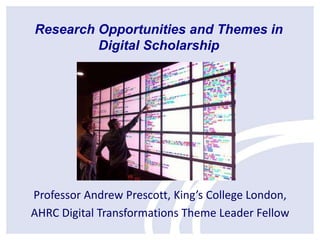

Research Opportunities and Themes in
Digital Scholarship

Professor Andrew Prescott, King’s College London,
AHRC Digital Transformations Theme Leader Fellow
AHRC Digital Transformations
Theme
• Exploring the transformative potential of
digital technologies in arts and humanities
research
• Developing flagship activities to exemplify the
possibilities
• Ensuring that arts and humanities research
contributes to wider agendas around such
issues as big data, the digital and creative
economy, intellectual property, identity,
privacy and security
AHRC Digital Transformations
Theme
•
•
•
•

Research fellowships and networks under highlight calls
Research Development Awards
Large grants
Community co-creation awards (with RCUK Connected
Communities theme)
• Big data research grants
• Future opportunities to be announced over the next few
months
• Collaboration with institutions like The British Library and
the British Museum, as well as with university libraries,
archives and museums, at heart of theme’s development
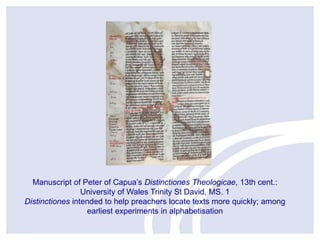
Manuscript of Peter of Capua’s Distinctiones Theologicae, 13th cent.:
University of Wales Trinity St David, MS. 1
Distinctiones intended to help preachers locate texts more quickly; among
earliest experiments in alphabetisation
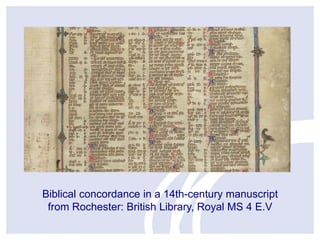
Biblical concordance in a 14th-century manuscript
from Rochester: British Library, Royal MS 4 E.V
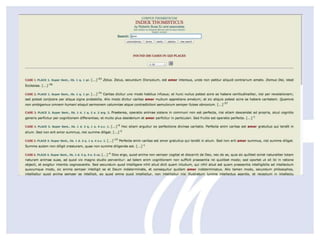
The Biblical Concordance:
an innovation in
information handling
• Team working: compiled by c. 500 Dominicans under
direction of Hugh of St Cher
• Radical approach to a sacred text, providing more rapid
ways of locating and juxtaposing information
• Reflects recent intellectual developments (Langton on
numbering of bible; use of logic in canon law and
elsewhere)
• An enormous scholarly achievement in itself, but seen
as a tool
• Wide-ranging in its impact and significance, but difficult
to pin down
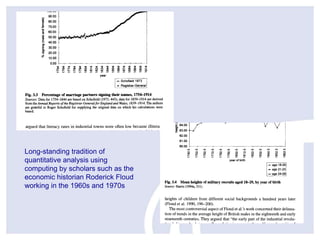
Long-standing tradition of
quantitative analysis using
computing by scholars such as the
economic historian Roderick Floud
working in the 1960s and 1970s
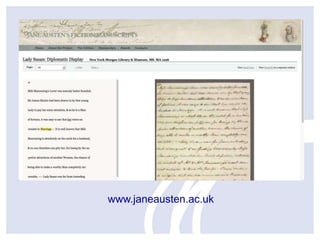
www.janeausten.ac.uk
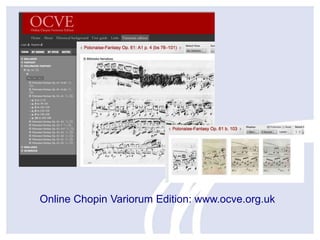
Online Chopin Variorum Edition: www.ocve.org.uk
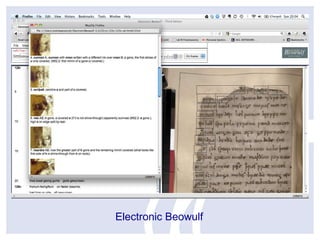
Electronic Beowulf
What is Changing?
• No longer an easily defined set of methods
• Wide variety of formats: not just text but sound, image, moving
image, animation, visualisation, making
• Recycling: visualising, linking, mash-up
• Cannot be confined within single disciplinary practice or structures
• More experimental and ad hoc
• Stronger cross-connections with practice-led research of different
types, particularly in arts
• Requires fresh appoaches to initiating and conceiving research
• Reflects increasing availability of born-digital data; digitisation no
longer at centre of agenda
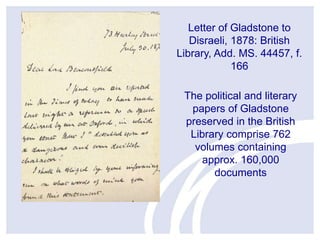
Letter of Gladstone to
Disraeli, 1878: British
Library, Add. MS. 44457, f.
166
The political and literary
papers of Gladstone
preserved in the British
Library comprise 762
volumes containing
approx. 160,000
documents
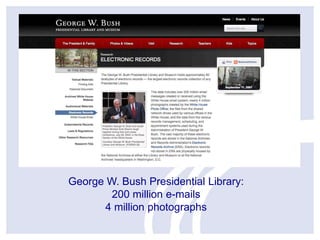
George W. Bush Presidential Library:
200 million e-mails
4 million photographs
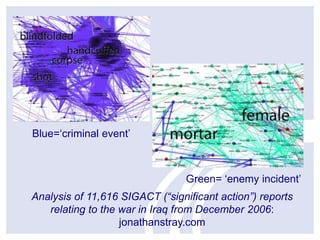
Blue=‘criminal event’

Green= ‘enemy incident’
Analysis of 11,616 SIGACT (“significant action”) reports
relating to the war in Iraq from December 2006:
jonathanstray.com
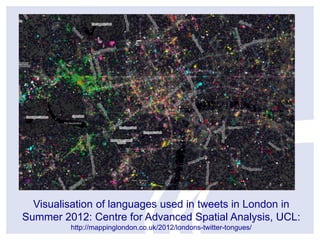
Visualisation of languages used in tweets in London in
Summer 2012: Centre for Advanced Spatial Analysis, UCL:
http://mappinglondon.co.uk/2012/londons-twitter-tongues/
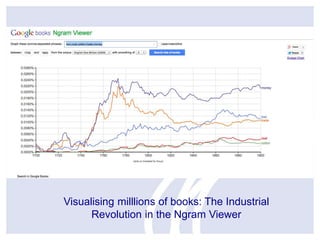
Visualising milllions of books: The Industrial
Revolution in the Ngram Viewer
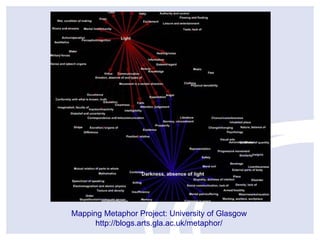
Mapping Metaphor Project: University of Glasgow
http://blogs.arts.gla.ac.uk/metaphor/
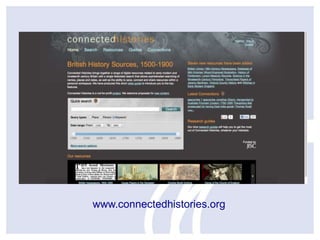
www.connectedhistories.org
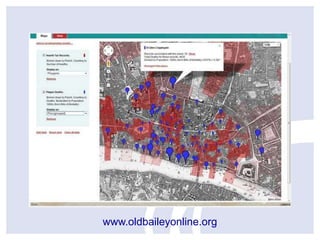
www.oldbaileyonline.org
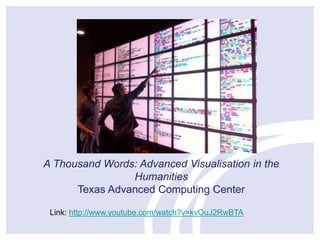
A Thousand Words: Advanced Visualisation in the
Humanities
Texas Advanced Computing Center
Link: http://www.youtube.com/watch?v=kvOuJ2RwBTA
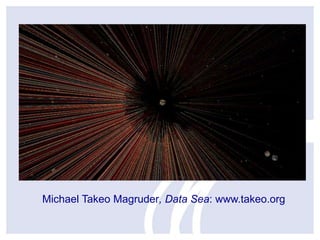
Michael Takeo Magruder, Data Sea: www.takeo.org
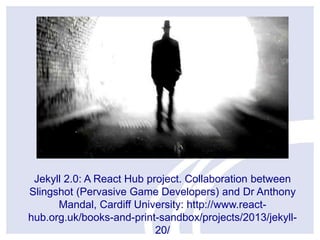
Jekyll 2.0: A React Hub project. Collaboration between
Slingshot (Pervasive Game Developers) and Dr Anthony
Mandal, Cardiff University: http://www.reacthub.org.uk/books-and-print-sandbox/projects/2013/jekyll20/
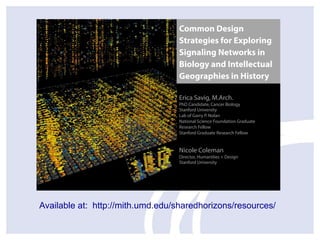
Available at: http://mith.umd.edu/sharedhorizons/resources/
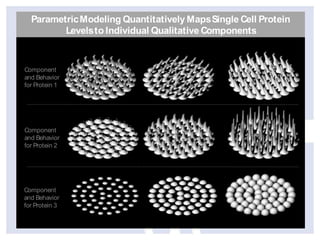
Parametric Modeling Quantitatively Maps Single Cell Protein
Levels to Individual Qualitative Components

Component
and Behavior
for Protein 1

Component
and Behavior
for Protein 2

Component
and Behavior
for Protein 3
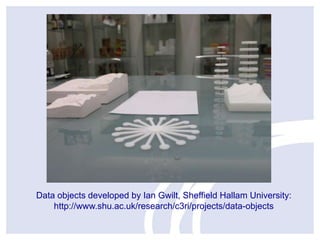
Data objects developed by Ian Gwilt, Sheffield Hallam University:
http://www.shu.ac.uk/research/c3ri/projects/data-objects
www.bareconductive.com
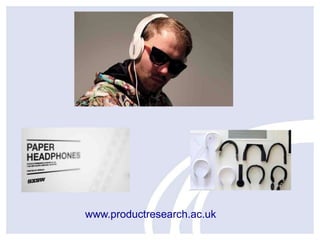
www.productresearch.ac.uk
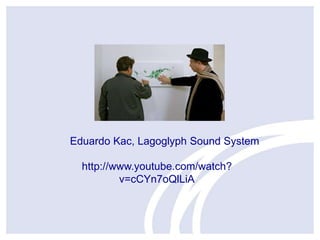
Eduardo Kac, Lagoglyph Sound System
http://www.youtube.com/watch?
v=cCYn7oQlLiA

Prescottdurhamfeb2014

  • 1.
    Research Opportunities andThemes in Digital Scholarship Professor Andrew Prescott, King’s College London, AHRC Digital Transformations Theme Leader Fellow
  • 2.
    AHRC Digital Transformations Theme •Exploring the transformative potential of digital technologies in arts and humanities research • Developing flagship activities to exemplify the possibilities • Ensuring that arts and humanities research contributes to wider agendas around such issues as big data, the digital and creative economy, intellectual property, identity, privacy and security
  • 3.
    AHRC Digital Transformations Theme • • • • Researchfellowships and networks under highlight calls Research Development Awards Large grants Community co-creation awards (with RCUK Connected Communities theme) • Big data research grants • Future opportunities to be announced over the next few months • Collaboration with institutions like The British Library and the British Museum, as well as with university libraries, archives and museums, at heart of theme’s development
  • 4.
    Manuscript of Peterof Capua’s Distinctiones Theologicae, 13th cent.: University of Wales Trinity St David, MS. 1 Distinctiones intended to help preachers locate texts more quickly; among earliest experiments in alphabetisation
  • 5.
    Biblical concordance ina 14th-century manuscript from Rochester: British Library, Royal MS 4 E.V
  • 6.
    The Biblical Concordance: aninnovation in information handling • Team working: compiled by c. 500 Dominicans under direction of Hugh of St Cher • Radical approach to a sacred text, providing more rapid ways of locating and juxtaposing information • Reflects recent intellectual developments (Langton on numbering of bible; use of logic in canon law and elsewhere) • An enormous scholarly achievement in itself, but seen as a tool • Wide-ranging in its impact and significance, but difficult to pin down
  • 8.
    Long-standing tradition of quantitativeanalysis using computing by scholars such as the economic historian Roderick Floud working in the 1960s and 1970s
  • 12.
  • 13.
    Online Chopin VariorumEdition: www.ocve.org.uk
  • 14.
  • 15.
    What is Changing? •No longer an easily defined set of methods • Wide variety of formats: not just text but sound, image, moving image, animation, visualisation, making • Recycling: visualising, linking, mash-up • Cannot be confined within single disciplinary practice or structures • More experimental and ad hoc • Stronger cross-connections with practice-led research of different types, particularly in arts • Requires fresh appoaches to initiating and conceiving research • Reflects increasing availability of born-digital data; digitisation no longer at centre of agenda
  • 16.
    Letter of Gladstoneto Disraeli, 1878: British Library, Add. MS. 44457, f. 166 The political and literary papers of Gladstone preserved in the British Library comprise 762 volumes containing approx. 160,000 documents
  • 17.
    George W. BushPresidential Library: 200 million e-mails 4 million photographs
  • 18.
    Blue=‘criminal event’ Green= ‘enemyincident’ Analysis of 11,616 SIGACT (“significant action”) reports relating to the war in Iraq from December 2006: jonathanstray.com
  • 20.
    Visualisation of languagesused in tweets in London in Summer 2012: Centre for Advanced Spatial Analysis, UCL: http://mappinglondon.co.uk/2012/londons-twitter-tongues/
  • 21.
    Visualising milllions ofbooks: The Industrial Revolution in the Ngram Viewer
  • 23.
    Mapping Metaphor Project:University of Glasgow http://blogs.arts.gla.ac.uk/metaphor/
  • 25.
  • 26.
  • 29.
    A Thousand Words:Advanced Visualisation in the Humanities Texas Advanced Computing Center Link: http://www.youtube.com/watch?v=kvOuJ2RwBTA
  • 30.
    Michael Takeo Magruder,Data Sea: www.takeo.org
  • 32.
    Jekyll 2.0: AReact Hub project. Collaboration between Slingshot (Pervasive Game Developers) and Dr Anthony Mandal, Cardiff University: http://www.reacthub.org.uk/books-and-print-sandbox/projects/2013/jekyll20/
  • 33.
  • 34.
    Parametric Modeling QuantitativelyMaps Single Cell Protein Levels to Individual Qualitative Components Component and Behavior for Protein 1 Component and Behavior for Protein 2 Component and Behavior for Protein 3
  • 35.
    Data objects developedby Ian Gwilt, Sheffield Hallam University: http://www.shu.ac.uk/research/c3ri/projects/data-objects
  • 36.
  • 37.
  • 38.
    Eduardo Kac, LagoglyphSound System http://www.youtube.com/watch? v=cCYn7oQlLiA