Preparation for SAT exam
www.studyguideexam.com
6/11/2013
www.studyguideexam.com
www.examsample.com 2
Priority #1 - Timing
 All juniors who are college-bound or considering college
should take the SAT as a junior
 January Test
 For students completing Algebra II or higher level math class Semester 1
of their junior year
 June Test
 For students completing Algebra II or higher level math class Semester 2
of their junior year
 Most students take the test at least twice
 June of Junior Year
 Mainly for students who are weak in English and have junior English
Semester .
6/11/2013
www.studyguideexam.com
www.examsample.com 3
Retaking the SAT
 Seniors taking the test a second time
55% Improved their scores
35% Had lower scores
10% Had no change in score
 On average, juniors repeating the SAT as
seniors improved their combined critical
reading, mathematics, and writing scores
by approximately 40 points
6/11/2013
www.studyguideexam.com
www.examsample.com 4
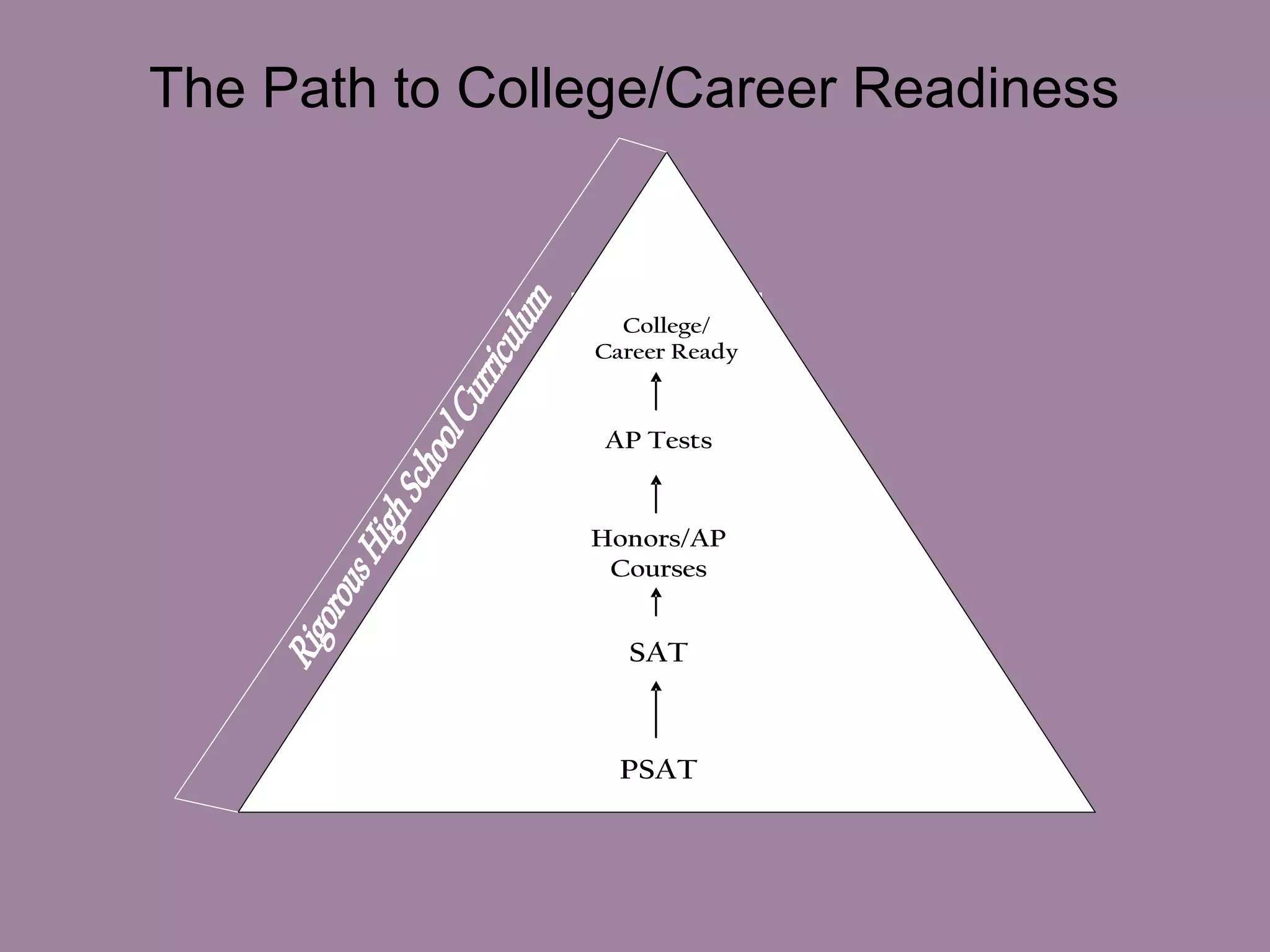
Priority #2 - Preparation
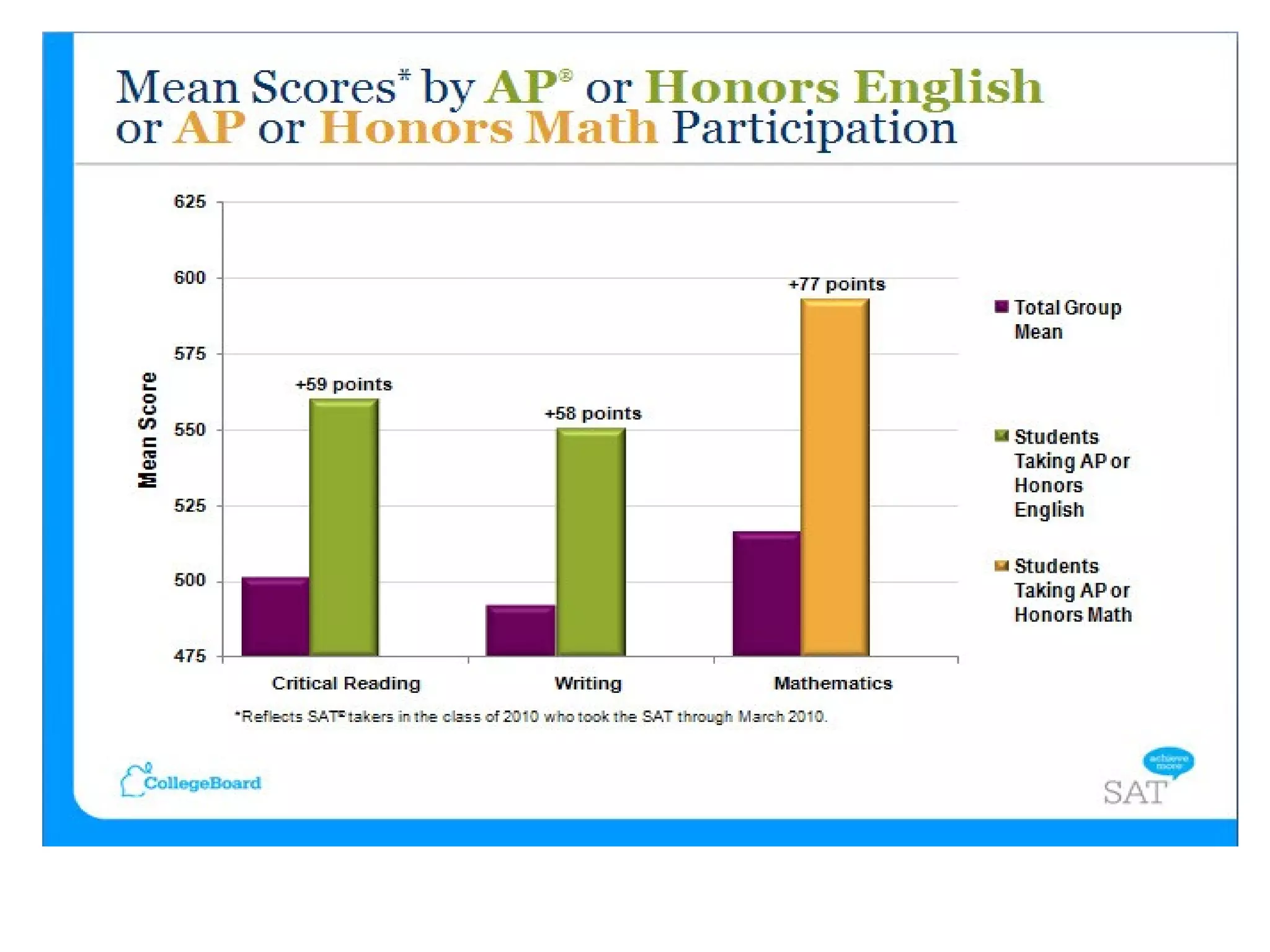
 The best preparation for the SAT is a
rigorous high school schedule comprised
of Honors and AP courses
College/Career
Ready
College/Career
Ready
PSAT
SAT
AP Tests
Honors/AP
Courses
College/
Career Ready
The Path to College/Career Readiness
6/11/2013
www.studyguideexam.com
www.examsample.com 7
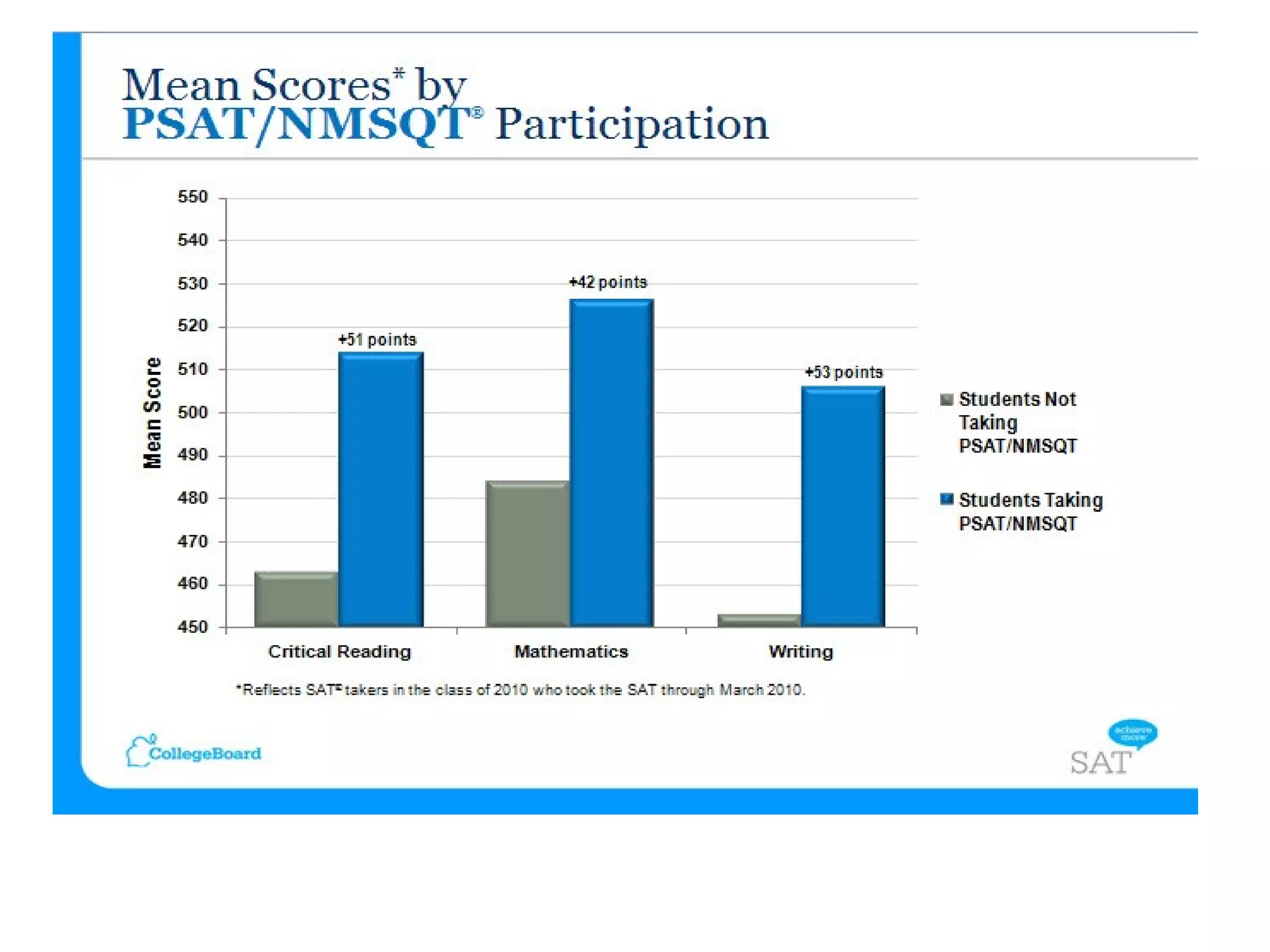
Priority #3 – Use the PSAT
 Take the PSAT in Grades 9, 10 and 11
 Why the PSAT?
 Best preparation for the SAT
 Uses similar questions and same directions
 Qualify for scholarships
 Compare scores with other college-bound students across the
country
 Forecast SAT scores
 Get personalized feedback on skill strengths and weaknesses
 Identify your child’s potential for AP courses in high school
6/11/2013
www.studyguideexam.com
www.examsample.com 9
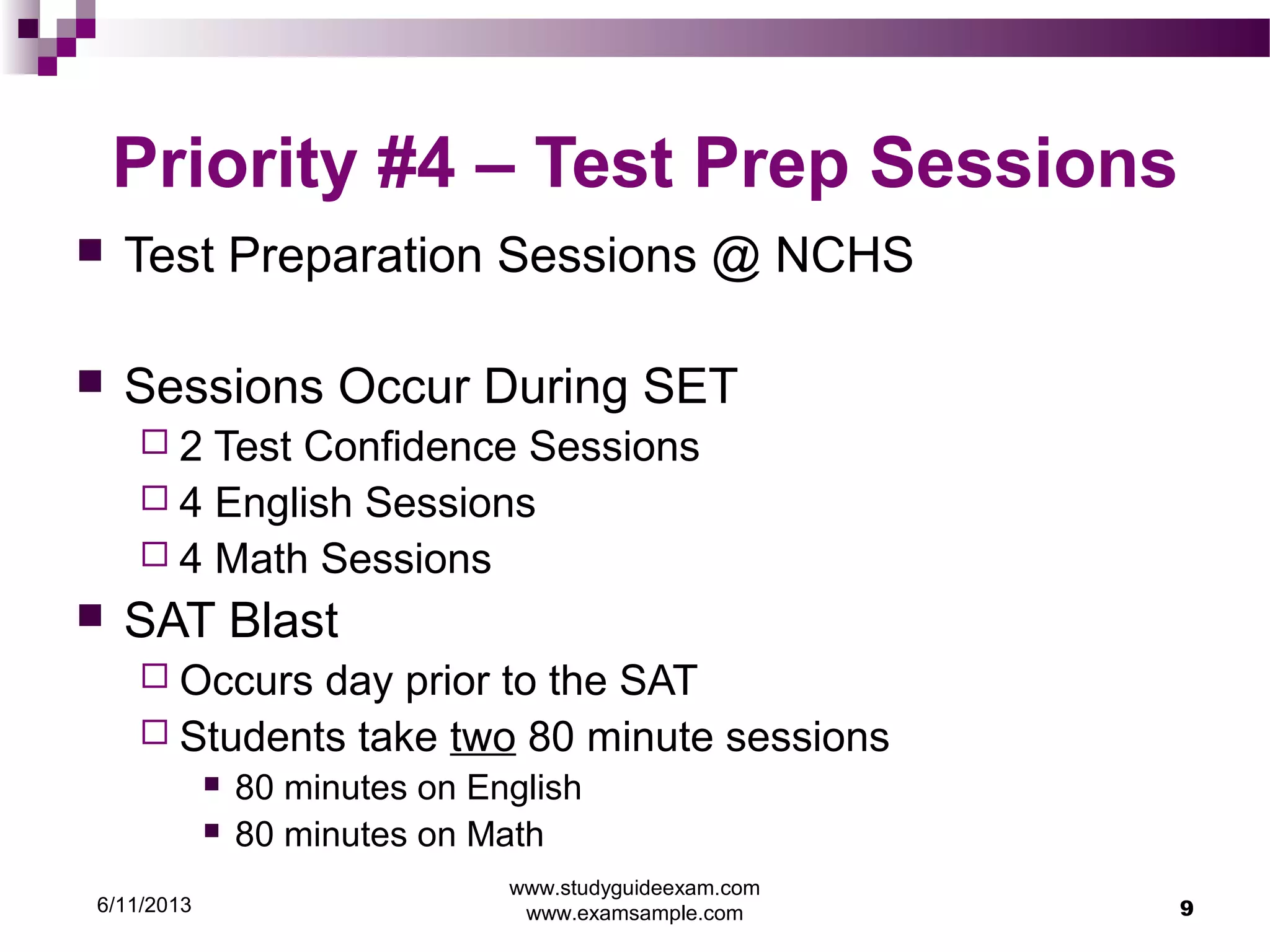
Priority #4 – Test Prep Sessions
 Test Preparation Sessions @ NCHS
 Sessions Occur During SET
 2 Test Confidence Sessions
 4 English Sessions
 4 Math Sessions
 SAT Blast
 Occurs day prior to the SAT
 Students take two 80 minute sessions
 80 minutes on English
 80 minutes on Math
6/11/2013
www.studyguideexam.com
www.examsample.com 10
Priority #5 – Preparation at Home
 Use online resources to prepare a study plan.
 http://www.studyguideexam.com/sat-subject-test-study-guide.
 Complete practice tests including at least one
full-length practice test
 Can be found online
 Can be purchased in SAT study guides
 Take mock SAT in March @ NCHS
6/11/2013
www.studyguideexam.com
www.examsample.com 11
Other Suggested Ways to Prepare
 Take SAT Prep class at NCHS
 This year there was only one section Quarter 1
 Considering offering two ½ credit options
 SAT Prep – English
 SAP Prep – Mathematics
 All courses run based upon student request
 College Board offers an online prep course
 Cost $69.95
 CCPS is exploring companies who are interested in
offering SAT Prep services such as Kaplan, etc.
 Unclear at this time if this will be available and if there will be a cost
to the student
6/11/2013
www.studyguideexam.com
www.examsample.com 12
Proven Keys to Success
 Practice makes perfect!
 READ, READ, READ!
 Turn off the electronics (unless it’s an eReader) and
pick up a book.
 Students consistently tell us the most
challenging part is the vocabulary
 Get top 100 SAT words
 Consider purchasing a SAT words book
 Suggestion: Hot Words for the SAT published by Barron’s at
cost of $9.99
The SAT
Things You
Might Not Know
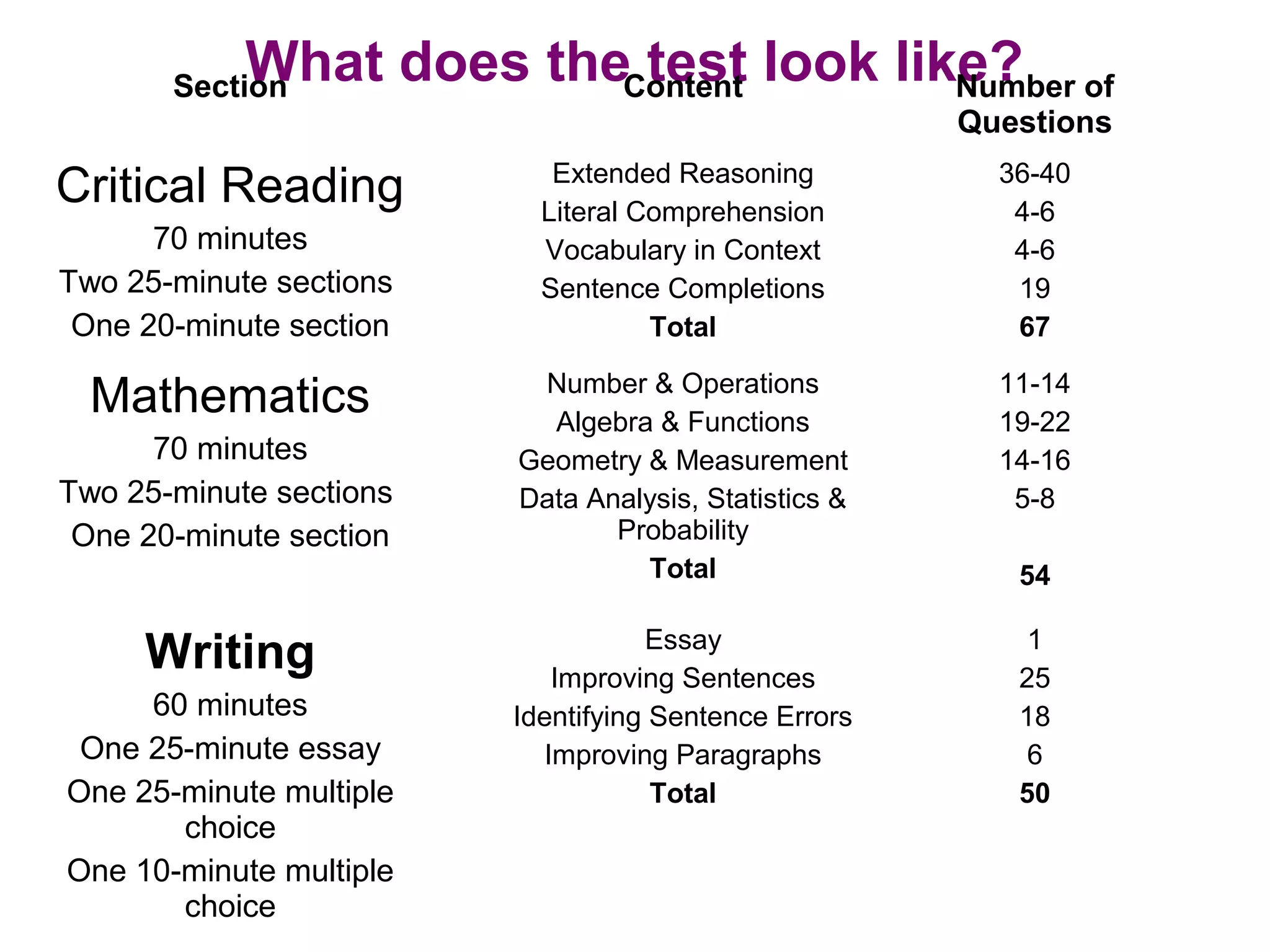
What does the test look like?Section Content Number of
Questions
Critical Reading
70 minutes
Two 25-minute sections
One 20-minute section
Extended Reasoning
Literal Comprehension
Vocabulary in Context
Sentence Completions
Total
36-40
4-6
4-6
19
67
Mathematics
70 minutes
Two 25-minute sections
One 20-minute section
Number & Operations
Algebra & Functions
Geometry & Measurement
Data Analysis, Statistics &
Probability
Total
11-14
19-22
14-16
5-8
54
Writing
60 minutes
One 25-minute essay
One 25-minute multiple
choice
One 10-minute multiple
choice
Essay
Improving Sentences
Identifying Sentence Errors
Improving Paragraphs
Total
1
25
18
6
50
6/11/2013
www.studyguideexam.com
www.examsample.com 15
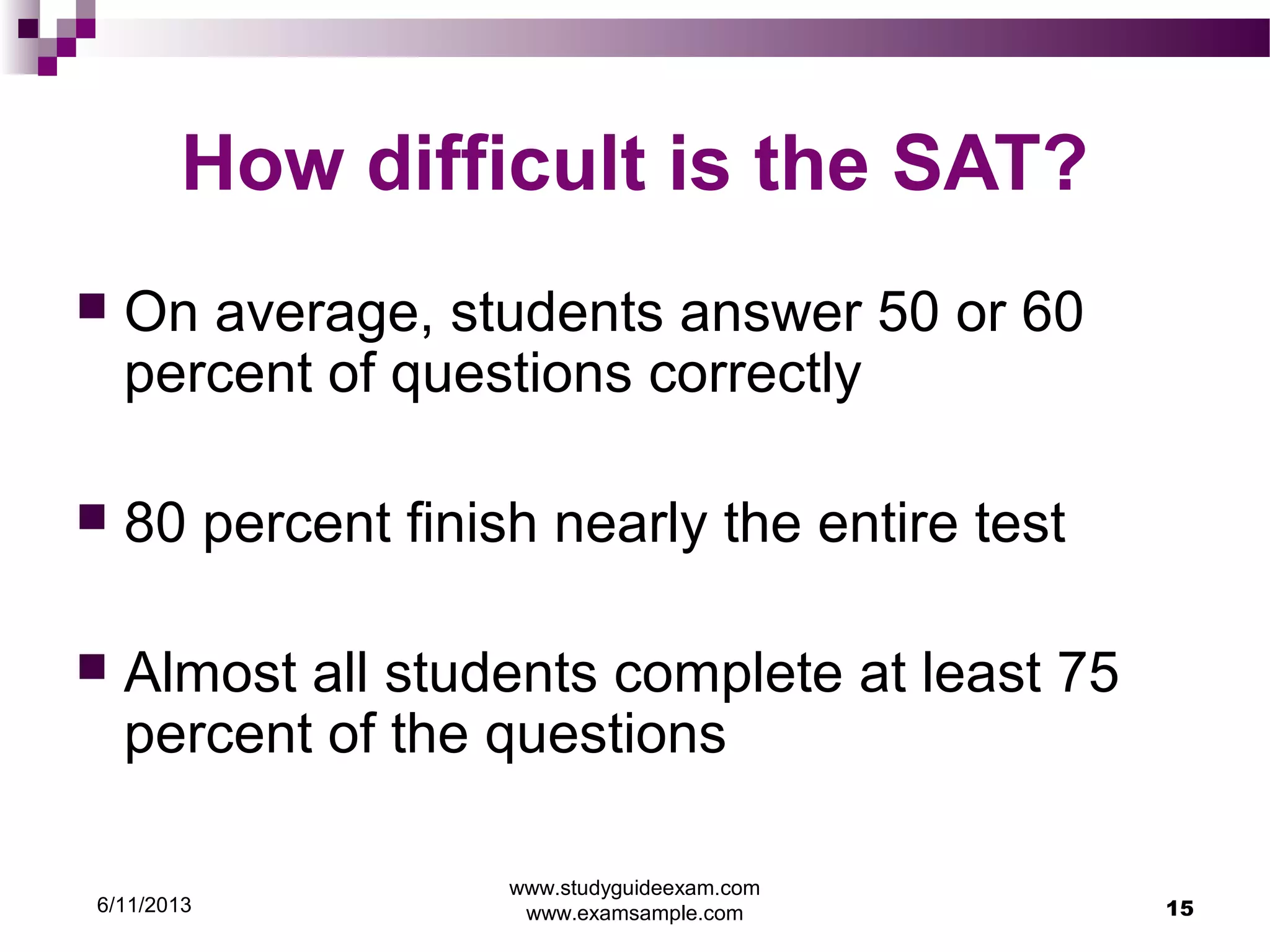
How difficult is the SAT?
 On average, students answer 50 or 60
percent of questions correctly
 80 percent finish nearly the entire test
 Almost all students complete at least 75
percent of the questions
6/11/2013
www.studyguideexam.com
www.examsample.com 16
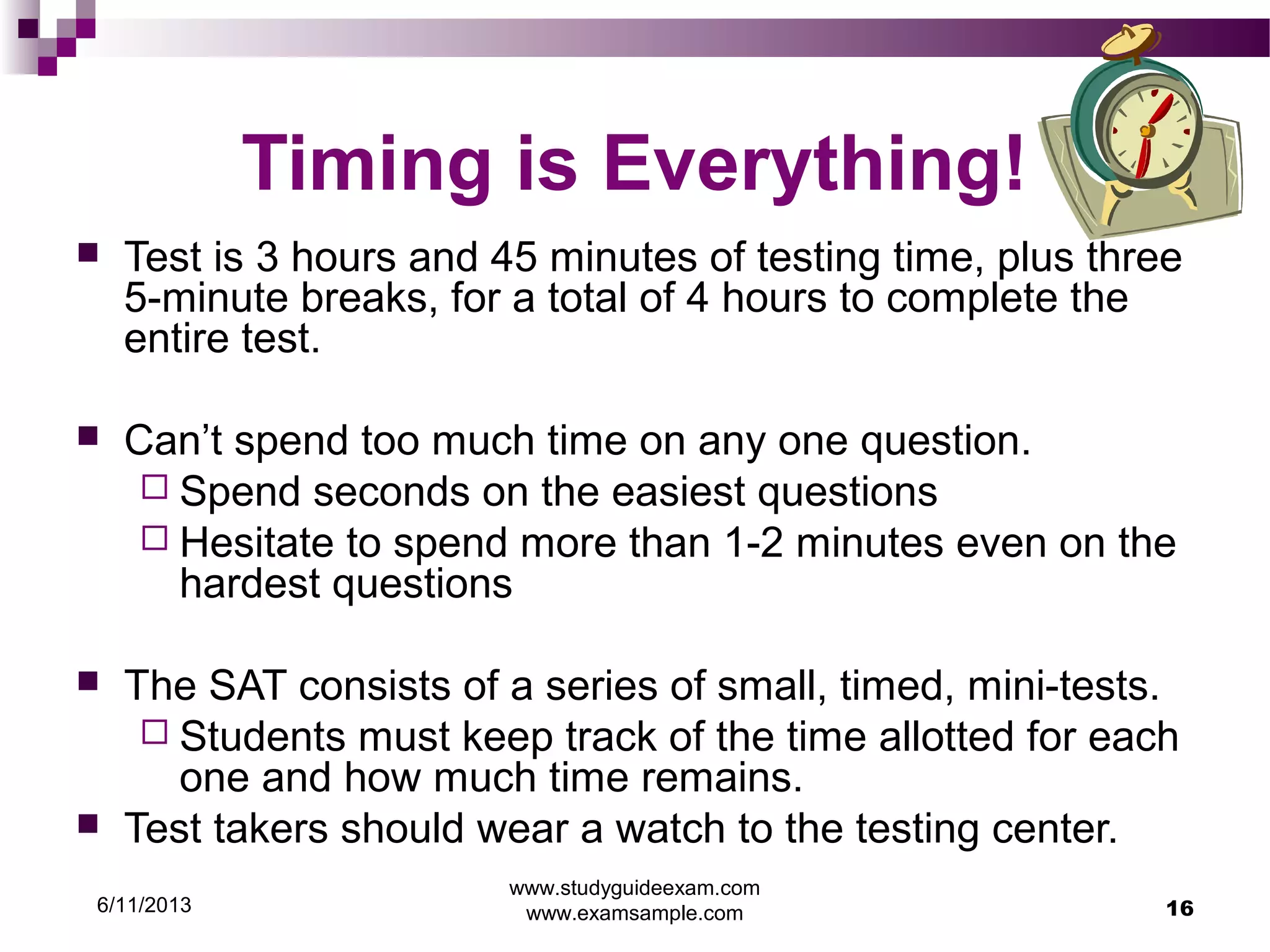
Timing is Everything!
 Test is 3 hours and 45 minutes of testing time, plus three
5-minute breaks, for a total of 4 hours to complete the
entire test.
 Can’t spend too much time on any one question.
 Spend seconds on the easiest questions
 Hesitate to spend more than 1-2 minutes even on the
hardest questions
 The SAT consists of a series of small, timed, mini-tests.
 Students must keep track of the time allotted for each
one and how much time remains.
 Test takers should wear a watch to the testing center.
6/11/2013
www.studyguideexam.com
www.examsample.com 17
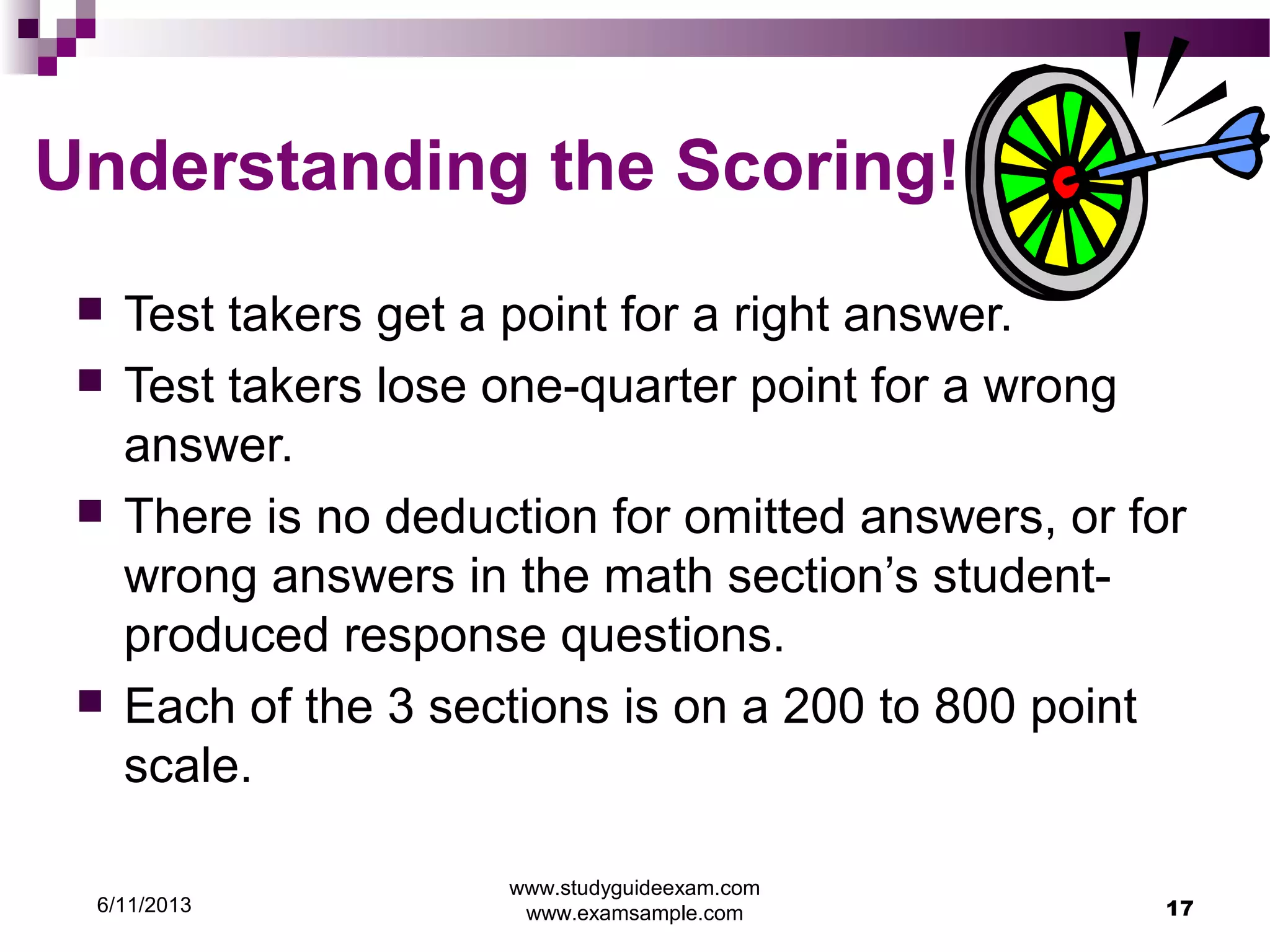
Understanding the Scoring!
 Test takers get a point for a right answer.
 Test takers lose one-quarter point for a wrong
answer.
 There is no deduction for omitted answers, or for
wrong answers in the math section’s student-
produced response questions.
 Each of the 3 sections is on a 200 to 800 point
scale.

Prepartion for sat exam study guide

  • 1.
    Preparation for SATexam www.studyguideexam.com
  • 2.
    6/11/2013 www.studyguideexam.com www.examsample.com 2 Priority #1- Timing  All juniors who are college-bound or considering college should take the SAT as a junior  January Test  For students completing Algebra II or higher level math class Semester 1 of their junior year  June Test  For students completing Algebra II or higher level math class Semester 2 of their junior year  Most students take the test at least twice  June of Junior Year  Mainly for students who are weak in English and have junior English Semester .
  • 3.
    6/11/2013 www.studyguideexam.com www.examsample.com 3 Retaking theSAT  Seniors taking the test a second time 55% Improved their scores 35% Had lower scores 10% Had no change in score  On average, juniors repeating the SAT as seniors improved their combined critical reading, mathematics, and writing scores by approximately 40 points
  • 4.
    6/11/2013 www.studyguideexam.com www.examsample.com 4 Priority #2- Preparation  The best preparation for the SAT is a rigorous high school schedule comprised of Honors and AP courses
  • 5.
  • 7.
    6/11/2013 www.studyguideexam.com www.examsample.com 7 Priority #3– Use the PSAT  Take the PSAT in Grades 9, 10 and 11  Why the PSAT?  Best preparation for the SAT  Uses similar questions and same directions  Qualify for scholarships  Compare scores with other college-bound students across the country  Forecast SAT scores  Get personalized feedback on skill strengths and weaknesses  Identify your child’s potential for AP courses in high school
  • 9.
    6/11/2013 www.studyguideexam.com www.examsample.com 9 Priority #4– Test Prep Sessions  Test Preparation Sessions @ NCHS  Sessions Occur During SET  2 Test Confidence Sessions  4 English Sessions  4 Math Sessions  SAT Blast  Occurs day prior to the SAT  Students take two 80 minute sessions  80 minutes on English  80 minutes on Math
  • 10.
    6/11/2013 www.studyguideexam.com www.examsample.com 10 Priority #5– Preparation at Home  Use online resources to prepare a study plan.  http://www.studyguideexam.com/sat-subject-test-study-guide.  Complete practice tests including at least one full-length practice test  Can be found online  Can be purchased in SAT study guides  Take mock SAT in March @ NCHS
  • 11.
    6/11/2013 www.studyguideexam.com www.examsample.com 11 Other SuggestedWays to Prepare  Take SAT Prep class at NCHS  This year there was only one section Quarter 1  Considering offering two ½ credit options  SAT Prep – English  SAP Prep – Mathematics  All courses run based upon student request  College Board offers an online prep course  Cost $69.95  CCPS is exploring companies who are interested in offering SAT Prep services such as Kaplan, etc.  Unclear at this time if this will be available and if there will be a cost to the student
  • 12.
    6/11/2013 www.studyguideexam.com www.examsample.com 12 Proven Keysto Success  Practice makes perfect!  READ, READ, READ!  Turn off the electronics (unless it’s an eReader) and pick up a book.  Students consistently tell us the most challenging part is the vocabulary  Get top 100 SAT words  Consider purchasing a SAT words book  Suggestion: Hot Words for the SAT published by Barron’s at cost of $9.99
  • 13.
  • 14.
    What does thetest look like?Section Content Number of Questions Critical Reading 70 minutes Two 25-minute sections One 20-minute section Extended Reasoning Literal Comprehension Vocabulary in Context Sentence Completions Total 36-40 4-6 4-6 19 67 Mathematics 70 minutes Two 25-minute sections One 20-minute section Number & Operations Algebra & Functions Geometry & Measurement Data Analysis, Statistics & Probability Total 11-14 19-22 14-16 5-8 54 Writing 60 minutes One 25-minute essay One 25-minute multiple choice One 10-minute multiple choice Essay Improving Sentences Identifying Sentence Errors Improving Paragraphs Total 1 25 18 6 50
  • 15.
    6/11/2013 www.studyguideexam.com www.examsample.com 15 How difficultis the SAT?  On average, students answer 50 or 60 percent of questions correctly  80 percent finish nearly the entire test  Almost all students complete at least 75 percent of the questions
  • 16.
    6/11/2013 www.studyguideexam.com www.examsample.com 16 Timing isEverything!  Test is 3 hours and 45 minutes of testing time, plus three 5-minute breaks, for a total of 4 hours to complete the entire test.  Can’t spend too much time on any one question.  Spend seconds on the easiest questions  Hesitate to spend more than 1-2 minutes even on the hardest questions  The SAT consists of a series of small, timed, mini-tests.  Students must keep track of the time allotted for each one and how much time remains.  Test takers should wear a watch to the testing center.
  • 17.
    6/11/2013 www.studyguideexam.com www.examsample.com 17 Understanding theScoring!  Test takers get a point for a right answer.  Test takers lose one-quarter point for a wrong answer.  There is no deduction for omitted answers, or for wrong answers in the math section’s student- produced response questions.  Each of the 3 sections is on a 200 to 800 point scale.

Editor's Notes

  • #15 Most test also contain a 10 th unscored, 25-minute subsection – the “equating” or variable subsection – that maybe critical reading, math, or multiple choice writing subsection Both the placement and the content of this section varies on different versions of the test Students will have different versions of the test as far as the order of the content and what is included in this section