Management Of
Rheumatic Diseases
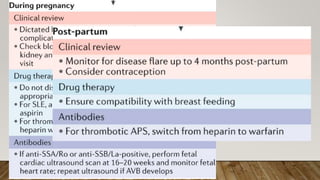
During Pregnancy
Marwa Abo Elmaaty Besar
Lecturer Of Internal Medicine
(Rheumatology & immunology Unit)
(Pediatric Rheumatologist)
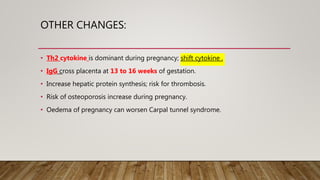
OTHER CHANGES:
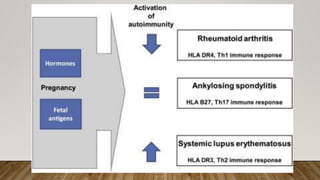
• Th2 cytokine is dominant during pregnancy; shift cytokine .
• IgG cross placenta at 13 to 16 weeks of gestation.
• Increase hepatic protein synthesis; risk for thrombosis.
• Risk of osteoporosis increase during pregnancy.
• Oedema of pregnancy can worsen Carpal tunnel syndrome.
Request for safe pregnancy:
Timing
Medication
supplementatio
n
• Remission of rheumatic disease = healthy child in >90%.
• Patients with SLE have an increased risk of
• Preeclampsia,
• Intrauterine growth restriction
• Hypertension during pregnancy prior or current renal disease and/or
aplas.
• Approximately 30% of patients with SLE have aPLAs but may or may not have
other criteria for the antiphospholipid antibody syndrome (APS).
SCREENING:
• The Predictors of Pregnancy Outcome: Biomarkers in Antiphospholipid syndrome and Systemic
Lupus (PROMISSE) study poor outcomes occurred in 19% of pregnancies with five major
predictors:
1. Lupus anticoagulant positive.
2. Hypertensive medication use.
3. Physician global assessment >1 (greater disease activity).
4. Non-Caucasian.
5. Thrombocytopenia (per 50K decrease).
• A history of LN or current LN correlates with poor fatal and maternal outcomes.
• Maternal hypertension and aPLAs may increase these risks as well as the risk of preeclampsia.
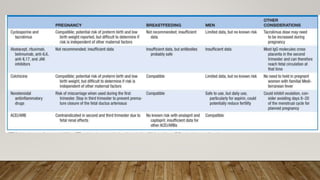
MEDICATION:
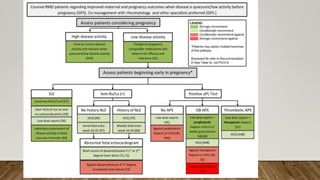
• Add low-dose aspirin (ASA) for prevention of preeclampsia in SLE pregnancy.
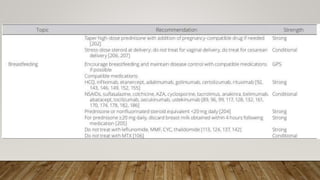
• Hydroxychloroquine is thought to be safe in pregnancy, may help prevent
intrauterine growth restriction.
• Stop renin–angiotensin blockade medications prior to conception.
Timing:
• Patients should be in remission for at least 6 months.
• Follow proteinuria off angiotensin-converting enzyme inhibitor or angiotensin-
receptor blocker prior to pregnancy; expect baseline proteinuria to increase with
increased glomerular filtration rate during pregnancy.
• Anti-dsDNA levels are not affected by pregnancy and can be followed as a sign of
disease flare in some individuals with increasing proteinuria.
• The risk of renal biopsy is likely not increased for patients in the first and second
trimester, (if aPLA-negative and not on anticoagulation), but best done prior to
pregnancy if there is a concern for active nephritis.
Serology:-
• Antibodies to Ro/SSA = neonatal lupus syndrome.
• Antibodies to La/SSB; less commonly neonatal lupus syndrome.
• aPLAs;
 Recurrent first trimester spontaneous abortion
Stillbirths, preeclampsia, intrauterine growth restriction, and preterm birth
Neurocognitive delay in children born to mothers with APS.
• Antiplatelet antibodies; autoimmune thrombocytopenia in the fetus.
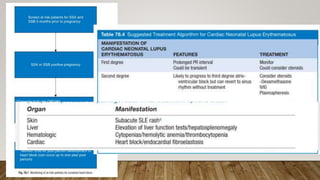
Neonatal lupus erythematous (NLE):
• Congenital heart block (CHB) is the most common cardiac manifestation of NLE.
• The accompanying myocarditis accounts for the major morbidity and mortality.
• Clinical manifestations of NLE occur in 5% to 20% of offspring of mothers with high
circulating levels of these antibodies.
• The risk of CHB is 2% in the offspring of seropositive mothers.
• The risk of recurrent heart bock is 15% to 20%.
• Hydroxychloroquine use was associated with a decreased rate of recurrent CHB in
subsequent pregnancies.
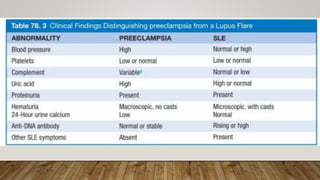
SLE Or Eclampsia???
• Preeclampsia typically occurs in late pregnancy (after 20 weeks of gestation) of
primigravida.
• LN can occur at any time during pregnancy and is associated with active urine
sediment.
• Patients with SLE have an increased risk of preeclampsia at baseline.
• The PROMISSE study, the measurement of angiogenic factors such as placental
growth factor (PGF) and soluble fms-like tyrosine kinase 1 (sflt1) measured early
in pregnancy (12–19 weeks) predicted preeclampsia (low PGF and high sFlt1)
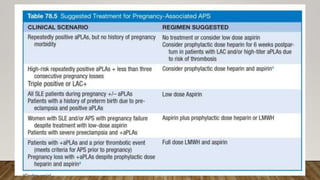
ANTIPHOSPHOLIPID SYNDROME
• Patients with APS with or without SLE are at risk for poor pregnancy outcomes:
 Recurrent early miscarriage.
 Intrauterine growth restriction
 Preeclampsia.
 Thrombosis.
 Early and late fetal loss.
• The addition of heparin plus ASA provided an estimated 54% reduced risk of
pregnancy loss.
• It is recommended to start as 4 weeks prior to conception if possible
Contraception:
• Contraception is the key to ensuring optimized timing and safety of pregnancy.
• Risk of venous thromboembolism with pregnancy is higher than with any contraceptive.
• Long-acting reversible contraceptives (implants and intrauterine devices (IUDs) have the highest
efficacy.
• Both progesterone-containing implants and IUDs are safe in women with high clotting risk.
• Estrogen-containing contraceptives should be avoided in women with aPLAs, even with no history of
clot or
other clotting risk factors.
• Women with stable SLE, no aPLAs or clotting risk factors, and no history of clot may use estrogen-
containing
oral contraceptives.
• Contraceptive decisions should include the patient, gynecology, and rheumatology
RA:-
• 2/3 patients with RA have improvement in RA symptoms during pregnancy, but
<20% achieve drug-free remission.
• Symptom improvement is highest during the third trimester.
• 2/3 RA patients have a flare of RA symptoms in the first 6 months postpartum.
• Erythrocyte sedimentation rate increases during pregnancy and should not be used
in the measurements of disease activity.
SPONDYLOARTHROPATHIES:-
• Fertility is unaffected.
• The course of ankylosing spondylitis varies during pregnancy (33% improve, 33%
worsen) and up to 60% worsen postpartum (mostly low back pain).
• Newer data suggests that women may have increased risk of
caesarean section
preterm birth
infants born small for gestational age.
• Up to 50% of patients with psoriatic arthritis may improve.
• Elevated disease activity and antitumor necrosis factor discontinuation in early
pregnancy are associated with increased risk of disease flare later in pregnancy.
• Patients with severe back and/or hip disease should be assessed for their
capability to deliver vaginally.
SYSTEMIC SCLEROSIS (SSC)
• Fertility is unaffected.
• Pulmonary hypertension is a contraindication to pregnancy.
• Women with early disease should delay pregnancy until disease stabilization.
• Increased risk:
(1) preterm delivery
(2) intrauterine growth restriction
(3) low birth weight.
• Risk factors for worse outcomes:
• early disease.
• diffuse cutaneous SSc.
• anti-Scl-70 ab,
• anti-RNA polymerase III ab.
• Pregnancy does not cause progressive visceral involvement or increased risk of
scleroderma renal crisis.
• Raynaud’s symptoms often improve and gastrointestinal reflux and arthralgias
often worsen.
Inflammatory myositis:
• There is limited data about pregnancy in these patients.
• Active disease, especially in early pregnancy, is associated with adverse outcomes.
• Patients with new onset of poly/dermatomyositis during pregnancy have a high
risk of fatal loss.
• The most common complications are
preterm delivery
infants born small for gestational age.
• Clinical improvement frequently occurs during pregnancy, but postpartum relapse
is common.
• There is no evidence that pregnancy is a trigger for myositis.
Vasculitis
Q; Should patients with a history of vasculitis get pregnant?
• There is limited data to guide management of pregnancy in vasculitis.
• Pregnancies are most likely to succeed:-
When vasculitis is well controlled.
Patient is on low risk medications.
• These patients should be followed by obstetricians experienced with high-risk
pregnancies and deliveries.
Vasculitis
Antineutrophil cytoplasmic antibody-associated vasculitis:
• Even if conception occurs with controlled disease, up to 40% of patients will flare
during pregnancy.
• Disease activity during pregnancy is associated with
 Preterm delivery
 Miscarriage.
 More serious outcomes.
Polyarteritis nodosa (PAN):
• Conception during remission results in good outcomes with rare flares.
• Onset of disease during pregnancy has a very high maternal mortality.
Vasculitis
Takayasu’s arteritis:
• Pregnancies are more likely to be complicated by hypertension and
preeclampsia (40% versus 8% in the general population).
• Pregnancy does not affect Takayasu’s arteritis in most cases, but complications
may be devastating (e.g., aneurysmal rupture).
• Most adverse effects are not due to disease flares but due to vascular sequelae
from previously active disease.
Vasculitis
Behçet’s disease:
• pregnancy outcomes are similar to general population.
• Up to 30% have disease relapse during pregnancy.
• Patients with prior thrombosis should be considered for intrapartum
anticoagulation.
Male fertility:-
Vasculitis:
Decreased fertility if testicular involvement in PAN.
Patients with behçet’s disease have normal fertility.
Data is lacking for other forms of vasculitis.
Ankylosing spondylitis:
 higher rates of varicocele, but no other changes in sperm.
Male fertility:-
RA:
• Active RA is associated with hypogonadism as well as decreased sperm production and
function.
SLE:
• Decreased libido, erectile dysfunction, and failure to ejaculate, though it is difficult to sort out
medication effect.
Common comorbidities
• Affect fertility and libido including obesity, chronic kidney disease, and depression.
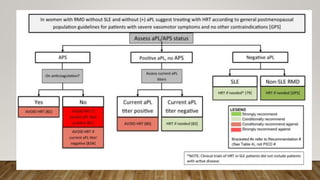
Hormonal replacement therapy (HRT):
Vasomotor symptoms:
defined by (The North American Menopause Society) include hot flashes and night
sweats.
• Hot flashes are recurrent, transient episodes of flushing, perspiration and a
sensation ranging from warmth to intense heat on the upper body and face,
sometimes followed by chills.
• Night sweats are hot flashes that occur with perspiration during sleep.
Pregnancy with rheumatic diseases

Pregnancy with rheumatic diseases

  • 1.
    Management Of Rheumatic Diseases DuringPregnancy Marwa Abo Elmaaty Besar Lecturer Of Internal Medicine (Rheumatology & immunology Unit) (Pediatric Rheumatologist)
  • 6.
    OTHER CHANGES: • Th2cytokine is dominant during pregnancy; shift cytokine . • IgG cross placenta at 13 to 16 weeks of gestation. • Increase hepatic protein synthesis; risk for thrombosis. • Risk of osteoporosis increase during pregnancy. • Oedema of pregnancy can worsen Carpal tunnel syndrome.
  • 7.
    Request for safepregnancy: Timing Medication supplementatio n
  • 10.
    • Remission ofrheumatic disease = healthy child in >90%. • Patients with SLE have an increased risk of • Preeclampsia, • Intrauterine growth restriction • Hypertension during pregnancy prior or current renal disease and/or aplas. • Approximately 30% of patients with SLE have aPLAs but may or may not have other criteria for the antiphospholipid antibody syndrome (APS).
  • 11.
    SCREENING: • The Predictorsof Pregnancy Outcome: Biomarkers in Antiphospholipid syndrome and Systemic Lupus (PROMISSE) study poor outcomes occurred in 19% of pregnancies with five major predictors: 1. Lupus anticoagulant positive. 2. Hypertensive medication use. 3. Physician global assessment >1 (greater disease activity). 4. Non-Caucasian. 5. Thrombocytopenia (per 50K decrease). • A history of LN or current LN correlates with poor fatal and maternal outcomes. • Maternal hypertension and aPLAs may increase these risks as well as the risk of preeclampsia.
  • 12.
    MEDICATION: • Add low-doseaspirin (ASA) for prevention of preeclampsia in SLE pregnancy. • Hydroxychloroquine is thought to be safe in pregnancy, may help prevent intrauterine growth restriction. • Stop renin–angiotensin blockade medications prior to conception.
  • 15.
    Timing: • Patients shouldbe in remission for at least 6 months. • Follow proteinuria off angiotensin-converting enzyme inhibitor or angiotensin- receptor blocker prior to pregnancy; expect baseline proteinuria to increase with increased glomerular filtration rate during pregnancy. • Anti-dsDNA levels are not affected by pregnancy and can be followed as a sign of disease flare in some individuals with increasing proteinuria. • The risk of renal biopsy is likely not increased for patients in the first and second trimester, (if aPLA-negative and not on anticoagulation), but best done prior to pregnancy if there is a concern for active nephritis.
  • 16.
    Serology:- • Antibodies toRo/SSA = neonatal lupus syndrome. • Antibodies to La/SSB; less commonly neonatal lupus syndrome. • aPLAs;  Recurrent first trimester spontaneous abortion Stillbirths, preeclampsia, intrauterine growth restriction, and preterm birth Neurocognitive delay in children born to mothers with APS. • Antiplatelet antibodies; autoimmune thrombocytopenia in the fetus.
  • 17.
    Neonatal lupus erythematous(NLE): • Congenital heart block (CHB) is the most common cardiac manifestation of NLE. • The accompanying myocarditis accounts for the major morbidity and mortality. • Clinical manifestations of NLE occur in 5% to 20% of offspring of mothers with high circulating levels of these antibodies. • The risk of CHB is 2% in the offspring of seropositive mothers. • The risk of recurrent heart bock is 15% to 20%. • Hydroxychloroquine use was associated with a decreased rate of recurrent CHB in subsequent pregnancies.
  • 19.
    SLE Or Eclampsia??? •Preeclampsia typically occurs in late pregnancy (after 20 weeks of gestation) of primigravida. • LN can occur at any time during pregnancy and is associated with active urine sediment. • Patients with SLE have an increased risk of preeclampsia at baseline. • The PROMISSE study, the measurement of angiogenic factors such as placental growth factor (PGF) and soluble fms-like tyrosine kinase 1 (sflt1) measured early in pregnancy (12–19 weeks) predicted preeclampsia (low PGF and high sFlt1)
  • 21.
    ANTIPHOSPHOLIPID SYNDROME • Patientswith APS with or without SLE are at risk for poor pregnancy outcomes:  Recurrent early miscarriage.  Intrauterine growth restriction  Preeclampsia.  Thrombosis.  Early and late fetal loss. • The addition of heparin plus ASA provided an estimated 54% reduced risk of pregnancy loss. • It is recommended to start as 4 weeks prior to conception if possible
  • 25.
    Contraception: • Contraception isthe key to ensuring optimized timing and safety of pregnancy. • Risk of venous thromboembolism with pregnancy is higher than with any contraceptive. • Long-acting reversible contraceptives (implants and intrauterine devices (IUDs) have the highest efficacy. • Both progesterone-containing implants and IUDs are safe in women with high clotting risk. • Estrogen-containing contraceptives should be avoided in women with aPLAs, even with no history of clot or other clotting risk factors. • Women with stable SLE, no aPLAs or clotting risk factors, and no history of clot may use estrogen- containing oral contraceptives. • Contraceptive decisions should include the patient, gynecology, and rheumatology
  • 27.
    RA:- • 2/3 patientswith RA have improvement in RA symptoms during pregnancy, but <20% achieve drug-free remission. • Symptom improvement is highest during the third trimester. • 2/3 RA patients have a flare of RA symptoms in the first 6 months postpartum. • Erythrocyte sedimentation rate increases during pregnancy and should not be used in the measurements of disease activity.
  • 28.
    SPONDYLOARTHROPATHIES:- • Fertility isunaffected. • The course of ankylosing spondylitis varies during pregnancy (33% improve, 33% worsen) and up to 60% worsen postpartum (mostly low back pain). • Newer data suggests that women may have increased risk of caesarean section preterm birth infants born small for gestational age.
  • 29.
    • Up to50% of patients with psoriatic arthritis may improve. • Elevated disease activity and antitumor necrosis factor discontinuation in early pregnancy are associated with increased risk of disease flare later in pregnancy. • Patients with severe back and/or hip disease should be assessed for their capability to deliver vaginally.
  • 30.
    SYSTEMIC SCLEROSIS (SSC) •Fertility is unaffected. • Pulmonary hypertension is a contraindication to pregnancy. • Women with early disease should delay pregnancy until disease stabilization. • Increased risk: (1) preterm delivery (2) intrauterine growth restriction (3) low birth weight.
  • 31.
    • Risk factorsfor worse outcomes: • early disease. • diffuse cutaneous SSc. • anti-Scl-70 ab, • anti-RNA polymerase III ab. • Pregnancy does not cause progressive visceral involvement or increased risk of scleroderma renal crisis. • Raynaud’s symptoms often improve and gastrointestinal reflux and arthralgias often worsen.
  • 32.
    Inflammatory myositis: • Thereis limited data about pregnancy in these patients. • Active disease, especially in early pregnancy, is associated with adverse outcomes. • Patients with new onset of poly/dermatomyositis during pregnancy have a high risk of fatal loss. • The most common complications are preterm delivery infants born small for gestational age.
  • 33.
    • Clinical improvementfrequently occurs during pregnancy, but postpartum relapse is common. • There is no evidence that pregnancy is a trigger for myositis.
  • 34.
    Vasculitis Q; Should patientswith a history of vasculitis get pregnant? • There is limited data to guide management of pregnancy in vasculitis. • Pregnancies are most likely to succeed:- When vasculitis is well controlled. Patient is on low risk medications. • These patients should be followed by obstetricians experienced with high-risk pregnancies and deliveries.
  • 35.
    Vasculitis Antineutrophil cytoplasmic antibody-associatedvasculitis: • Even if conception occurs with controlled disease, up to 40% of patients will flare during pregnancy. • Disease activity during pregnancy is associated with  Preterm delivery  Miscarriage.  More serious outcomes. Polyarteritis nodosa (PAN): • Conception during remission results in good outcomes with rare flares. • Onset of disease during pregnancy has a very high maternal mortality.
  • 36.
    Vasculitis Takayasu’s arteritis: • Pregnanciesare more likely to be complicated by hypertension and preeclampsia (40% versus 8% in the general population). • Pregnancy does not affect Takayasu’s arteritis in most cases, but complications may be devastating (e.g., aneurysmal rupture). • Most adverse effects are not due to disease flares but due to vascular sequelae from previously active disease.
  • 37.
    Vasculitis Behçet’s disease: • pregnancyoutcomes are similar to general population. • Up to 30% have disease relapse during pregnancy. • Patients with prior thrombosis should be considered for intrapartum anticoagulation.
  • 38.
    Male fertility:- Vasculitis: Decreased fertilityif testicular involvement in PAN. Patients with behçet’s disease have normal fertility. Data is lacking for other forms of vasculitis. Ankylosing spondylitis:  higher rates of varicocele, but no other changes in sperm.
  • 39.
    Male fertility:- RA: • ActiveRA is associated with hypogonadism as well as decreased sperm production and function. SLE: • Decreased libido, erectile dysfunction, and failure to ejaculate, though it is difficult to sort out medication effect. Common comorbidities • Affect fertility and libido including obesity, chronic kidney disease, and depression.
  • 41.
    Hormonal replacement therapy(HRT): Vasomotor symptoms: defined by (The North American Menopause Society) include hot flashes and night sweats. • Hot flashes are recurrent, transient episodes of flushing, perspiration and a sensation ranging from warmth to intense heat on the upper body and face, sometimes followed by chills. • Night sweats are hot flashes that occur with perspiration during sleep.