Precision 10uA Current
Sources and Mirrors
G S Javed, PhD
Analog Design Manager
Founder, King Consultants Education
drgs.javed@gmail.com
@ConsultantsKing
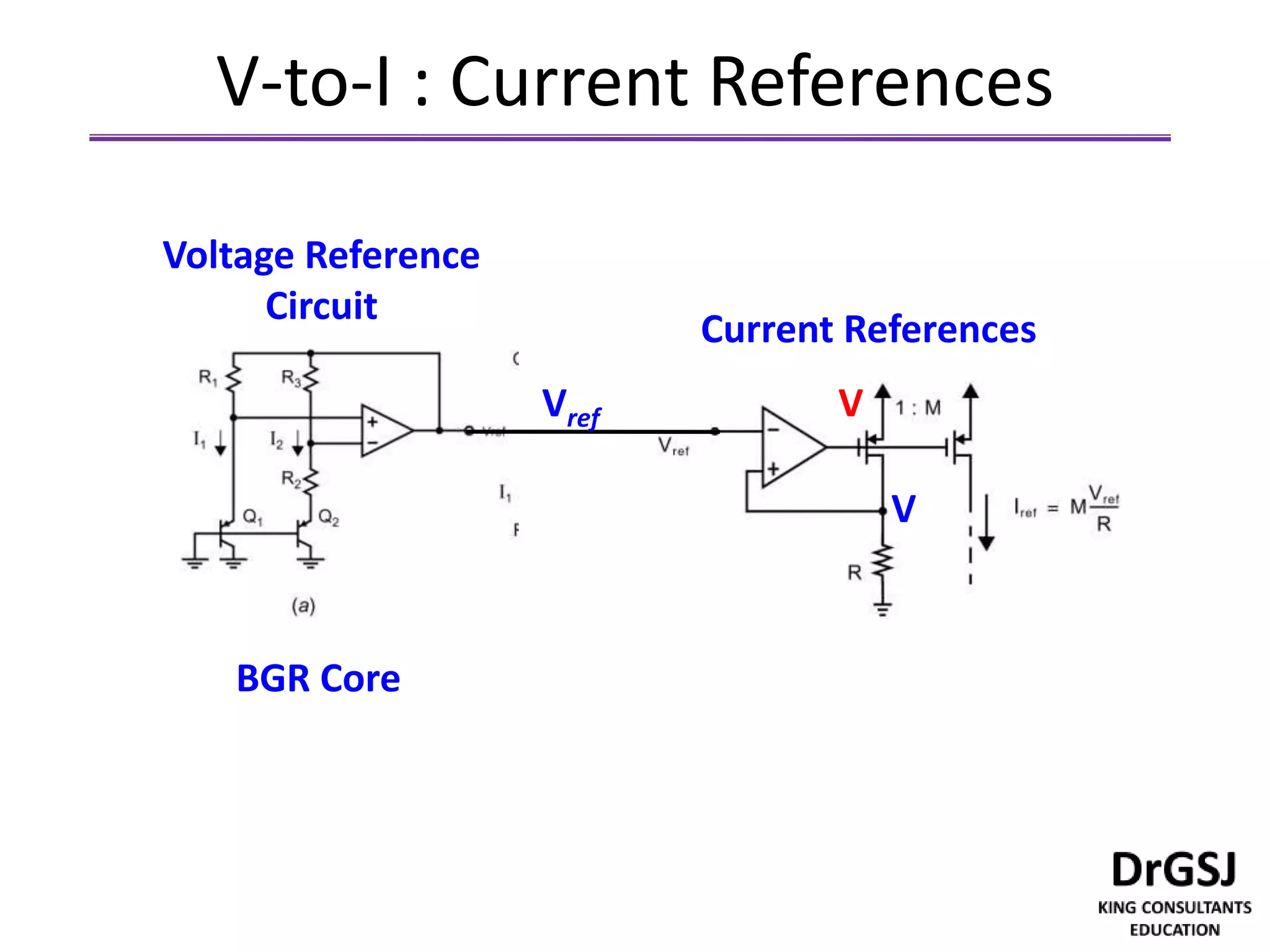
V-to-I : Current References
V
V
Current References
Voltage Reference
Circuit
BGR Core
Vref
Precision Current Sources
[slau507.pdf, Texas Instruments]
Precision 5 uA
current source
Vref
IOUT = Vref / RSET
= 1/ 100K = 10uA
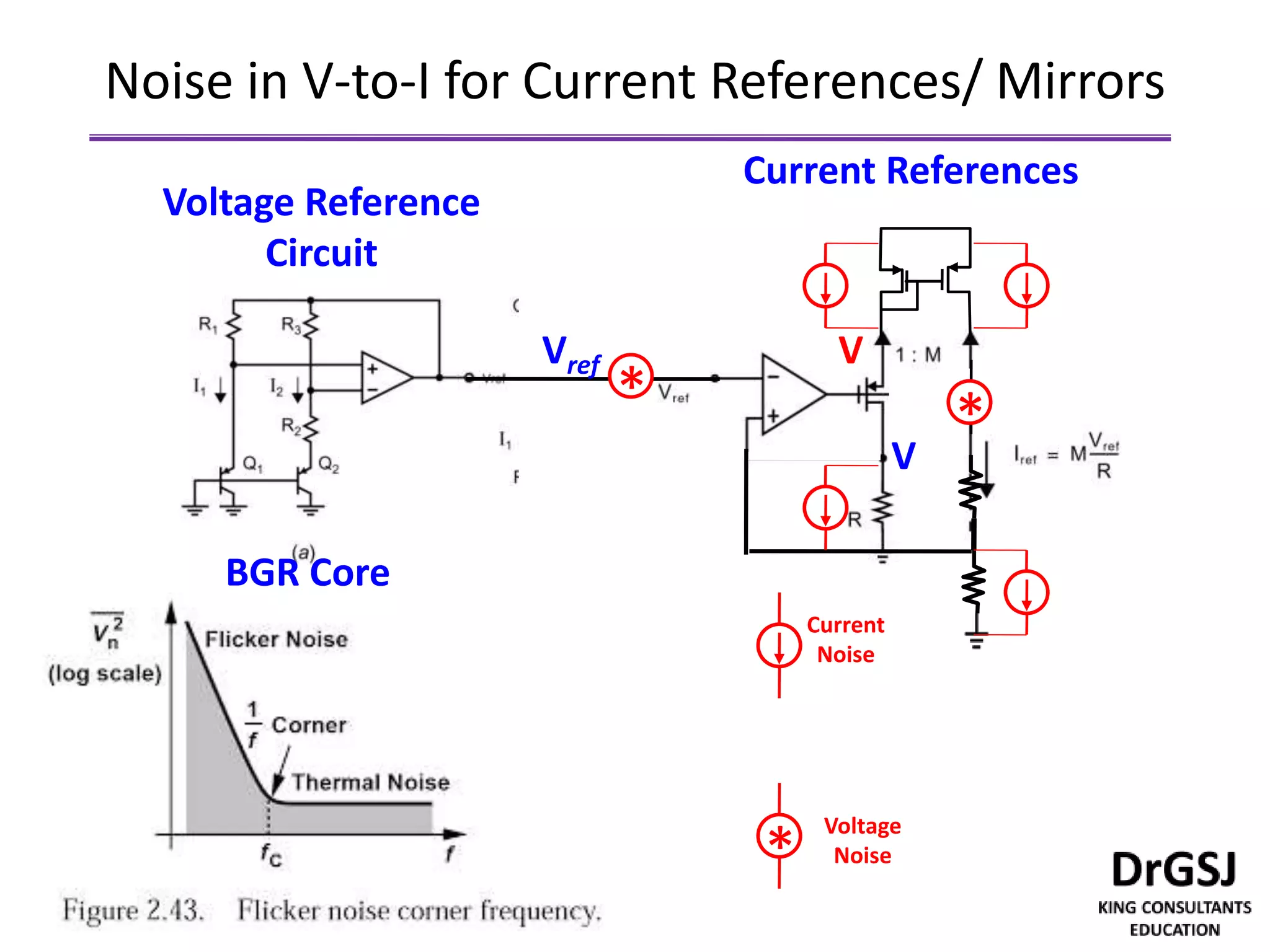
Noise in V-to-I for Current References/ Mirrors
V
V
Current References
Voltage Reference
Circuit
BGR Core
Vref
*
* *
Current
Noise
Voltage
Noise
Approach to reduce/cancel the noise
1. Reduce the noise at the source – BGR or external reference voltage.
2. Use a high gain, low input offset Error Amplifier for fast settling and low
noise.
3. Explore the use of Chopper Amplifier to reduce the flicker noise.
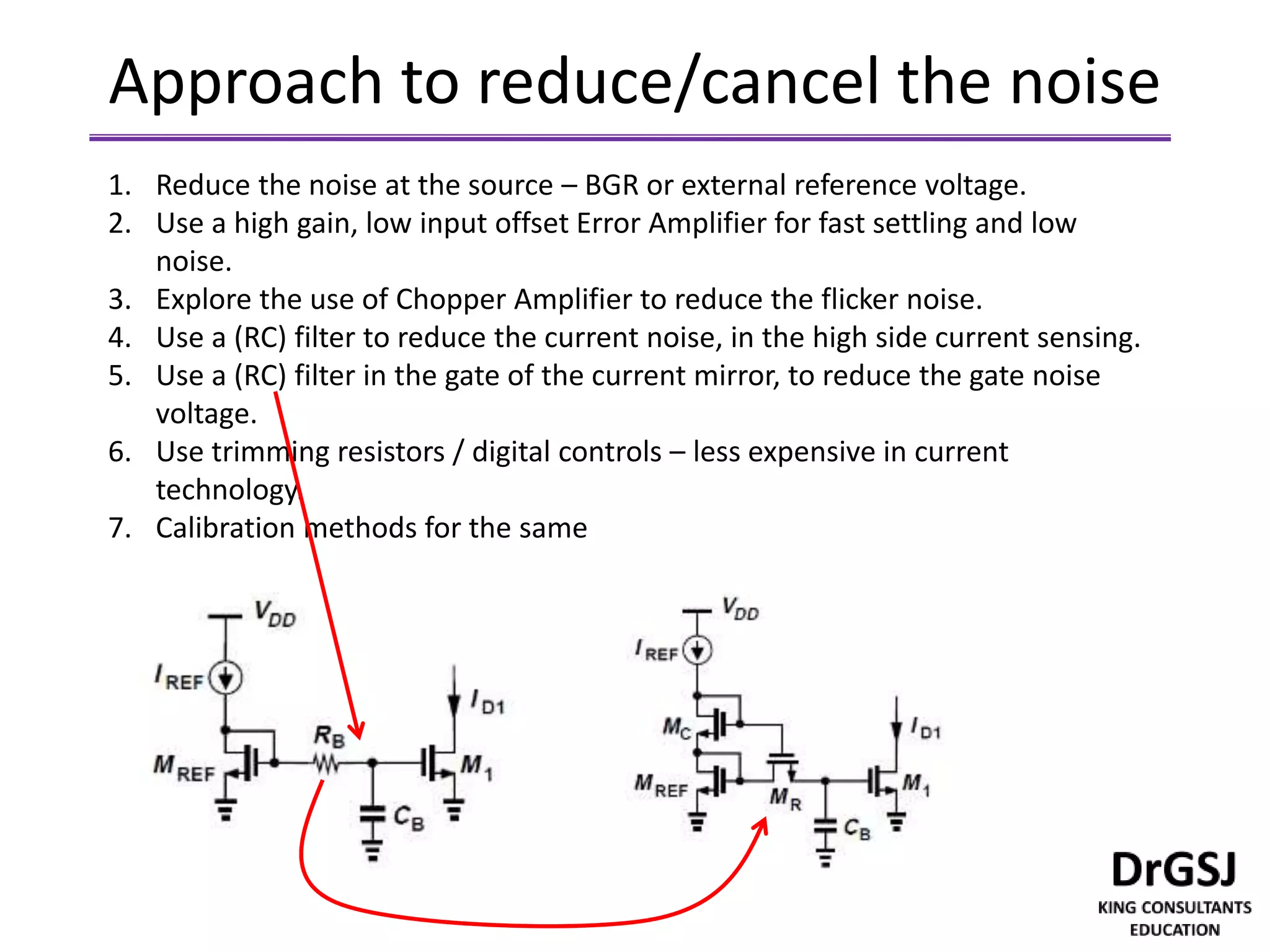
4. Use a (RC) filter to reduce the current noise, in the high side current sensing.
5. Use a (RC) filter in the gate of the current mirror, to reduce the gate noise
voltage.
6. Use trimming resistors / digital controls – less expensive in current
technology.
7. Calibration methods for the same
Noise in Current Mirrors
1. Add RC filter to reduce the variations in the voltage and acts like a LPF.
2. It effectively reduces the impact of the gate noise and flicker noise.
[Razavi]
Trimmed Current Generation
[Shagun Bhajoria,
MS Thesis, TU Delft]
Calibration Methods
1. Sample the output of the error amplifier
2. Simple calibration method
3. Does not impact the direct voltage
[Shagun Bhajoria,
MS Thesis, TU Delft]
Unit Calibration circuit
[Shagun Bhajoria,
MS Thesis, TU Delft]
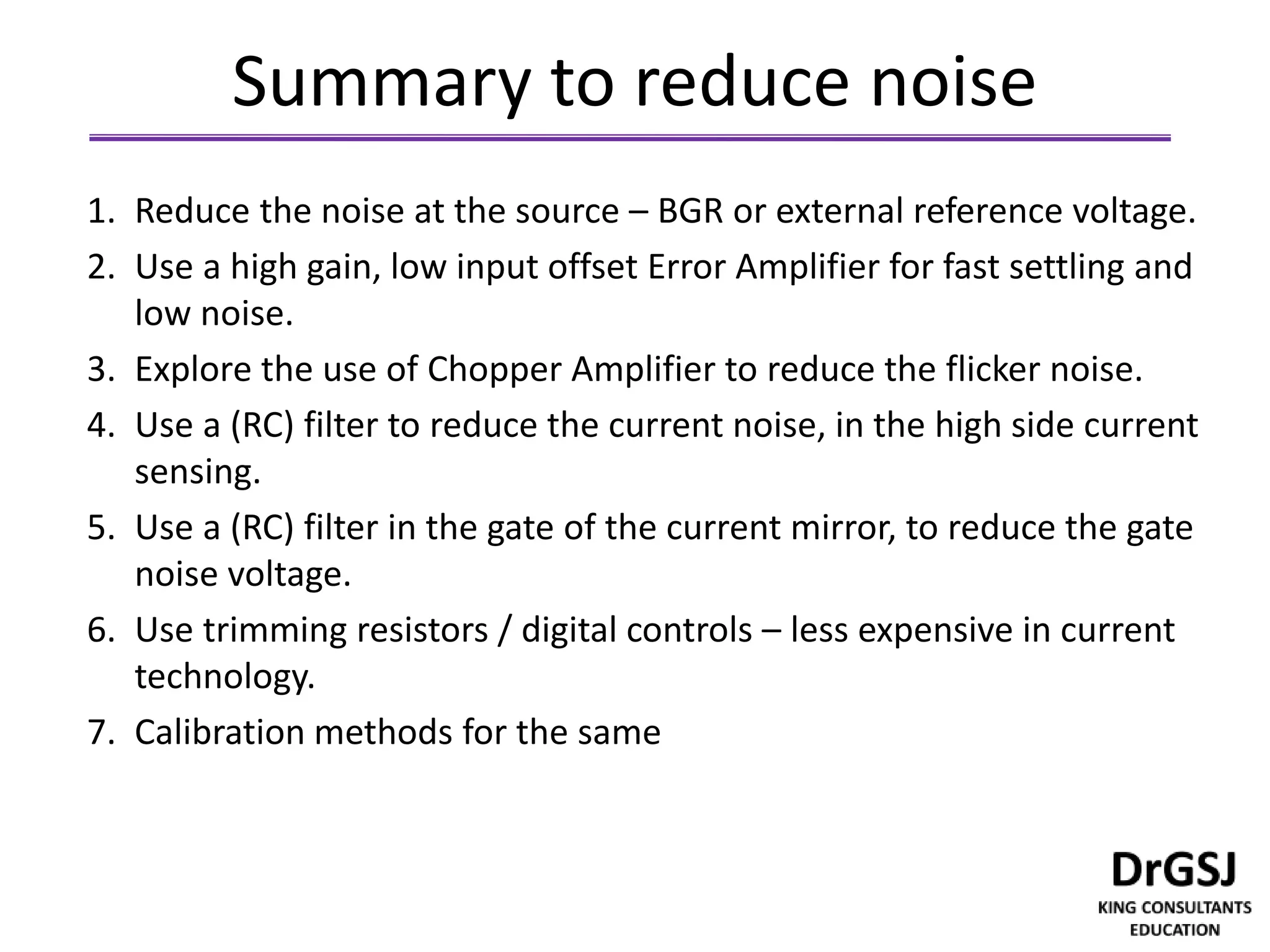
Summary to reduce noise
1. Reduce the noise at the source – BGR or external reference voltage.
2. Use a high gain, low input offset Error Amplifier for fast settling and
low noise.
3. Explore the use of Chopper Amplifier to reduce the flicker noise.
4. Use a (RC) filter to reduce the current noise, in the high side current
sensing.
5. Use a (RC) filter in the gate of the current mirror, to reduce the gate
noise voltage.
6. Use trimming resistors / digital controls – less expensive in current
technology.
7. Calibration methods for the same
G S Javed, PhD
Analog Design Manager
Founder, King Consultants Education
drgs.javed@gmail.com
Thank you

Precision current sources - Low noise current mirrors

  • 1.
    Precision 10uA Current Sourcesand Mirrors G S Javed, PhD Analog Design Manager Founder, King Consultants Education drgs.javed@gmail.com @ConsultantsKing
  • 2.
    V-to-I : CurrentReferences V V Current References Voltage Reference Circuit BGR Core Vref
  • 3.
    Precision Current Sources [slau507.pdf,Texas Instruments] Precision 5 uA current source Vref IOUT = Vref / RSET = 1/ 100K = 10uA
  • 4.
    Noise in V-to-Ifor Current References/ Mirrors V V Current References Voltage Reference Circuit BGR Core Vref * * * Current Noise Voltage Noise
  • 5.
    Approach to reduce/cancelthe noise 1. Reduce the noise at the source – BGR or external reference voltage. 2. Use a high gain, low input offset Error Amplifier for fast settling and low noise. 3. Explore the use of Chopper Amplifier to reduce the flicker noise. 4. Use a (RC) filter to reduce the current noise, in the high side current sensing. 5. Use a (RC) filter in the gate of the current mirror, to reduce the gate noise voltage. 6. Use trimming resistors / digital controls – less expensive in current technology. 7. Calibration methods for the same
  • 6.
    Noise in CurrentMirrors 1. Add RC filter to reduce the variations in the voltage and acts like a LPF. 2. It effectively reduces the impact of the gate noise and flicker noise. [Razavi]
  • 7.
    Trimmed Current Generation [ShagunBhajoria, MS Thesis, TU Delft]
  • 8.
    Calibration Methods 1. Samplethe output of the error amplifier 2. Simple calibration method 3. Does not impact the direct voltage [Shagun Bhajoria, MS Thesis, TU Delft]
  • 9.
    Unit Calibration circuit [ShagunBhajoria, MS Thesis, TU Delft]
  • 10.
    Summary to reducenoise 1. Reduce the noise at the source – BGR or external reference voltage. 2. Use a high gain, low input offset Error Amplifier for fast settling and low noise. 3. Explore the use of Chopper Amplifier to reduce the flicker noise. 4. Use a (RC) filter to reduce the current noise, in the high side current sensing. 5. Use a (RC) filter in the gate of the current mirror, to reduce the gate noise voltage. 6. Use trimming resistors / digital controls – less expensive in current technology. 7. Calibration methods for the same
  • 11.
    G S Javed,PhD Analog Design Manager Founder, King Consultants Education drgs.javed@gmail.com Thank you