PRECAST CONCRETE STRUCTURE
Session -1
Introduction to Precast Structures & Course Outline
www.structuralgeek.com
Table of Contents
• Course outline
• Introduction to precast structures
• Need & challenges with precast structures
• Technical basis for precast design
• Architectural layout of G+5 building
• Brief about the G+5 building
• Structural codes
• Analysis software
www.structuralgeek.com
Learning Objective
• By the end of this presentation, you will have basic understanding
about precast structures.
• The presentation nudges you towards the think about the challenges
faced during about the precast construction.
• After understanding the presentation, you should be able to read the
architectural drawings & develop structural plan accordingly.
• Students will be equipped to know the structural codes needed to
design a precast building.
• Students will get a brief idea about the analysis software which are to
be used in course further.
www.structuralgeek.com
Course Outline
• Brief introduction about the precast concrete structures and its usage
& application in the industry.
• Concept structural system of the G + 5 building using the architectural
plans.
• Developing the structural framing plan to ground the vertical & lateral
forces.
• Developing precast scheme for the building, breaking down to precast
elements & schematic connections.
• Detailed design : load calculations, combinations, strength & SLS
parameters.
www.structuralgeek.com
Course Outline
• Preparing the analytical model for the building structure in ETABS.
(geometry, loading, connection, foundation)
• Analyzing the behavior of the analytical model. (deflected shape,
reaction, mode shapes, uplifts.
www.structuralgeek.com
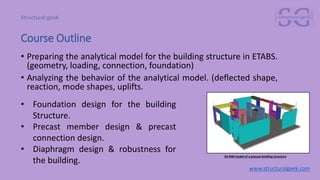
3D BIM model of a precast building structure
• Foundation design for the building
Structure.
• Precast member design & precast
connection design.
• Diaphragm design & robustness for
the building.
Precast Concrete Structure
www.structuralgeek.com
• Precast structures are casted earlier, then transported & erected on the
site to produce the finish building structure.
• It is alternate to the conventional cast in-situ construction, which helps
enhance product quality & reduce the time of construction.
• Precast structure need not be only of concrete, it can be mixture of
steel, concrete or some material.
• The elements are casted (at site/plant), demolded, lifted, transported to
site, assembled & erected.
• Precast element are of better strength and finish because of their
controlled production environment.
Precast Concrete Structure
www.structuralgeek.com
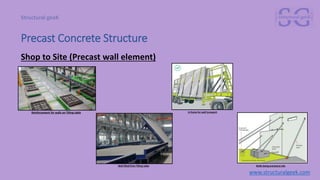
Shop to Site (Precast wall element)
Reinforcement for walls on Tilting table
Wall lifted from Tilting table
A-frame for wall transport
Walls being erected at site
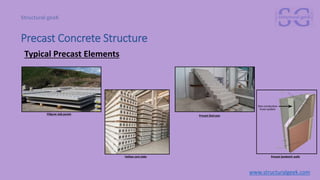
Typical Precast Elements
Filligree slab panels
Hollow core slabs Precast Sandwich walls
Precast Staircase
Precast Concrete Structure
www.structuralgeek.com
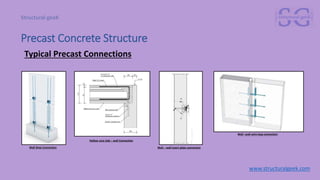
Typical Precast Connections
Wall Shoe Connection
Wall –wall wire loop connection
Wall – wall insert plate connection
Hollow core slab – wall Connection
Precast Concrete Structure
www.structuralgeek.com
Structural Design of Precast Building
Building Specifications
• Number of stories : G + 5
• Floor plate dimension : 17 m X 11 m
• Location of the Structure : Kanpur
• Soil bearing capacity : 150 KN/m2
• Soil subgrade modulus: 10000 KN/m3
• Floor height: 2.7m (Stilt floor), 3.0m (Typical floor)
www.structuralgeek.com
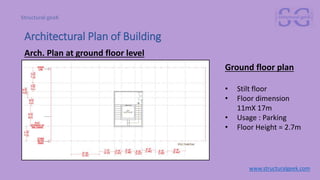
Architectural Plan of Building
Arch. Plan at ground floor level
Ground floor plan
• Stilt floor
• Floor dimension
11mX 17m
• Usage : Parking
• Floor Height = 2.7m
www.structuralgeek.com
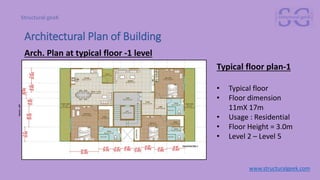
Arch. Plan at typical floor -1 level
Typical floor plan-1
• Typical floor
• Floor dimension
11mX 17m
• Usage : Residential
• Floor Height = 3.0m
• Level 2 – Level 5
Source
:
self
www.structuralgeek.com
Architectural Plan of Building
Structural codes
• This segment has the structural codes and references which will be
followed during the entire course.
• IS 456 :Plain and reinforced concrete
• IS 875 (Part 1-5) : Design Loads(other than earthquake) for buildings
and structures
• IS 1893 :Criterion for earthquake resistant design of structures
• IS 13920: Ductile detailing of reinforced concrete structures subjected
to seismic forces
www.structuralgeek.com
• IS 15916: Building Design and Erection Using Prefabricated concrete
• FIB 43: Bulletin 43 - Structural Connections for Precast Concrete
Buildings
www.structuralgeek.com
Structural codes
Analysis software
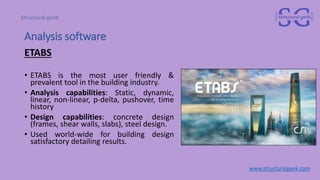
ETABS
• ETABS is the most user friendly &
prevalent tool in the building industry.
• Analysis capabilities: Static, dynamic,
linear, non-linear, p-delta, pushover, time
history
• Design capabilities: concrete design
(frames, shear walls, slabs), steel design.
• Used world-wide for building design
satisfactory detailing results.
www.structuralgeek.com
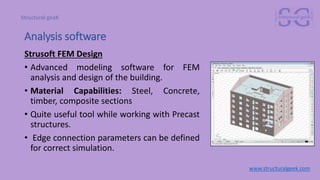
Strusoft FEM Design
• Advanced modeling software for FEM
analysis and design of the building.
• Material Capabilities: Steel, Concrete,
timber, composite sections
• Quite useful tool while working with Precast
structures.
• Edge connection parameters can be defined
for correct simulation.
www.structuralgeek.com
Analysis software
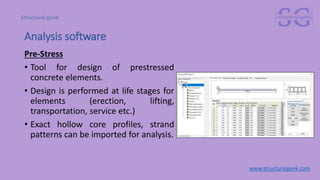
Pre-Stress
• Tool for design of prestressed
concrete elements.
• Design is performed at life stages for
elements (erection, lifting,
transportation, service etc.)
• Exact hollow core profiles, strand
patterns can be imported for analysis.
www.structuralgeek.com
Analysis software
Summary
• Precast concrete structures offer fast built & better-quality products
than cast in-situ buildings.
• Repeatability & constructability are critical points while deciding the
precast scheme of the building.
• Fixed connection are generally avoided in precast buildings.
• Structural system needs to be developed in parallel with architectural
plans.
www.structuralgeek.com
THANK YOU!
www.structuralgeek.com

Precast Concrete Structure Session 01

  • 1.
    PRECAST CONCRETE STRUCTURE Session-1 Introduction to Precast Structures & Course Outline www.structuralgeek.com
  • 2.
    Table of Contents •Course outline • Introduction to precast structures • Need & challenges with precast structures • Technical basis for precast design • Architectural layout of G+5 building • Brief about the G+5 building • Structural codes • Analysis software www.structuralgeek.com
  • 3.
    Learning Objective • Bythe end of this presentation, you will have basic understanding about precast structures. • The presentation nudges you towards the think about the challenges faced during about the precast construction. • After understanding the presentation, you should be able to read the architectural drawings & develop structural plan accordingly. • Students will be equipped to know the structural codes needed to design a precast building. • Students will get a brief idea about the analysis software which are to be used in course further. www.structuralgeek.com
  • 4.
    Course Outline • Briefintroduction about the precast concrete structures and its usage & application in the industry. • Concept structural system of the G + 5 building using the architectural plans. • Developing the structural framing plan to ground the vertical & lateral forces. • Developing precast scheme for the building, breaking down to precast elements & schematic connections. • Detailed design : load calculations, combinations, strength & SLS parameters. www.structuralgeek.com
  • 5.
    Course Outline • Preparingthe analytical model for the building structure in ETABS. (geometry, loading, connection, foundation) • Analyzing the behavior of the analytical model. (deflected shape, reaction, mode shapes, uplifts. www.structuralgeek.com 3D BIM model of a precast building structure • Foundation design for the building Structure. • Precast member design & precast connection design. • Diaphragm design & robustness for the building.
  • 6.
    Precast Concrete Structure www.structuralgeek.com •Precast structures are casted earlier, then transported & erected on the site to produce the finish building structure. • It is alternate to the conventional cast in-situ construction, which helps enhance product quality & reduce the time of construction. • Precast structure need not be only of concrete, it can be mixture of steel, concrete or some material. • The elements are casted (at site/plant), demolded, lifted, transported to site, assembled & erected. • Precast element are of better strength and finish because of their controlled production environment.
  • 7.
    Precast Concrete Structure www.structuralgeek.com Shopto Site (Precast wall element) Reinforcement for walls on Tilting table Wall lifted from Tilting table A-frame for wall transport Walls being erected at site
  • 8.
    Typical Precast Elements Filligreeslab panels Hollow core slabs Precast Sandwich walls Precast Staircase Precast Concrete Structure www.structuralgeek.com
  • 9.
    Typical Precast Connections WallShoe Connection Wall –wall wire loop connection Wall – wall insert plate connection Hollow core slab – wall Connection Precast Concrete Structure www.structuralgeek.com
  • 10.
    Structural Design ofPrecast Building Building Specifications • Number of stories : G + 5 • Floor plate dimension : 17 m X 11 m • Location of the Structure : Kanpur • Soil bearing capacity : 150 KN/m2 • Soil subgrade modulus: 10000 KN/m3 • Floor height: 2.7m (Stilt floor), 3.0m (Typical floor) www.structuralgeek.com
  • 11.
    Architectural Plan ofBuilding Arch. Plan at ground floor level Ground floor plan • Stilt floor • Floor dimension 11mX 17m • Usage : Parking • Floor Height = 2.7m www.structuralgeek.com
  • 12.
    Arch. Plan attypical floor -1 level Typical floor plan-1 • Typical floor • Floor dimension 11mX 17m • Usage : Residential • Floor Height = 3.0m • Level 2 – Level 5 Source : self www.structuralgeek.com Architectural Plan of Building
  • 13.
    Structural codes • Thissegment has the structural codes and references which will be followed during the entire course. • IS 456 :Plain and reinforced concrete • IS 875 (Part 1-5) : Design Loads(other than earthquake) for buildings and structures • IS 1893 :Criterion for earthquake resistant design of structures • IS 13920: Ductile detailing of reinforced concrete structures subjected to seismic forces www.structuralgeek.com
  • 14.
    • IS 15916:Building Design and Erection Using Prefabricated concrete • FIB 43: Bulletin 43 - Structural Connections for Precast Concrete Buildings www.structuralgeek.com Structural codes
  • 15.
    Analysis software ETABS • ETABSis the most user friendly & prevalent tool in the building industry. • Analysis capabilities: Static, dynamic, linear, non-linear, p-delta, pushover, time history • Design capabilities: concrete design (frames, shear walls, slabs), steel design. • Used world-wide for building design satisfactory detailing results. www.structuralgeek.com
  • 16.
    Strusoft FEM Design •Advanced modeling software for FEM analysis and design of the building. • Material Capabilities: Steel, Concrete, timber, composite sections • Quite useful tool while working with Precast structures. • Edge connection parameters can be defined for correct simulation. www.structuralgeek.com Analysis software
  • 17.
    Pre-Stress • Tool fordesign of prestressed concrete elements. • Design is performed at life stages for elements (erection, lifting, transportation, service etc.) • Exact hollow core profiles, strand patterns can be imported for analysis. www.structuralgeek.com Analysis software
  • 18.
    Summary • Precast concretestructures offer fast built & better-quality products than cast in-situ buildings. • Repeatability & constructability are critical points while deciding the precast scheme of the building. • Fixed connection are generally avoided in precast buildings. • Structural system needs to be developed in parallel with architectural plans. www.structuralgeek.com
  • 19.