Practice methods

Practice does not make perfect. Only perfect practice makes
                         perfect.


                Matt             Massed
               Doesnt           Distributed
                 Feel              Fixed
                 Very             Varied
                Macho             Mental
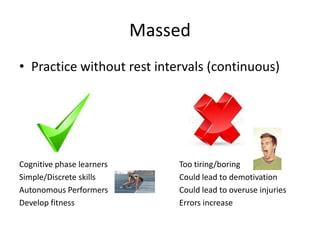
Massed
• Practice without rest intervals (continuous)


Cognitive phase learners       Too tiring/boring
Simple/Discrete skills         Could lead to demotivation
Autonomous Performers          Could lead to overuse injuries
Develop fitness                Errors increase
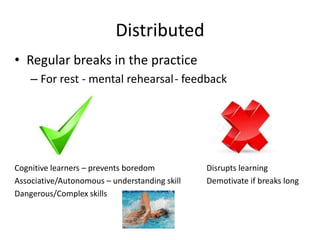
Distributed
• Regular breaks in the practice
    – For rest - mental rehearsal- feedback


Cognitive learners – prevents boredom          Disrupts learning
Associative/Autonomous – understanding skill   Demotivate if breaks long
Dangerous/Complex skills
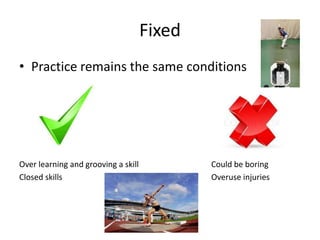
Fixed
• Practice remains the same conditions


Over learning and grooving a skill           Could be boring
Closed skills                                Overuse injuries
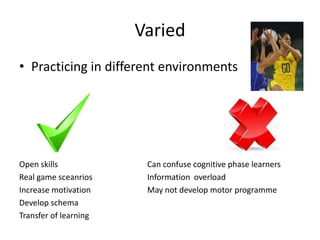
Varied
• Practicing in different environments


Open skills             Can confuse cognitive phase learners
Real game sceanrios     Information overload
Increase motivation     May not develop motor programme
Develop schema
Transfer of learning
Mental
• Going through the skill in your head –
  visualisation. Creating a mental picture!


Autonomous performers                      Some personalities find it difficult
Works well with distributed practice        Not easy to apply to competition
Helps learning patterns/movements/routines
Can visualise faults and corrections
Reduces reaction time
Improve confidence

Practice methods

  • 1.
    Practice methods Practice doesnot make perfect. Only perfect practice makes perfect. Matt Massed Doesnt Distributed Feel Fixed Very Varied Macho Mental
  • 2.
    Massed • Practice withoutrest intervals (continuous) Cognitive phase learners Too tiring/boring Simple/Discrete skills Could lead to demotivation Autonomous Performers Could lead to overuse injuries Develop fitness Errors increase
  • 3.
    Distributed • Regular breaksin the practice – For rest - mental rehearsal- feedback Cognitive learners – prevents boredom Disrupts learning Associative/Autonomous – understanding skill Demotivate if breaks long Dangerous/Complex skills
  • 4.
    Fixed • Practice remainsthe same conditions Over learning and grooving a skill Could be boring Closed skills Overuse injuries
  • 5.
    Varied • Practicing indifferent environments Open skills Can confuse cognitive phase learners Real game sceanrios Information overload Increase motivation May not develop motor programme Develop schema Transfer of learning
  • 6.
    Mental • Going throughthe skill in your head – visualisation. Creating a mental picture! Autonomous performers Some personalities find it difficult Works well with distributed practice Not easy to apply to competition Helps learning patterns/movements/routines Can visualise faults and corrections Reduces reaction time Improve confidence