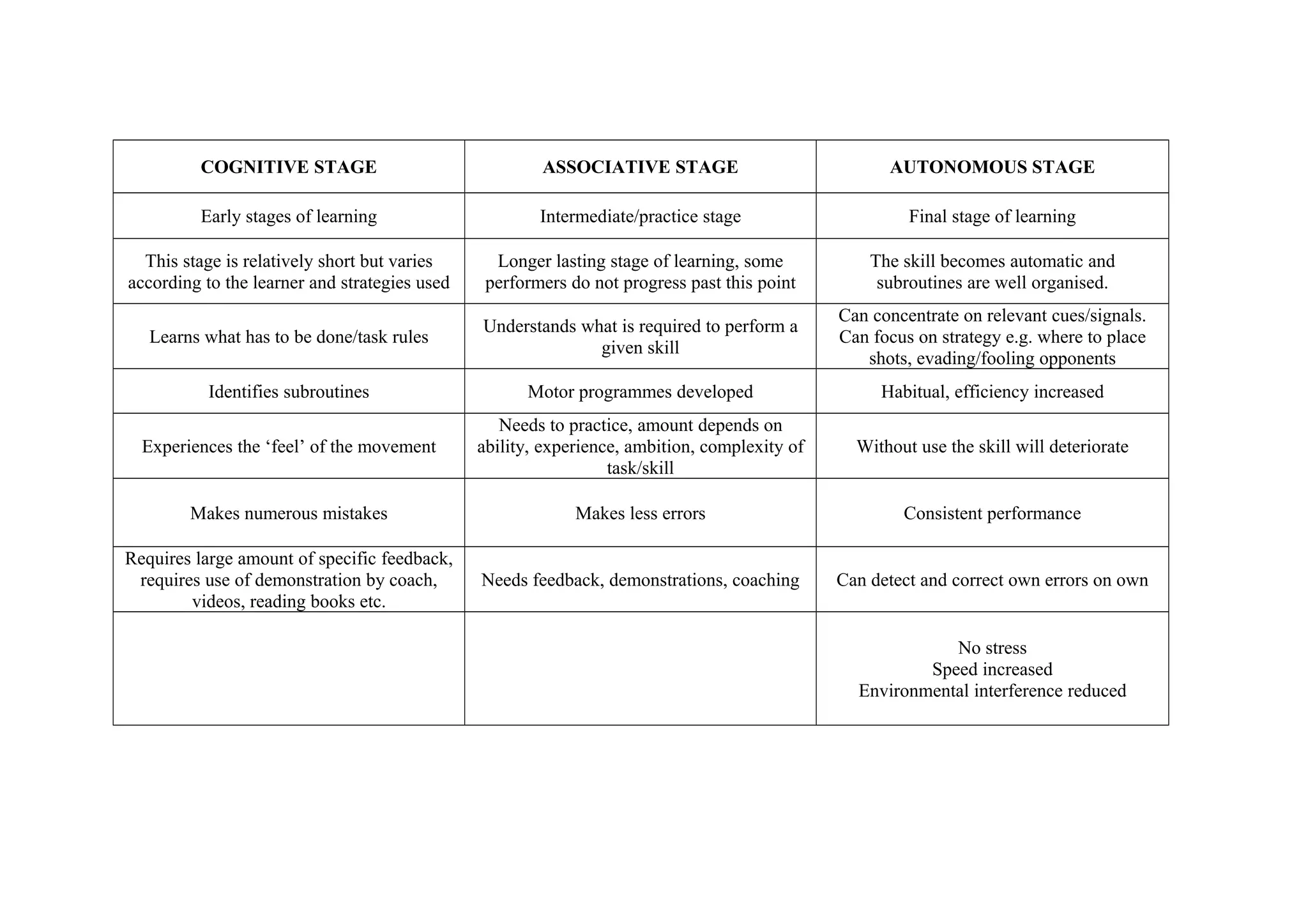
COGNITIVE STAGE                               ASSOCIATIVE STAGE                            AUTONOMOUS STAGE

         Early stages of learning                      Intermediate/practice stage                     Final stage of learning

  This stage is relatively short but varies      Longer lasting stage of learning, some           The skill becomes automatic and
according to the learner and strategies used    performers do not progress past this point         subroutines are well organised.
                                                                                              Can concentrate on relevant cues/signals.
                                               Understands what is required to perform a
   Learns what has to be done/task rules                                                      Can focus on strategy e.g. where to place
                                                             given skill
                                                                                                 shots, evading/fooling opponents
           Identifies subroutines                    Motor programmes developed                    Habitual, efficiency increased
                                                  Needs to practice, amount depends on
  Experiences the ‘feel’ of the movement       ability, experience, ambition, complexity of     Without use the skill will deteriorate
                                                                 task/skill

        Makes numerous mistakes                             Makes less errors                         Consistent performance

Requires large amount of specific feedback,
 requires use of demonstration by coach,       Needs feedback, demonstrations, coaching       Can detect and correct own errors on own
        videos, reading books etc.

                                                                                                           No stress
                                                                                                        Speed increased
                                                                                                Environmental interference reduced

Stages of learning

  • 1.
    COGNITIVE STAGE ASSOCIATIVE STAGE AUTONOMOUS STAGE Early stages of learning Intermediate/practice stage Final stage of learning This stage is relatively short but varies Longer lasting stage of learning, some The skill becomes automatic and according to the learner and strategies used performers do not progress past this point subroutines are well organised. Can concentrate on relevant cues/signals. Understands what is required to perform a Learns what has to be done/task rules Can focus on strategy e.g. where to place given skill shots, evading/fooling opponents Identifies subroutines Motor programmes developed Habitual, efficiency increased Needs to practice, amount depends on Experiences the ‘feel’ of the movement ability, experience, ambition, complexity of Without use the skill will deteriorate task/skill Makes numerous mistakes Makes less errors Consistent performance Requires large amount of specific feedback, requires use of demonstration by coach, Needs feedback, demonstrations, coaching Can detect and correct own errors on own videos, reading books etc. No stress Speed increased Environmental interference reduced