EXPLORING FILMS OUTSIDE HOLLYWOODThe best way of learning what knowledge is required for this unit is to look at the exam questions.We’re going to be going through the exam questions and deciding the best way to answer them the numbers in brackets refer to the amount of marks available for that question.
1. Briefly describe one important setting or location in the film(2)Kliptown (the township), The Dube’s house, Tsotsi’s hut, any others?Name the settingDescribe what it looks likeKliptown the township which Tsotsi live in, looks like a poor area due to the use of corrugated iron used as roofs on the huts, also women are queuing at a tap for what, and the air looks smoky.The train station where the gang mug and murder and manMiriam’s house – although in the township looks well looked after and signifies the creativeness of the people who live theirTsotsi’s hut – very small and filled with what looks like stolen good, no running water or electricityThe Dube’s house – very large in the urban area of Johannesburg
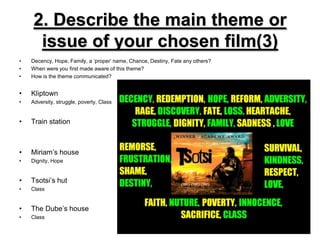
2. Describe the main theme or issue of your chosen film(3)Decency, Hope, Family, a ‘proper’ name, Chance, Destiny, Fate any others?When were you first made aware of this theme?How is the theme communicated?KliptownAdversity, struggle, poverty, ClassTrain stationMiriam’s houseDignity, HopeTsotsi’s hutClassThe Dube’s houseClass
3. Explain how the setting or location you described in Q1 relates to thethemes or issues of your chosen film.(5)Think about the use of mise-en-scene, and how it has been constructed to put the theme/ issue acrossMiriam's house relates to the theme of hope this is only clear when presented in opposition to Tsotsi hut. The colours in Miriam's home play with light, she uses glass to make ornaments and mobiles that play with light. Her sewing machine, her clothing and the decoration on her room are all about the use of colour. This is different to Tsotsi hut which is dark and reflects he’s hopeless existence, where as it doesn’t matter what Miriam has been through she and her house still represent hope in the face of adversity.The Dube’s house again only has meaning in contrast to Kliptown and Tsotsi’s hut. It relates to the theme of class and makes a clear distinction between the ‘haves’ and ‘have not's’. It reminds the audience of the class disparities that exist in South Africa
4. Choose one important character from your chosen film. Name and briefly describe the character.(2)What is the main characters name?Make sure you have the correct spelling?Does the name mean anything?Can you give any back ground information on him that might help us to understand him?
5. How is your first impression of this character created?(4)Think about: use of mise-en-scene (props, costume, etc)PerformanceCamerawork
6. Choose a key scene in which this character appears. Why is this sceneimportant to the film's narrative?(6)Choose a key scene that represents a turning point in the film’s narrativeDescribe the scene and the point it happens in the film (beginning, middle, end?)Use micro elements to talk about the sceneWhat happens to the character as a consequence of this scene?
7. How far does your character change over the course of the film?(8)Describe what the character was like at the beginningDescribe some events that way have caused them to changeDescribe what the character is like at he end of the film and why

Practice exam questions 1with notes

  • 1.
    EXPLORING FILMS OUTSIDEHOLLYWOODThe best way of learning what knowledge is required for this unit is to look at the exam questions.We’re going to be going through the exam questions and deciding the best way to answer them the numbers in brackets refer to the amount of marks available for that question.
  • 2.
    1. Briefly describeone important setting or location in the film(2)Kliptown (the township), The Dube’s house, Tsotsi’s hut, any others?Name the settingDescribe what it looks likeKliptown the township which Tsotsi live in, looks like a poor area due to the use of corrugated iron used as roofs on the huts, also women are queuing at a tap for what, and the air looks smoky.The train station where the gang mug and murder and manMiriam’s house – although in the township looks well looked after and signifies the creativeness of the people who live theirTsotsi’s hut – very small and filled with what looks like stolen good, no running water or electricityThe Dube’s house – very large in the urban area of Johannesburg
  • 3.
    2. Describe themain theme or issue of your chosen film(3)Decency, Hope, Family, a ‘proper’ name, Chance, Destiny, Fate any others?When were you first made aware of this theme?How is the theme communicated?KliptownAdversity, struggle, poverty, ClassTrain stationMiriam’s houseDignity, HopeTsotsi’s hutClassThe Dube’s houseClass
  • 4.
    3. Explain howthe setting or location you described in Q1 relates to thethemes or issues of your chosen film.(5)Think about the use of mise-en-scene, and how it has been constructed to put the theme/ issue acrossMiriam's house relates to the theme of hope this is only clear when presented in opposition to Tsotsi hut. The colours in Miriam's home play with light, she uses glass to make ornaments and mobiles that play with light. Her sewing machine, her clothing and the decoration on her room are all about the use of colour. This is different to Tsotsi hut which is dark and reflects he’s hopeless existence, where as it doesn’t matter what Miriam has been through she and her house still represent hope in the face of adversity.The Dube’s house again only has meaning in contrast to Kliptown and Tsotsi’s hut. It relates to the theme of class and makes a clear distinction between the ‘haves’ and ‘have not's’. It reminds the audience of the class disparities that exist in South Africa
  • 5.
    4. Choose oneimportant character from your chosen film. Name and briefly describe the character.(2)What is the main characters name?Make sure you have the correct spelling?Does the name mean anything?Can you give any back ground information on him that might help us to understand him?
  • 6.
    5. How isyour first impression of this character created?(4)Think about: use of mise-en-scene (props, costume, etc)PerformanceCamerawork
  • 7.
    6. Choose akey scene in which this character appears. Why is this sceneimportant to the film's narrative?(6)Choose a key scene that represents a turning point in the film’s narrativeDescribe the scene and the point it happens in the film (beginning, middle, end?)Use micro elements to talk about the sceneWhat happens to the character as a consequence of this scene?
  • 8.
    7. How fardoes your character change over the course of the film?(8)Describe what the character was like at the beginningDescribe some events that way have caused them to changeDescribe what the character is like at he end of the film and why