Practical
Research 2
MODULE 1 - NATURE OF INQUIRY AND RESEARCH
Experimental and
Non-experimental
Research
03
Classification of Quantitative Research
a. Experimental Research - is a classical scientific experiment,
similar to those performed in high school science classes. It is
based on the comparison between two or more groups with a
straightforward logic, which may, however, be difficult to
execute.
Ex. Sample A – plant exposed to sunlight
Sample B – plant kept away from sunlight
If after the duration of the research, we find out that sample A
grows and sample B dies, even though they are both regularly
watered and given the same treatment. Therefore, we can
conclude that sunlight will aid growth in all similar plants.
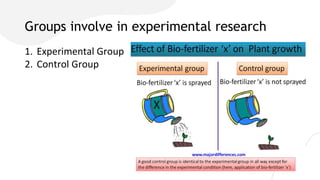
Groups involve in experimental research
1. Experimental Group
2. Control Group
Classification of Experimental Research
1.True Experimental Research – requires pre-
testing of RANDOMIZED control and
experimental group.
2.Quasi-experimental Research – a type of
experimental design in which the researcher
DOES NOT USE RANDOM ASSIGNMENT of
subjects to groups.
Quasi
Research Design of Experimental Research
1. Specify the problem or topic of your research.
2. Formulate the research problem or hypothesis.
3. Determine the dependent and independent
variables.
4. Select the participants or subject.
5. Decide on the specific type of experimental
research.
6. Conduct the experiment.
7. Collect, analyze and interpret the results.
Non-experimental Research
Is a way of finding out truths about a subject by describing the
collected data about such subject and determining their relationships
and connections with one another.
It deals with both quantitative and qualitative data, desiring to
discover people’s thoughts, views, feelings and attitudes about a
certain societal issue, object, place or event.
Characteristics of Non-Experimental Research
1. Capable of establishing cause-effect relationship, by itself.
2. Involves various ways of data analysis:
• Primary – analysis of data collected by the researcher
himself.
• Secondary – examination of data collected by other
people.
• Meta-analysis – analysis of data expressed numerically.
Survey Research
a method of research that aims at knowing what a big
number of people think and feel about some sociological
issues. The data it collects from these people serving as
"representatives or informants" explain or describe the
society's thoughts, attitudes and feelings towards
environmental issues.
Purposes of Survey Research
1. To obtain information about people’s opinion and feelings
about an issue.
2. To identify present condition, needs or problems of
people in a short span of time.
3. To seek answers to social problems.
4. To give school officials pointers on curricular offerings,
guidance and counselling services, teacher evaluation and
so on.
Strengths of Survey Research
1. Versatility – can tackle any issue affecting the society
2. Efficiency – not costly in terms of money and time,
assuming there is excellent communication or postal
system
3. Generality – can get a good representation or sample of
large group of people
4. Confidentiality – capable of safeguarding the privacy or
anonymity of the respondents
PR2_lesson3.pptx

PR2_lesson3.pptx

  • 1.
    Practical Research 2 MODULE 1- NATURE OF INQUIRY AND RESEARCH
  • 2.
  • 3.
    Classification of QuantitativeResearch a. Experimental Research - is a classical scientific experiment, similar to those performed in high school science classes. It is based on the comparison between two or more groups with a straightforward logic, which may, however, be difficult to execute. Ex. Sample A – plant exposed to sunlight Sample B – plant kept away from sunlight If after the duration of the research, we find out that sample A grows and sample B dies, even though they are both regularly watered and given the same treatment. Therefore, we can conclude that sunlight will aid growth in all similar plants.
  • 4.
    Groups involve inexperimental research 1. Experimental Group 2. Control Group
  • 5.
    Classification of ExperimentalResearch 1.True Experimental Research – requires pre- testing of RANDOMIZED control and experimental group. 2.Quasi-experimental Research – a type of experimental design in which the researcher DOES NOT USE RANDOM ASSIGNMENT of subjects to groups.
  • 7.
  • 10.
    Research Design ofExperimental Research 1. Specify the problem or topic of your research. 2. Formulate the research problem or hypothesis. 3. Determine the dependent and independent variables. 4. Select the participants or subject. 5. Decide on the specific type of experimental research. 6. Conduct the experiment. 7. Collect, analyze and interpret the results.
  • 11.
    Non-experimental Research Is away of finding out truths about a subject by describing the collected data about such subject and determining their relationships and connections with one another. It deals with both quantitative and qualitative data, desiring to discover people’s thoughts, views, feelings and attitudes about a certain societal issue, object, place or event.
  • 13.
    Characteristics of Non-ExperimentalResearch 1. Capable of establishing cause-effect relationship, by itself. 2. Involves various ways of data analysis: • Primary – analysis of data collected by the researcher himself. • Secondary – examination of data collected by other people. • Meta-analysis – analysis of data expressed numerically.
  • 14.
    Survey Research a methodof research that aims at knowing what a big number of people think and feel about some sociological issues. The data it collects from these people serving as "representatives or informants" explain or describe the society's thoughts, attitudes and feelings towards environmental issues.
  • 18.
    Purposes of SurveyResearch 1. To obtain information about people’s opinion and feelings about an issue. 2. To identify present condition, needs or problems of people in a short span of time. 3. To seek answers to social problems. 4. To give school officials pointers on curricular offerings, guidance and counselling services, teacher evaluation and so on.
  • 19.
    Strengths of SurveyResearch 1. Versatility – can tackle any issue affecting the society 2. Efficiency – not costly in terms of money and time, assuming there is excellent communication or postal system 3. Generality – can get a good representation or sample of large group of people 4. Confidentiality – capable of safeguarding the privacy or anonymity of the respondents