WRITING THE
WRITING THE
INTRODUCTION
INTRODUCTION
& ITS SUB-SECTIONS
& ITS SUB-SECTIONS
B u k i d n o n N a t i o n a l H i g h S c h o o l
Lesson 6
Lesson 6
PRACTICAL RESEARCH 1
Prepared by: Joevi Jhun A. Idul, SST-I
Checkpoint:
What do you think is
the importance of
CHAPTER 1 in
research?
Short activity
AGREE/ DISAGREE
Evaluate whether the
statements describe a
characteristic of
THE INTRODUCTION.
01
AGREE/ DISAGREE
It presents the
results/ findings of
the present study.
02
AGREE/ DISAGREE
It justifies the need
to conduct the
study.
03
AGREE/ DISAGREE
It states the
objective of the
study.
04
AGREE/ DISAGREE
It gives further
recommendations
for future
researches.
05
AGREE/ DISAGREE
It states who will
benefit from the
results of the study.
THE INTRODUCTION
This familiarizes the reader
with the background of the
study, statement of the
research problem investigated,
why the study was conducted
and how these target groups
will benefit from the study
(Caintic & Cruz, 2008)
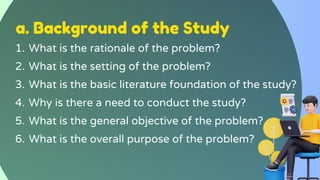
a. Background of the Study
What is the rationale of the problem?
1.
What is the setting of the problem?
2.
What is the basic literature foundation of the study?
3.
Why is there a need to conduct the study?
4.
What is the general objective of the problem?
5.
What is the overall purpose of the problem?
6.
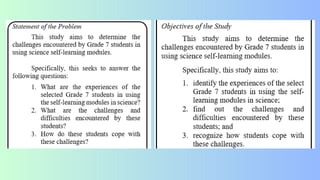
b. Statement of the Problem/
Objectives of the Study
In the statement of the problem, the
problem is divided into main and
sub-problems.
The Objective of the Study is a
direct descriptive restatement
derived from the research problems.
c. Significance of the Study
Who will benefit from the study?
How will they benefit from the
results of the study?
d. Scope & Delimitation
of the Study
The scope of the study is determined
primarily by the selection of variables
that the research study will focus on.
The delimitation of the study describes
the various limitations that arose
during the design and conduct of the
study.
Possible limitations:
Sample size
Lack of available and/or reliable data
Lack of prior studies
Chosen data collection method
Nature of the information collected
Duration/ Time-constraints
Cost
Tips in Writing the Scope &
Delimitation of the Study:
Make sure that your write-up includes the following:
1.A statement of your general objective (main problem)
and sub-problems (1-2 sentences)
2.Where and when the study will be conducted (1
sentence)
3.Who are the participants of the study, and what is the
sampling technique you applied in choosing these
participants (1 sentence)
4.Research design; State your data collection method
and your research instrument (1-2 sentences)
5.Statistical treatment/ data analysis (1 sentence)
e. Definition of Terms
The definition of key terms will help
clarify the purpose and direction of the
study being conducted.
The terms should be defined as used in
the study or research or within the
content being discussed.
Arranged alphabetically
LET’S START
WRITING.
WRITING THE
WRITING THE
INTRODUCTION
INTRODUCTION
& ITS SUB-SECTIONS
& ITS SUB-SECTIONS
B u k i d n o n N a t i o n a l H i g h S c h o o l
Lesson 6
Lesson 6
PRACTICAL RESEARCH 1
Prepared by: Joevi Jhun A. Idul, SST-I
Have you learned
something today?

PR1-Lesson-6-Writing-the-Introduction-Its-Subsections_PPT_JJAI.pdf

  • 1.
    WRITING THE WRITING THE INTRODUCTION INTRODUCTION &ITS SUB-SECTIONS & ITS SUB-SECTIONS B u k i d n o n N a t i o n a l H i g h S c h o o l Lesson 6 Lesson 6 PRACTICAL RESEARCH 1 Prepared by: Joevi Jhun A. Idul, SST-I
  • 2.
    Checkpoint: What do youthink is the importance of CHAPTER 1 in research?
  • 3.
    Short activity AGREE/ DISAGREE Evaluatewhether the statements describe a characteristic of THE INTRODUCTION.
  • 4.
    01 AGREE/ DISAGREE It presentsthe results/ findings of the present study.
  • 5.
    02 AGREE/ DISAGREE It justifiesthe need to conduct the study.
  • 6.
    03 AGREE/ DISAGREE It statesthe objective of the study.
  • 7.
    04 AGREE/ DISAGREE It givesfurther recommendations for future researches.
  • 8.
    05 AGREE/ DISAGREE It stateswho will benefit from the results of the study.
  • 9.
    THE INTRODUCTION This familiarizesthe reader with the background of the study, statement of the research problem investigated, why the study was conducted and how these target groups will benefit from the study (Caintic & Cruz, 2008)
  • 10.
    a. Background ofthe Study What is the rationale of the problem? 1. What is the setting of the problem? 2. What is the basic literature foundation of the study? 3. Why is there a need to conduct the study? 4. What is the general objective of the problem? 5. What is the overall purpose of the problem? 6.
  • 11.
    b. Statement ofthe Problem/ Objectives of the Study In the statement of the problem, the problem is divided into main and sub-problems. The Objective of the Study is a direct descriptive restatement derived from the research problems.
  • 13.
    c. Significance ofthe Study Who will benefit from the study? How will they benefit from the results of the study?
  • 14.
    d. Scope &Delimitation of the Study The scope of the study is determined primarily by the selection of variables that the research study will focus on. The delimitation of the study describes the various limitations that arose during the design and conduct of the study.
  • 15.
    Possible limitations: Sample size Lackof available and/or reliable data Lack of prior studies Chosen data collection method Nature of the information collected Duration/ Time-constraints Cost
  • 16.
    Tips in Writingthe Scope & Delimitation of the Study: Make sure that your write-up includes the following: 1.A statement of your general objective (main problem) and sub-problems (1-2 sentences) 2.Where and when the study will be conducted (1 sentence) 3.Who are the participants of the study, and what is the sampling technique you applied in choosing these participants (1 sentence) 4.Research design; State your data collection method and your research instrument (1-2 sentences) 5.Statistical treatment/ data analysis (1 sentence)
  • 17.
    e. Definition ofTerms The definition of key terms will help clarify the purpose and direction of the study being conducted. The terms should be defined as used in the study or research or within the content being discussed. Arranged alphabetically
  • 18.
  • 19.
    WRITING THE WRITING THE INTRODUCTION INTRODUCTION &ITS SUB-SECTIONS & ITS SUB-SECTIONS B u k i d n o n N a t i o n a l H i g h S c h o o l Lesson 6 Lesson 6 PRACTICAL RESEARCH 1 Prepared by: Joevi Jhun A. Idul, SST-I Have you learned something today?