Binming Li
27428486
Burberry
in
A Global Market
An overview history
1891
founded by
Thomas
Burberry
1901
appointed
to be
military
uniform
1910 first
Burberry
store in
Paris
1911
support the
exploration
of South
Pole
1970 first
Burberry
New York
store
2009 new
London and
New York
headquarter
s
2011 first
Burberry
Beijing store
2012 first
Burberry
Taiwan store
(Burberryplc, 2012)
An overview history
• Burberry is a luxury brand which possesses the traditional
British style, which includes
• womenswear,
• accessories, handbags,
• footwear,
• menswear,
• children's clothing,
• beauty makeup, perfume,
• housewares and gifts
• Classic check pattern
(Burberryplc, 2012)
Thedevelopment of Burberry in Japanese
market
• Burberry negotiated a wholesale agreement with the Japanese retailers
(Burberryplc, 2012)
• Burberry launched a different Burberry London lines for its Japanese
market (Moore & Birtwistle, 2004)
•Products are distributed under the Burberry London brand name (ibid.)
Strategiesof development
Targeting Positioning
Issues
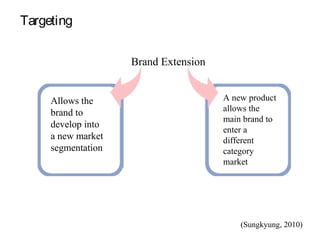
Targeting
A new product
allows the
main brand to
enter a
different
category
market
Brand Extension
Allows the
brand to
develop into
a new market
segmentation
(Sungkyung, 2010)
Targeting
Burberry Blue
Label
Burberry Black
Label
•A leisure wear
•Targets younger women
•Targets at younger male
consumers
•A collection of tailoring
clothing and sportswear
•“Elegant yet affordable
men’s fashion”(Monden,
2015, pp. 144)(Moore & Birtwistle, 2004)
Positioning
•Concept
•The policies and actions that utilized to establish and maintain a certain image for a
product inside the mind of consumers in order for the product to show certain
characteristics that demanded by the targeted customer segmentation (Ferrell & Pride,
2010)
•Positioning of Burberry
•A luxury brand with high taste and unique design for customers in higher social class
However…
•The alteration of creating a younger and more affordable brand image allows its
consumers to re-interpret the brand (Tungate, 2012)
•The price of Black label and Blue label exclusively for Japanese market which mainly
target at younger customers is relatively lower and more accessible, therefore may cause a
self-devaluation of brand image
premium
market in
Japan and
other Asia
markets
counterfeiting
influenced by
the slow
economic
growth
Issues
•Andante economic growth
in Asian market
•A reduce in spending
•The demand of luxury
goods decreases
•Make the brand less
valuable
•Burberry should not
be branded as a mass
premium product
•Make the brand
ubiquitous again
•Iconic symbols are copied
by others
•The proliferation of symbols
caused a damage of the
image of the brand (Oswald,
2012)
•Asian market as the the main
force in counterfeiting
(Chesters, 2012)
Polo ArmaniCoach
Competitors in the fashion industry
Burberry and itscompetitors
Gucci
•Accessory
•includes watches,
•shoes,
•scarves and
•Handbags
•Low-end market
•more affordable for
massive consumers
(Jacobson, 2015)
•Concentrates on
apparel
•A more
affordable price
•High quality
(Jacobson, 2015)
•One of top 10
global luxury
products
•Focuses on
clothing
•Top luxury
brands in the
fashion market
(Jacobson, 2015)
•One of top 10 global
luxury products
•Concentrates on
luxury accessories
(Jacobson, 2015)
•Suffers the influences
of counterfeit goods in
its Asia market
Burberry and itscompetitors
Apparel Accessory
Makeup
&fragrance
•Horizontal brand extension
•Enter different categories in the fashion industry
•The brand is more sustainable (Jacobson, 2015)
Bibliography
Burberryplc (2012) “Fragrance and Beauty to be Directly Operated”. [Online]
Avaiable at:
http://www.burberryplc.com/media_centre/press_releases/2012/fragrance_and_beauty_to_be_directly_operated
[Accessed date: 22.4.2015]
Chesters, L. (2012) “Far East Fakes: The Burgeoning Underworld of Counterfeit Goods”. [Online]
Available at: http://www.independent.co.uk/news/business/analysis-and-features/far-east-fakes-the-burgeoning-underworldof-counterfeit-goods-
8301450.html
[Accessed date: 30.04.2015]
Ferrell, O. C. & Pride, W. M. (2010) “Target Markets: Segmentation, Evaluation, and Positioning”. Marketing. United State of America: Cengage
Learning
Jacobson, L. M. (2015) “Burberry Case Study”. [Online]
Available at: https://laurenmjacobson.wordpress.com/case-studies/burberry-case-study/
[Accessed date: 25.04.2015]
Sungkyung, I. (2010) “The Comparative Study on the Extension Brands of Fashion Industry”. Journal of Fashion Business, Vol. 14, No. 3, pp. 97-115.
Chungcheongnam-do: Sangmyung University
Monden, M. (2015) “Rugged Suavity: Take Ivy and IVY Illustrated”. Japanese Fashion Cultures: Dress and Gender in Contemporary Japan, pp. 144.
London: Bloomsbury Publishing Plc
Moore, C. M. & Birtwistle, G. (2004) “The Burberry Business Model: Creating An International Luxury Fashion Brand”. International Journal of Retail
& Distribution Management, Vol. 32, No. 8, pp. 412-422. London: Emerald
Nikkei (2015) “Burberry’s New Strategy in Japan”. [Online]
Available at: http://asia.nikkei.com/Business/Consumers/Burberry-s-new-strategy-in-Japan
[Accessed date: 22.4.2015]
Oswald, L. R. (2012) “Marketing Semiotics”. Signs, Strategies, and Brand Value. Oxford: Oxford University Press
Tungate, M . (2012) “Controlling the Plot”. Fashion Brands: Branding Style From Armani to Zara (3rd
Edition). London: Kogan Page Limited
Thank you for your patience!

Ppt4244

  • 1.
  • 2.
    An overview history 1891 foundedby Thomas Burberry 1901 appointed to be military uniform 1910 first Burberry store in Paris 1911 support the exploration of South Pole 1970 first Burberry New York store 2009 new London and New York headquarter s 2011 first Burberry Beijing store 2012 first Burberry Taiwan store (Burberryplc, 2012)
  • 3.
    An overview history •Burberry is a luxury brand which possesses the traditional British style, which includes • womenswear, • accessories, handbags, • footwear, • menswear, • children's clothing, • beauty makeup, perfume, • housewares and gifts • Classic check pattern (Burberryplc, 2012)
  • 4.
    Thedevelopment of Burberryin Japanese market • Burberry negotiated a wholesale agreement with the Japanese retailers (Burberryplc, 2012) • Burberry launched a different Burberry London lines for its Japanese market (Moore & Birtwistle, 2004) •Products are distributed under the Burberry London brand name (ibid.)
  • 5.
  • 6.
    Targeting A new product allowsthe main brand to enter a different category market Brand Extension Allows the brand to develop into a new market segmentation (Sungkyung, 2010)
  • 7.
    Targeting Burberry Blue Label Burberry Black Label •Aleisure wear •Targets younger women •Targets at younger male consumers •A collection of tailoring clothing and sportswear •“Elegant yet affordable men’s fashion”(Monden, 2015, pp. 144)(Moore & Birtwistle, 2004)
  • 8.
    Positioning •Concept •The policies andactions that utilized to establish and maintain a certain image for a product inside the mind of consumers in order for the product to show certain characteristics that demanded by the targeted customer segmentation (Ferrell & Pride, 2010) •Positioning of Burberry •A luxury brand with high taste and unique design for customers in higher social class However… •The alteration of creating a younger and more affordable brand image allows its consumers to re-interpret the brand (Tungate, 2012) •The price of Black label and Blue label exclusively for Japanese market which mainly target at younger customers is relatively lower and more accessible, therefore may cause a self-devaluation of brand image
  • 9.
    premium market in Japan and otherAsia markets counterfeiting influenced by the slow economic growth Issues •Andante economic growth in Asian market •A reduce in spending •The demand of luxury goods decreases •Make the brand less valuable •Burberry should not be branded as a mass premium product •Make the brand ubiquitous again •Iconic symbols are copied by others •The proliferation of symbols caused a damage of the image of the brand (Oswald, 2012) •Asian market as the the main force in counterfeiting (Chesters, 2012)
  • 10.
    Polo ArmaniCoach Competitors inthe fashion industry Burberry and itscompetitors Gucci •Accessory •includes watches, •shoes, •scarves and •Handbags •Low-end market •more affordable for massive consumers (Jacobson, 2015) •Concentrates on apparel •A more affordable price •High quality (Jacobson, 2015) •One of top 10 global luxury products •Focuses on clothing •Top luxury brands in the fashion market (Jacobson, 2015) •One of top 10 global luxury products •Concentrates on luxury accessories (Jacobson, 2015) •Suffers the influences of counterfeit goods in its Asia market
  • 11.
    Burberry and itscompetitors ApparelAccessory Makeup &fragrance •Horizontal brand extension •Enter different categories in the fashion industry •The brand is more sustainable (Jacobson, 2015)
  • 12.
    Bibliography Burberryplc (2012) “Fragranceand Beauty to be Directly Operated”. [Online] Avaiable at: http://www.burberryplc.com/media_centre/press_releases/2012/fragrance_and_beauty_to_be_directly_operated [Accessed date: 22.4.2015] Chesters, L. (2012) “Far East Fakes: The Burgeoning Underworld of Counterfeit Goods”. [Online] Available at: http://www.independent.co.uk/news/business/analysis-and-features/far-east-fakes-the-burgeoning-underworldof-counterfeit-goods- 8301450.html [Accessed date: 30.04.2015] Ferrell, O. C. & Pride, W. M. (2010) “Target Markets: Segmentation, Evaluation, and Positioning”. Marketing. United State of America: Cengage Learning Jacobson, L. M. (2015) “Burberry Case Study”. [Online] Available at: https://laurenmjacobson.wordpress.com/case-studies/burberry-case-study/ [Accessed date: 25.04.2015] Sungkyung, I. (2010) “The Comparative Study on the Extension Brands of Fashion Industry”. Journal of Fashion Business, Vol. 14, No. 3, pp. 97-115. Chungcheongnam-do: Sangmyung University Monden, M. (2015) “Rugged Suavity: Take Ivy and IVY Illustrated”. Japanese Fashion Cultures: Dress and Gender in Contemporary Japan, pp. 144. London: Bloomsbury Publishing Plc Moore, C. M. & Birtwistle, G. (2004) “The Burberry Business Model: Creating An International Luxury Fashion Brand”. International Journal of Retail & Distribution Management, Vol. 32, No. 8, pp. 412-422. London: Emerald Nikkei (2015) “Burberry’s New Strategy in Japan”. [Online] Available at: http://asia.nikkei.com/Business/Consumers/Burberry-s-new-strategy-in-Japan [Accessed date: 22.4.2015] Oswald, L. R. (2012) “Marketing Semiotics”. Signs, Strategies, and Brand Value. Oxford: Oxford University Press Tungate, M . (2012) “Controlling the Plot”. Fashion Brands: Branding Style From Armani to Zara (3rd Edition). London: Kogan Page Limited
  • 13.
    Thank you foryour patience!