MENSTRUAL IRREGULARITIES
INTRODUCTION:- Menstrual irregularities
are common abnormalities of a woman’s
menstrual cycle. Menstrual irregularities
include a variety of conditions in which
menstruation is irregular, heavy, painful, or
does not occur at all.
COMMON TYPES OF MENSTRUAL IRREGULARITIES INCLUDE:
Amenorrhea (when a teenager
does not get her period by age
16, or when a woman stops
getting her period for at least
three months and is not pregnant)
Dysmenorrhea (painful menstrual
periods)
CONTI---------
Oligomenorrhea (menstrual bleeding
occurring more than 35 days after the
last menstrual period, that is, less
than 10 periods a year).
Polymenorrhea (menstrual bleeding
occurring less than 21 days after the
last menstrual period, that is, more
than 12 periods a year) Spotting (light
irregular vaginal bleeding or vaginal
CONTI---------
Menstrual irregularities or their
symptoms, such as abnormal
vaginal bleeding, can be caused by
a wide variety of abnormal
conditions, including pregnancy,
hormonal imbalances or changes,
infection (sexually transmitted
diseases and other infections),
CONTI---------
 Some menstrual irregularities can
be caused by serious, even life-
threatening conditions, such as
uterine cancer. There is need
to seek prompt medical care if there
is following menstrual irregularities,
such as heavy menstrual periods or
a lack of menstrual periods. Early
diagnosis and treatment of
menstrual irregularities reduces the
MENSTRUATIONAND THE MENSTRUAL CYCLE
The menstrual cycle is the process
by which a woman’s body gets
ready for the chance of a pregnancy
each month. Menstruation is the
part of a woman’s monthly
menstrual cycle in which blood and
tissue are discharged from the
vagina. It is also commonly called
DEFINITION
Bleeding intervals longer than 35
days. Oligomenorrhea may be
transient during the transition to a
normal cycle.
CAUSES OF MENSTRUAL IRREGULARITIES
Potential causes
Menstrual irregularities can be
caused by a variety of underlying
factors, such as a pelvic infection,
or a disease, disorder or condition
of the ovaries or uterus. Causes of
menstrual irregularities include:
Polycystic ovary syndrome
Stress
Obesity
Age
Cancer
Extremely low levels of body fat,
which can be caused by
malnourishment, extreme physical
training, or eating disorders
CONTI---------
Ovulation
Perimenopause and menopause
Pregnancy
Puberty
Sexually transmitted diseases
(STDs) and pelvic inflammatory
disease (PID)
Side effect of certain medications,
POLYCYSTIC OVARIAN SYNDROME:-
Women who have
polycystic ovarian
syndrome suffer
from small cysts that
grow in their ovaries.
Polycystic ovarian
syndrome is one of
the causes of
menstrual
irregularities that
women should be
CONTI---------
POS often results in women having
light, irregular periods.
Women with menstrual irregularities
causes such as polycystic ovarian
syndrome do not always release an egg
and thus do not have a period.
Furthermore, their hormone levels are
often imbalanced and women may have
higher levels of testosterone
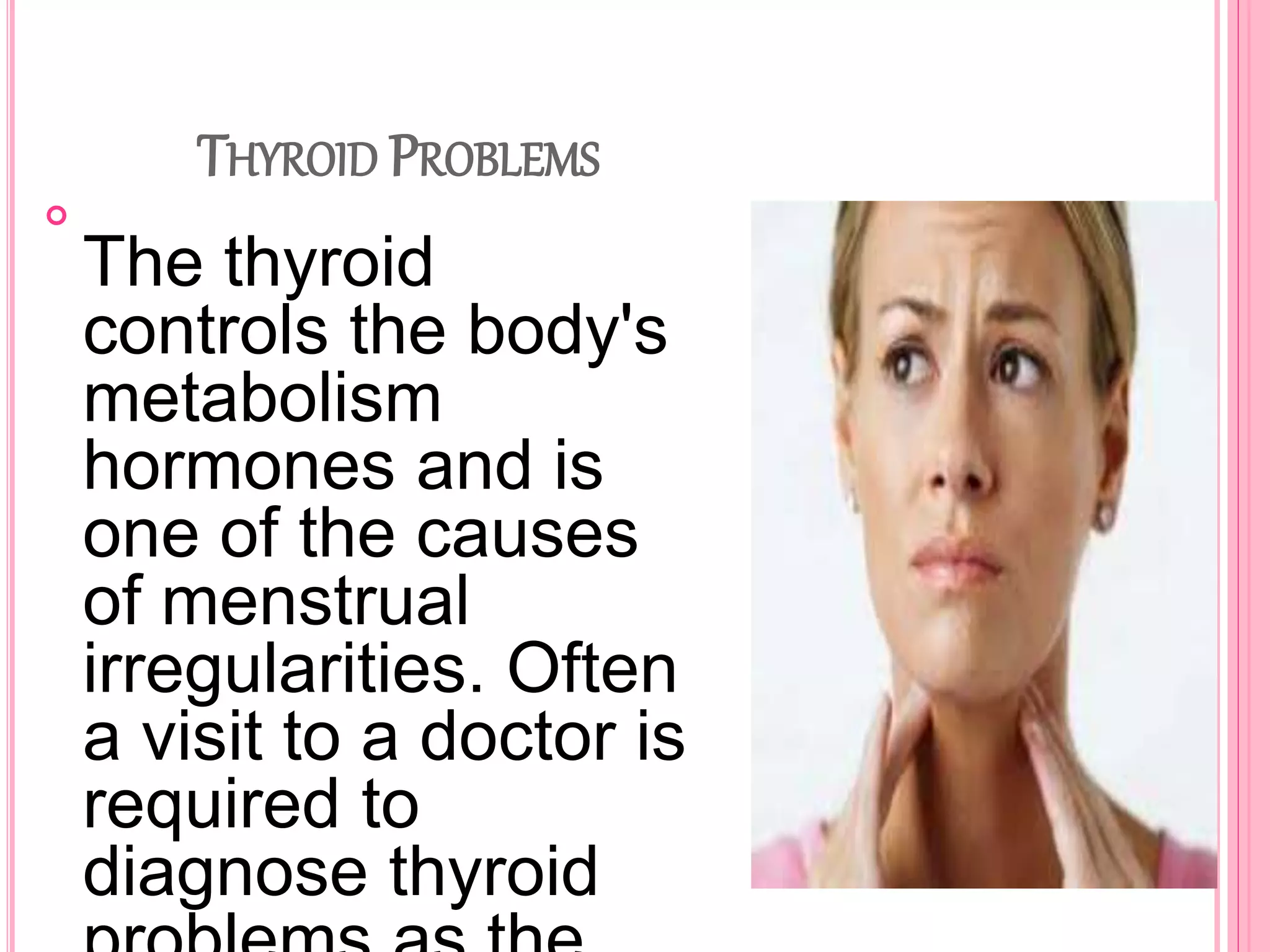
THYROID PROBLEMS

The thyroid
controls the body's
metabolism
hormones and is
one of the causes
of menstrual
irregularities. Often
a visit to a doctor is
required to
diagnose thyroid
STRESS
Stress is frequently
reported as one of the
causes of menstrual
irregularities. Women
suffering from high
amounts of anxiety,
experience an
imbalance of
hormones. The
imbalanced hormones
can then become a
cause of menstrual
EXTREME WEIGHT LOSS OR GAIN
Many menstrual
irregularities are
related to weight
fluctuations. Women
who are anorexic or
gain a large amount
of weight in a small
amount of time will
find that it is one of
the biggest causes
AGE
With age, a woman's menstrual
cycle can change dramatically and
aging is one of the major causes of
menstrual irregularities. Irregular
and heavy bleeding can be
common when women are
becoming pre menopausal
because of the changing hormone
CANCER
 although it is extremely rare,
and women should never
believe their problem is
cancer immediately; it can be
one of the causes of
menstrual irregularities.
Cancer of the cervix, or the
womb, can cause heavy
bleeding during sex and
disrupt the menstrual cycle.
 However, if women find that
their menstrual irregularities
are becoming worse they
should consult their doctor.
OTHER CONDITIONS THAT CAN CAUSE MENSTRUAL
IRREGULARITIES.
Amenorrhea Amenorrhea occurs
when a woman does not get her
period by age 16, or when she
stops getting her period for at
least three months and is not
pregnant.
Amenorrhea is not a disease.
Instead, it is a symptom of another
condition. Possible causes can
include moderate or excessive
exercising, eating disorders (such
as anorexia nervosa), physical or
CONT--------
Oligomenorrhea This term refers
to infrequent menstrual periods, or
having a period only now and
then. Like amenorrhea,
oligomenorrhea is not a disease
itself, but is a symptom of a larger
condition. For example, many
women with polycystic ovary
PREMATURE OVARIAN FAILURE (POF)
POF describes a stop in the normal
functioning of the ovaries in a woman
younger than age 40. Women with POF
may not have periods or may get them
irregularly. Although getting pregnant is
difficult for women with POF, it may still
be possible.
There is no proven treatment to make a
woman’s ovaries work normally
again. However, estrogen replacement
therapy (ERT) gives women the
estrogen and other hormones their
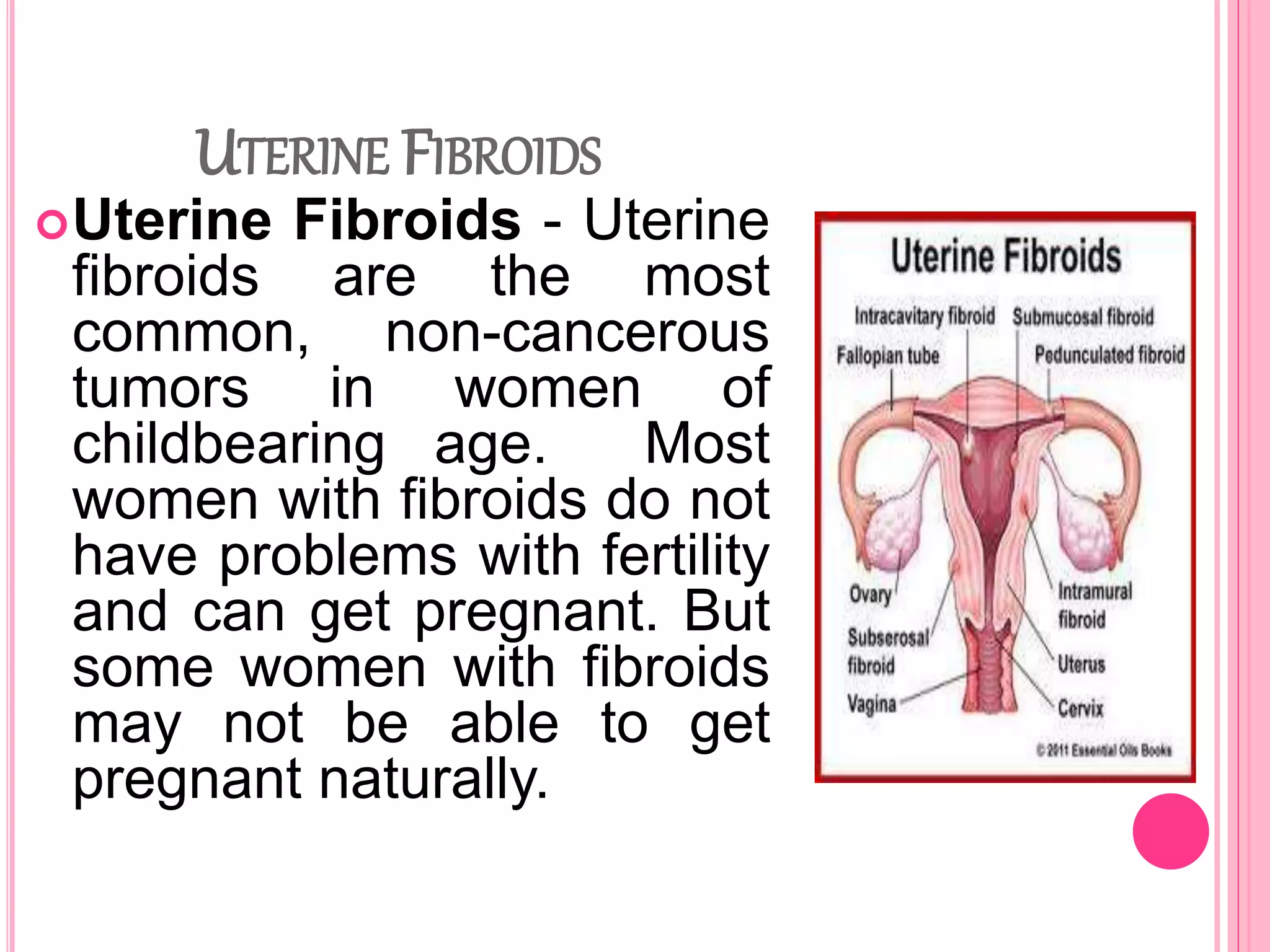
UTERINE FIBROIDS
Uterine Fibroids - Uterine
fibroids are the most
common, non-cancerous
tumors in women of
childbearing age. Most
women with fibroids do not
have problems with fertility
and can get pregnant. But
some women with fibroids
may not be able to get
pregnant naturally.
CONT--------
. Women who have uterine fibroids
but show no symptoms may not
need any treatment. Some women
with fibroids have heavy menstrual
periods, and some may bleed in
between periods. There are also
several types of surgery that can
remove the fibroids.
ENDOMETRIOSIS
 Endometriosis occurs when tissues that usually grow
inside a woman’s uterus grow on the outside
instead. Endometriosis may cause pain before and
during the first few days of the menstrual
period. About 30 percent to 50 percent of women with
endometriosis are infertile. There are several ways to
treat pain, including pain medication, hormone therapy,
and surgery. There are also some treatments for
infertility associated with endometriosis. In vitro
fertilization often works to improve fertility in women
with the condition.
DYSMENORRHEA
Dysmenorrhea refers to painful periods,
including severe menstrual cramps. The
condition is usually not serious, although it can
sometimes be caused by infection, endometriosis,
or ovarian cysts. Painful periods can sometimes
be eased by using heating pads or taking a warm
bath. Health care provider might recommend
birth control pills or a birth control shot to make
periods less painful.
SYMPTOMS OF MENSTRUAL IRREGULARITIES
Symptoms that may occur along with menstrual
irregularities
 Burning with urination
 Difficulty getting pregnant or infertility
 Fever
 Lower back pain
 Nausea and vomiting
 Painful bowel movements
 Painful sexual intercourse
 Pelvic or abdominal pain or cramps
SYMPTOMS THAT MIGHT INDICATE A SERIOUS OR
LIFE-THREATENING CONDITION
Anemia,
Pelvic Inflammatory Disease.
Uterine Cancer.
Pelvic Or Abdominal Pain
Periods that are heavier or longer than usual
Unusual vaginal bleeding
Vaginal bleeding after menopause
CONTI---------
Dizziness or feeling faint
High fever (higher than 101 degrees)
Severe pelvic or abdominal pain.
Vaginal bleeding during pregnancy.
SERIOUS COMPLICATIONS OF MENSTRUAL IRREGULARITIES
Anemia, due to excessive blood loss.
Chronic pelvic pain
Difficulty getting pregnant and infertility
Ectopic pregnancy
Metastatic cancer that can become terminal
Pelvic adhesions and scarring of the fallopian
tubes.
Severe hemorrhage.
INVESTIGATION
Blood test such as (T3, T4, TSH & blood
hormones profile)
Ultrasound (pelvis)
Thyroid scans
endometrial biopsy,
Pap smear,
high vaginal swab and test for confirmation
of ovulation
Complete hemograme.
TREATMENT MENSTRUAL
IRREGULARITIES
 Most women avoid consulting medical health care
providers for menstrual problems treatment, unless the
problem gets out of hand and starts affecting them in a
very severe manner. Many women suffer from lack of
knowledge and do not even realize that they are going
through severe menstrual problems, which could be an
indication of an underlying health condition that needs to
be treated without any delay. Therefore, women need to
realize that these menstrual problems will not just go
away on their own, unless some sort of treatment is
administered.
HOME REMEDIES
Certain home remedies are
very effective in reducing
menstrual pain and cramps,
with minimal side effects.
These home remedies
include:
 regular exercise,
 heat therapy,
 drinking a lot of water,
 chewing on some mint,
 taking warm baths and yoga.
THREE APPROACHES FOR TREATING IRREGULAR
PERIODS
(1) Lifestyle Changes,
(2) Alternative Medicine
(3) Drugs and Surgery
LIFESTYLE CHANGES
 The first level of treatment available to women wishing
to ease the effects of irregular periods. while these
changes are usually cost-free and virtually risk-free,
they do require the greatest amount of self-discipline.
for example, leading a more sedentary lifestyle or
consuming too much caffeine or alcohol can exacerbate
the experience of irregular periods. increased stress due
to work pressure or family obligations can also increase
the severity of irregular periods.
ALTERNATIVE MEDICINE
 Alternative approaches involve little to no risk and can
be an extremely effective way to treat irregular periods.
This level of approach can involve several different
therapies. Herbal supplements are the most prominent,
though in addition women may turn to such techniques
as:-
 Acupuncture
 Massage
 Homeopathy, Or Hypnosis.
ACUPUNCTURE
Herbs are used to stimulate or support hormone
production In the case of herbal supplements,
there are two types of herbs that can be used for
treating irregular periods phytoestrogenic and
non-estrogenic herbs.
HERBAL SUPPLEMENTS
Phytoestrogenic herbs .
Non-estrogenic herbs.
PHYTOESTROGENIC HERBS
 Phytoestrogenic herbs (e.g.
BlackCohosh) contain estrogenic
components produced by plants.
These herbs, at first, do treat the
hormonal imbalance by
introducing these plant-based
estrogens into the body.
However, as a result of adding
outside hormones, a woman´s
body may become less capable of
producing estrogen on its own.
CONTI---------
 Black cohosh is popular as
an alternative to hormonal
therapy.
NON-ESTROGENIC HERBS
Macafem is a natural supplement made from a selection
of high quality Lepidium Meyenii.
Macafem nutrients stimulate the pituitary and
hypothalamus glands, and it is primarily used to
improve hormonal function, which in turn helps to
stabilize the endocrine (hormonal) system.
DRUGS AND SURGERY
 Interventions at the third level involve the highest
risk and often the highest costs. However, these are
sometimes necessary for those whose irregular bleeding
signals a more serious underlying condition. For
example, uterine fibroids will often require surgical
removal, though this depends on the size, location,
number and symptom severity of the fibroids. In rare
cases, the underlying causes of irregular periods require
a hysterectomy, or full removal of the female
reproductive organs.
CONTI----------
Women who experience abnormal bleeding after
menopause may also require medical treatment. In the
West, the most common drugs therapy for treating
irregular periods is hormone replacement
therapy (HRT). This may be a quick and strong way to
combat hormonal imbalance; but, unfortunately, it
entails the risk of serious side effects, including certain
types of cancer, as the study has proven.
Massage
Effective for relaxation or medicinal purposes
Homeopathy
Uses small amounts of natural substances to stimulate the
body's own defense and healing process
ABSTRACT- 1
 Menstrual and reproductive history taken from 178
women they referred to the thyroid clinic and
compared with 49 healthy controls. Cases were
classified as hypothyroid or hyperthyroid after clinical
examination and after serum T3,T4, TSH measurements.
Reproductive history was related chronologically to
symptoms and signs of thyroid dysfunction. in 45% of
cases with menstrual abnormality, the anomaly was
antecedent to other clinical features by a variable period
of two months to ten years.
CONTI---------
 Reproductive failure and lactation failure also preceded
thyroid dysfunction or goitre. Reproductive dysfunction
may therefore be considered as one of the presenting
symptoms of thyroid disorders in women, keeping in
mind both menstrual irregularities and lactation failure
may also arise from other common or idiopathic origins.
Especially in women with menstrual irregularities in the
perimenopausal age thyroid dysfunction is detected.
ABSTRACT- 2
This review assessed the safety of medicinal extracts of
black cohosh.
Authors' objectives
 To assess the safety of medicinal extracts of black
cohosh
 Study designs of evaluations included in the review
 All data from postmarketing surveillance studies,
clinical trials, case reports, spontaneous reporting
programmes and Phase I studies were included in the
review.
RESULTS OF THE REVIEW
 Twenty-two studies (2,474 participants) were accepted for
inclusion in the review. There were 4 randomised
controlled trials (285 participants), 1 equivalence trial (with
152 participants) 5 open trials (334 participants) of which
one was placebo-controlled, 2 postmarketing surveillance
trials (732 participants), 1 in vitro study (110 participants)
and 9 case series (861 participants). In addition, drug
surveillance reports revealed 62 case reports linked to
black cohosh.
AUTHORS' CONCLUSIONS
 The authors concluded that, although definitive
evidence is not available as regards the risk of adverse
events, black cohosh appears to be a safe herbal
medicine.
NURSING MANAGEMENT
 Advise women to do exercise daily like deep breathing
exercises.
 Advise to take nutritious diet.
 If a woman is stressed about some issue, it can reflect in
her menstrual cycle causing it to be irregular. Anxiety,
fatigue, worries and stress are causes of this condition so
advise women to ventilate her problem and keep herself
tension free.
 Intense Exercises: Intense workouts and exercises can
also disrupt the hormonal balance in a woman’s body
resulting in irregular menstrual periods.
NURSINGMANAGEMENT
 For many women, this irregularity is nothing serious
and nothing to be worried about. Some home remedies
can be followed to deal with these irregularities and help
the periods to become regular advise her to take the
ginger with honey every day.
 Try to avoid drinking caffeinated beverages and alcohol.
 Avoid eating spicy and fried food. Also avoid chocolates
and pineapples to overcome this problem.
NURSING MANAGEMENT
 Take adequate rest and maintain a stress free life to
improve menstrual cycles. Maintaining healthy choices
in diet is also very important to cure irregular menstrual
periods.
 Advise to take Herbs like sage, rosemary, ginger and
feverfew have also been recommended to stabilize
menstrual cycles in women
NURSING MANAGEMENT
 Ask to take adequate amounts of sleep, rest and exercise
can also be very effective in irregular menstruation
treatment.
 Women who have the problem of heavy bleeding
usually have to restrict their activities when they are
menstruating. However, by following the right
menstrual flow treatment, this problem can be controlled
to a great extent. During a period, women can follow
certain steps to reduce menstrual flow, by lying down
with their legs elevated or placing a cold compress on
the abdominal area.
NURSING MANAGEMENT
 Avoid strenuous activity like running or lifting heavy
weight should also be strictly avoided. Most health
experts advise women against menstrual flow medication
and therefore, it is best to use home instead.
 Following a healthy diet, which is high in vitamin C
also helps in reducing the flow of blood during a
menstrual cycle.
 All women should be educated on the importance of
proper menstrual disorder management.
NURSING MANAGEMENT
 Diet plays a crucial role in normalizing the menstrual cycle
in most females. Dietary problems can result in menstrual
irregularities ranging from abnormal uterine bleeding to
absence of periods (i.e. Amenorrhea).
 Avoid processed foods and consume whole grain food
products. Brown bread should be preferred in comparison
to White bread. Consuming fresh foods is also very
important.
 Increase the intake of vegetables. Vegetables are rich in
minerals and vitamins which are essential to normalize the
menstrual cycles and treat menstrual irregularities in
women.
NURSINGMANAGEMENT
 Legumes like kidney beans, split peas, black beans,
black eyed beans are very beneficial.
 Limit the intake of seeds and nuts. Unlike other
foods, seeds and nuts don’t provide complete
proteins and also are associated with increased risk
of becoming rancid.
 Increase the intake of fish, lean meat and eggs.
These foods are high in protein content and help
treat menstrual irregularities
 Fruits are an important source of dietary fiber and
vitamins and should be consumed fresh and
regularly. Seasonal fruits are recommended.
NURSING MANAGEMENT
 Include flax seed oil, or oil from fatty fish in diet.
These oils are rich in Essential fatty acids and help fight
menstrual irregularities
 Seaweeds are loaded with vitamins, amino acids and
minerals and an excellent source of iodine, iron
and calcium. Studies have shown that seaweeds can
help fight stress, boost stamina and enhance libido
 Water is essential as it helps flush the toxins
and detoxify the body and prevents dehydration. Three
liters of water each day is recommended for an adult
female.
NURSING MANAGEMENT
 Decrease intake of refined carbohydrates.
 Consider meditation, yoga, visualization or other
methods of stress relief.
 Consume lots of water to replace lost nutrients.
 Making lifestyle changes is easier said than done. For
example, some triggers can be hard to avoid: it may be
possible to drink more water or take more walks but
virtually impossible to avoid work-related stress. It can
also be difficult to suddenly and drastically change
habits and preferences.
NURSING MANAGEMENT
 Avoid tinned, canned or juice with added
preservatives. Fruits like grapes, apples, pumpkins,
etc are rich in antioxidants and help in reducing tissue
damage due to free radicals
 Take fresh vegetables including green leafy vegetables
like spinach, broccoli, cucumber, etc are potential
sources of vitamins and minerals and need to be
consumed on regular basis
NURSING MANAGEMENT
 Increasing the intake of sesame and papaya along with
spices like pepper, garlic and ginger.
 Avoid eating junk food, oily or fried foods, aerated
drinks, etc.
 Avoid indulging into habits like drinking alcohol or
smoking; these can be detrimental to overall health.
CONCLUSION
 Menstrual irregularities are common abnormalities of a
woman’s menstrual cycle. Menstrual irregularities
include a variety of conditions in which menstruation is
irregular, heavy, painful, or does not occur at all.
Common types of menstrual irregularities include:
Amenorrhea (when a teenager does not get her period
by age 16, or when a woman stops getting her period
for at least three months and is not pregnant)
Dysmenorrhea (painful menstrual periods
CONTI-----------
Menorrhagia (heavy menstrual periods Oligomenorrhea
(menstrual bleeding occurring more than 35 days after
the last menstrual period, that is, less than 10 periods a
year) Polymenorrhea (menstrual bleeding occurring less
than 21 days after the last menstrual period, that is
more than 12 periods a year) .
 Spotting (light irregular vaginal bleeding or vaginal
bleeding between periods) Menstrual irregularities or
their symptoms, such as abnormal vaginal bleeding, can
be caused by a wide variety of abnormal conditions,
including pregnancy, hormonal imbalances or changes,
infection (sexually transmitted diseases and other
infections), malignancy (cervical, uterine or vaginal
cancer), Some menstrual irregularities can be caused by
serious, even life-threatening conditions, such as uterine
cancer. cancer.
 There is need to seek prompt medical care if there is
following menstrual irregularities, such as heavy
menstrual periods or a lack of menstrual periods.
Early diagnosis and treatment of menstrual
irregularities reduces the risk of serious
complications, such as infertility and metastatic
uterine.
SUMMARY
 INTRODUCTION
 DEFINITION
 CAUSES
 SIGNAND SYMPTOMS
 COMPLICATION OF MENSTRUAL IRREGULARITIES.
 TREATMENT
 ALTERNATIVE TREATMENT.
 HERBAL TREATMENT
 MEDICAL AND SURGICAL TREATMENT
 NURSING MANAGEMENT
BIBLIOGRAPHY:
BOOKS:
 D.C. DUTTA.Text Book of Gynaecology. New Central Book Agency
(P)LTD. P No.88-92.
 Myles. Textbook for midwives. 11th edition. Churchill livingstone.
Medical Division of Longfman UK Ltd. P No.122-126.
 Betty j.ackley gail b. ladwig nursing diagnosis handbook: an
evidence –based guide to planning care, 9th edition, 2011, mosby
elsevier page no-312-320.
 Neelam kumara, shivani Sharma, Dr. Preeti Gupta, Midwifery &
Gynecology Nursing, 1ST Edition, PV, 2010, page no. 230-243.

 Internet
 www.timeforwellness.org/.../yoga-nidra-practice-benefits-women-wit.
http/ www.meb.uni-bonn.de/dtc/primsurg/docbook/html/x5609.html
 http/ www.icd9data.com/2012/Volume1/630-679/660-
669/.../default.htm
PPT on Menstrual irregularities (1).pptx

PPT on Menstrual irregularities (1).pptx

  • 2.
    MENSTRUAL IRREGULARITIES INTRODUCTION:- Menstrualirregularities are common abnormalities of a woman’s menstrual cycle. Menstrual irregularities include a variety of conditions in which menstruation is irregular, heavy, painful, or does not occur at all.
  • 3.
    COMMON TYPES OFMENSTRUAL IRREGULARITIES INCLUDE: Amenorrhea (when a teenager does not get her period by age 16, or when a woman stops getting her period for at least three months and is not pregnant) Dysmenorrhea (painful menstrual periods)
  • 4.
    CONTI--------- Oligomenorrhea (menstrual bleeding occurringmore than 35 days after the last menstrual period, that is, less than 10 periods a year). Polymenorrhea (menstrual bleeding occurring less than 21 days after the last menstrual period, that is, more than 12 periods a year) Spotting (light irregular vaginal bleeding or vaginal
  • 5.
    CONTI--------- Menstrual irregularities ortheir symptoms, such as abnormal vaginal bleeding, can be caused by a wide variety of abnormal conditions, including pregnancy, hormonal imbalances or changes, infection (sexually transmitted diseases and other infections),
  • 6.
    CONTI---------  Some menstrualirregularities can be caused by serious, even life- threatening conditions, such as uterine cancer. There is need to seek prompt medical care if there is following menstrual irregularities, such as heavy menstrual periods or a lack of menstrual periods. Early diagnosis and treatment of menstrual irregularities reduces the
  • 7.
    MENSTRUATIONAND THE MENSTRUALCYCLE The menstrual cycle is the process by which a woman’s body gets ready for the chance of a pregnancy each month. Menstruation is the part of a woman’s monthly menstrual cycle in which blood and tissue are discharged from the vagina. It is also commonly called
  • 8.
    DEFINITION Bleeding intervals longerthan 35 days. Oligomenorrhea may be transient during the transition to a normal cycle.
  • 9.
    CAUSES OF MENSTRUALIRREGULARITIES Potential causes Menstrual irregularities can be caused by a variety of underlying factors, such as a pelvic infection, or a disease, disorder or condition of the ovaries or uterus. Causes of menstrual irregularities include: Polycystic ovary syndrome
  • 10.
    Stress Obesity Age Cancer Extremely low levelsof body fat, which can be caused by malnourishment, extreme physical training, or eating disorders
  • 11.
    CONTI--------- Ovulation Perimenopause and menopause Pregnancy Puberty Sexuallytransmitted diseases (STDs) and pelvic inflammatory disease (PID) Side effect of certain medications,
  • 12.
    POLYCYSTIC OVARIAN SYNDROME:- Womenwho have polycystic ovarian syndrome suffer from small cysts that grow in their ovaries. Polycystic ovarian syndrome is one of the causes of menstrual irregularities that women should be
  • 13.
    CONTI--------- POS often resultsin women having light, irregular periods. Women with menstrual irregularities causes such as polycystic ovarian syndrome do not always release an egg and thus do not have a period. Furthermore, their hormone levels are often imbalanced and women may have higher levels of testosterone
  • 14.
    THYROID PROBLEMS  The thyroid controlsthe body's metabolism hormones and is one of the causes of menstrual irregularities. Often a visit to a doctor is required to diagnose thyroid
  • 15.
    STRESS Stress is frequently reportedas one of the causes of menstrual irregularities. Women suffering from high amounts of anxiety, experience an imbalance of hormones. The imbalanced hormones can then become a cause of menstrual
  • 16.
    EXTREME WEIGHT LOSSOR GAIN Many menstrual irregularities are related to weight fluctuations. Women who are anorexic or gain a large amount of weight in a small amount of time will find that it is one of the biggest causes
  • 17.
    AGE With age, awoman's menstrual cycle can change dramatically and aging is one of the major causes of menstrual irregularities. Irregular and heavy bleeding can be common when women are becoming pre menopausal because of the changing hormone
  • 18.
    CANCER  although itis extremely rare, and women should never believe their problem is cancer immediately; it can be one of the causes of menstrual irregularities. Cancer of the cervix, or the womb, can cause heavy bleeding during sex and disrupt the menstrual cycle.  However, if women find that their menstrual irregularities are becoming worse they should consult their doctor.
  • 19.
    OTHER CONDITIONS THATCAN CAUSE MENSTRUAL IRREGULARITIES. Amenorrhea Amenorrhea occurs when a woman does not get her period by age 16, or when she stops getting her period for at least three months and is not pregnant. Amenorrhea is not a disease. Instead, it is a symptom of another condition. Possible causes can include moderate or excessive exercising, eating disorders (such as anorexia nervosa), physical or
  • 20.
    CONT-------- Oligomenorrhea This termrefers to infrequent menstrual periods, or having a period only now and then. Like amenorrhea, oligomenorrhea is not a disease itself, but is a symptom of a larger condition. For example, many women with polycystic ovary
  • 21.
    PREMATURE OVARIAN FAILURE(POF) POF describes a stop in the normal functioning of the ovaries in a woman younger than age 40. Women with POF may not have periods or may get them irregularly. Although getting pregnant is difficult for women with POF, it may still be possible. There is no proven treatment to make a woman’s ovaries work normally again. However, estrogen replacement therapy (ERT) gives women the estrogen and other hormones their
  • 22.
    UTERINE FIBROIDS Uterine Fibroids- Uterine fibroids are the most common, non-cancerous tumors in women of childbearing age. Most women with fibroids do not have problems with fertility and can get pregnant. But some women with fibroids may not be able to get pregnant naturally.
  • 23.
    CONT-------- . Women whohave uterine fibroids but show no symptoms may not need any treatment. Some women with fibroids have heavy menstrual periods, and some may bleed in between periods. There are also several types of surgery that can remove the fibroids.
  • 24.
    ENDOMETRIOSIS  Endometriosis occurswhen tissues that usually grow inside a woman’s uterus grow on the outside instead. Endometriosis may cause pain before and during the first few days of the menstrual period. About 30 percent to 50 percent of women with endometriosis are infertile. There are several ways to treat pain, including pain medication, hormone therapy, and surgery. There are also some treatments for infertility associated with endometriosis. In vitro fertilization often works to improve fertility in women with the condition.
  • 25.
    DYSMENORRHEA Dysmenorrhea refers topainful periods, including severe menstrual cramps. The condition is usually not serious, although it can sometimes be caused by infection, endometriosis, or ovarian cysts. Painful periods can sometimes be eased by using heating pads or taking a warm bath. Health care provider might recommend birth control pills or a birth control shot to make periods less painful.
  • 26.
    SYMPTOMS OF MENSTRUALIRREGULARITIES Symptoms that may occur along with menstrual irregularities  Burning with urination  Difficulty getting pregnant or infertility  Fever  Lower back pain  Nausea and vomiting  Painful bowel movements  Painful sexual intercourse  Pelvic or abdominal pain or cramps
  • 27.
    SYMPTOMS THAT MIGHTINDICATE A SERIOUS OR LIFE-THREATENING CONDITION Anemia, Pelvic Inflammatory Disease. Uterine Cancer. Pelvic Or Abdominal Pain Periods that are heavier or longer than usual Unusual vaginal bleeding Vaginal bleeding after menopause
  • 28.
    CONTI--------- Dizziness or feelingfaint High fever (higher than 101 degrees) Severe pelvic or abdominal pain. Vaginal bleeding during pregnancy.
  • 29.
    SERIOUS COMPLICATIONS OFMENSTRUAL IRREGULARITIES Anemia, due to excessive blood loss. Chronic pelvic pain Difficulty getting pregnant and infertility Ectopic pregnancy Metastatic cancer that can become terminal Pelvic adhesions and scarring of the fallopian tubes. Severe hemorrhage.
  • 30.
    INVESTIGATION Blood test suchas (T3, T4, TSH & blood hormones profile) Ultrasound (pelvis) Thyroid scans endometrial biopsy, Pap smear, high vaginal swab and test for confirmation of ovulation Complete hemograme.
  • 31.
    TREATMENT MENSTRUAL IRREGULARITIES  Mostwomen avoid consulting medical health care providers for menstrual problems treatment, unless the problem gets out of hand and starts affecting them in a very severe manner. Many women suffer from lack of knowledge and do not even realize that they are going through severe menstrual problems, which could be an indication of an underlying health condition that needs to be treated without any delay. Therefore, women need to realize that these menstrual problems will not just go away on their own, unless some sort of treatment is administered.
  • 32.
    HOME REMEDIES Certain homeremedies are very effective in reducing menstrual pain and cramps, with minimal side effects. These home remedies include:  regular exercise,  heat therapy,  drinking a lot of water,  chewing on some mint,  taking warm baths and yoga.
  • 33.
    THREE APPROACHES FORTREATING IRREGULAR PERIODS (1) Lifestyle Changes, (2) Alternative Medicine (3) Drugs and Surgery
  • 34.
    LIFESTYLE CHANGES  Thefirst level of treatment available to women wishing to ease the effects of irregular periods. while these changes are usually cost-free and virtually risk-free, they do require the greatest amount of self-discipline. for example, leading a more sedentary lifestyle or consuming too much caffeine or alcohol can exacerbate the experience of irregular periods. increased stress due to work pressure or family obligations can also increase the severity of irregular periods.
  • 35.
    ALTERNATIVE MEDICINE  Alternativeapproaches involve little to no risk and can be an extremely effective way to treat irregular periods. This level of approach can involve several different therapies. Herbal supplements are the most prominent, though in addition women may turn to such techniques as:-  Acupuncture  Massage  Homeopathy, Or Hypnosis.
  • 36.
    ACUPUNCTURE Herbs are usedto stimulate or support hormone production In the case of herbal supplements, there are two types of herbs that can be used for treating irregular periods phytoestrogenic and non-estrogenic herbs.
  • 37.
  • 38.
    PHYTOESTROGENIC HERBS  Phytoestrogenicherbs (e.g. BlackCohosh) contain estrogenic components produced by plants. These herbs, at first, do treat the hormonal imbalance by introducing these plant-based estrogens into the body. However, as a result of adding outside hormones, a woman´s body may become less capable of producing estrogen on its own.
  • 39.
    CONTI---------  Black cohoshis popular as an alternative to hormonal therapy.
  • 40.
    NON-ESTROGENIC HERBS Macafem isa natural supplement made from a selection of high quality Lepidium Meyenii. Macafem nutrients stimulate the pituitary and hypothalamus glands, and it is primarily used to improve hormonal function, which in turn helps to stabilize the endocrine (hormonal) system.
  • 41.
    DRUGS AND SURGERY Interventions at the third level involve the highest risk and often the highest costs. However, these are sometimes necessary for those whose irregular bleeding signals a more serious underlying condition. For example, uterine fibroids will often require surgical removal, though this depends on the size, location, number and symptom severity of the fibroids. In rare cases, the underlying causes of irregular periods require a hysterectomy, or full removal of the female reproductive organs.
  • 42.
    CONTI---------- Women who experienceabnormal bleeding after menopause may also require medical treatment. In the West, the most common drugs therapy for treating irregular periods is hormone replacement therapy (HRT). This may be a quick and strong way to combat hormonal imbalance; but, unfortunately, it entails the risk of serious side effects, including certain types of cancer, as the study has proven. Massage Effective for relaxation or medicinal purposes Homeopathy Uses small amounts of natural substances to stimulate the body's own defense and healing process
  • 43.
    ABSTRACT- 1  Menstrualand reproductive history taken from 178 women they referred to the thyroid clinic and compared with 49 healthy controls. Cases were classified as hypothyroid or hyperthyroid after clinical examination and after serum T3,T4, TSH measurements. Reproductive history was related chronologically to symptoms and signs of thyroid dysfunction. in 45% of cases with menstrual abnormality, the anomaly was antecedent to other clinical features by a variable period of two months to ten years.
  • 44.
    CONTI---------  Reproductive failureand lactation failure also preceded thyroid dysfunction or goitre. Reproductive dysfunction may therefore be considered as one of the presenting symptoms of thyroid disorders in women, keeping in mind both menstrual irregularities and lactation failure may also arise from other common or idiopathic origins. Especially in women with menstrual irregularities in the perimenopausal age thyroid dysfunction is detected.
  • 45.
    ABSTRACT- 2 This reviewassessed the safety of medicinal extracts of black cohosh. Authors' objectives  To assess the safety of medicinal extracts of black cohosh  Study designs of evaluations included in the review  All data from postmarketing surveillance studies, clinical trials, case reports, spontaneous reporting programmes and Phase I studies were included in the review.
  • 46.
    RESULTS OF THEREVIEW  Twenty-two studies (2,474 participants) were accepted for inclusion in the review. There were 4 randomised controlled trials (285 participants), 1 equivalence trial (with 152 participants) 5 open trials (334 participants) of which one was placebo-controlled, 2 postmarketing surveillance trials (732 participants), 1 in vitro study (110 participants) and 9 case series (861 participants). In addition, drug surveillance reports revealed 62 case reports linked to black cohosh.
  • 47.
    AUTHORS' CONCLUSIONS  Theauthors concluded that, although definitive evidence is not available as regards the risk of adverse events, black cohosh appears to be a safe herbal medicine.
  • 48.
    NURSING MANAGEMENT  Advisewomen to do exercise daily like deep breathing exercises.  Advise to take nutritious diet.  If a woman is stressed about some issue, it can reflect in her menstrual cycle causing it to be irregular. Anxiety, fatigue, worries and stress are causes of this condition so advise women to ventilate her problem and keep herself tension free.  Intense Exercises: Intense workouts and exercises can also disrupt the hormonal balance in a woman’s body resulting in irregular menstrual periods.
  • 49.
    NURSINGMANAGEMENT  For manywomen, this irregularity is nothing serious and nothing to be worried about. Some home remedies can be followed to deal with these irregularities and help the periods to become regular advise her to take the ginger with honey every day.  Try to avoid drinking caffeinated beverages and alcohol.  Avoid eating spicy and fried food. Also avoid chocolates and pineapples to overcome this problem.
  • 50.
    NURSING MANAGEMENT  Takeadequate rest and maintain a stress free life to improve menstrual cycles. Maintaining healthy choices in diet is also very important to cure irregular menstrual periods.  Advise to take Herbs like sage, rosemary, ginger and feverfew have also been recommended to stabilize menstrual cycles in women
  • 51.
    NURSING MANAGEMENT  Askto take adequate amounts of sleep, rest and exercise can also be very effective in irregular menstruation treatment.  Women who have the problem of heavy bleeding usually have to restrict their activities when they are menstruating. However, by following the right menstrual flow treatment, this problem can be controlled to a great extent. During a period, women can follow certain steps to reduce menstrual flow, by lying down with their legs elevated or placing a cold compress on the abdominal area.
  • 52.
    NURSING MANAGEMENT  Avoidstrenuous activity like running or lifting heavy weight should also be strictly avoided. Most health experts advise women against menstrual flow medication and therefore, it is best to use home instead.  Following a healthy diet, which is high in vitamin C also helps in reducing the flow of blood during a menstrual cycle.  All women should be educated on the importance of proper menstrual disorder management.
  • 53.
    NURSING MANAGEMENT  Dietplays a crucial role in normalizing the menstrual cycle in most females. Dietary problems can result in menstrual irregularities ranging from abnormal uterine bleeding to absence of periods (i.e. Amenorrhea).  Avoid processed foods and consume whole grain food products. Brown bread should be preferred in comparison to White bread. Consuming fresh foods is also very important.  Increase the intake of vegetables. Vegetables are rich in minerals and vitamins which are essential to normalize the menstrual cycles and treat menstrual irregularities in women.
  • 54.
    NURSINGMANAGEMENT  Legumes likekidney beans, split peas, black beans, black eyed beans are very beneficial.  Limit the intake of seeds and nuts. Unlike other foods, seeds and nuts don’t provide complete proteins and also are associated with increased risk of becoming rancid.  Increase the intake of fish, lean meat and eggs. These foods are high in protein content and help treat menstrual irregularities  Fruits are an important source of dietary fiber and vitamins and should be consumed fresh and regularly. Seasonal fruits are recommended.
  • 55.
    NURSING MANAGEMENT  Includeflax seed oil, or oil from fatty fish in diet. These oils are rich in Essential fatty acids and help fight menstrual irregularities  Seaweeds are loaded with vitamins, amino acids and minerals and an excellent source of iodine, iron and calcium. Studies have shown that seaweeds can help fight stress, boost stamina and enhance libido  Water is essential as it helps flush the toxins and detoxify the body and prevents dehydration. Three liters of water each day is recommended for an adult female.
  • 56.
    NURSING MANAGEMENT  Decreaseintake of refined carbohydrates.  Consider meditation, yoga, visualization or other methods of stress relief.  Consume lots of water to replace lost nutrients.  Making lifestyle changes is easier said than done. For example, some triggers can be hard to avoid: it may be possible to drink more water or take more walks but virtually impossible to avoid work-related stress. It can also be difficult to suddenly and drastically change habits and preferences.
  • 57.
    NURSING MANAGEMENT  Avoidtinned, canned or juice with added preservatives. Fruits like grapes, apples, pumpkins, etc are rich in antioxidants and help in reducing tissue damage due to free radicals  Take fresh vegetables including green leafy vegetables like spinach, broccoli, cucumber, etc are potential sources of vitamins and minerals and need to be consumed on regular basis
  • 58.
    NURSING MANAGEMENT  Increasingthe intake of sesame and papaya along with spices like pepper, garlic and ginger.  Avoid eating junk food, oily or fried foods, aerated drinks, etc.  Avoid indulging into habits like drinking alcohol or smoking; these can be detrimental to overall health.
  • 59.
    CONCLUSION  Menstrual irregularitiesare common abnormalities of a woman’s menstrual cycle. Menstrual irregularities include a variety of conditions in which menstruation is irregular, heavy, painful, or does not occur at all. Common types of menstrual irregularities include: Amenorrhea (when a teenager does not get her period by age 16, or when a woman stops getting her period for at least three months and is not pregnant) Dysmenorrhea (painful menstrual periods
  • 60.
    CONTI----------- Menorrhagia (heavy menstrualperiods Oligomenorrhea (menstrual bleeding occurring more than 35 days after the last menstrual period, that is, less than 10 periods a year) Polymenorrhea (menstrual bleeding occurring less than 21 days after the last menstrual period, that is more than 12 periods a year) .
  • 61.
     Spotting (lightirregular vaginal bleeding or vaginal bleeding between periods) Menstrual irregularities or their symptoms, such as abnormal vaginal bleeding, can be caused by a wide variety of abnormal conditions, including pregnancy, hormonal imbalances or changes, infection (sexually transmitted diseases and other infections), malignancy (cervical, uterine or vaginal cancer), Some menstrual irregularities can be caused by serious, even life-threatening conditions, such as uterine cancer. cancer.
  • 62.
     There isneed to seek prompt medical care if there is following menstrual irregularities, such as heavy menstrual periods or a lack of menstrual periods. Early diagnosis and treatment of menstrual irregularities reduces the risk of serious complications, such as infertility and metastatic uterine.
  • 63.
    SUMMARY  INTRODUCTION  DEFINITION CAUSES  SIGNAND SYMPTOMS  COMPLICATION OF MENSTRUAL IRREGULARITIES.  TREATMENT  ALTERNATIVE TREATMENT.  HERBAL TREATMENT  MEDICAL AND SURGICAL TREATMENT  NURSING MANAGEMENT
  • 64.
    BIBLIOGRAPHY: BOOKS:  D.C. DUTTA.TextBook of Gynaecology. New Central Book Agency (P)LTD. P No.88-92.  Myles. Textbook for midwives. 11th edition. Churchill livingstone. Medical Division of Longfman UK Ltd. P No.122-126.  Betty j.ackley gail b. ladwig nursing diagnosis handbook: an evidence –based guide to planning care, 9th edition, 2011, mosby elsevier page no-312-320.  Neelam kumara, shivani Sharma, Dr. Preeti Gupta, Midwifery & Gynecology Nursing, 1ST Edition, PV, 2010, page no. 230-243.   Internet  www.timeforwellness.org/.../yoga-nidra-practice-benefits-women-wit. http/ www.meb.uni-bonn.de/dtc/primsurg/docbook/html/x5609.html  http/ www.icd9data.com/2012/Volume1/630-679/660- 669/.../default.htm