PROF SUCHITRAA RATI
WELCOME
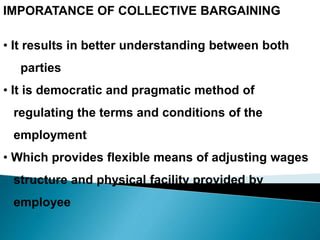
IMPORATANCE OF COLLECTIVE BARGAINING
• It results in better understanding between both
parties
• It is democratic and pragmatic method of
regulating the terms and conditions of the
employment
• Which provides flexible means of adjusting wages
structure and physical facility provided by
employee
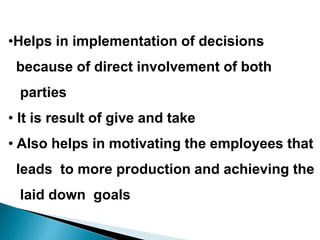
•Helps in implementation of decisions
because of direct involvement of both
parties
• It is result of give and take
• Also helps in motivating the employees that
leads to more production and achieving the
laid down goals
FACTORS FOR INEFFECTIVE COLLECTIVE
BARGAINING IN INDIA
• Absence of enlightened management[not
interested in trade union]
• Weakness if trade unions due to
multiplicity[poor financial condition ,lack
of leadership]
• Surplus manpower
• Restricted rights of workers and employer
to strike or lockout
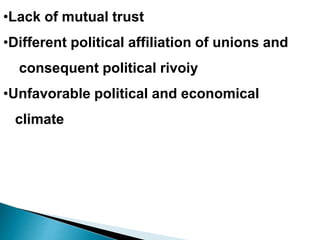
•Lack of mutual trust
•Different political affiliation of unions and
consequent political rivoiy
•Unfavorable political and economical
climate
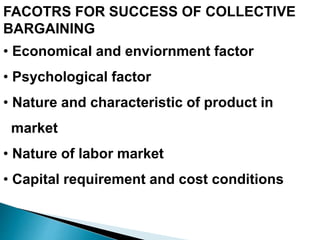
FACOTRS FOR SUCCESS OF COLLECTIVE
BARGAINING
• Economical and enviornment factor
• Psychological factor
• Nature and characteristic of product in
market
• Nature of labor market
• Capital requirement and cost conditions
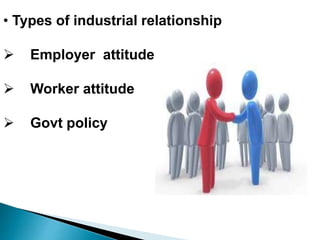
• Types of industrial relationship
 Employer attitude
 Worker attitude
 Govt policy
ESSENTIALS FOR SUCESSFUL CB
• A favorable political environment helps
• Freedom of association is helpful
• Recognition of union is must
• Willingness to give and take
• Fair labor practice
• Problem solving attitude of management
• Availability of data and facts and figures
concern with pay should be on basis of
negotiation
ACTIVITY/FORMS/TACTS OF CB
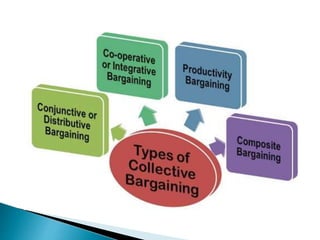
It includes 4 types of activity or bargaining
•DISTRIBUTIVE BARGAINING---involves bargain
persistently over the distribution of surplus[on
economic issues like wages, salaries ,bonus which
will be discussed periodic intervals]
•INTERGRATIVE BARGAINING—here both
parties gain something [training of employer for
more productive work and programme]more
cooperative
•ATTITUDINAL BARGAINING—this bargaining
involves shaping and reshaping some attitudes like
hostility between labor and management[when there
is backlog or bitterness-it will help in monitoring
smooth and coordinal relationship between two
parties
•INTRA-ORGANIZATIONAL BARGAINING—it
is an achievement of general agreement with
employee and employer. generally aims at
resolving internal conflict [women nay face
that their interest not being looked properly]
TRADE UNIONS
Nurse as an employee in any health care
institution or hospital has rights to become a
member of any union or association for many
reasons i,e collective bargaining [protecting their
interest, conditions and improvement]
Employees essentially join a union or
association to increase their power to get certain
responses from management.
Instead of quitting a job or giving up their
seniority or for security they form union. so
the trade unions are formed to protect
,maintain and improve economic social and
vocational interest of their members to
strengthen their bargaining power.
REASONS FOR UNIONIZATION
•Management action have caused to reach
limitation
•Poor working condition and job inequities in
wage increments ,promotion and benefit
distress
•Poor quality of immediate supervision
•Arbitory treatment from management
•Poor communication between employer and
employee
PPT on Collective bargaining

PPT on Collective bargaining

  • 1.
  • 2.
    IMPORATANCE OF COLLECTIVEBARGAINING • It results in better understanding between both parties • It is democratic and pragmatic method of regulating the terms and conditions of the employment • Which provides flexible means of adjusting wages structure and physical facility provided by employee
  • 3.
    •Helps in implementationof decisions because of direct involvement of both parties • It is result of give and take • Also helps in motivating the employees that leads to more production and achieving the laid down goals
  • 4.
    FACTORS FOR INEFFECTIVECOLLECTIVE BARGAINING IN INDIA • Absence of enlightened management[not interested in trade union] • Weakness if trade unions due to multiplicity[poor financial condition ,lack of leadership] • Surplus manpower • Restricted rights of workers and employer to strike or lockout
  • 5.
    •Lack of mutualtrust •Different political affiliation of unions and consequent political rivoiy •Unfavorable political and economical climate
  • 6.
    FACOTRS FOR SUCCESSOF COLLECTIVE BARGAINING • Economical and enviornment factor • Psychological factor • Nature and characteristic of product in market • Nature of labor market • Capital requirement and cost conditions
  • 7.
    • Types ofindustrial relationship  Employer attitude  Worker attitude  Govt policy
  • 8.
    ESSENTIALS FOR SUCESSFULCB • A favorable political environment helps • Freedom of association is helpful • Recognition of union is must • Willingness to give and take • Fair labor practice • Problem solving attitude of management • Availability of data and facts and figures concern with pay should be on basis of negotiation
  • 10.
    ACTIVITY/FORMS/TACTS OF CB Itincludes 4 types of activity or bargaining •DISTRIBUTIVE BARGAINING---involves bargain persistently over the distribution of surplus[on economic issues like wages, salaries ,bonus which will be discussed periodic intervals] •INTERGRATIVE BARGAINING—here both parties gain something [training of employer for more productive work and programme]more cooperative
  • 11.
    •ATTITUDINAL BARGAINING—this bargaining involvesshaping and reshaping some attitudes like hostility between labor and management[when there is backlog or bitterness-it will help in monitoring smooth and coordinal relationship between two parties
  • 13.
    •INTRA-ORGANIZATIONAL BARGAINING—it is anachievement of general agreement with employee and employer. generally aims at resolving internal conflict [women nay face that their interest not being looked properly]
  • 15.
    TRADE UNIONS Nurse asan employee in any health care institution or hospital has rights to become a member of any union or association for many reasons i,e collective bargaining [protecting their interest, conditions and improvement] Employees essentially join a union or association to increase their power to get certain responses from management.
  • 16.
    Instead of quittinga job or giving up their seniority or for security they form union. so the trade unions are formed to protect ,maintain and improve economic social and vocational interest of their members to strengthen their bargaining power.
  • 17.
    REASONS FOR UNIONIZATION •Managementaction have caused to reach limitation •Poor working condition and job inequities in wage increments ,promotion and benefit distress •Poor quality of immediate supervision •Arbitory treatment from management •Poor communication between employer and employee