ANTI-NEOPLASTIC AGENTS
DR. D. P. KAWADE
ASSOCIATE PROFESSOR
Priyadarshini J. L. College of Pharmacy,
Electronic zone,MIDC, Hingna Road, Nagpur-440016
Contents
1. INTRODUCTION
2. CLASSIFICATION
3. MECHANISM OF ACTION
4. USES OF DRUGS
5. STRUCTURE ACTIVITY RELATIONSHIP OF SELECTIVE
CLASS OF DRUGS AS SPECIFIED IN THE COURSE
6. SYNTHESIS OF DRUGS
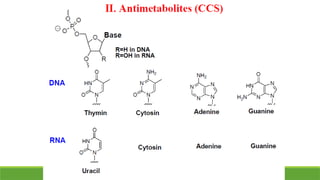
Anti-neoplastic agents:
Alkylating agents: Meclorethamine*, Cyclophosphamide, Melphalan, Chlorambucil, Busulfan,
Thiotepa
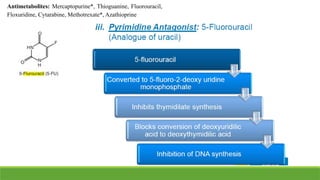
Antimetabolites: Mercaptopurine*, Thioguanine, Fluorouracil, Floxuridine, Cytarabine,
Methotrexate*, Azathioprine
Antibiotics: Dactinomycin, Daunorubicin, Doxorubicin, Bleomycin
Plant products: Etoposide, Vinblastin sulphate, Vincristin sulphate
Miscellaneous: Cisplatin, Mitotane
Neoplasms
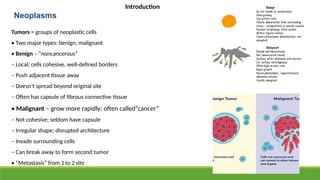
Tumors = groups of neoplastic cells
โ€ข Two major types: benign, malignant
โ€ข Benign โ€“ โ€œnoncancerousโ€
โ€“ Local; cells cohesive, well-defined borders
โ€“ Push adjacent tissue away
โ€“ Doesnโ€™t spread beyond original site
โ€“ Often has capsule of fibrous connective tissue
โ€ข Malignant โ€“ grow more rapidly; often calledโ€œcancerโ€
โ€“ Not cohesive; seldom have capsule
โ€“ Irregular shape; disrupted architecture
โ€“ Invade surrounding cells
โ€“ Can break away to form second tumor
โ€ข โ€œMetastasisโ€ from 1 to 2 site
Introduction
Cancer (Neoplastic)
โ€ข Cancer is a term used for diseases in which abnormal cells divide without control and are
able to invade other tissues
โ€ข Cancer occurs after normal cells have been transformed into neoplastic cells through
alteration of their genetic material and the abnormal expression of certain genes.
โ€ข Neoplastic cells usually exhibit chromosomal abnormalities and the loss of their
differentiated properties.
โ€ข These changes leads to uncontrolled cell division and many result in the invasion of previously
unaffected organs, a process called metastasis
โ€ข Cancer cells can spread to other parts of the body through the blood and lymph systems, this process is
called metastasis
โ€ข Anticancer drug, also called antineoplastic drug, any drug that is effective in the treatment of malignant,
or cancerous, disease.
Introduction
Categorized based on the functions/locations of the cells from which they originate:
1. Carcinoma - skin or in tissues that line or cover internal organs. E.g., Epithelial cells. 80-90%
reported cancer cases are carcinomas.
2. Sarcoma - bone, cartilage, fat, muscle, blood vessels, or other connective or supportive tissue.
3. Leukemia - White blood cells and their precursor cells such as
the bone marrow cells.
4. Lymphoma - cells of the immune system that affects lymphatic system.
5. Myeloma - B-cells that produce antibodies, spreads through lymphatic system.
6. CNS cancers - cancers that begin in the tissues of brain and spinal cord.
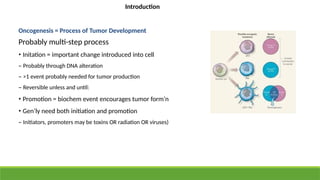
Oncogenesis = Process of Tumor Development
Probably multi-step process
โ€ข Initation = important change introduced into cell
โ€“ Probably through DNA alteration
โ€“ >1 event probably needed for tumor production
โ€“ Reversible unless and until:
โ€ข Promotion = biochem event encourages tumor formโ€™n
โ€ข Genโ€™ly need both initiation and promotion
โ€“ Initiators, promoters may be toxins OR radiation OR viruses)
Introduction
The Goal of Cancer Treatments
โ€ข Curative
โ€“ Total irradication of cancer cells
โ€“ Curable cancers include testicular tumors, Wills tumor
โ€ข Palliative
โ€“ Alleviation of symptoms
โ€“ Avoidance of life-threatening toxicity
โ€“ Increased survival and improved quality of life
โ€ข Adjuvant therapy
โ€“ Attempt to eradicate microscopic cancer after surgery
โ€“ e.g. breast cancer & colorectal cancer
Introduction
Six Established Rx Modalities
1. Surgery
2. Radiotherapy
3. Chemotherapy
4. Endocrine therapy
5. Immunotherapy
6. Biological therapy
Introduction
New types of cancer treatment
Hormonal Treatments: These drugs are designed to prevent cancer cell growth by preventing the cells from
receiving signals necessary for their continued growth and division.
E.g., Breast cancer โ€“ tamoxifen after surgery and radiation
Specific Inhibitors: Drugs targeting specific proteins and processes that are limited primarily to cancer cells or
that are much more prevalent in cancer cells.
Antibodies: The antibodies used in the treatment of cancer have been manufactured for use as drugs.
E.g., Herceptin, avastin
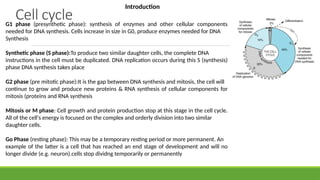
G1 phase (presynthetic phase): synthesis of enzymes and other cellular components
needed for DNA synthesis. Cells increase in size in G0, produce enzymes needed for DNA
Synthesis
Synthetic phase (S phase):To produce two similar daughter cells, the complete DNA
instructions in the cell must be duplicated. DNA replication occurs during this S (synthesis)
phase DNA synthesis takes place
G2 phase (pre mitotic phase):It is the gap between DNA synthesis and mitosis, the cell will
continue to grow and produce new proteins & RNA synthesis of cellular components for
mitosis (proteins and RNA synthesis
Mitosis or M phase: Cell growth and protein production stop at this stage in the cell cycle.
All of the cell's energy is focused on the complex and orderly division into two similar
daughter cells.
Go Phase (resting phase): This may be a temporary resting period or more permanent. An
example of the latter is a cell that has reached an end stage of development and will no
longer divide (e.g. neuron).cells stop dividng temporarily or permanently
Cell cycle
Introduction
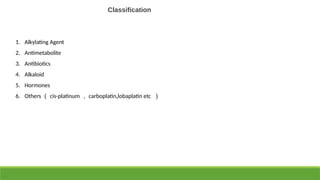
Classification
1. Alkylating Agent
2. Antimetabolite
3. Antibiotics
4. Alkaloid
5. Hormones
6. Others ๏ผˆ cis-platinum ๏ผŒ carboplatin,lobaplatin etc ๏ผ‰
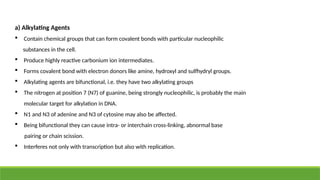
a) Alkylating Agents
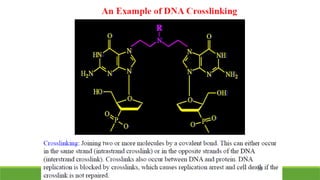
๏‚ง Contain chemical groups that can form covalent bonds with particular nucleophilic
substances in the cell.
๏‚ง Produce highly reactive carbonium ion intermediates.
๏‚ง Forms covalent bond with electron donors like amine, hydroxyl and sulfhydryl groups.
๏‚ง Alkylating agents are bifunctional, i.e. they have two alkylating groups
๏‚ง The nitrogen at position 7 (N7) of guanine, being strongly nucleophilic, is probably the main
molecular target for alkylation in DNA.
๏‚ง N1 and N3 of adenine and N3 of cytosine may also be affected.
๏‚ง Being bifunctional they can cause intra- or interchain cross-linking, abnormal base
pairing or chain scission.
๏‚ง Interferes not only with transcription but also with replication.
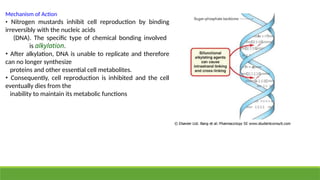
Mechanism of Action
โ€ข Nitrogen mustards inhibit cell reproduction by binding
irreversibly with the nucleic acids
(DNA). The specific type of chemical bonding involved
is alkylation.
โ€ข After alkylation, DNA is unable to replicate and therefore
can no longer synthesize
proteins and other essential cell metabolites.
โ€ข Consequently, cell reproduction is inhibited and the cell
eventually dies from the
inability to maintain its metabolic functions
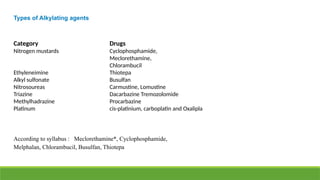
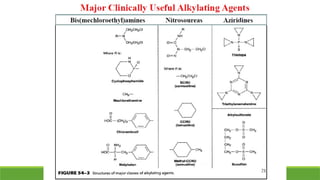
Types of Alkylating agents
Category
Category Drugs
Nitrogen mustards Cyclophosphamide,
Meclorethamine,
Chlorambucil
Ethyleneimine Thiotepa
Alkyl sulfonate Busulfan
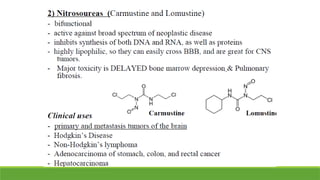
Nitrosoureas Carmustine, Lomustine
Triazine Dacarbazine Tremozolomide
Methylhadrazine Procarbazine
Platinum cis-platinium, carboplatin and Oxalipla
According to syllabus : Meclorethamine*, Cyclophosphamide,
Melphalan, Chlorambucil, Busulfan, Thiotepa
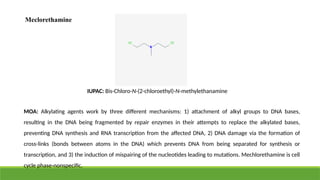
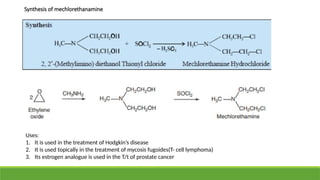
Meclorethamine
IUPAC: Bis-Chloro-N-(2-chloroethyl)-N-methylethanamine
MOA: Alkylating agents work by three different mechanisms: 1) attachment of alkyl groups to DNA bases,
resulting in the DNA being fragmented by repair enzymes in their attempts to replace the alkylated bases,
preventing DNA synthesis and RNA transcription from the affected DNA, 2) DNA damage via the formation of
cross-links (bonds between atoms in the DNA) which prevents DNA from being separated for synthesis or
transcription, and 3) the induction of mispairing of the nucleotides leading to mutations. Mechlorethamine is cell
cycle phase-nonspecific.
Synthesis of mechlorethanamine
Uses:
1. It is used in the treatment of Hodgkinโ€™s disease
2. It is used topically in the treatment of mycosis fugoides(T- cell lymphoma)
3. Its estrogen analogue is used in the T/t of prostate cancer
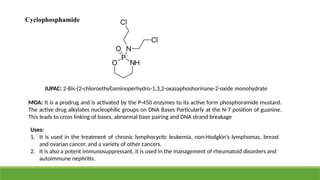
Cyclophosphamide
IUPAC: 2-Bis-(2-chloroethyl)aminoperhydro-1,3,2-oxazaphoshorinane-2-oxide monohydrate
MOA: It is a prodrug and is activated by the P-450 enzymes to its active form phosphoramide mustard.
The active drug alkylates nucleophilic groups on DNA Bases Particularly at the N-7 position of guanine.
This leads to cross linking of bases, abnormal base pairing and DNA strand breakage
Uses:
1. It is used in the treatment of chronic lymphocyctic leukemia, non-Hodgkinโ€™s lymphomas, breast
and ovarian cancer, and a variety of other cancers.
2. It is also a potent immunosuppressant, it is used in the management of rheumatoid disorders and
autoimmune nephritis.
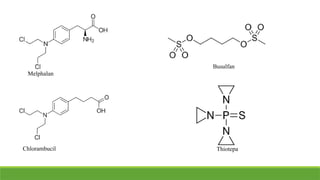
Melphalan
Chlorambucil
Busulfan
Thiotepa
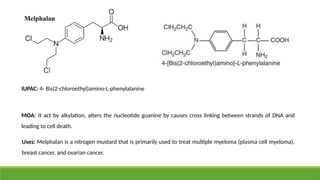
Melphalan
IUPAC: 4- Bis(2-chloroethyl)amino-L-phenylalanine
MOA: It act by alkylation, alters the nucleotide guanine by causes cross linking between strands of DNA and
leading to cell death.
Uses: Melphalan is a nitrogen mustard that is primarily used to treat multiple myeloma (plasma cell myeloma),
breast cancer, and ovarian cancer.
Chlorambucil
IUPAC: 4-[4-Bis(2-chloroethyl)aminophenyl]butyric acid
MOA: It alkylates, alters and cross links DNA during DNA replication damage the DNA in a cell.
Uses:
1 It is mainly used in Chronic lymphatic leukaemia,
2 Non Hodgkinโ€™s Lymphoma and few solid tumours.
3 It also used as a immunosuppressive agent for various autoimmune disorders
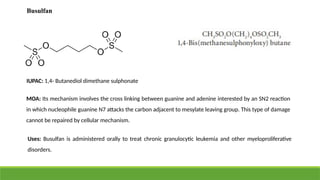
Busulfan
IUPAC: 1,4- Butanediol dimethane sulphonate
MOA: Its mechanism involves the cross linking between guanine and adenine interested by an SN2 reaction
in which nucleophile guanine N7 attacks the carbon adjacent to mesylate leaving group. This type of damage
cannot be repaired by cellular mechanism.
Uses: Busulfan is administered orally to treat chronic granulocytic leukemia and other myeloproliferative
disorders.
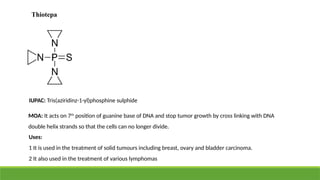
Thiotepa
IUPAC: Tris(aziridinz-1-yl)phosphine sulphide
MOA: It acts on 7th
position of guanine base of DNA and stop tumor growth by cross linking with DNA
double helix strands so that the cells can no longer divide.
Uses:
1 It is used in the treatment of solid tumours including breast, ovary and bladder carcinoma.
2 It also used in the treatment of various lymphomas
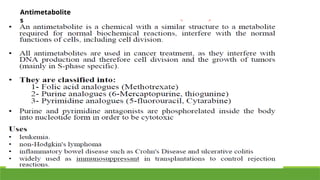
Antimetabolite
s
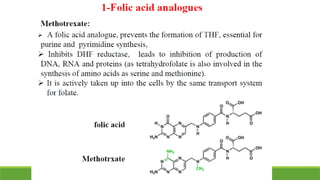
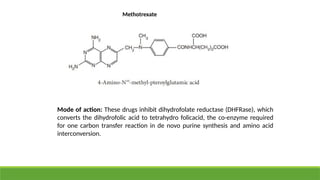
Methotrexate
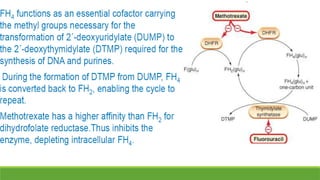
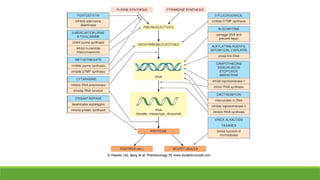
Mode of action: These drugs inhibit dihydrofolate reductase (DHFRase), which
converts the dihydrofolic acid to tetrahydro folicacid, the co-enzyme required
for one carbon transfer reaction in de novo purine synthesis and amino acid
interconversion.
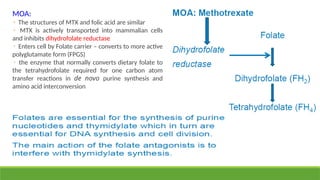
MOA:
โ—ฆ The structures of MTX and folic acid are similar
โ—ฆ MTX is actively transported into mammalian cells
and inhibits dihydrofolate reductase
โ—ฆ Enters cell by Folate carrier โ€“ converts to more active
polyglutamate form (FPGS)
โ—ฆ the enzyme that normally converts dietary folate to
the tetrahydrofolate required for one carbon atom
transfer reactions in de novo purine synthesis and
amino acid interconversion
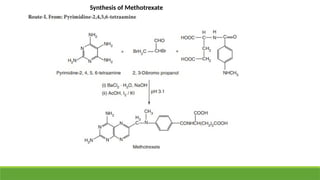
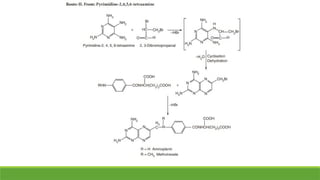
Synthesis of Methotrexate
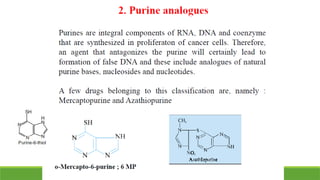
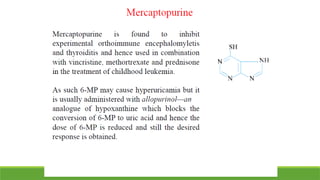
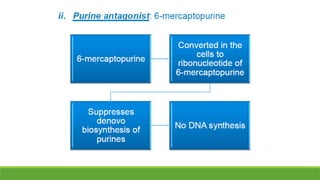
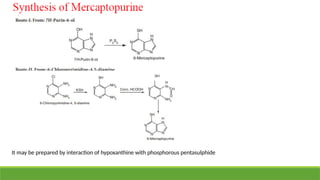
It may be prepared by interaction of hypoxanthine with phosphorous pentasulphide
Uses:
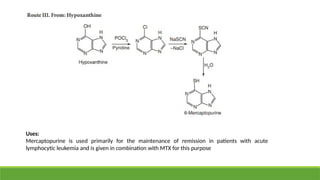
Mercaptopurine is used primarily for the maintenance of remission in patients with acute
lymphocytic leukemia and is given in combination with MTX for this purpose
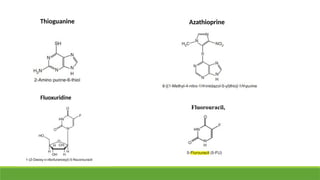
Antimetabolites: Mercaptopurine*, Thioguanine, Fluorouracil,
Floxuridine, Cytarabine, Methotrexate*, Azathioprine
Thioguanine Azathioprine
Fluoxuridine
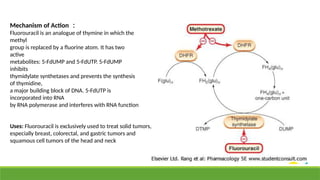
Fluorouracil,
Mechanism of Action ๏ผš
Fluorouracil is an analogue of thymine in which the
methyl
group is replaced by a fluorine atom. It has two
active
metabolites: 5-FdUMP and 5-FdUTP. 5-FdUMP
inhibits
thymidylate synthetases and prevents the synthesis
of thymidine,
a major building block of DNA. 5-FdUTP is
incorporated into RNA
by RNA polymerase and interferes with RNA function
Uses: Fluorouracil is exclusively used to treat solid tumors,
especially breast, colorectal, and gastric tumors and
squamous cell tumors of the head and neck
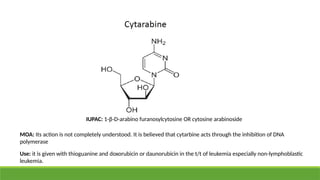
IUPAC: 1-ฮฒ-D-arabino furanosylcytosine OR cytosine arabinoside
MOA: Its action is not completely understood. It is believed that cytarbine acts through the inhibition of DNA
polymerase
Use: it is given with thioguanine and doxorubicin or daunorubicin in the t/t of leukemia especially non-lymphoblastic
leukemia.
The recognition of antibiotics as an important class of antineoplastic agents is quite recent.
Consequently, the production of antineoplastic agents through proper strain selection and controlled microbial
fermentation conditions may ultimately optimize the formation of a particular component in an antibiotic mixture.
A few important members of this category are described below, namely ; Dactinomycine; Daunorubicin
III. Antibiotics
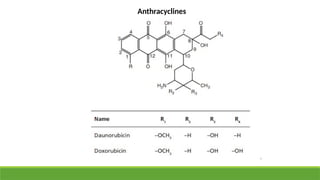
Antibiotics: Dactinomycin, Daunorubicin, Doxorubicin, Bleomycin
Plant products: Etoposide, Vinblastin sulphate, Vincristin sulphate
Miscellaneous: Cisplatin, Mitotane
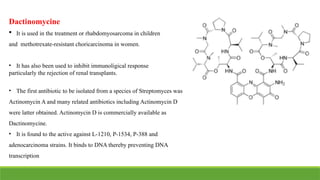
Dactinomycine
๏‚ง It is used in the treatment or rhabdomyosarcoma in children
and methotrexate-resistant choricarcinoma in women.
โ€ข It has also been used to inhibit immunoligical response
particularly the rejection of renal transplants.
โ€ข The first antibiotic to be isolated from a species of Streptomyces was
Actinomycin A and many related antibiotics including Actinomycin D
were latter obtained. Actinomycin D is commercially available as
Dactinomycine.
โ€ข It is found to the active against L-1210, P-1534, P-388 and
adenocarcinoma strains. It binds to DNA thereby preventing DNA
transcription
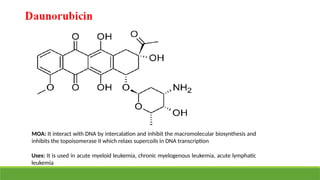
MOA: It interact with DNA by intercalation and inhibit the macromolecular biosynthesis and
inhibits the topoisomerase II which relaxs supercoils in DNA transcription
Uses: It is used in acute myeloid leukemia, chronic myelogenous leukemia, acute lymphatic
leukemia
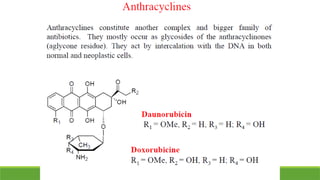
Anthracyclines
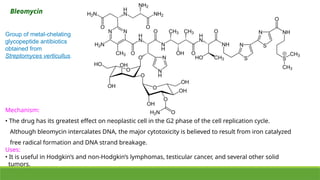
Mechanism:
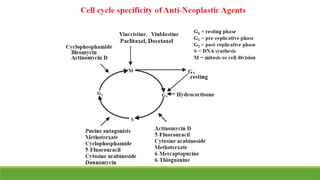
โ€ข The drug has its greatest effect on neoplastic cell in the G2 phase of the cell replication cycle.
Although bleomycin intercalates DNA, the major cytotoxicity is believed to result from iron catalyzed
free radical formation and DNA strand breakage.
Uses:
โ€ข It is useful in Hodgkinโ€™s and non-Hodgkinโ€™s lymphomas, testicular cancer, and several other solid
tumors.
Bleomycin
Group of metal-chelating
glycopeptide antibiotics
obtained from
Streptomyces verticullus.
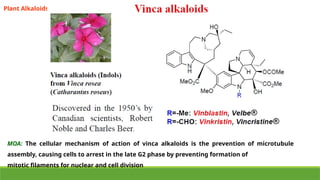
Plant Alkaloids
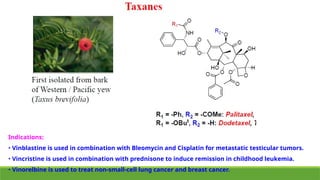
MOA: The cellular mechanism of action of vinca alkaloids is the prevention of microtubule
assembly, causing cells to arrest in the late G2 phase by preventing formation of
mitotic filaments for nuclear and cell division
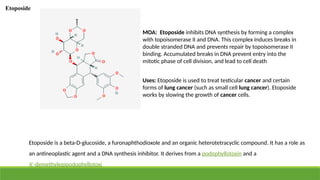
Etoposide
Etoposide is a beta-D-glucoside, a furonaphthodioxole and an organic heterotetracyclic compound. It has a role as
an antineoplastic agent and a DNA synthesis inhibitor. It derives from a podophyllotoxin and a
4'-demethylepipodophyllotoxi
MOA: Etoposide inhibits DNA synthesis by forming a complex
with topoisomerase II and DNA. This complex induces breaks in
double stranded DNA and prevents repair by topoisomerase II
binding. Accumulated breaks in DNA prevent entry into the
mitotic phase of cell division, and lead to cell death
Uses: Etoposide is used to treat testicular cancer and certain
forms of lung cancer (such as small cell lung cancer). Etoposide
works by slowing the growth of cancer cells.
Indications:
โ€ข Vinblastine is used in combination with Bleomycin and Cisplatin for metastatic testicular tumors.
โ€ข Vincristine is used in combination with prednisone to induce remission in childhood leukemia.
โ€ข Vinorelbine is used to treat non-small-cell lung cancer and breast cancer.
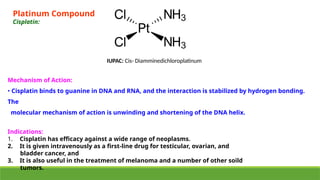
Mechanism of Action:
โ€ข Cisplatin binds to guanine in DNA and RNA, and the interaction is stabilized by hydrogen bonding.
The
molecular mechanism of action is unwinding and shortening of the DNA helix.
Indications:
1. Cisplatin has efficacy against a wide range of neoplasms.
2. It is given intravenously as a first-line drug for testicular, ovarian, and
bladder cancer, and
3. It is also useful in the treatment of melanoma and a number of other soild
tumors.
IUPAC: Cis- Diamminedichloroplatinum
Platinum Compound
Cisplatin:
HORMONES
a) Glucocorticoids
โ€ข Glucocorticoids such as prednisolone and dexamethasone have marked inhibitory effects on
lymphocyte proliferation
โ€ข Used in the treatment of leukaemias and lymphomas.
b) Oestrogens
โ€ข Diethylstilbestrol and ethinyloestradiol are two oestrogens used clinically in the palliative
treatment of androgen-dependent prostatic tumours.
b) Progestins
Progestins such as megestrol and medroxyprogesterone have been useful in
endometrial neoplasms and in renal tumours to bring temporary remission.
c) Anti-Androgen
Flutamide: androgen antagonist used in prostate tumors since they increase
androgen levels
MISCELLANEOUS DRUGS
a) Hydroxyureas
โ€“ Acts by blocking the conversion of ribonucleotide to deoxyribonucleotide by inhibing
the enzyme ribonucleoside diphoshate reductase.
L-Asparaginase
โ€“ Enzyme prepared from E.coli.
โ€“ Deaminates asparagine to aspartic acid and ammonia, and is active against tumour cells, such as
those of acute lymphoblastic leukaemia.
Monoclonal Antibodies
โ€“ Ex: Rituximab
โ€“ Activate the host immune mechanism and kills the cancer cells.
โ€“ Used for ฮฒ-cell lymphoma
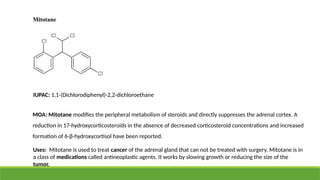
Mitotane
IUPAC: 1,1-(Dichlorodiphenyl)-2,2-dichloroethane
MOA: Mitotane modifies the peripheral metabolism of steroids and directly suppresses the adrenal cortex. A
reduction in 17-hydroxycorticosteroids in the absence of decreased corticosteroid concentrations and increased
formation of 6-ฮฒ-hydroxycortisol have been reported.
Uses: Mitotane is used to treat cancer of the adrenal gland that can not be treated with surgery. Mitotane is in
a class of medications called antineoplastic agents. It works by slowing growth or reducing the size of the
tumor.

PPT Anticancer agent for B Pharm Fifth Semester students

  • 1.
    ANTI-NEOPLASTIC AGENTS DR. D.P. KAWADE ASSOCIATE PROFESSOR Priyadarshini J. L. College of Pharmacy, Electronic zone,MIDC, Hingna Road, Nagpur-440016
  • 2.
    Contents 1. INTRODUCTION 2. CLASSIFICATION 3.MECHANISM OF ACTION 4. USES OF DRUGS 5. STRUCTURE ACTIVITY RELATIONSHIP OF SELECTIVE CLASS OF DRUGS AS SPECIFIED IN THE COURSE 6. SYNTHESIS OF DRUGS
  • 3.
    Anti-neoplastic agents: Alkylating agents:Meclorethamine*, Cyclophosphamide, Melphalan, Chlorambucil, Busulfan, Thiotepa Antimetabolites: Mercaptopurine*, Thioguanine, Fluorouracil, Floxuridine, Cytarabine, Methotrexate*, Azathioprine Antibiotics: Dactinomycin, Daunorubicin, Doxorubicin, Bleomycin Plant products: Etoposide, Vinblastin sulphate, Vincristin sulphate Miscellaneous: Cisplatin, Mitotane
  • 4.
    Neoplasms Tumors = groupsof neoplastic cells โ€ข Two major types: benign, malignant โ€ข Benign โ€“ โ€œnoncancerousโ€ โ€“ Local; cells cohesive, well-defined borders โ€“ Push adjacent tissue away โ€“ Doesnโ€™t spread beyond original site โ€“ Often has capsule of fibrous connective tissue โ€ข Malignant โ€“ grow more rapidly; often calledโ€œcancerโ€ โ€“ Not cohesive; seldom have capsule โ€“ Irregular shape; disrupted architecture โ€“ Invade surrounding cells โ€“ Can break away to form second tumor โ€ข โ€œMetastasisโ€ from 1 to 2 site Introduction
  • 5.
    Cancer (Neoplastic) โ€ข Canceris a term used for diseases in which abnormal cells divide without control and are able to invade other tissues โ€ข Cancer occurs after normal cells have been transformed into neoplastic cells through alteration of their genetic material and the abnormal expression of certain genes. โ€ข Neoplastic cells usually exhibit chromosomal abnormalities and the loss of their differentiated properties. โ€ข These changes leads to uncontrolled cell division and many result in the invasion of previously unaffected organs, a process called metastasis โ€ข Cancer cells can spread to other parts of the body through the blood and lymph systems, this process is called metastasis โ€ข Anticancer drug, also called antineoplastic drug, any drug that is effective in the treatment of malignant, or cancerous, disease. Introduction
  • 6.
    Categorized based onthe functions/locations of the cells from which they originate: 1. Carcinoma - skin or in tissues that line or cover internal organs. E.g., Epithelial cells. 80-90% reported cancer cases are carcinomas. 2. Sarcoma - bone, cartilage, fat, muscle, blood vessels, or other connective or supportive tissue. 3. Leukemia - White blood cells and their precursor cells such as the bone marrow cells. 4. Lymphoma - cells of the immune system that affects lymphatic system. 5. Myeloma - B-cells that produce antibodies, spreads through lymphatic system. 6. CNS cancers - cancers that begin in the tissues of brain and spinal cord.
  • 7.
    Oncogenesis = Processof Tumor Development Probably multi-step process โ€ข Initation = important change introduced into cell โ€“ Probably through DNA alteration โ€“ >1 event probably needed for tumor production โ€“ Reversible unless and until: โ€ข Promotion = biochem event encourages tumor formโ€™n โ€ข Genโ€™ly need both initiation and promotion โ€“ Initiators, promoters may be toxins OR radiation OR viruses) Introduction
  • 8.
    The Goal ofCancer Treatments โ€ข Curative โ€“ Total irradication of cancer cells โ€“ Curable cancers include testicular tumors, Wills tumor โ€ข Palliative โ€“ Alleviation of symptoms โ€“ Avoidance of life-threatening toxicity โ€“ Increased survival and improved quality of life โ€ข Adjuvant therapy โ€“ Attempt to eradicate microscopic cancer after surgery โ€“ e.g. breast cancer & colorectal cancer Introduction
  • 9.
    Six Established RxModalities 1. Surgery 2. Radiotherapy 3. Chemotherapy 4. Endocrine therapy 5. Immunotherapy 6. Biological therapy Introduction New types of cancer treatment Hormonal Treatments: These drugs are designed to prevent cancer cell growth by preventing the cells from receiving signals necessary for their continued growth and division. E.g., Breast cancer โ€“ tamoxifen after surgery and radiation Specific Inhibitors: Drugs targeting specific proteins and processes that are limited primarily to cancer cells or that are much more prevalent in cancer cells. Antibodies: The antibodies used in the treatment of cancer have been manufactured for use as drugs. E.g., Herceptin, avastin
  • 10.
    G1 phase (presyntheticphase): synthesis of enzymes and other cellular components needed for DNA synthesis. Cells increase in size in G0, produce enzymes needed for DNA Synthesis Synthetic phase (S phase):To produce two similar daughter cells, the complete DNA instructions in the cell must be duplicated. DNA replication occurs during this S (synthesis) phase DNA synthesis takes place G2 phase (pre mitotic phase):It is the gap between DNA synthesis and mitosis, the cell will continue to grow and produce new proteins & RNA synthesis of cellular components for mitosis (proteins and RNA synthesis Mitosis or M phase: Cell growth and protein production stop at this stage in the cell cycle. All of the cell's energy is focused on the complex and orderly division into two similar daughter cells. Go Phase (resting phase): This may be a temporary resting period or more permanent. An example of the latter is a cell that has reached an end stage of development and will no longer divide (e.g. neuron).cells stop dividng temporarily or permanently Cell cycle Introduction
  • 12.
    Classification 1. Alkylating Agent 2.Antimetabolite 3. Antibiotics 4. Alkaloid 5. Hormones 6. Others ๏ผˆ cis-platinum ๏ผŒ carboplatin,lobaplatin etc ๏ผ‰
  • 14.
    a) Alkylating Agents ๏‚งContain chemical groups that can form covalent bonds with particular nucleophilic substances in the cell. ๏‚ง Produce highly reactive carbonium ion intermediates. ๏‚ง Forms covalent bond with electron donors like amine, hydroxyl and sulfhydryl groups. ๏‚ง Alkylating agents are bifunctional, i.e. they have two alkylating groups ๏‚ง The nitrogen at position 7 (N7) of guanine, being strongly nucleophilic, is probably the main molecular target for alkylation in DNA. ๏‚ง N1 and N3 of adenine and N3 of cytosine may also be affected. ๏‚ง Being bifunctional they can cause intra- or interchain cross-linking, abnormal base pairing or chain scission. ๏‚ง Interferes not only with transcription but also with replication.
  • 15.
    Mechanism of Action โ€ขNitrogen mustards inhibit cell reproduction by binding irreversibly with the nucleic acids (DNA). The specific type of chemical bonding involved is alkylation. โ€ข After alkylation, DNA is unable to replicate and therefore can no longer synthesize proteins and other essential cell metabolites. โ€ข Consequently, cell reproduction is inhibited and the cell eventually dies from the inability to maintain its metabolic functions
  • 17.
    Types of Alkylatingagents Category Category Drugs Nitrogen mustards Cyclophosphamide, Meclorethamine, Chlorambucil Ethyleneimine Thiotepa Alkyl sulfonate Busulfan Nitrosoureas Carmustine, Lomustine Triazine Dacarbazine Tremozolomide Methylhadrazine Procarbazine Platinum cis-platinium, carboplatin and Oxalipla According to syllabus : Meclorethamine*, Cyclophosphamide, Melphalan, Chlorambucil, Busulfan, Thiotepa
  • 19.
    Meclorethamine IUPAC: Bis-Chloro-N-(2-chloroethyl)-N-methylethanamine MOA: Alkylatingagents work by three different mechanisms: 1) attachment of alkyl groups to DNA bases, resulting in the DNA being fragmented by repair enzymes in their attempts to replace the alkylated bases, preventing DNA synthesis and RNA transcription from the affected DNA, 2) DNA damage via the formation of cross-links (bonds between atoms in the DNA) which prevents DNA from being separated for synthesis or transcription, and 3) the induction of mispairing of the nucleotides leading to mutations. Mechlorethamine is cell cycle phase-nonspecific.
  • 20.
    Synthesis of mechlorethanamine Uses: 1.It is used in the treatment of Hodgkinโ€™s disease 2. It is used topically in the treatment of mycosis fugoides(T- cell lymphoma) 3. Its estrogen analogue is used in the T/t of prostate cancer
  • 21.
    Cyclophosphamide IUPAC: 2-Bis-(2-chloroethyl)aminoperhydro-1,3,2-oxazaphoshorinane-2-oxide monohydrate MOA:It is a prodrug and is activated by the P-450 enzymes to its active form phosphoramide mustard. The active drug alkylates nucleophilic groups on DNA Bases Particularly at the N-7 position of guanine. This leads to cross linking of bases, abnormal base pairing and DNA strand breakage Uses: 1. It is used in the treatment of chronic lymphocyctic leukemia, non-Hodgkinโ€™s lymphomas, breast and ovarian cancer, and a variety of other cancers. 2. It is also a potent immunosuppressant, it is used in the management of rheumatoid disorders and autoimmune nephritis.
  • 22.
  • 23.
    Melphalan IUPAC: 4- Bis(2-chloroethyl)amino-L-phenylalanine MOA:It act by alkylation, alters the nucleotide guanine by causes cross linking between strands of DNA and leading to cell death. Uses: Melphalan is a nitrogen mustard that is primarily used to treat multiple myeloma (plasma cell myeloma), breast cancer, and ovarian cancer.
  • 24.
    Chlorambucil IUPAC: 4-[4-Bis(2-chloroethyl)aminophenyl]butyric acid MOA:It alkylates, alters and cross links DNA during DNA replication damage the DNA in a cell. Uses: 1 It is mainly used in Chronic lymphatic leukaemia, 2 Non Hodgkinโ€™s Lymphoma and few solid tumours. 3 It also used as a immunosuppressive agent for various autoimmune disorders
  • 25.
    Busulfan IUPAC: 1,4- Butanedioldimethane sulphonate MOA: Its mechanism involves the cross linking between guanine and adenine interested by an SN2 reaction in which nucleophile guanine N7 attacks the carbon adjacent to mesylate leaving group. This type of damage cannot be repaired by cellular mechanism. Uses: Busulfan is administered orally to treat chronic granulocytic leukemia and other myeloproliferative disorders.
  • 26.
    Thiotepa IUPAC: Tris(aziridinz-1-yl)phosphine sulphide MOA:It acts on 7th position of guanine base of DNA and stop tumor growth by cross linking with DNA double helix strands so that the cells can no longer divide. Uses: 1 It is used in the treatment of solid tumours including breast, ovary and bladder carcinoma. 2 It also used in the treatment of various lymphomas
  • 28.
  • 31.
    Methotrexate Mode of action:These drugs inhibit dihydrofolate reductase (DHFRase), which converts the dihydrofolic acid to tetrahydro folicacid, the co-enzyme required for one carbon transfer reaction in de novo purine synthesis and amino acid interconversion.
  • 32.
    MOA: โ—ฆ The structuresof MTX and folic acid are similar โ—ฆ MTX is actively transported into mammalian cells and inhibits dihydrofolate reductase โ—ฆ Enters cell by Folate carrier โ€“ converts to more active polyglutamate form (FPGS) โ—ฆ the enzyme that normally converts dietary folate to the tetrahydrofolate required for one carbon atom transfer reactions in de novo purine synthesis and amino acid interconversion
  • 34.
  • 39.
    It may beprepared by interaction of hypoxanthine with phosphorous pentasulphide
  • 40.
    Uses: Mercaptopurine is usedprimarily for the maintenance of remission in patients with acute lymphocytic leukemia and is given in combination with MTX for this purpose
  • 41.
    Antimetabolites: Mercaptopurine*, Thioguanine,Fluorouracil, Floxuridine, Cytarabine, Methotrexate*, Azathioprine
  • 42.
  • 43.
    Mechanism of Action๏ผš Fluorouracil is an analogue of thymine in which the methyl group is replaced by a fluorine atom. It has two active metabolites: 5-FdUMP and 5-FdUTP. 5-FdUMP inhibits thymidylate synthetases and prevents the synthesis of thymidine, a major building block of DNA. 5-FdUTP is incorporated into RNA by RNA polymerase and interferes with RNA function Uses: Fluorouracil is exclusively used to treat solid tumors, especially breast, colorectal, and gastric tumors and squamous cell tumors of the head and neck
  • 44.
    IUPAC: 1-ฮฒ-D-arabino furanosylcytosineOR cytosine arabinoside MOA: Its action is not completely understood. It is believed that cytarbine acts through the inhibition of DNA polymerase Use: it is given with thioguanine and doxorubicin or daunorubicin in the t/t of leukemia especially non-lymphoblastic leukemia.
  • 45.
    The recognition ofantibiotics as an important class of antineoplastic agents is quite recent. Consequently, the production of antineoplastic agents through proper strain selection and controlled microbial fermentation conditions may ultimately optimize the formation of a particular component in an antibiotic mixture. A few important members of this category are described below, namely ; Dactinomycine; Daunorubicin III. Antibiotics Antibiotics: Dactinomycin, Daunorubicin, Doxorubicin, Bleomycin Plant products: Etoposide, Vinblastin sulphate, Vincristin sulphate Miscellaneous: Cisplatin, Mitotane
  • 46.
    Dactinomycine ๏‚ง It isused in the treatment or rhabdomyosarcoma in children and methotrexate-resistant choricarcinoma in women. โ€ข It has also been used to inhibit immunoligical response particularly the rejection of renal transplants. โ€ข The first antibiotic to be isolated from a species of Streptomyces was Actinomycin A and many related antibiotics including Actinomycin D were latter obtained. Actinomycin D is commercially available as Dactinomycine. โ€ข It is found to the active against L-1210, P-1534, P-388 and adenocarcinoma strains. It binds to DNA thereby preventing DNA transcription
  • 48.
    MOA: It interactwith DNA by intercalation and inhibit the macromolecular biosynthesis and inhibits the topoisomerase II which relaxs supercoils in DNA transcription Uses: It is used in acute myeloid leukemia, chronic myelogenous leukemia, acute lymphatic leukemia
  • 49.
  • 50.
    Mechanism: โ€ข The drughas its greatest effect on neoplastic cell in the G2 phase of the cell replication cycle. Although bleomycin intercalates DNA, the major cytotoxicity is believed to result from iron catalyzed free radical formation and DNA strand breakage. Uses: โ€ข It is useful in Hodgkinโ€™s and non-Hodgkinโ€™s lymphomas, testicular cancer, and several other solid tumors. Bleomycin Group of metal-chelating glycopeptide antibiotics obtained from Streptomyces verticullus.
  • 51.
    Plant Alkaloids MOA: Thecellular mechanism of action of vinca alkaloids is the prevention of microtubule assembly, causing cells to arrest in the late G2 phase by preventing formation of mitotic filaments for nuclear and cell division
  • 52.
    Etoposide Etoposide is abeta-D-glucoside, a furonaphthodioxole and an organic heterotetracyclic compound. It has a role as an antineoplastic agent and a DNA synthesis inhibitor. It derives from a podophyllotoxin and a 4'-demethylepipodophyllotoxi MOA: Etoposide inhibits DNA synthesis by forming a complex with topoisomerase II and DNA. This complex induces breaks in double stranded DNA and prevents repair by topoisomerase II binding. Accumulated breaks in DNA prevent entry into the mitotic phase of cell division, and lead to cell death Uses: Etoposide is used to treat testicular cancer and certain forms of lung cancer (such as small cell lung cancer). Etoposide works by slowing the growth of cancer cells.
  • 53.
    Indications: โ€ข Vinblastine isused in combination with Bleomycin and Cisplatin for metastatic testicular tumors. โ€ข Vincristine is used in combination with prednisone to induce remission in childhood leukemia. โ€ข Vinorelbine is used to treat non-small-cell lung cancer and breast cancer.
  • 54.
    Mechanism of Action: โ€ขCisplatin binds to guanine in DNA and RNA, and the interaction is stabilized by hydrogen bonding. The molecular mechanism of action is unwinding and shortening of the DNA helix. Indications: 1. Cisplatin has efficacy against a wide range of neoplasms. 2. It is given intravenously as a first-line drug for testicular, ovarian, and bladder cancer, and 3. It is also useful in the treatment of melanoma and a number of other soild tumors. IUPAC: Cis- Diamminedichloroplatinum Platinum Compound Cisplatin:
  • 55.
    HORMONES a) Glucocorticoids โ€ข Glucocorticoidssuch as prednisolone and dexamethasone have marked inhibitory effects on lymphocyte proliferation โ€ข Used in the treatment of leukaemias and lymphomas. b) Oestrogens โ€ข Diethylstilbestrol and ethinyloestradiol are two oestrogens used clinically in the palliative treatment of androgen-dependent prostatic tumours. b) Progestins Progestins such as megestrol and medroxyprogesterone have been useful in endometrial neoplasms and in renal tumours to bring temporary remission. c) Anti-Androgen Flutamide: androgen antagonist used in prostate tumors since they increase androgen levels
  • 56.
    MISCELLANEOUS DRUGS a) Hydroxyureas โ€“Acts by blocking the conversion of ribonucleotide to deoxyribonucleotide by inhibing the enzyme ribonucleoside diphoshate reductase. L-Asparaginase โ€“ Enzyme prepared from E.coli. โ€“ Deaminates asparagine to aspartic acid and ammonia, and is active against tumour cells, such as those of acute lymphoblastic leukaemia. Monoclonal Antibodies โ€“ Ex: Rituximab โ€“ Activate the host immune mechanism and kills the cancer cells. โ€“ Used for ฮฒ-cell lymphoma
  • 57.
    Mitotane IUPAC: 1,1-(Dichlorodiphenyl)-2,2-dichloroethane MOA: Mitotanemodifies the peripheral metabolism of steroids and directly suppresses the adrenal cortex. A reduction in 17-hydroxycorticosteroids in the absence of decreased corticosteroid concentrations and increased formation of 6-ฮฒ-hydroxycortisol have been reported. Uses: Mitotane is used to treat cancer of the adrenal gland that can not be treated with surgery. Mitotane is in a class of medications called antineoplastic agents. It works by slowing growth or reducing the size of the tumor.