Smt. Kamala and Sri.Venkappa M. Agadi
College of Engineering & Technology
Department of Electrical and Electronics Engineering
Presented by
Ms. Asiyakhatoon Lohar 2KA18EE007
Ms. Ayesha Taqdees 2KA18EE009
Ms. Nagaveena.H.Basari 2KA18EE020
Under the Guidance of:
Mr. Harish.A.M
Asst. Professor
EEE Department
2021-22 Academic Project Phase 1
IOT BASED SMART SOLAR
IRRIGATION SYSTEM
 Introduction
 Literature Review
 Problem Statement
 Objectives
 Methodology
 Block diagram
 Advantages
 Disadvantages
 Conclusion
 References
 The farmer has to toil himself day in and day out
to produce the crop which brings him little
revenue, so he has to try some other options for
his sustenance, also today the availability of
labor for carrying out agricultural activities is
less, therefore the automation in agricultural
process is needed.
 The farmer can monitor whether everything is
going normal or some action is needed to be
taken. The entire process is controlled and
monitored by programmable controller.
 In this paper, soil moisture sensor, temperature
sensors ,humidity sensor, PIR sensor placed in
root zone of plant and gateway unit handles the
sensor information and transmit data to a web
application.
 Automated Irrigation System Using a Wireless Sensor Network and GPRS Module
 Author:-Joaquín Gutiérrez, Juan Francisco Villa-Medina, Alejandra Nieto-Garibay,
and Miguel ÁngelPorta- Gándara
 The automatic system was tested for 136 days and save 90% compared with
traditional irrigation system. Three replicas of the automated system have been
used successfully in other places for 18 months. Because of its energy autonomy
and low cost, the system has the potential
 Automated Irrigation System Using Solar Power
 Author :-JiaUddin, S.M. Taslim Reza, QaderNewaz, Jamal Uddin, Touhidul Islam,
and Jong-Myon Kim,
 “This paper design a model of automatic irrigation system which is based on
microcontroller and solar power was used only for source of power supply.
Various sensor are placed in paddy field. Sensors sense water level continuously
and give the information to farmer through cellular phone. Farmer controls the
motor using cellular phone without going in paddy field. If the water level reaches
at danger level, automatically motor will be off without conformation of farmer.
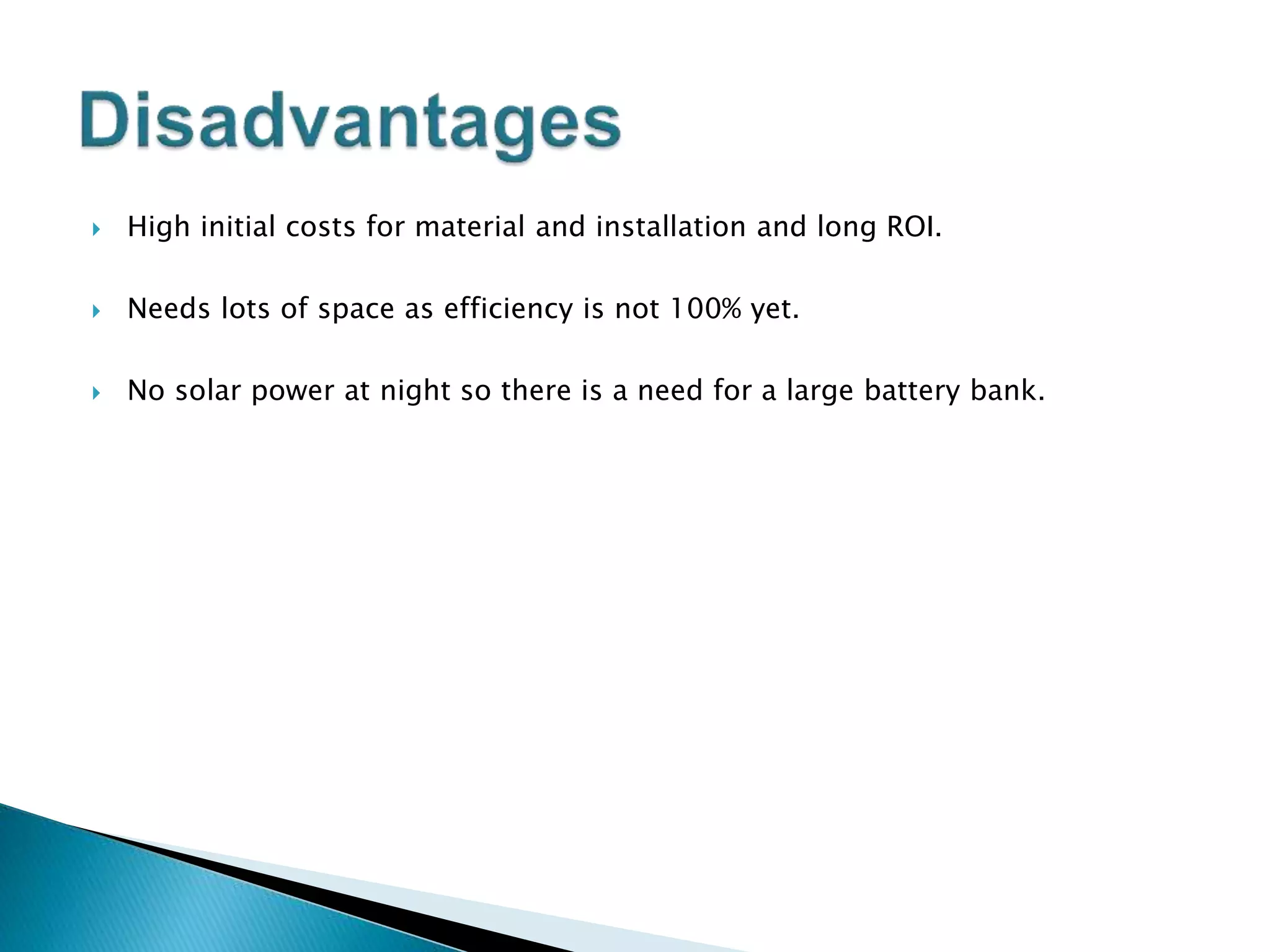
Farmer experiences huge economic losses due to wrong prediction about
weather and wrong irrigation method. When the Wireless Sensor
Network is developed now it is very easy to apply them for increasing
the quality and quantity of crops.
We are overcome this problem by implementing this project.
 There is an urgent need for a system that makes the
agricultural process easier and burden free for a farmer.
 With the recent advancement of technology it has become
necessary to increase the annual crop production for country
like India which is entirely agro-centric economy.
 If the farmer is far from the agricultural land he will not
beable to notice current conditions in the farm. So, efficient
water management plays an important role in the irrigated
agricultural cropping systems.
◦ In this project humidity sensor check humidity environment
◦ Temperature sensor check temperature of environment
◦ Soil moisture sensor checks moisture level of soil.
◦ If any sensor value changes than its set value, , at that time
through motor driver motor will gets on.
◦ All sensor values will be displayed on lcd.
◦ The result will be displayed on LCD.
◦ All sensor related data will be updated on web server using
IOT module.
 Its ability to save water.
 Traditional watering methods can waste as much as 50% of the water.
 Solar power is pollution free and causes no greenhouse gases to be emitted
after installation.
 cost-effective for enhancing the techniques to preserve water resources.
 Solar power is pollution free and causes no greenhouse gases to be emitted
after installation.
 This system conserves electricity by reducing the usage of grid power.
 High initial costs for material and installation and long ROI.
 Needs lots of space as efficiency is not 100% yet.
 No solar power at night so there is a need for a large battery bank.
 The smart irrigation system is suitable and cost effective for
advance water resources for agricultural production. The system
would provide feedback control system which will monitor and
control all the activities of plant growth and irrigation system
efficiently. If rain gun sensor can be added so that when it rains
there won’t be floods. Rain water harvesting can be done and this
harvested water can be used to irrigate fields. We can also include
many more water quality sensors that affect the crops.
 Chandankumar Sahu, Pramitee Behera. 2015 A Low Cost Smart Irrigation Control
System IEEE Sponsored 2nd International Conference on Electronics and
Communication System (ICECS).
 Suprabha Jadhav, Shailesh Hambarde. 2013 Automated Irrigation System using
Wireless Sensor Network and Raspberry pi, International Journal of science and
research (IJSR).
 Gutierrez, J. Francisco, J. Villa-Medina Nieto- Garibay, A., and Angel, P.G. 2013.
Automated Irrigation System Using a Wireless Sensor Network and GPRS Module
 Rane D, Indurkar P, and Khatri, D.M. 2015 Paper based on Automatic irrigation
system on RF module In IJAICT Volume 1, Issue 9.
ppt 786 (2).pptx

ppt 786 (2).pptx

  • 1.
    Smt. Kamala andSri.Venkappa M. Agadi College of Engineering & Technology Department of Electrical and Electronics Engineering Presented by Ms. Asiyakhatoon Lohar 2KA18EE007 Ms. Ayesha Taqdees 2KA18EE009 Ms. Nagaveena.H.Basari 2KA18EE020 Under the Guidance of: Mr. Harish.A.M Asst. Professor EEE Department 2021-22 Academic Project Phase 1 IOT BASED SMART SOLAR IRRIGATION SYSTEM
  • 2.
     Introduction  LiteratureReview  Problem Statement  Objectives  Methodology  Block diagram  Advantages  Disadvantages  Conclusion  References
  • 3.
     The farmerhas to toil himself day in and day out to produce the crop which brings him little revenue, so he has to try some other options for his sustenance, also today the availability of labor for carrying out agricultural activities is less, therefore the automation in agricultural process is needed.  The farmer can monitor whether everything is going normal or some action is needed to be taken. The entire process is controlled and monitored by programmable controller.  In this paper, soil moisture sensor, temperature sensors ,humidity sensor, PIR sensor placed in root zone of plant and gateway unit handles the sensor information and transmit data to a web application.
  • 4.
     Automated IrrigationSystem Using a Wireless Sensor Network and GPRS Module  Author:-Joaquín Gutiérrez, Juan Francisco Villa-Medina, Alejandra Nieto-Garibay, and Miguel ÁngelPorta- Gándara  The automatic system was tested for 136 days and save 90% compared with traditional irrigation system. Three replicas of the automated system have been used successfully in other places for 18 months. Because of its energy autonomy and low cost, the system has the potential  Automated Irrigation System Using Solar Power  Author :-JiaUddin, S.M. Taslim Reza, QaderNewaz, Jamal Uddin, Touhidul Islam, and Jong-Myon Kim,  “This paper design a model of automatic irrigation system which is based on microcontroller and solar power was used only for source of power supply. Various sensor are placed in paddy field. Sensors sense water level continuously and give the information to farmer through cellular phone. Farmer controls the motor using cellular phone without going in paddy field. If the water level reaches at danger level, automatically motor will be off without conformation of farmer.
  • 5.
    Farmer experiences hugeeconomic losses due to wrong prediction about weather and wrong irrigation method. When the Wireless Sensor Network is developed now it is very easy to apply them for increasing the quality and quantity of crops. We are overcome this problem by implementing this project.
  • 6.
     There isan urgent need for a system that makes the agricultural process easier and burden free for a farmer.  With the recent advancement of technology it has become necessary to increase the annual crop production for country like India which is entirely agro-centric economy.  If the farmer is far from the agricultural land he will not beable to notice current conditions in the farm. So, efficient water management plays an important role in the irrigated agricultural cropping systems.
  • 7.
    ◦ In thisproject humidity sensor check humidity environment ◦ Temperature sensor check temperature of environment ◦ Soil moisture sensor checks moisture level of soil. ◦ If any sensor value changes than its set value, , at that time through motor driver motor will gets on. ◦ All sensor values will be displayed on lcd. ◦ The result will be displayed on LCD. ◦ All sensor related data will be updated on web server using IOT module.
  • 9.
     Its abilityto save water.  Traditional watering methods can waste as much as 50% of the water.  Solar power is pollution free and causes no greenhouse gases to be emitted after installation.  cost-effective for enhancing the techniques to preserve water resources.  Solar power is pollution free and causes no greenhouse gases to be emitted after installation.  This system conserves electricity by reducing the usage of grid power.
  • 10.
     High initialcosts for material and installation and long ROI.  Needs lots of space as efficiency is not 100% yet.  No solar power at night so there is a need for a large battery bank.
  • 11.
     The smartirrigation system is suitable and cost effective for advance water resources for agricultural production. The system would provide feedback control system which will monitor and control all the activities of plant growth and irrigation system efficiently. If rain gun sensor can be added so that when it rains there won’t be floods. Rain water harvesting can be done and this harvested water can be used to irrigate fields. We can also include many more water quality sensors that affect the crops.
  • 12.
     Chandankumar Sahu,Pramitee Behera. 2015 A Low Cost Smart Irrigation Control System IEEE Sponsored 2nd International Conference on Electronics and Communication System (ICECS).  Suprabha Jadhav, Shailesh Hambarde. 2013 Automated Irrigation System using Wireless Sensor Network and Raspberry pi, International Journal of science and research (IJSR).  Gutierrez, J. Francisco, J. Villa-Medina Nieto- Garibay, A., and Angel, P.G. 2013. Automated Irrigation System Using a Wireless Sensor Network and GPRS Module  Rane D, Indurkar P, and Khatri, D.M. 2015 Paper based on Automatic irrigation system on RF module In IJAICT Volume 1, Issue 9.