SERVSAFE/Chapter 2
THE
MICROWORLD
Microorganisms…
• Small, living organisms
• Harmful microorganisms are
called pathogens
• Cause foodborne illness
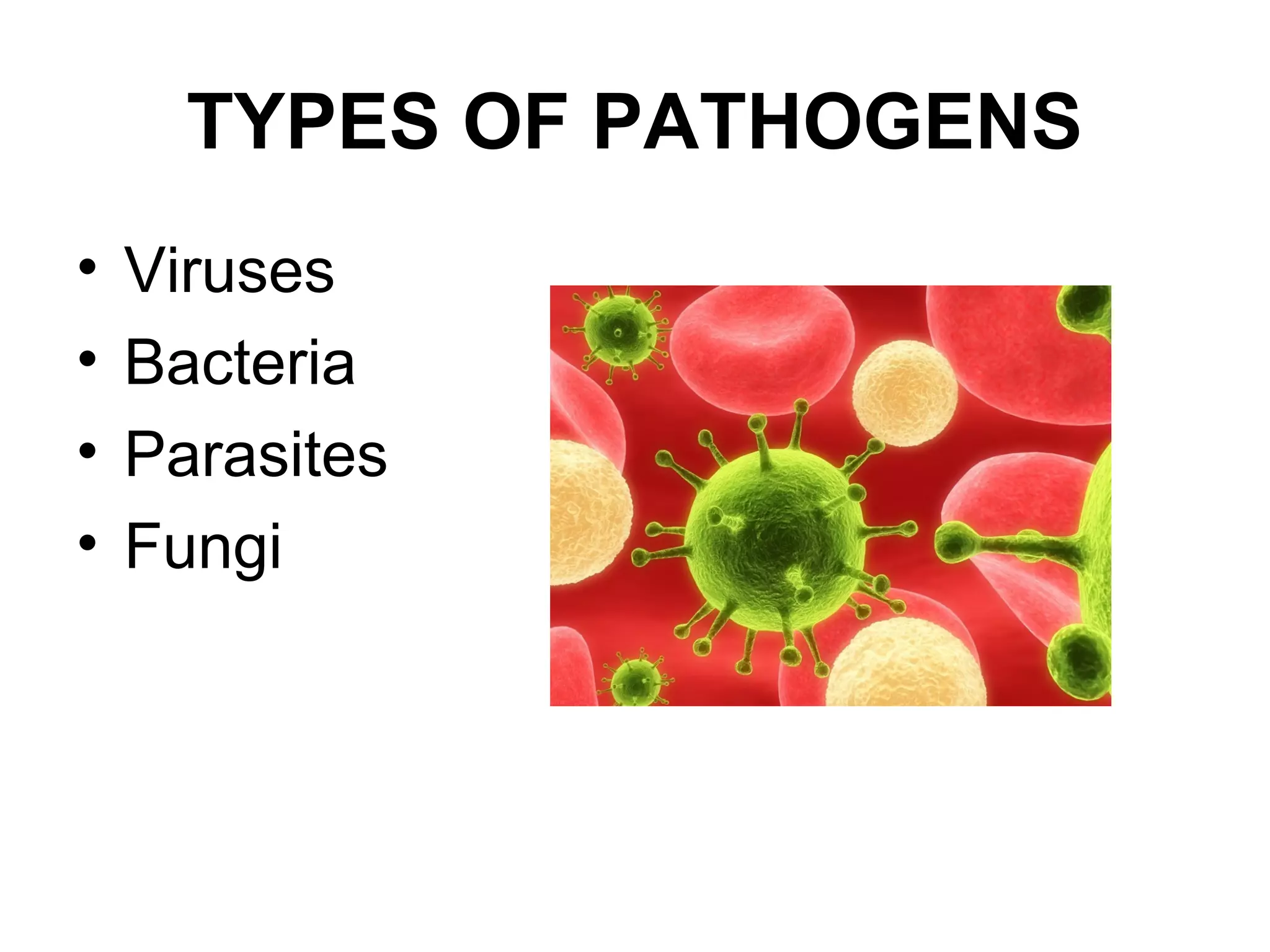
TYPES OF PATHOGENS
• Viruses
• Bacteria
• Parasites
• Fungi
VIRUSES
• Leading cause of
foodborne illness
• Cannot grow in food,
but can survive cooler
and freezer
temperatures
• Key to prevention is
good personal
hygiene
BACTERIA
• Usually controlled by keeping food out of
the temperature danger zone
• Some bacteria can change into spores to
keep from dying when they don’t have
enough food
• Multiplies quickly under the right
conditions
PARASITES
• Must be in the meat of another animal in
order to survive
• Can contaminate both food and water…
particularly water used to irrigate produce
• Method of prevention would be to
purchase food from a reputable supplier
FUNGI
• Sometimes makes
people sick
• Mostly spoils food
• Examples are mold
and yeast
• Any food spoiled by
mold or yeast should
be thrown out, unless
the mold is a natural
part of the product
WHAT PATHOGENS NEED TO
GROW
• FOOD
• ACIDITY
• TEMPERATURE
• TIME
• OXYGEN
• MOISTURE
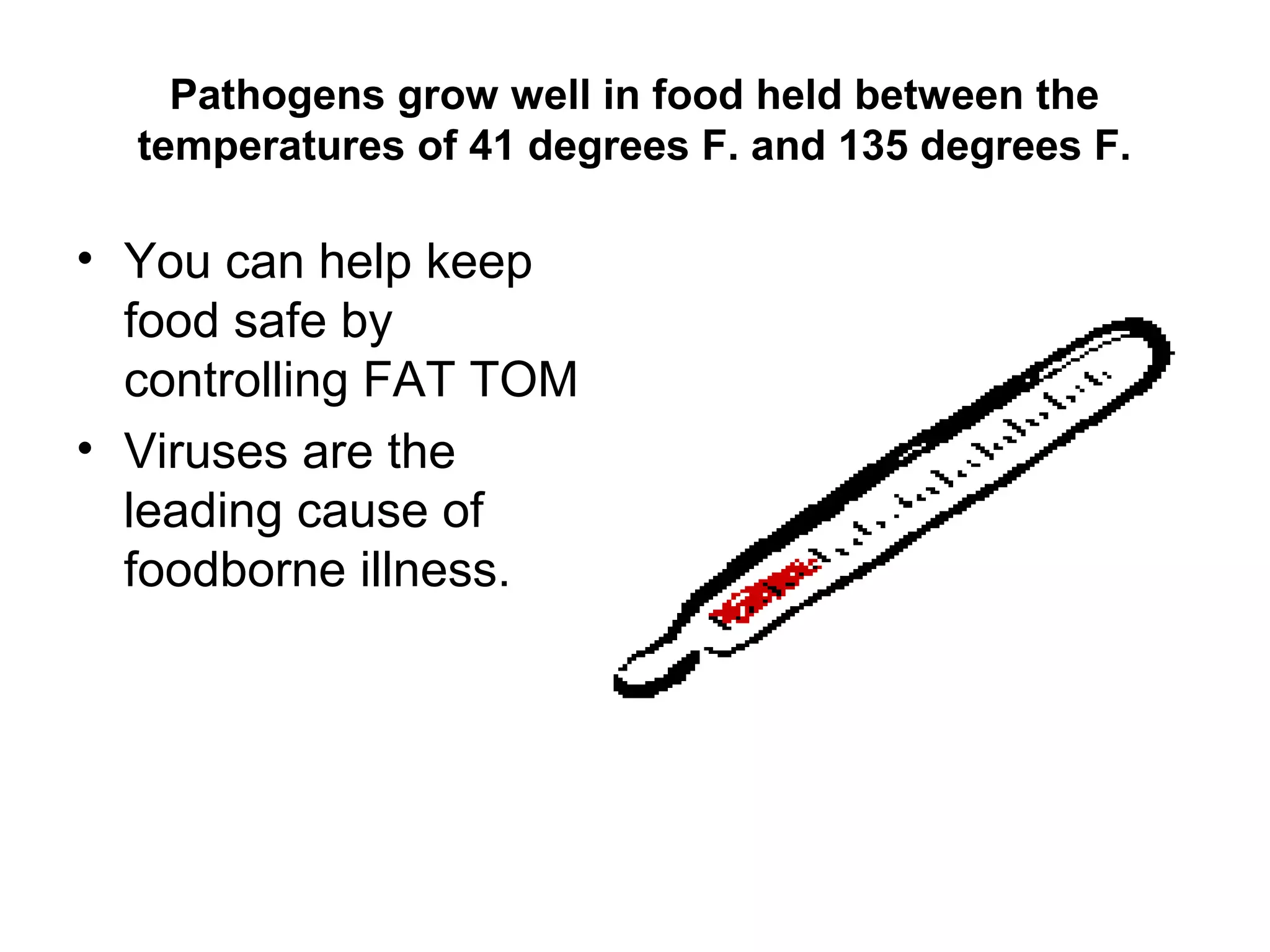
Pathogens grow well in food held between the
temperatures of 41 degrees F. and 135 degrees F.
• You can help keep
food safe by
controlling FAT TOM
• Viruses are the
leading cause of
foodborne illness.
Fish toxins…
• Can be a natural part of the fish or made
by pathogens on it.
• Some occur when fish eat smaller fish that
have the toxin.
• Shellfish toxins are caused by marine
algae that have a toxin, which the shellfish
then eats
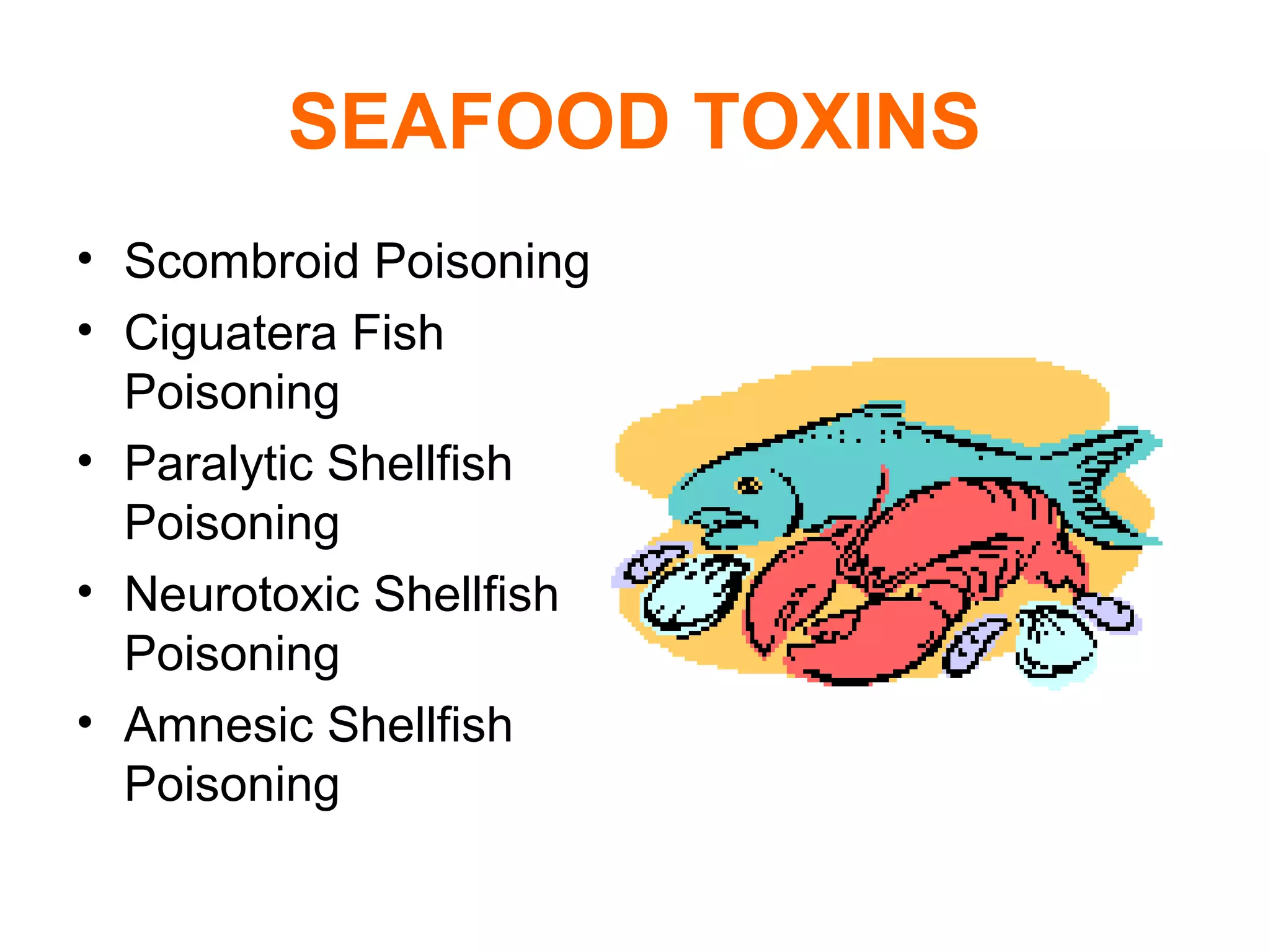
SEAFOOD TOXINS
• Scombroid Poisoning
• Ciguatera Fish
Poisoning
• Paralytic Shellfish
Poisoning
• Neurotoxic Shellfish
Poisoning
• Amnesic Shellfish
Poisoning
Mushroom toxins…
• Foodborne illness
linked with
mushrooms are
almost always caused
by eating toxic, wild
mushrooms collected
by amateur hunters.

Servsafe chapter 2 ppt

  • 1.
  • 2.
    Microorganisms… • Small, livingorganisms • Harmful microorganisms are called pathogens • Cause foodborne illness
  • 3.
    TYPES OF PATHOGENS •Viruses • Bacteria • Parasites • Fungi
  • 4.
    VIRUSES • Leading causeof foodborne illness • Cannot grow in food, but can survive cooler and freezer temperatures • Key to prevention is good personal hygiene
  • 5.
    BACTERIA • Usually controlledby keeping food out of the temperature danger zone • Some bacteria can change into spores to keep from dying when they don’t have enough food • Multiplies quickly under the right conditions
  • 6.
    PARASITES • Must bein the meat of another animal in order to survive • Can contaminate both food and water… particularly water used to irrigate produce • Method of prevention would be to purchase food from a reputable supplier
  • 7.
    FUNGI • Sometimes makes peoplesick • Mostly spoils food • Examples are mold and yeast • Any food spoiled by mold or yeast should be thrown out, unless the mold is a natural part of the product
  • 8.
    WHAT PATHOGENS NEEDTO GROW • FOOD • ACIDITY • TEMPERATURE • TIME • OXYGEN • MOISTURE
  • 9.
    Pathogens grow wellin food held between the temperatures of 41 degrees F. and 135 degrees F. • You can help keep food safe by controlling FAT TOM • Viruses are the leading cause of foodborne illness.
  • 10.
    Fish toxins… • Canbe a natural part of the fish or made by pathogens on it. • Some occur when fish eat smaller fish that have the toxin. • Shellfish toxins are caused by marine algae that have a toxin, which the shellfish then eats
  • 11.
    SEAFOOD TOXINS • ScombroidPoisoning • Ciguatera Fish Poisoning • Paralytic Shellfish Poisoning • Neurotoxic Shellfish Poisoning • Amnesic Shellfish Poisoning
  • 12.
    Mushroom toxins… • Foodborneillness linked with mushrooms are almost always caused by eating toxic, wild mushrooms collected by amateur hunters.