Concussions in Sport
Mitigating Risks in the Student Athlete
High School Concussions


Over 50% of concussed high school football
athletes do NOT report their injury to medical
personnel

McCrea, M., Hammeke, T., Olsen, G., Leo, P., and Guskiewicz, K.M.
(2004). Unreported concussion in high school football players:
implications for prevention. Clin. J. Sport Med. 14, 13–17.
Collegiate Concussions





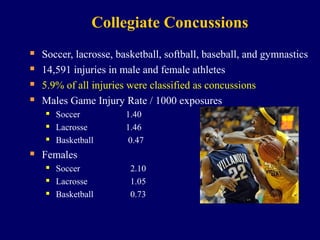
Soccer, lacrosse, basketball, softball, baseball, and gymnastics
14,591 injuries in male and female athletes
5.9% of all injuries were classified as concussions
Males Game Injury Rate / 1000 exposures






Soccer
Lacrosse
Basketball

1.40
1.46
0.47

Females




Soccer
Lacrosse
Basketball

2.10
1.05
0.73
Perceptions









Survey 300 players, 100 coaches, 100 parents, 100 ATCs
If a player complains of a headache , should return to play?
 Players 55%, Coaches 33%, ATC 30%, Parents 24%
Percentage who would play a concussed star in a title game?
 Players 54%, ATC 9%, Parents 6.1%, Coaches 2.1%
Level of concern for concussions (1 = most concerned; 4 = least)
 Players 3.5, Coaches 2.4, Parents 2.1, ATC 1.6
Is a good chance of playing in the NFL worth a decent chance of
permanent brain damage?
 Players 44.7%, Coaches 19.4%, Parents 15%, ATC 10%
Classification of concussions


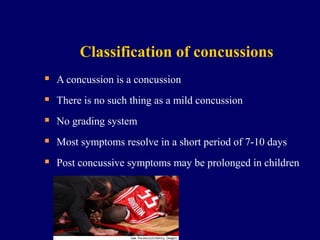
A concussion is a concussion



There is no such thing as a mild concussion



No grading system



Most symptoms resolve in a short period of 7-10 days



Post concussive symptoms may be prolonged in children
Symptoms









Headache (83%)
Dizzy (65%), dazed, fog
Light and sound sensitivity
Visual disturbances
“Everything seems slow”
“My colors changed”
Teammate, “Eric’s not right, coach”
Appearance can be delayed several hours
Physical Signs







You do not have to lose consciousness
Amnesia (“Doc, I don’t remember the first half”)
Emotional labile (crying, talkative)
Poor balance
Difficulty concentrating
Difficulty remembering
On-Field Evaluation








Standard emergency management
Exclude cervical spine injury
Return to play determined by a physician
“When in doubt, sit them out”
No player shall return to play the same day
Sideline assessment of concussion (SCAT2)
Monitor for any deterioration over time
Concussion Management


Complete physical and cognitive rest until symptom free







No sports
No horseplay
No school, if necessary
No texting, video games, internet, TV, driving

Graded program of exertion prior to full return to play
Exertion effects


Symptoms are worsened by


physical activity



mental effort



environmental stimulation



emotional stress
Post-concussion syndrome
Risk factors for complicated recovery




Re-injury before complete recovery
Over-exertion early after injury
Significant stress






Unable to participate in sports
Medical uncertainty
Academic difficulties

Prior or comorbid condition




Migraine
Anxiety
ADHD, LD
Multiple Concussions


Second Impact Syndrome
 A concussion prior to recovery from a prior concussion
 Athlete is still symptomatic
 Mostly males < 21 years old
 Rapid increase in intracranial pressure
 Rare but almost always fatal



Cumulative effects
 Risk of concussion is 4-6 times greater after one concussion


Risk is 8 times greater after sustaining two concussions



Prolonged or incomplete recovery



Increased risk of later depression or dementia
How many is too many ?
Graduated return to play protocol
Day 1

Day 2

Day 3

Day 4
Day 5

Light aerobic exercise
Light jog/stroll, stationary bicycle
Goal: elevate HR
Sport-specific exercise
Running drills in basketball
Goal: add movement
Non-contact training drills
Passing and shooting, light resistance training
Goal: coordination, cognitive load, valsava
Full contact practice only after physician clearance
Return to competition

Any symptoms at any stage, return to complete rest
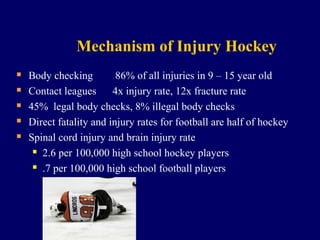
Mechanism of Injury Hockey






Body checking
86% of all injuries in 9 – 15 year old
Contact leagues
4x injury rate, 12x fracture rate
45% legal body checks, 8% illegal body checks
Direct fatality and injury rates for football are half of hockey
Spinal cord injury and brain injury rate
 2.6 per 100,000 high school hockey players
 .7 per 100,000 high school football players
Helmets and Mouth Guards






Helmets prevent skull fractures
Helmets do not prevent concussions, they cause
concussions
Mouth guards prevent dental injuries
Mouth guards do not prevent concussions

Powerpoint preview

  • 1.
    Concussions in Sport MitigatingRisks in the Student Athlete
  • 2.
    High School Concussions  Over50% of concussed high school football athletes do NOT report their injury to medical personnel McCrea, M., Hammeke, T., Olsen, G., Leo, P., and Guskiewicz, K.M. (2004). Unreported concussion in high school football players: implications for prevention. Clin. J. Sport Med. 14, 13–17.
  • 3.
    Collegiate Concussions     Soccer, lacrosse,basketball, softball, baseball, and gymnastics 14,591 injuries in male and female athletes 5.9% of all injuries were classified as concussions Males Game Injury Rate / 1000 exposures     Soccer Lacrosse Basketball 1.40 1.46 0.47 Females    Soccer Lacrosse Basketball 2.10 1.05 0.73
  • 4.
    Perceptions      Survey 300 players,100 coaches, 100 parents, 100 ATCs If a player complains of a headache , should return to play?  Players 55%, Coaches 33%, ATC 30%, Parents 24% Percentage who would play a concussed star in a title game?  Players 54%, ATC 9%, Parents 6.1%, Coaches 2.1% Level of concern for concussions (1 = most concerned; 4 = least)  Players 3.5, Coaches 2.4, Parents 2.1, ATC 1.6 Is a good chance of playing in the NFL worth a decent chance of permanent brain damage?  Players 44.7%, Coaches 19.4%, Parents 15%, ATC 10%
  • 5.
    Classification of concussions  Aconcussion is a concussion  There is no such thing as a mild concussion  No grading system  Most symptoms resolve in a short period of 7-10 days  Post concussive symptoms may be prolonged in children
  • 6.
    Symptoms         Headache (83%) Dizzy (65%),dazed, fog Light and sound sensitivity Visual disturbances “Everything seems slow” “My colors changed” Teammate, “Eric’s not right, coach” Appearance can be delayed several hours
  • 7.
    Physical Signs       You donot have to lose consciousness Amnesia (“Doc, I don’t remember the first half”) Emotional labile (crying, talkative) Poor balance Difficulty concentrating Difficulty remembering
  • 8.
    On-Field Evaluation        Standard emergencymanagement Exclude cervical spine injury Return to play determined by a physician “When in doubt, sit them out” No player shall return to play the same day Sideline assessment of concussion (SCAT2) Monitor for any deterioration over time
  • 9.
    Concussion Management  Complete physicaland cognitive rest until symptom free      No sports No horseplay No school, if necessary No texting, video games, internet, TV, driving Graded program of exertion prior to full return to play
  • 10.
    Exertion effects  Symptoms areworsened by  physical activity  mental effort  environmental stimulation  emotional stress
  • 11.
    Post-concussion syndrome Risk factorsfor complicated recovery    Re-injury before complete recovery Over-exertion early after injury Significant stress     Unable to participate in sports Medical uncertainty Academic difficulties Prior or comorbid condition    Migraine Anxiety ADHD, LD
  • 12.
    Multiple Concussions  Second ImpactSyndrome  A concussion prior to recovery from a prior concussion  Athlete is still symptomatic  Mostly males < 21 years old  Rapid increase in intracranial pressure  Rare but almost always fatal  Cumulative effects  Risk of concussion is 4-6 times greater after one concussion  Risk is 8 times greater after sustaining two concussions  Prolonged or incomplete recovery  Increased risk of later depression or dementia How many is too many ?
  • 13.
    Graduated return toplay protocol Day 1 Day 2 Day 3 Day 4 Day 5 Light aerobic exercise Light jog/stroll, stationary bicycle Goal: elevate HR Sport-specific exercise Running drills in basketball Goal: add movement Non-contact training drills Passing and shooting, light resistance training Goal: coordination, cognitive load, valsava Full contact practice only after physician clearance Return to competition Any symptoms at any stage, return to complete rest
  • 14.
    Mechanism of InjuryHockey      Body checking 86% of all injuries in 9 – 15 year old Contact leagues 4x injury rate, 12x fracture rate 45% legal body checks, 8% illegal body checks Direct fatality and injury rates for football are half of hockey Spinal cord injury and brain injury rate  2.6 per 100,000 high school hockey players  .7 per 100,000 high school football players
  • 15.
    Helmets and MouthGuards     Helmets prevent skull fractures Helmets do not prevent concussions, they cause concussions Mouth guards prevent dental injuries Mouth guards do not prevent concussions

Editor's Notes

  • #3 246 certified athletic trainers recorded injury and exposure data for high school varsity athletes participating in boys&apos; football, wrestling, baseball and field hockey, girls&apos; volleyball and softball, boys&apos; and girls&apos; basketball, and boys&apos; and girls&apos; soccer at 235 US high schools during 1 or more of the 1995-1997 academic years.
  • #4 A cohort study of collegiate athletes using the National Collegiate Athletic Association (NCAA) Injury Surveillance System; certified athletic trainers recorded data during the 1997–2000 academic years. To compare sex differences regarding the incidence of concussions among collegiate athletes during the 1997–1998, 1998–1999, and 1999–2000 seasons. Example year2000, male 20 concussions / 32,836 game exposures = game injury rate of .61
  • #10 If you remember one slide, this is the one