1
2
Session Objectives:
At the end of the session, the students should be able to:
•identify various ICT sectors and potential career and
business opportunities;
•draw a graphic organizer showing the different ICT Sectors’
career and business opportunities;
•conduct a survey on ICT Sectors in the community; and
•value the significance of ICT Sectors to future career or
business opportunities.
B. Establishing Lesson Purpose (Aims)
3
Week 1 Day 1
SECTORS OF ICT AND ITS
CAREER AND BUSINESS
OPPORTUNITIES
(Part I)
4
A. Activating Prior Knowledge (Minds and Moods)
5
Motivational Questions:
•What is the most common device you use to access the
internet?
•How do you think technology has changed the way we
communicate?
•Can you think of a time when technology helped you solve a
problem?
A. Activating Prior Knowledge (Minds and Moods)
6
A. Activating Prior Knowledge (Minds and Moods)
7
A. Activating Prior Knowledge (Minds and Moods)
8
Unlocking Content Area Vocabulary:
 Information - Data that has been processed and organized
to be meaningful.
 Communication - The process of exchanging information
and ideas.
 Technology - The application of scientific knowledge for
practical purposes.
B. Establishing Lesson Purpose (Aims)
9
10
Information and Communications Technology (ICT)
• a broad term that encompasses the use of technology to
gather, store, manipulate, and transmit information.
• It includes a wide range of tools and systems, such as
computers, smartphones, the internet, and various
software applications.
C. Developing and Deeping Understanding (Tasks and Thoughts)
11
Components of ICT
• Hardware: This refers to the physical devices and
equipment used in ICT, such as computers, laptops, tablets,
smartphones, printers, scanners, and servers.
• Software: Software is the programs and applications that
run on hardware devices, enabling them to perform
specific tasks. Examples include operating systems, word
processors, spreadsheets, databases, and web browsers
C. Developing and Deeping Understanding (Tasks and Thoughts)
12
C. Developing and Deeping Understanding (Tasks and Thoughts)
13
Components of ICT
• Communication devices: These are the devices and
systems used for communication, such as telephones, fax
machines, modems, routers, and the internet itself.
C. Developing and Deeping Understanding (Tasks and Thoughts)
14
Brainstorming Activity:
• Divide the class into 4 groups.
• Ask each group to brainstorm and list the ways in which
ICT is used in their assigned field.
• Have each group present their findings to the class.
C. Developing and Deeping Understanding (Tasks and Thoughts)
15
Analysis Questions:
• How do you think ICT will continue to evolve and impact
our lives in the future?
• What are some potential challenges or drawbacks of
relying heavily on ICT in our daily lives?
• How can we ensure that everyone has equal access to the
benefits of ICT, regardless of their background or
socioeconomic status?
D. Making Generalization (Abstraction)
16
Abstraction:
• In this lesson, we explored the concept of ICT and its main
components: hardware, software, and communication
devices.
• By embracing ICT, we can unlock new opportunities and
create a better future for ourselves and our communities.
D. Making Generalization (Abstraction)
17
Essay Questions:
1. Define ICT and explain its main components.
2. Describe how ICT has changed the way people
communicate and access information.
A. Evaluating Learning (Tools for Test)
18
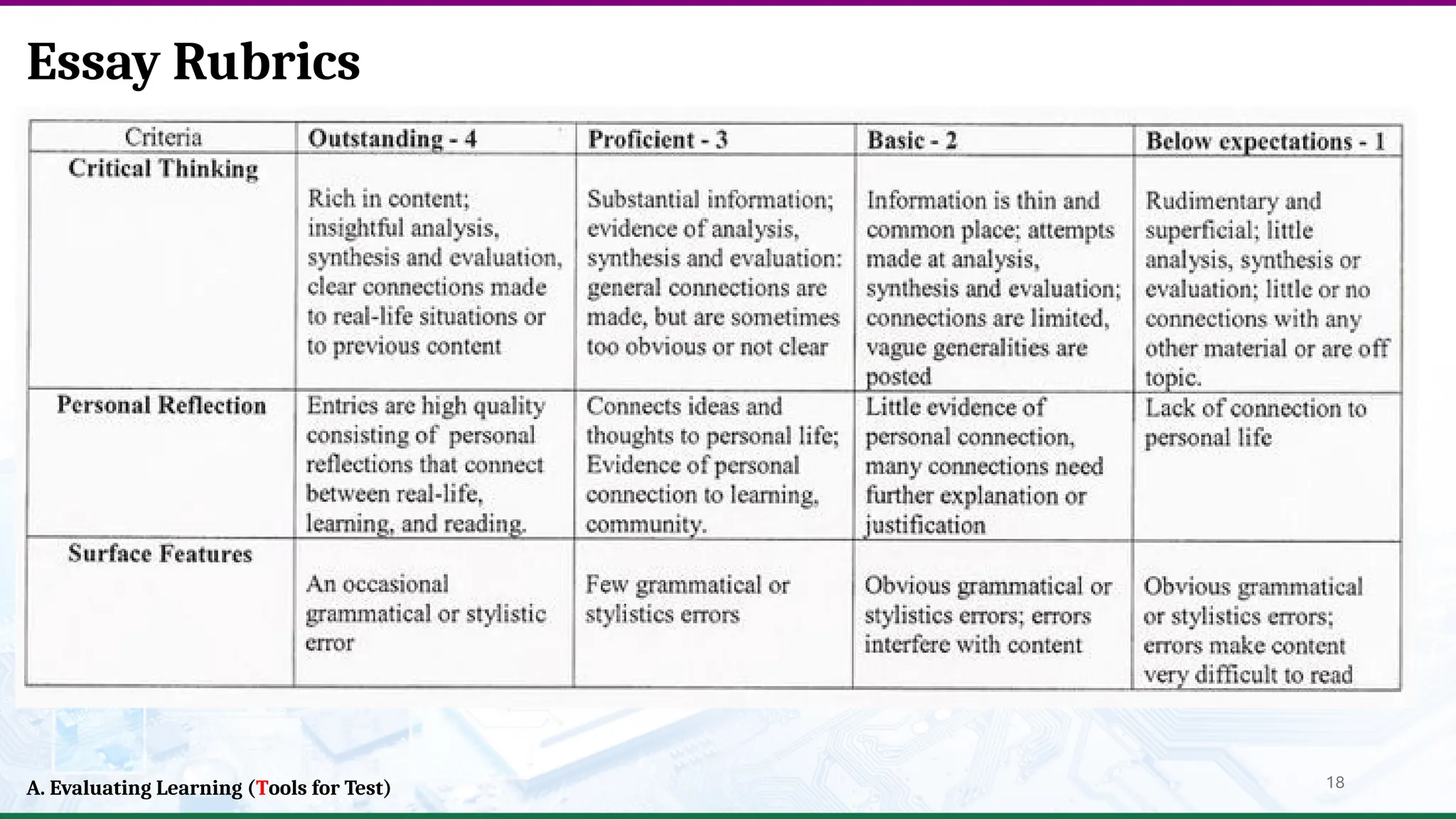
Essay Rubrics
A. Evaluating Learning (Tools for Test)
19
END OF LESSON
THANK YOU!
20
References:
Laudon, K. C., & Laudon, J. P. (2020). Management information systems: Managing the digital
firm (16th ed.). Pearson.
Turban, E., Volonino, L., & Wood, G. R. (2015). Information technology for management:
Advancing sustainable, profitable business growth (10th ed.). Wiley.
Rouse, M. (2022). Information and communications technology (ICT). TechTarget.
https://www.techtarget.com/searchcio/definition/ICT-information-and-communications-
technology-or-technologies
References (Other Learning Resources)

PowerPoint Presentation TLE- ICT Grade 7

  • 1.
  • 2.
    2 Session Objectives: At theend of the session, the students should be able to: •identify various ICT sectors and potential career and business opportunities; •draw a graphic organizer showing the different ICT Sectors’ career and business opportunities; •conduct a survey on ICT Sectors in the community; and •value the significance of ICT Sectors to future career or business opportunities. B. Establishing Lesson Purpose (Aims)
  • 3.
    3 Week 1 Day1 SECTORS OF ICT AND ITS CAREER AND BUSINESS OPPORTUNITIES (Part I)
  • 4.
    4 A. Activating PriorKnowledge (Minds and Moods)
  • 5.
    5 Motivational Questions: •What isthe most common device you use to access the internet? •How do you think technology has changed the way we communicate? •Can you think of a time when technology helped you solve a problem? A. Activating Prior Knowledge (Minds and Moods)
  • 6.
    6 A. Activating PriorKnowledge (Minds and Moods)
  • 7.
    7 A. Activating PriorKnowledge (Minds and Moods)
  • 8.
    8 Unlocking Content AreaVocabulary:  Information - Data that has been processed and organized to be meaningful.  Communication - The process of exchanging information and ideas.  Technology - The application of scientific knowledge for practical purposes. B. Establishing Lesson Purpose (Aims)
  • 9.
  • 10.
    10 Information and CommunicationsTechnology (ICT) • a broad term that encompasses the use of technology to gather, store, manipulate, and transmit information. • It includes a wide range of tools and systems, such as computers, smartphones, the internet, and various software applications. C. Developing and Deeping Understanding (Tasks and Thoughts)
  • 11.
    11 Components of ICT •Hardware: This refers to the physical devices and equipment used in ICT, such as computers, laptops, tablets, smartphones, printers, scanners, and servers. • Software: Software is the programs and applications that run on hardware devices, enabling them to perform specific tasks. Examples include operating systems, word processors, spreadsheets, databases, and web browsers C. Developing and Deeping Understanding (Tasks and Thoughts)
  • 12.
    12 C. Developing andDeeping Understanding (Tasks and Thoughts)
  • 13.
    13 Components of ICT •Communication devices: These are the devices and systems used for communication, such as telephones, fax machines, modems, routers, and the internet itself. C. Developing and Deeping Understanding (Tasks and Thoughts)
  • 14.
    14 Brainstorming Activity: • Dividethe class into 4 groups. • Ask each group to brainstorm and list the ways in which ICT is used in their assigned field. • Have each group present their findings to the class. C. Developing and Deeping Understanding (Tasks and Thoughts)
  • 15.
    15 Analysis Questions: • Howdo you think ICT will continue to evolve and impact our lives in the future? • What are some potential challenges or drawbacks of relying heavily on ICT in our daily lives? • How can we ensure that everyone has equal access to the benefits of ICT, regardless of their background or socioeconomic status? D. Making Generalization (Abstraction)
  • 16.
    16 Abstraction: • In thislesson, we explored the concept of ICT and its main components: hardware, software, and communication devices. • By embracing ICT, we can unlock new opportunities and create a better future for ourselves and our communities. D. Making Generalization (Abstraction)
  • 17.
    17 Essay Questions: 1. DefineICT and explain its main components. 2. Describe how ICT has changed the way people communicate and access information. A. Evaluating Learning (Tools for Test)
  • 18.
    18 Essay Rubrics A. EvaluatingLearning (Tools for Test)
  • 19.
  • 20.
    20 References: Laudon, K. C.,& Laudon, J. P. (2020). Management information systems: Managing the digital firm (16th ed.). Pearson. Turban, E., Volonino, L., & Wood, G. R. (2015). Information technology for management: Advancing sustainable, profitable business growth (10th ed.). Wiley. Rouse, M. (2022). Information and communications technology (ICT). TechTarget. https://www.techtarget.com/searchcio/definition/ICT-information-and-communications- technology-or-technologies References (Other Learning Resources)

Editor's Notes

  • #2 Present the Lesson Title and Objectives.
  • #3 Present the Lesson Title and Objectives.
  • #4 Present the Lesson Title and Objectives.
  • #5 Present the Lesson Title and Objectives.
  • #6 Show an infographic about the usage of smartphones. Encourage the learners to share what they learned.
  • #7 Show a show video presentation entitled “Technology in our daily life”. Encourage the learners to share what they learned.
  • #8 Encourage the learners to read and translate to Filipino and Mother Tongue.
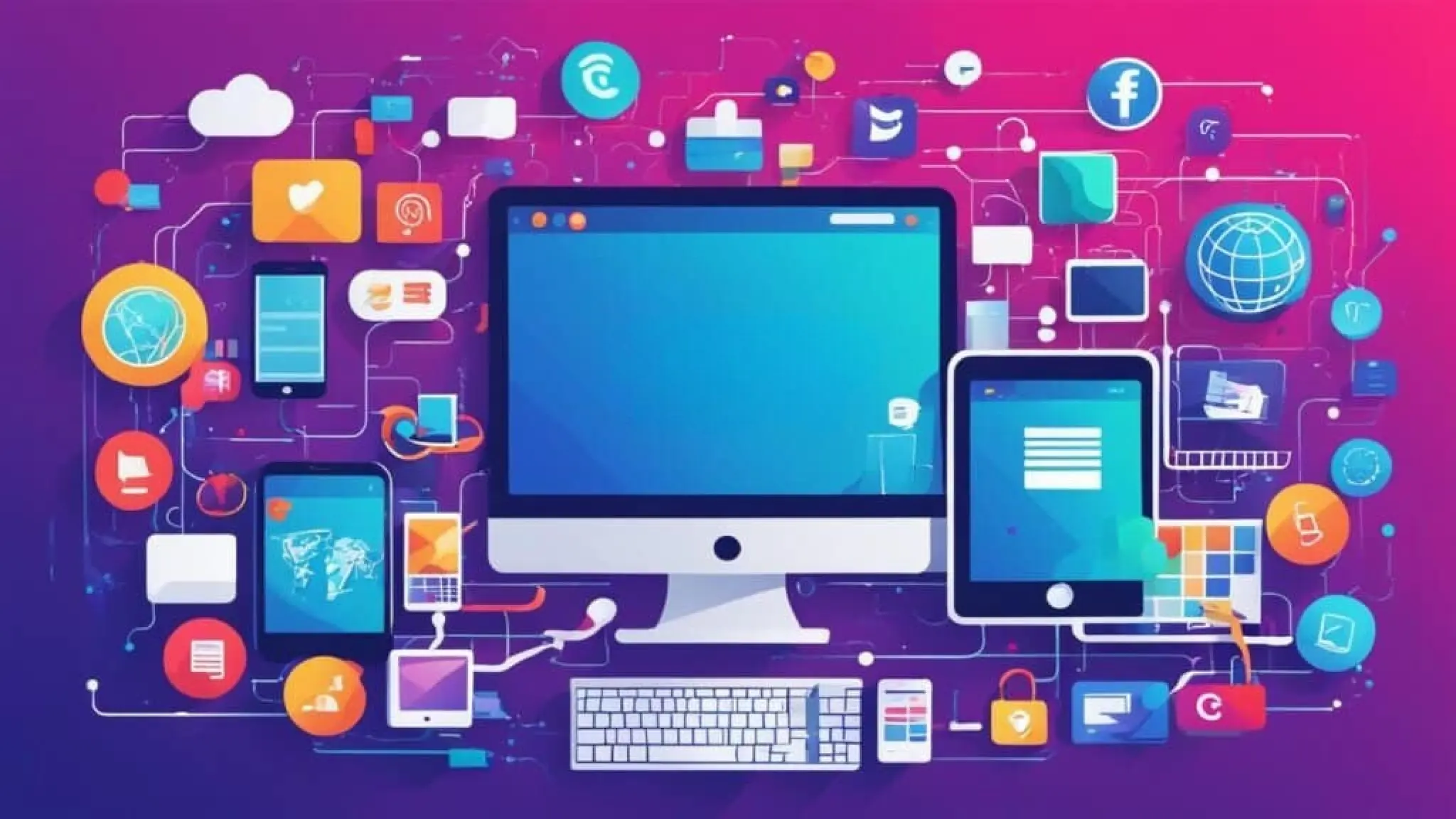
  • #9 Encourage the learners to share what they can see on the image
  • #10  Encourage the learners to share what they learned
  • #13  Encourage the learners to share what they learned
  • #14  Encourage the learners to share what they learned
  • #15  Encourage the learners to share what they learned
  • #16  Encourage the learners to share what they learned
  • #17  Encourage the learners to share what they learned
  • #18  Encourage the learners to share what they learned
  • #19 Present the Lesson Title and Objectives.
  • #20  Encourage the learners to share what they learned