MAP - Language
Mrs. Pérez
Norms
•

Do your best participating!

•

Use technology wisely.

•

Be original but also build on other ideas.
x
•

Instrucción Sistematica del Idioma Ingles.

•

Being Bilingual

•

Personal Experience

•

Scenarios

•

Scenarios Debrief
•

Aha Moments

•

Meadows Elementary Challenge

•

What is ELD?

•

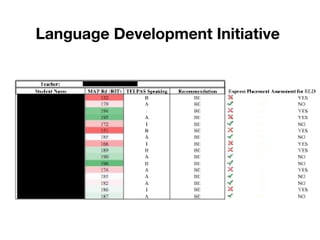
Language Development Initiative
•

•

Take Away

Reflections
Instrucción Sistemática del
Idioma Ingles
El programa de Desarrollo del Idioma Ingles (ELD)
•

Desarrollo natural de los conocimientos
lingüísticos (Estándares ELD)

•

Construcción de un vocabulario básico y general

•

Uso de estructuras gramaticales tanto simples
como complejas

•

Contextos tanto cotidianos como académicos
Instrucción Sistemática del
Idioma Ingles
•

Tiempo dedicado a la enseñanza del lenguaje de
manera regular

•

Se toma en cuenta el dominio del idioma inglés de
los estudiantes.

•

Enseñanza no académica vinculada a la lectura y el
lenguaje.

•

Por sí mismo, un curso de ELD no es suficiente para
garantizar el éxito académico de los estudiantes.
Preguntas

¿?
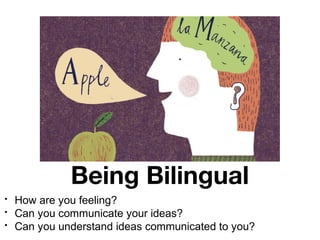
Being Bilingual
•
•
•

How are you feeling?
Can you communicate your ideas?
Can you understand ideas communicated to you?
Personal experience
How does it feel to be an English Language Learner in
an American School?
Scenarios
•

How your scenario
influence your role as an
educator and/or school
leader?
Scenarios Debrief
•

How your scenario
influence your role as an
educator and/or school
leader?

•

What challenges related to
bilingual and ESL
education do educators
and/or school leaders
encounter?
“Aha”
Moments
Think about how will you use
this information to guide your
decisions about student
learning
for
ESL
and
bilingual students? Write
your major takeaways in the
reflection form.
Meadows Elementary
Challenges
•

English Language Learners population of
53.6% (Texas Education Agency, 2013)

•

88%
of
students
Disadvantage.

•

The mobility rate of 18.9%.

•

Campus size: 549 students

•

60% of students at Phase-in 1 below
Level II - writing STAAR test.

•

33% of students at Phase-in 1 below
Level II - Reading STAAR test.

•

72.7% of students at-risk.

•

52.6%
of
students
bilingual/ESL education.

Economically

enrolled

in
•

Assess students by English proficiency level as determined

•

Functional language approach with purposes for communication and structure
interactions.

•

Real world activities and academic interactions

•

Variety of aspects of English (rhythm and cadence, pronunciation, colloquial
expressions, formal and informal registers)

•

Organized method of language instruction.

•

Includes written practice to develop in-depth understanding of English

•

Develops fluency of all modes of communication.
(E.L. Achieve/2014)
Language Development Initiative
Language Knowledge
•

Teaches language in different
contexts and for various
purposes.

•

Develops meta-linguistic
awareness for flexibility in
making language choices.

•

Teaches language in detail to
comprehend when reading or
listening.
(E.L. Achieve/2014)
Language Development Initiative
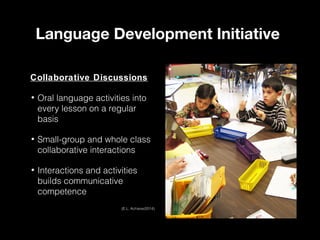
Collaborative Discussions
•

Oral language activities into
every lesson on a regular
basis

•

Small-group and whole class
collaborative interactions

•

Interactions and activities
builds communicative
competence
(E.L. Achieve/2014)
Language Development Initiative
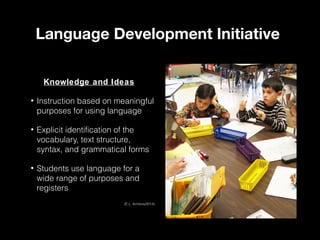
Knowledge and Ideas
•

Instruction based on meaningful
purposes for using language

•

Explicit identification of the
vocabulary, text structure,
syntax, and grammatical forms

•

Students use language for a
wide range of purposes and
registers
(E.L. Achieve/2014)
Language Development Initiative
Reading and Writing
•

Grade-appropriate content topics

•

Visuals, templates, and other
explicit scaffolds, to learn essential
vocabulary and language patterns

•

Informational articles into lessons

•

Calls out features of text structures
and functional language for high
leverage text types
(E.L. Achieve/2014)
Language Development Initiative
Results
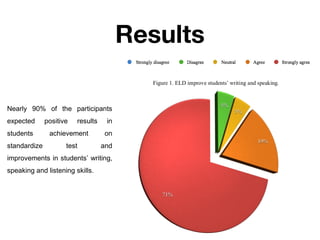
Nearly 90% of the participants
expected
students
standardize

positive

results

achievement
test

in
on
and

improvements in students’ writing,
speaking and listening skills.
Results

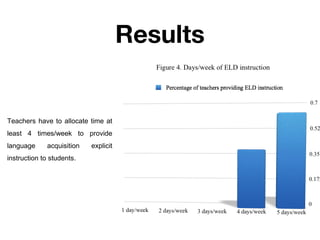
Teachers have to allocate time at
least 4 times/week to provide
language

acquisition

instruction to students.

explicit
Results

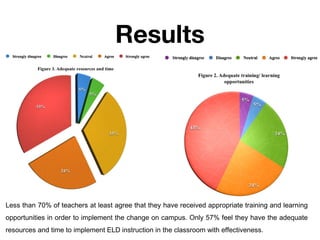
Less than 70% of teachers at least agree that they have received appropriate training and learning
opportunities in order to implement the change on campus. Only 57% feel they have the adequate
resources and time to implement ELD instruction in the classroom with effectiveness.
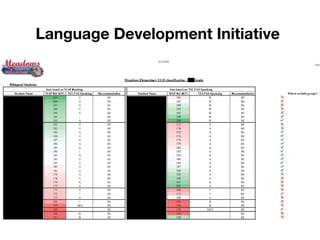
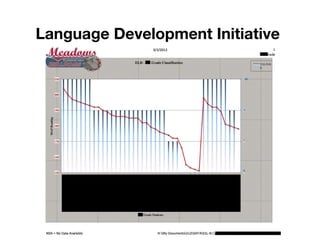
3rd Grade BI/ESL - MAP Reading

•

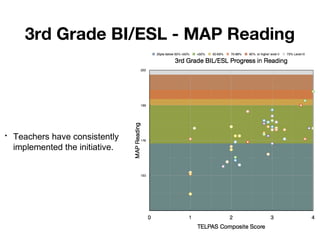
Teachers have consistently
implemented the initiative.
4th Grade BI/ESL - MAP Reading

•

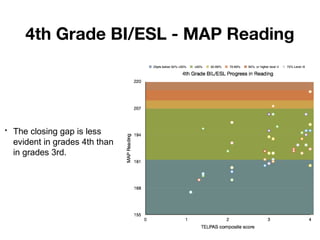
The closing gap is less
evident in grades 4th than
in grades 3rd.
5th Grade BI/ESL - MAP Reading

•

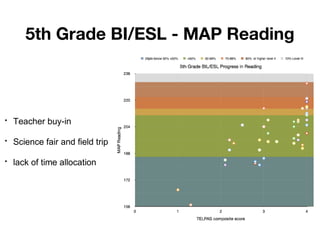
Teacher buy-in

•

Science fair and field trip

•

lack of time allocation
“Take Away”
•

Think about ELD, how can you
use MAP data to drive language
acquisition initiatives in your
campus?

•

How this information is relevant
for your campus?

•

What connections have you
made?

•

How will you use this information
to improve student achievement
among bilingual and ESL
students.
Share your Reflections

How will you use this
information to improve student
achievement among bilingual
and ESL students.
Thank you!
“Life is not the way we
want it to be. Life is the
way it is. But we can
decide to either make
dust with the block of
life or to build castles of
possibility.”
Greses A. Pérez
My contact Information

Greses A. Pérez
greses.perez@pisd.edu
gperezgonzal@smu.edu

Power point greses

  • 1.
  • 2.
    Norms • Do your bestparticipating! • Use technology wisely. • Be original but also build on other ideas.
  • 3.
    x • Instrucción Sistematica delIdioma Ingles. • Being Bilingual • Personal Experience • Scenarios • Scenarios Debrief • Aha Moments • Meadows Elementary Challenge • What is ELD? • Language Development Initiative • • Take Away Reflections
  • 4.
    Instrucción Sistemática del IdiomaIngles El programa de Desarrollo del Idioma Ingles (ELD) • Desarrollo natural de los conocimientos lingüísticos (Estándares ELD) • Construcción de un vocabulario básico y general • Uso de estructuras gramaticales tanto simples como complejas • Contextos tanto cotidianos como académicos
  • 5.
    Instrucción Sistemática del IdiomaIngles • Tiempo dedicado a la enseñanza del lenguaje de manera regular • Se toma en cuenta el dominio del idioma inglés de los estudiantes. • Enseñanza no académica vinculada a la lectura y el lenguaje. • Por sí mismo, un curso de ELD no es suficiente para garantizar el éxito académico de los estudiantes.
  • 6.
  • 7.
    Being Bilingual • • • How areyou feeling? Can you communicate your ideas? Can you understand ideas communicated to you?
  • 8.
    Personal experience How doesit feel to be an English Language Learner in an American School?
  • 9.
    Scenarios • How your scenario influenceyour role as an educator and/or school leader?
  • 10.
    Scenarios Debrief • How yourscenario influence your role as an educator and/or school leader? • What challenges related to bilingual and ESL education do educators and/or school leaders encounter?
  • 11.
    “Aha” Moments Think about howwill you use this information to guide your decisions about student learning for ESL and bilingual students? Write your major takeaways in the reflection form.
  • 12.
    Meadows Elementary Challenges • English LanguageLearners population of 53.6% (Texas Education Agency, 2013) • 88% of students Disadvantage. • The mobility rate of 18.9%. • Campus size: 549 students • 60% of students at Phase-in 1 below Level II - writing STAAR test. • 33% of students at Phase-in 1 below Level II - Reading STAAR test. • 72.7% of students at-risk. • 52.6% of students bilingual/ESL education. Economically enrolled in
  • 13.
    • Assess students byEnglish proficiency level as determined • Functional language approach with purposes for communication and structure interactions. • Real world activities and academic interactions • Variety of aspects of English (rhythm and cadence, pronunciation, colloquial expressions, formal and informal registers) • Organized method of language instruction. • Includes written practice to develop in-depth understanding of English • Develops fluency of all modes of communication. (E.L. Achieve/2014)
  • 14.
    Language Development Initiative LanguageKnowledge • Teaches language in different contexts and for various purposes. • Develops meta-linguistic awareness for flexibility in making language choices. • Teaches language in detail to comprehend when reading or listening. (E.L. Achieve/2014)
  • 15.
    Language Development Initiative CollaborativeDiscussions • Oral language activities into every lesson on a regular basis • Small-group and whole class collaborative interactions • Interactions and activities builds communicative competence (E.L. Achieve/2014)
  • 16.
    Language Development Initiative Knowledgeand Ideas • Instruction based on meaningful purposes for using language • Explicit identification of the vocabulary, text structure, syntax, and grammatical forms • Students use language for a wide range of purposes and registers (E.L. Achieve/2014)
  • 17.
    Language Development Initiative Readingand Writing • Grade-appropriate content topics • Visuals, templates, and other explicit scaffolds, to learn essential vocabulary and language patterns • Informational articles into lessons • Calls out features of text structures and functional language for high leverage text types (E.L. Achieve/2014)
  • 18.
  • 19.
  • 20.
  • 21.
    Results Nearly 90% ofthe participants expected students standardize positive results achievement test in on and improvements in students’ writing, speaking and listening skills.
  • 22.
    Results Teachers have toallocate time at least 4 times/week to provide language acquisition instruction to students. explicit
  • 23.
    Results Less than 70%of teachers at least agree that they have received appropriate training and learning opportunities in order to implement the change on campus. Only 57% feel they have the adequate resources and time to implement ELD instruction in the classroom with effectiveness.
  • 24.
    3rd Grade BI/ESL- MAP Reading • Teachers have consistently implemented the initiative.
  • 25.
    4th Grade BI/ESL- MAP Reading • The closing gap is less evident in grades 4th than in grades 3rd.
  • 26.
    5th Grade BI/ESL- MAP Reading • Teacher buy-in • Science fair and field trip • lack of time allocation
  • 27.
    “Take Away” • Think aboutELD, how can you use MAP data to drive language acquisition initiatives in your campus? • How this information is relevant for your campus? • What connections have you made? • How will you use this information to improve student achievement among bilingual and ESL students.
  • 28.
    Share your Reflections Howwill you use this information to improve student achievement among bilingual and ESL students.
  • 29.
    Thank you! “Life isnot the way we want it to be. Life is the way it is. But we can decide to either make dust with the block of life or to build castles of possibility.” Greses A. Pérez
  • 30.
    My contact Information GresesA. Pérez greses.perez@pisd.edu gperezgonzal@smu.edu