Estimados y Estimadas Estudiantes, 
Reciban una calurosa bienvenida a esta, su aula virtual. 
Es un motivo de gran alegría poder compartir con 
ustedes nuevamente en este espacio. Mis felicitaciones 
a todo el grupo por su excelente desenvolvimiento y 
entusiasmo en esta interesante, valiosa y divertida 
travesía hacia su segundo idioma.
Introducción al curso 
Los/as estudiantes de la Licenciatura en Inglés requieren un profundo conocimiento de la 
estructura sintáctica y morfológica del idioma que les permitirá desarrollar al máximo su 
capacidad de comprender, leer, hablar y escribir de manera correcta y eficaz dicha 
lengua. Dada la aspiración de los estudiantes de convertirse en docentes de inglés como 
segunda lengua, en traductores e intérpretes, o de servir como vínculos de comunicación, 
el conocimiento estructural de la lengua debe valorarse como elemento indispensable en 
su formación. 
Fundamentos de la Gramática Inglesa 110a es pre-requisito para el 110b y se trata de un 
estudio detallado teórico-práctico de las palabras (verbos, tiempos verbales, sustantivos, 
determinativos y pronombres) con atención a sus respectivas formas, posiciones y 
funciones dentro de oraciones de estructuras simples y compuestas. Los conocimientos 
que los/as estudiantes adquirirán en este curso incrementarán su capacidad de 
expresarse en el uso cotidiano, común y natural de la lengua, con confianza y entusiasmo, 
y serán una base indispensable para las asignaturas de Gramática que le siguen.
Objetivos 
Competencia: 
1. Formular diferentes tipos de Yes-No Questions 
Sub-Competencias: 
1.1 Reconoce y formula Yes/No Questions 
1.2 Responde con respuestas cortas 
1.3 Reconoce y usa Negative Questions 
1.4 Reconoce y usa “Tag Questions
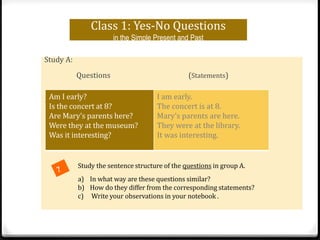
Class 1: Yes-No Questions 
in the Simple Present and Past 
Study A: 
Questions (Statements) 
? 
Am I early? 
Is the concert at 8? 
Are Mary’s parents here? 
Were they at the museum? 
Was it interesting? 
I am early. 
The concert is at 8. 
Mary’s parents are here. 
They were at the library. 
It was interesting. 
Study the sentence structure of the questions in group A. 
a) In what way are these questions similar? 
b) How do they differ from the corresponding statements? 
c) Write your observations in your notebook .
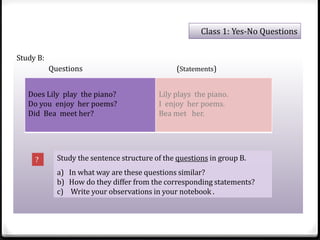
Class 1: Yes-No Questions 
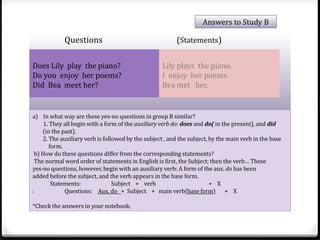
Study B: 
Questions (Statements) 
Does Lily play the piano? 
Do you enjoy her poems? 
Did Bea meet her? 
Lily plays the piano. 
I enjoy her poems. 
Bea met her. 
Study the sentence structure of the questions in group B. 
a) In what way are these questions similar? 
b) How do they differ from the corresponding statements? 
c) Write your observations in your notebook . 
?
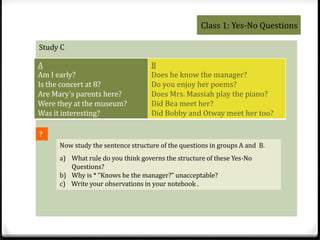
Class 1: Yes-No Questions 
Study C 
A 
Am I early? 
Is the concert at 8? 
Are Mary’s parents here? 
Were they at the museum? 
Was it interesting? 
B 
Does he know the manager? 
Do you enjoy her poems? 
Does Mrs. Massiah play the piano? 
Did Bea meet her? 
Did Bobby and Otway meet her too? 
Now study the sentence structure of the questions in groups A and B. 
a) What rule do you think governs the structure of these Yes-No 
Questions? 
b) Why is * “Knows he the manager?” unacceptable? 
c) Write your observations in your notebook . 
?
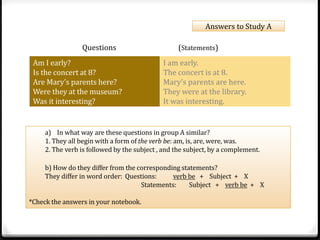
Answers to Study A 
Questions (Statements) 
Am I early? 
Is the concert at 8? 
Are Mary’s parents here? 
Were they at the museum? 
Was it interesting? 
I am early. 
The concert is at 8. 
Mary’s parents are here. 
They were at the library. 
It was interesting. 
! 
a) In what way are these questions in group A similar? 
1. They all begin with a form of the verb be: am, is, are, were, was. 
2. The verb is followed by the subject , and the subject, by a complement. 
b) How do they differ from the corresponding statements? 
They differ in word order: Questions: verb be + Subject + X 
Statements: Subject + verb be + X 
*Check the answers in your notebook.
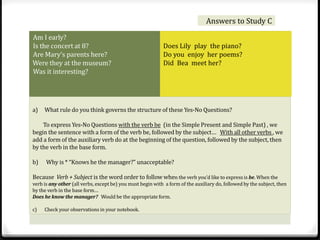
Answers to Study B 
Questions (Statements) 
Does Lily play the piano? 
Do you enjoy her poems? 
Did Bea meet her? 
Lily plays the piano. 
I enjoy her poems. 
Bea met her. 
a) In what way are these yes-no questions in group B similar? 
1. They all begin with a form of the auxiliary verb do: does and do( in the present), and did 
(in the past). 
2. The auxiliary verb is followed by the subject , and the subject, by the main verb in the base 
form. 
b) How do these questions differ from the corresponding statements? 
The normal word order of statements in English is first, the Subject; then the verb… These 
yes-no questions, however, begin with an auxiliary verb: A form of the aux. do has been 
added before the subject, and the verb appears in the base form. 
Statements: Subject + verb + X 
: Questions: Aux. do + Subject + main verb(base form) + X 
*Check the answers in your notebook.
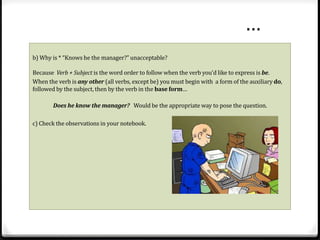
Answers to Study C 
Am I early? 
Is the concert at 8? 
Are Mary’s parents here? 
Were they at the museum? 
Was it interesting? 
Does Lily play the piano? 
Do you enjoy her poems? 
Did Bea meet her? 
a) What rule do you think governs the structure of these Yes-No Questions? 
To express Yes-No Questions with the verb be (in the Simple Present and Simple Past) , we 
begin the sentence with a form of the verb be, followed by the subject… With all other verbs , we 
add a form of the auxiliary verb do at the beginning of the question, followed by the subject, then 
by the verb in the base form. 
b) Why is * “Knows he the manager?” unacceptable? 
Because Verb + Subject is the word order to follow when the verb you’d like to express is be. When the 
verb is any other (all verbs, except be) you must begin with a form of the auxiliary do, followed by the subject, then 
by the verb in the base form… 
Does he know the manager? Would be the appropriate form. 
c) Check your observations in your notebook.
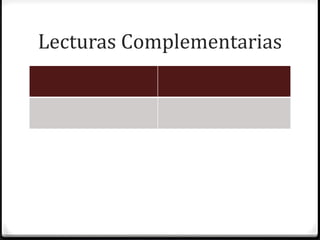
b) Why is * “Knows he the manager?” unacceptable? 
Because Verb + Subject is the word order to follow when the verb you’d like to express is be. 
When the verb is any other (all verbs, except be) you must begin with a form of the auxiliary do, 
followed by the subject, then by the verb in the base form… 
Does he know the manager? Would be the appropriate way to pose the question. 
c) Check the observations in your notebook. 
…
Lecturas Complementarias
Hipervínculos 
Other Web Sites: 
• http://www.myenglishpages.com 
• http://www.learnenglish-online. 
com/grammar/yesnoquestions.htm 
• en.wikipedia.org/wiki/Yes–no_question 
• http://www.eslcafe.com/grammar/yes_no_questions01.ht 
ml 
• http://www.elearnenglishlanguage.com/blog/learn-english/ 
grammar/questions-yes-no/ 
• http://www.youtube.com/watch?v=43jTh1HiIcI 
• http://ielts-yasi.englishlab.net/YES_NO_QUESTIONS.html
Motivación 
Estimados y Estimadas Estudiantes, 
Es un motivo de gran alegría haber podido compartir 
con ustedes en este espacio. Mis felicitaciones a todo el 
grupo por su excelente desenvolvimiento y entusiasmo 
en esta interesante, valiosa y divertida travesía hacia su 
segundo idioma. 
Hasta el próximo módulo.

Power point 97 2003 show

  • 2.
    Estimados y EstimadasEstudiantes, Reciban una calurosa bienvenida a esta, su aula virtual. Es un motivo de gran alegría poder compartir con ustedes nuevamente en este espacio. Mis felicitaciones a todo el grupo por su excelente desenvolvimiento y entusiasmo en esta interesante, valiosa y divertida travesía hacia su segundo idioma.
  • 3.
    Introducción al curso Los/as estudiantes de la Licenciatura en Inglés requieren un profundo conocimiento de la estructura sintáctica y morfológica del idioma que les permitirá desarrollar al máximo su capacidad de comprender, leer, hablar y escribir de manera correcta y eficaz dicha lengua. Dada la aspiración de los estudiantes de convertirse en docentes de inglés como segunda lengua, en traductores e intérpretes, o de servir como vínculos de comunicación, el conocimiento estructural de la lengua debe valorarse como elemento indispensable en su formación. Fundamentos de la Gramática Inglesa 110a es pre-requisito para el 110b y se trata de un estudio detallado teórico-práctico de las palabras (verbos, tiempos verbales, sustantivos, determinativos y pronombres) con atención a sus respectivas formas, posiciones y funciones dentro de oraciones de estructuras simples y compuestas. Los conocimientos que los/as estudiantes adquirirán en este curso incrementarán su capacidad de expresarse en el uso cotidiano, común y natural de la lengua, con confianza y entusiasmo, y serán una base indispensable para las asignaturas de Gramática que le siguen.
  • 4.
    Objetivos Competencia: 1.Formular diferentes tipos de Yes-No Questions Sub-Competencias: 1.1 Reconoce y formula Yes/No Questions 1.2 Responde con respuestas cortas 1.3 Reconoce y usa Negative Questions 1.4 Reconoce y usa “Tag Questions
  • 5.
    Class 1: Yes-NoQuestions in the Simple Present and Past Study A: Questions (Statements) ? Am I early? Is the concert at 8? Are Mary’s parents here? Were they at the museum? Was it interesting? I am early. The concert is at 8. Mary’s parents are here. They were at the library. It was interesting. Study the sentence structure of the questions in group A. a) In what way are these questions similar? b) How do they differ from the corresponding statements? c) Write your observations in your notebook .
  • 6.
    Class 1: Yes-NoQuestions Study B: Questions (Statements) Does Lily play the piano? Do you enjoy her poems? Did Bea meet her? Lily plays the piano. I enjoy her poems. Bea met her. Study the sentence structure of the questions in group B. a) In what way are these questions similar? b) How do they differ from the corresponding statements? c) Write your observations in your notebook . ?
  • 7.
    Class 1: Yes-NoQuestions Study C A Am I early? Is the concert at 8? Are Mary’s parents here? Were they at the museum? Was it interesting? B Does he know the manager? Do you enjoy her poems? Does Mrs. Massiah play the piano? Did Bea meet her? Did Bobby and Otway meet her too? Now study the sentence structure of the questions in groups A and B. a) What rule do you think governs the structure of these Yes-No Questions? b) Why is * “Knows he the manager?” unacceptable? c) Write your observations in your notebook . ?
  • 8.
    Answers to StudyA Questions (Statements) Am I early? Is the concert at 8? Are Mary’s parents here? Were they at the museum? Was it interesting? I am early. The concert is at 8. Mary’s parents are here. They were at the library. It was interesting. ! a) In what way are these questions in group A similar? 1. They all begin with a form of the verb be: am, is, are, were, was. 2. The verb is followed by the subject , and the subject, by a complement. b) How do they differ from the corresponding statements? They differ in word order: Questions: verb be + Subject + X Statements: Subject + verb be + X *Check the answers in your notebook.
  • 9.
    Answers to StudyB Questions (Statements) Does Lily play the piano? Do you enjoy her poems? Did Bea meet her? Lily plays the piano. I enjoy her poems. Bea met her. a) In what way are these yes-no questions in group B similar? 1. They all begin with a form of the auxiliary verb do: does and do( in the present), and did (in the past). 2. The auxiliary verb is followed by the subject , and the subject, by the main verb in the base form. b) How do these questions differ from the corresponding statements? The normal word order of statements in English is first, the Subject; then the verb… These yes-no questions, however, begin with an auxiliary verb: A form of the aux. do has been added before the subject, and the verb appears in the base form. Statements: Subject + verb + X : Questions: Aux. do + Subject + main verb(base form) + X *Check the answers in your notebook.
  • 10.
    Answers to StudyC Am I early? Is the concert at 8? Are Mary’s parents here? Were they at the museum? Was it interesting? Does Lily play the piano? Do you enjoy her poems? Did Bea meet her? a) What rule do you think governs the structure of these Yes-No Questions? To express Yes-No Questions with the verb be (in the Simple Present and Simple Past) , we begin the sentence with a form of the verb be, followed by the subject… With all other verbs , we add a form of the auxiliary verb do at the beginning of the question, followed by the subject, then by the verb in the base form. b) Why is * “Knows he the manager?” unacceptable? Because Verb + Subject is the word order to follow when the verb you’d like to express is be. When the verb is any other (all verbs, except be) you must begin with a form of the auxiliary do, followed by the subject, then by the verb in the base form… Does he know the manager? Would be the appropriate form. c) Check your observations in your notebook.
  • 11.
    b) Why is* “Knows he the manager?” unacceptable? Because Verb + Subject is the word order to follow when the verb you’d like to express is be. When the verb is any other (all verbs, except be) you must begin with a form of the auxiliary do, followed by the subject, then by the verb in the base form… Does he know the manager? Would be the appropriate way to pose the question. c) Check the observations in your notebook. …
  • 12.
  • 13.
    Hipervínculos Other WebSites: • http://www.myenglishpages.com • http://www.learnenglish-online. com/grammar/yesnoquestions.htm • en.wikipedia.org/wiki/Yes–no_question • http://www.eslcafe.com/grammar/yes_no_questions01.ht ml • http://www.elearnenglishlanguage.com/blog/learn-english/ grammar/questions-yes-no/ • http://www.youtube.com/watch?v=43jTh1HiIcI • http://ielts-yasi.englishlab.net/YES_NO_QUESTIONS.html
  • 14.
    Motivación Estimados yEstimadas Estudiantes, Es un motivo de gran alegría haber podido compartir con ustedes en este espacio. Mis felicitaciones a todo el grupo por su excelente desenvolvimiento y entusiasmo en esta interesante, valiosa y divertida travesía hacia su segundo idioma. Hasta el próximo módulo.