Integers
• Integers are whole numbers
that describe opposite ideas in
mathematics.
• Integers can either be
negative(-), positive(+) or zero.
• The integer zero is neutral. It is
neither positive nor negative, but
is an integer.
• Integers can be represented on
a number line, which can help us
understand the valve of the
integer.
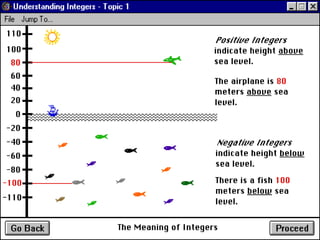
Positive Integers
• Are to the right of zero
• Are valued greater than
zero.
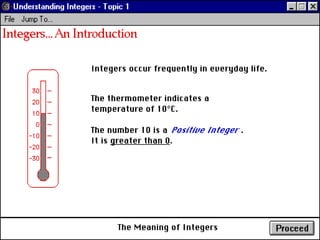
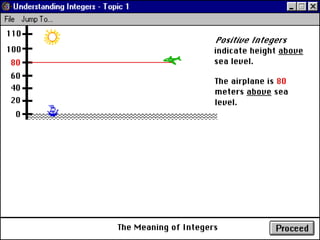
• Express ideas of up, a gain
or a profit.
• The sign for a positive
integer is (+), however the
sign is not always needed.
• Meaning +3 is the same
value as 3.
Negative Integers
• Are to the left of zero
• Are valued less than
zero.
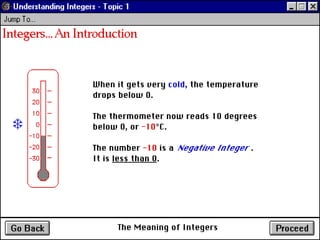
• Express ideas of down
or a lose.
• The sign for a negative
integer is (-). This sign
is always needed.
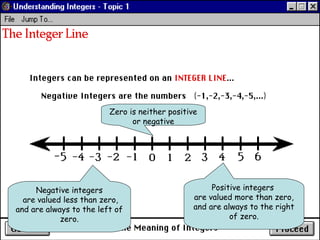
Zero is neither positive
or negative

Negative integers
are valued less than zero,
and are always to the left of
zero.

Positive integers
are valued more than zero,
and are always to the right
of zero.
Power point
Power point
Power point
Power point
Power point

Power point

  • 2.
    Integers • Integers arewhole numbers that describe opposite ideas in mathematics. • Integers can either be negative(-), positive(+) or zero. • The integer zero is neutral. It is neither positive nor negative, but is an integer. • Integers can be represented on a number line, which can help us understand the valve of the integer.
  • 3.
    Positive Integers • Areto the right of zero • Are valued greater than zero. • Express ideas of up, a gain or a profit. • The sign for a positive integer is (+), however the sign is not always needed. • Meaning +3 is the same value as 3.
  • 4.
    Negative Integers • Areto the left of zero • Are valued less than zero. • Express ideas of down or a lose. • The sign for a negative integer is (-). This sign is always needed.
  • 5.
    Zero is neitherpositive or negative Negative integers are valued less than zero, and are always to the left of zero. Positive integers are valued more than zero, and are always to the right of zero.