What are the best practices for using a potato seed planter
to ensure a successful potato crop?
- Mahindra Farm Machinery
Introduction
Potatoes are one of the world's most important staple crops, and
efficient planting is crucial for a successful potato crop. Using a potato
seed planter is a key component of this process. By following best
practices when utilizing this agricultural machinery, farmers can
optimize yield, reduce seed wastage, and ensure healthy, uniform
potato growth. This article will explore the essential best practices for
using a potato seed planter to achieve a bountiful potato harvest.
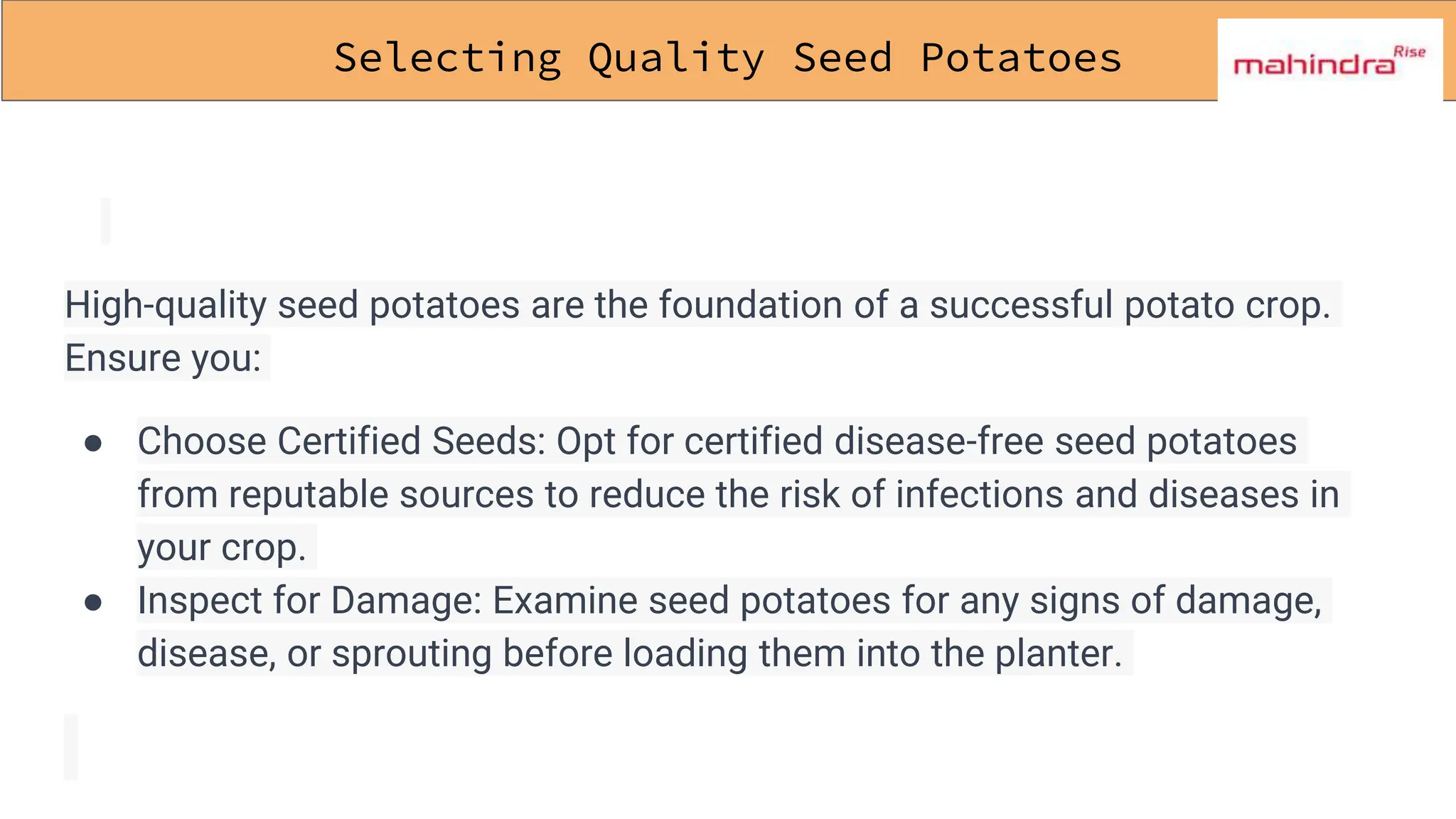
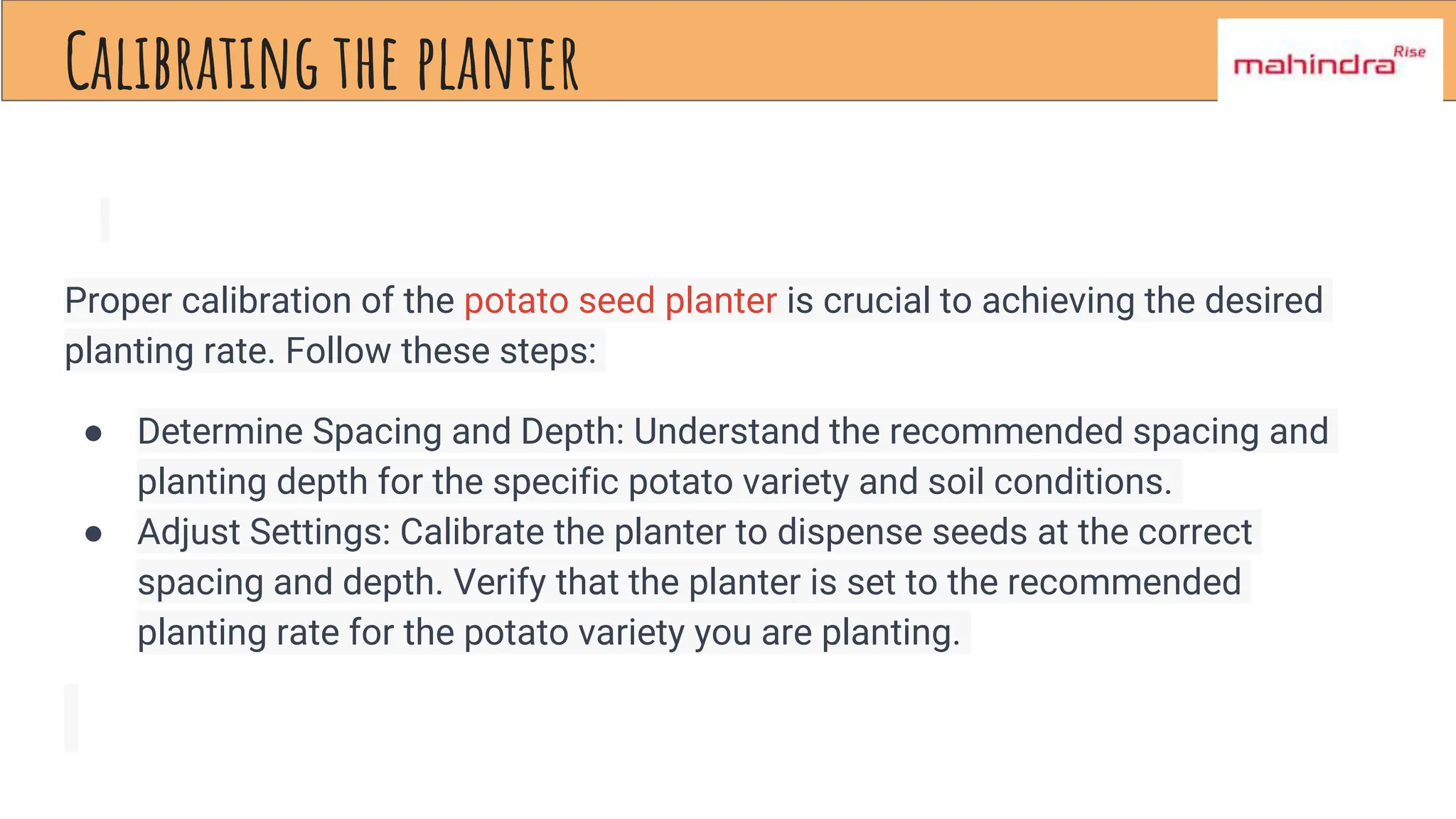
Field preparation
Proper field preparation is the first step in ensuring
a successful potato crop with a seed planter. This
includes:
● Soil Preparation: Begin by tilling the soil to
create a well-aerated and loose bed.
Adequate soil preparation promotes root
growth and facilitates easy penetration for
the potato seeds.
● Fertilization: Conduct a soil test to determine
nutrient levels and pH. Based on the results,
amend the soil with the necessary nutrients
to ensure optimal potato growth.
Selecting Quality Seed Potatoes
High-quality seed potatoes are the foundation of a successful potato crop.
Ensure you:
● Choose Certified Seeds: Opt for certified disease-free seed potatoes
from reputable sources to reduce the risk of infections and diseases in
your crop.
● Inspect for Damage: Examine seed potatoes for any signs of damage,
disease, or sprouting before loading them into the planter.
Calibrating the planter
Proper calibration of the potato seed planter is crucial to achieving the desired
planting rate. Follow these steps:
● Determine Spacing and Depth: Understand the recommended spacing and
planting depth for the specific potato variety and soil conditions.
● Adjust Settings: Calibrate the planter to dispense seeds at the correct
spacing and depth. Verify that the planter is set to the recommended
planting rate for the potato variety you are planting.
Depth Adjustment
Adjusting the planter's depth is essential. Ensure the planter is set to the
recommended planting depth, which is typically around 2-4 inches (5-10 cm).
Proper planting depth is critical for promoting tuber development and
maximizing yield.
Consistent Seed Spacing
To ensure even growth and optimize yield, it's vital to maintain consistent seed
spacing. Regularly check for any blockages or misalignments in the seed
dispensing mechanism that could affect spacing.
conclusion
Successful potato cultivation begins with efficient
planting, and a potato seed planter is an invaluable tool in
this process. By following the best practices outlined in
this article, farmers can maximize yield, reduce seed
wastage, and ensure healthy, uniform potato growth. With
careful preparation, calibration, and maintenance, potato
growers can look forward to a bountiful harvest,
contributing to food security and agricultural
sustainability.

Pottato planter

  • 1.
    What are thebest practices for using a potato seed planter to ensure a successful potato crop? - Mahindra Farm Machinery
  • 2.
    Introduction Potatoes are oneof the world's most important staple crops, and efficient planting is crucial for a successful potato crop. Using a potato seed planter is a key component of this process. By following best practices when utilizing this agricultural machinery, farmers can optimize yield, reduce seed wastage, and ensure healthy, uniform potato growth. This article will explore the essential best practices for using a potato seed planter to achieve a bountiful potato harvest.
  • 3.
    Field preparation Proper fieldpreparation is the first step in ensuring a successful potato crop with a seed planter. This includes: ● Soil Preparation: Begin by tilling the soil to create a well-aerated and loose bed. Adequate soil preparation promotes root growth and facilitates easy penetration for the potato seeds. ● Fertilization: Conduct a soil test to determine nutrient levels and pH. Based on the results, amend the soil with the necessary nutrients to ensure optimal potato growth.
  • 4.
    Selecting Quality SeedPotatoes High-quality seed potatoes are the foundation of a successful potato crop. Ensure you: ● Choose Certified Seeds: Opt for certified disease-free seed potatoes from reputable sources to reduce the risk of infections and diseases in your crop. ● Inspect for Damage: Examine seed potatoes for any signs of damage, disease, or sprouting before loading them into the planter.
  • 5.
    Calibrating the planter Propercalibration of the potato seed planter is crucial to achieving the desired planting rate. Follow these steps: ● Determine Spacing and Depth: Understand the recommended spacing and planting depth for the specific potato variety and soil conditions. ● Adjust Settings: Calibrate the planter to dispense seeds at the correct spacing and depth. Verify that the planter is set to the recommended planting rate for the potato variety you are planting.
  • 6.
    Depth Adjustment Adjusting theplanter's depth is essential. Ensure the planter is set to the recommended planting depth, which is typically around 2-4 inches (5-10 cm). Proper planting depth is critical for promoting tuber development and maximizing yield. Consistent Seed Spacing To ensure even growth and optimize yield, it's vital to maintain consistent seed spacing. Regularly check for any blockages or misalignments in the seed dispensing mechanism that could affect spacing.
  • 7.
    conclusion Successful potato cultivationbegins with efficient planting, and a potato seed planter is an invaluable tool in this process. By following the best practices outlined in this article, farmers can maximize yield, reduce seed wastage, and ensure healthy, uniform potato growth. With careful preparation, calibration, and maintenance, potato growers can look forward to a bountiful harvest, contributing to food security and agricultural sustainability.