
WIL Research Laboratories

Postnatal Evaluation in
Developmental and Juvenile
Toxicity Studies
Joseph F. Holson, Ph.D.
Guideline Requirements for
Testing Chemicals
Established and proposed guidelines for studies
which include postnatal assessment
Two-generation reproduction study
OPPTS 870.3800; OECD 416; updating and/or
harmonizing drafts

Developmental Neurotoxicity study
OPPTS 870.6300 and DCI for organophosphate
pesticides; OECD 426; harmonizing drafts
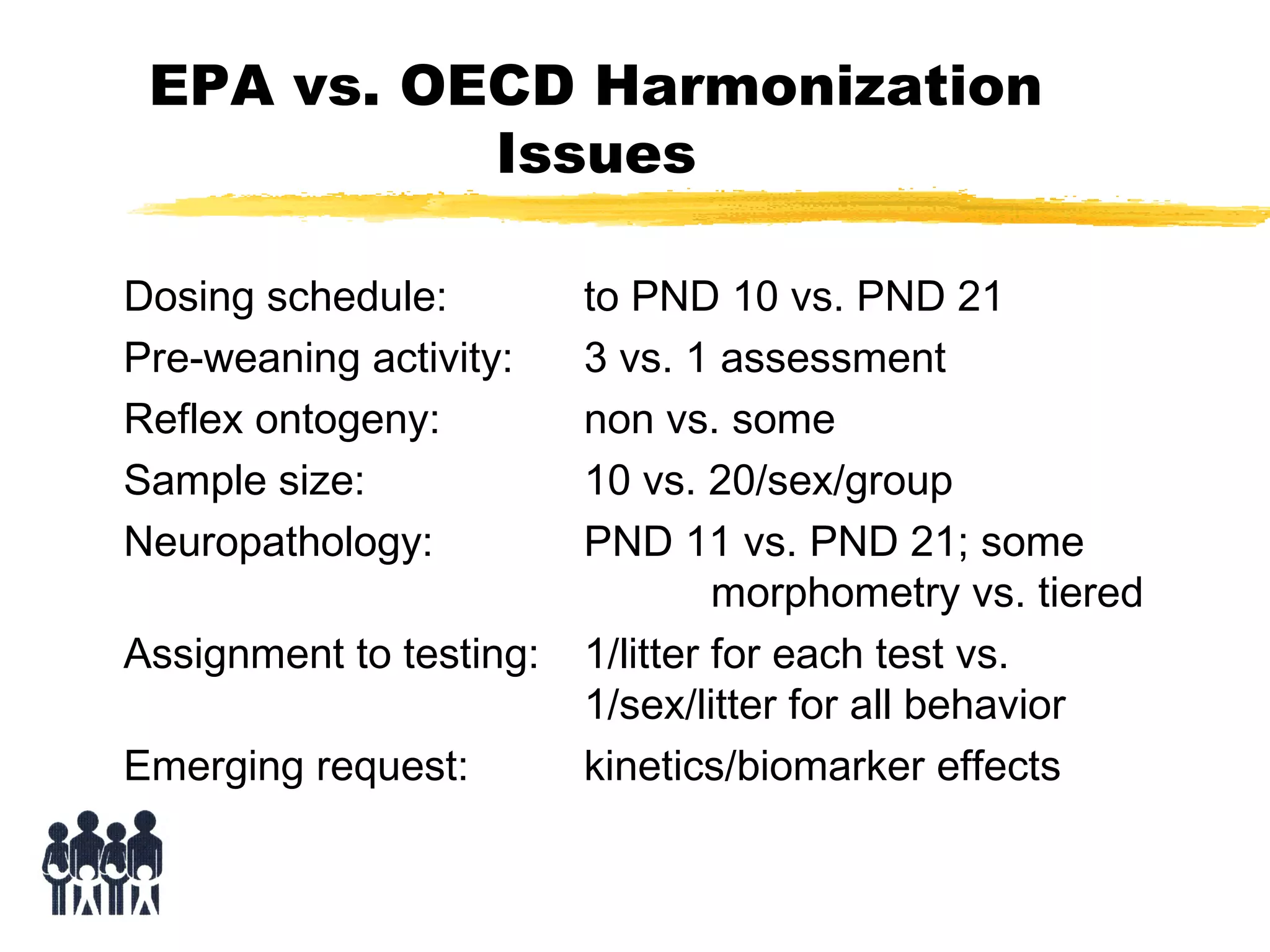
EPA vs. OECD Harmonization
Issues
Dosing schedule:
Pre-weaning activity:
Reflex ontogeny:
Sample size:
Neuropathology:
Assignment to testing:
Emerging request:

to PND 10 vs. PND 21
3 vs. 1 assessment
non vs. some
10 vs. 20/sex/group
PND 11 vs. PND 21; some
morphometry vs. tiered
1/litter for each test vs.
1/sex/litter for all behavior
kinetics/biomarker effects
Guideline Requirements for
Testing Pharmaceuticals
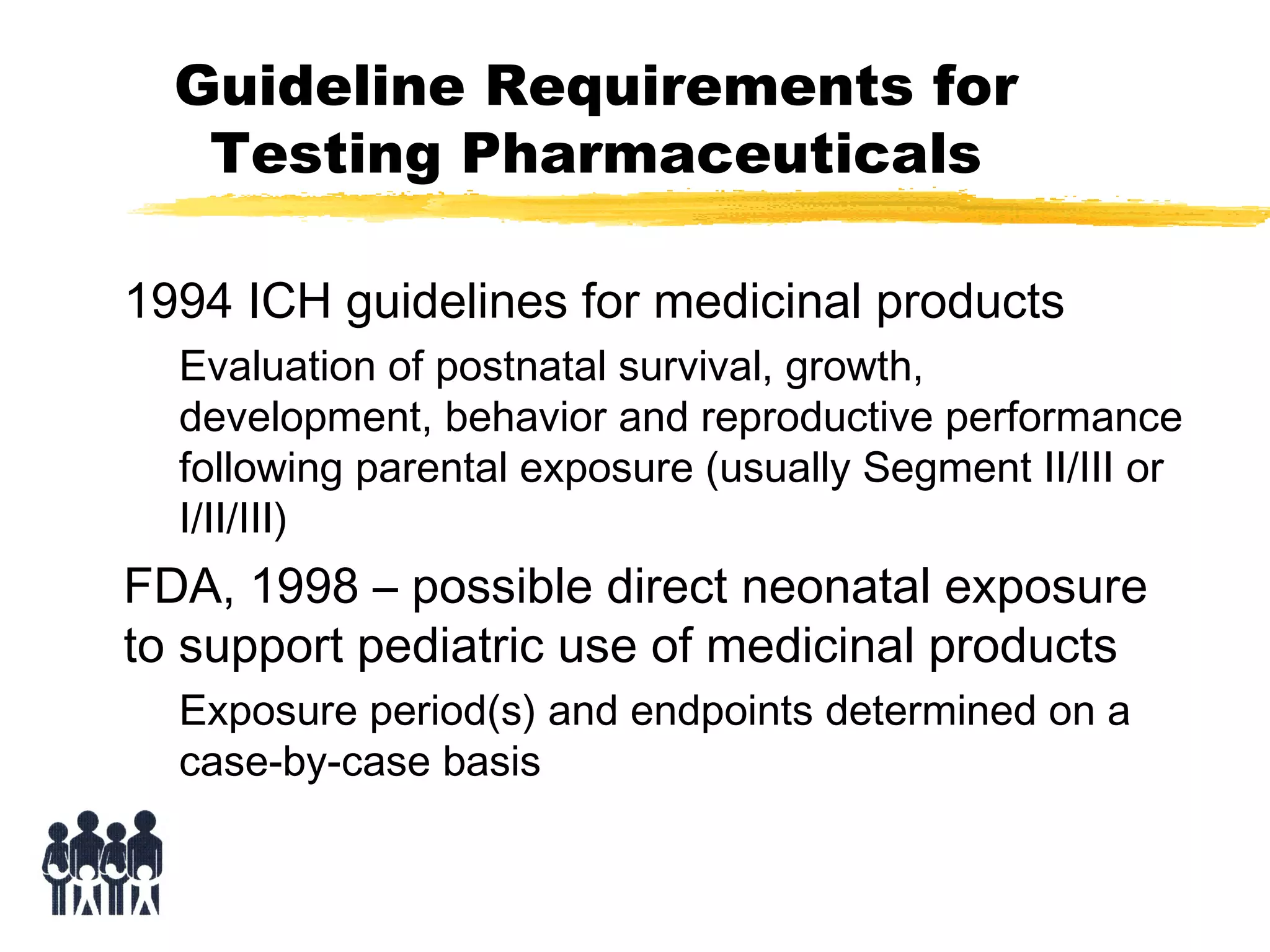
1994 ICH guidelines for medicinal products
Evaluation of postnatal survival, growth,
development, behavior and reproductive performance
following parental exposure (usually Segment II/III or
I/II/III)

FDA, 1998 – possible direct neonatal exposure
to support pediatric use of medicinal products
Exposure period(s) and endpoints determined on a
case-by-case basis
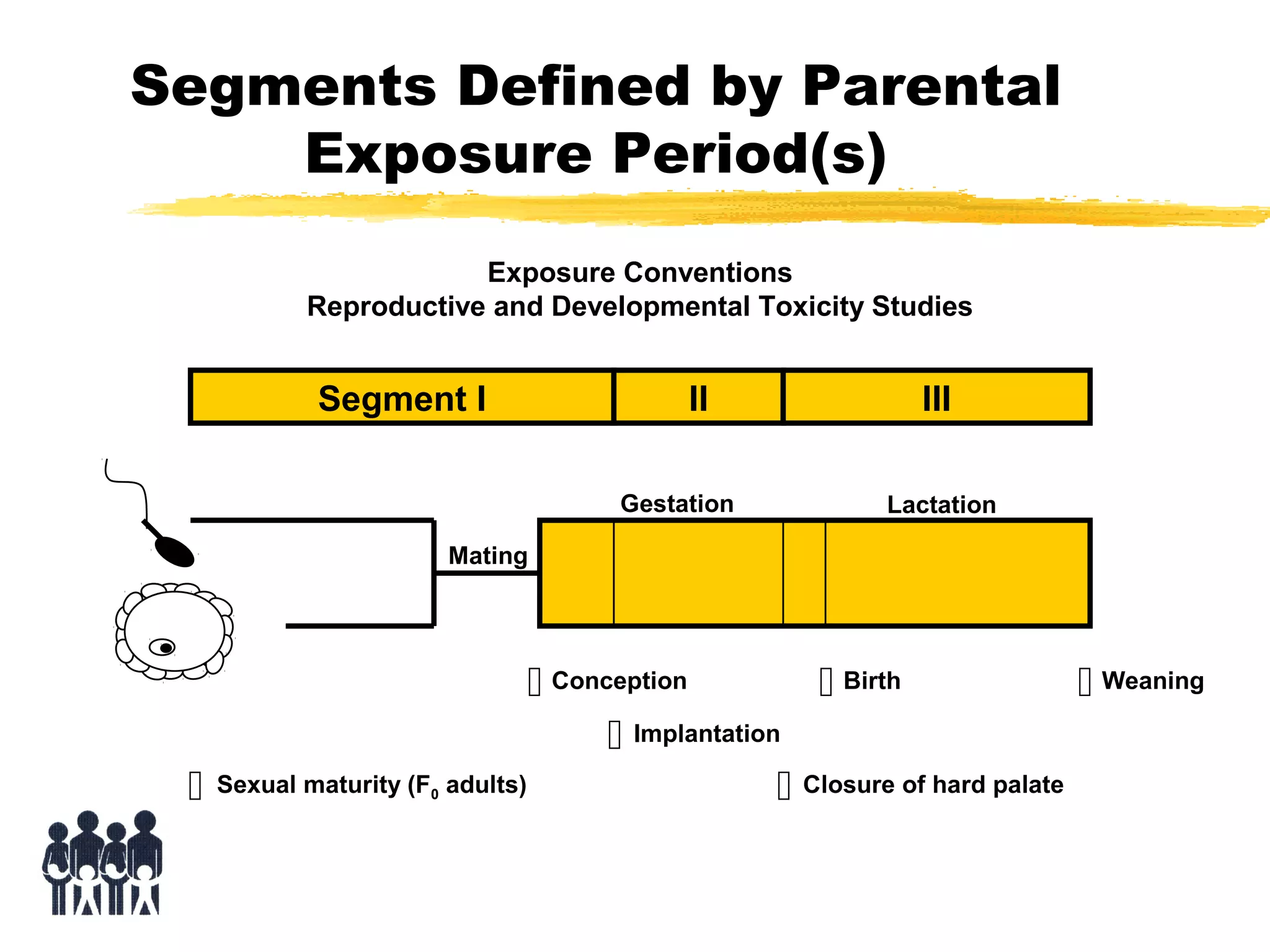
Segments Defined by Parental
Exposure Period(s)
Exposure Conventions
Reproductive and Developmental Toxicity Studies

Segment I

II
Gestation

III
Lactation

Mating



Sexual maturity (F0

 Conception
 Birth
 Weaning
 Implantation
adults)
 Closure of hard palate
Manifestations of Developmental
Disruption

Functional Deficits
Growth Alterations
Malformations
Death
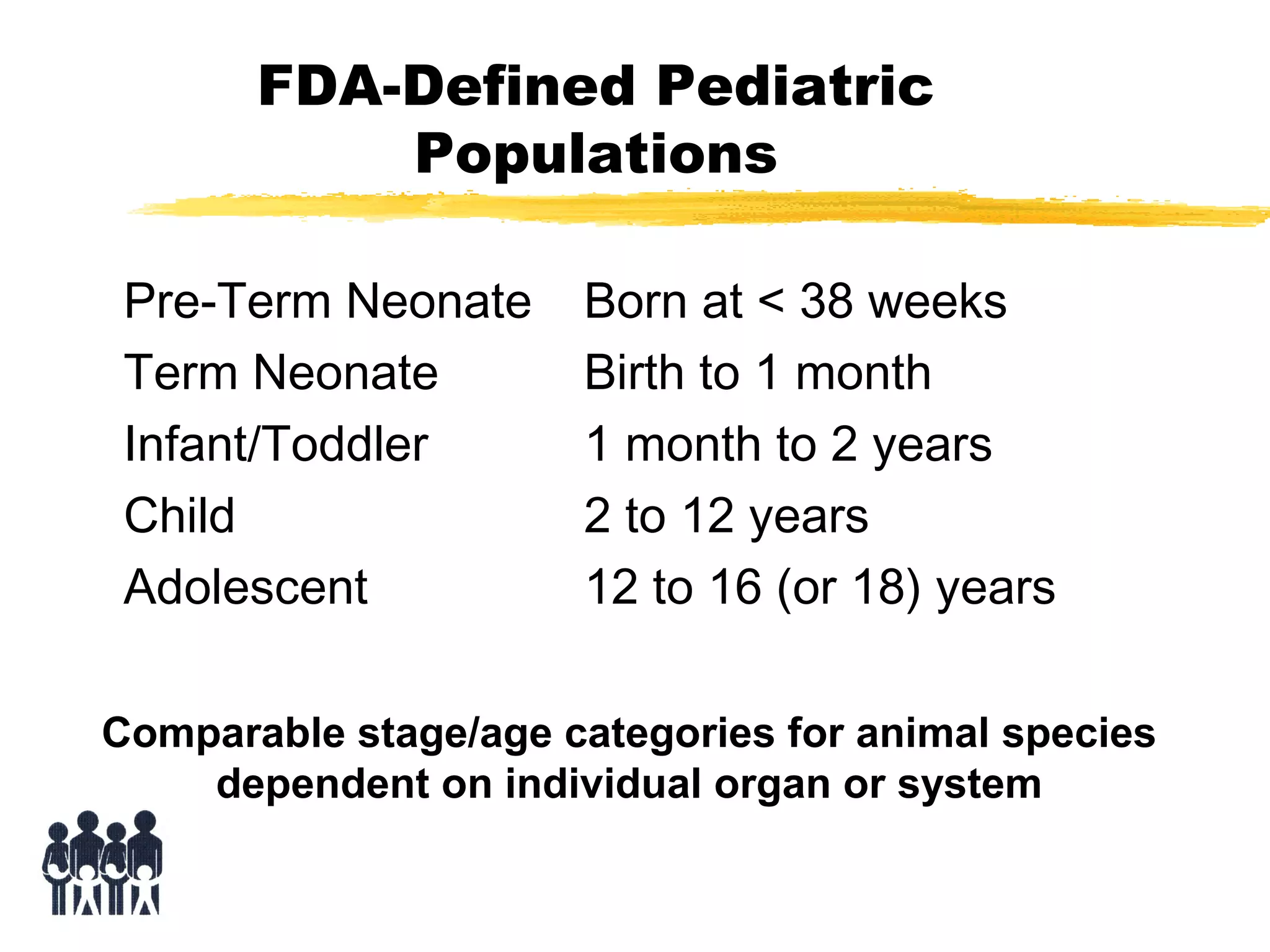
FDA-Defined Pediatric
Populations
Pre-Term Neonate
Term Neonate
Infant/Toddler
Child
Adolescent

Born at < 38 weeks
Birth to 1 month
1 month to 2 years
2 to 12 years
12 to 16 (or 18) years

Comparable stage/age categories for animal species
dependent on individual organ or system
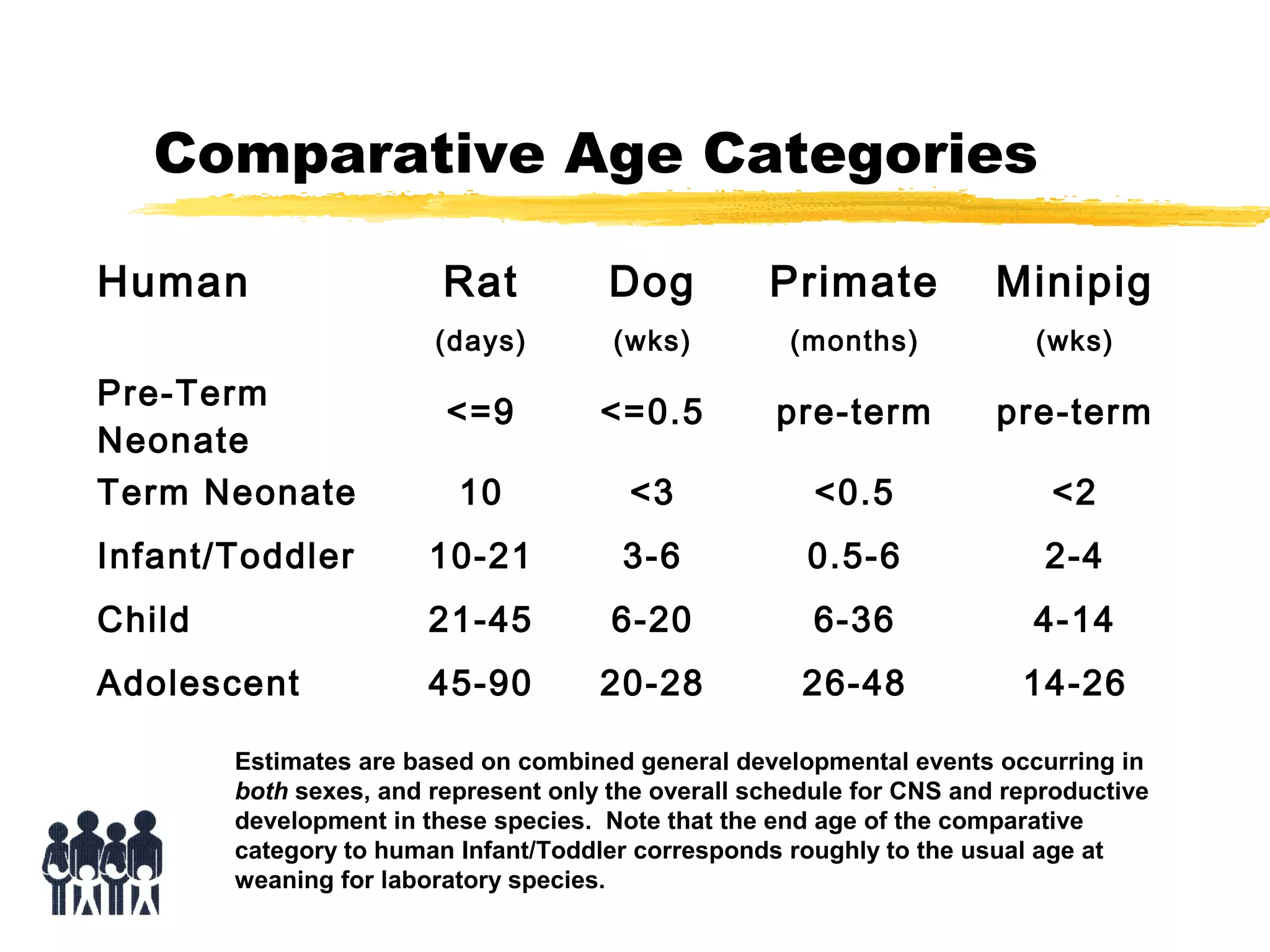
Comparative Age Categories
Human

Rat

Dog

Primate

Minipig

(days)

(wks)

(months)

(wks)

<=9

<=0.5

pre-term

pre-term

10

<3

<0.5

<2

Infant/Toddler

10-21

3-6

0.5-6

2-4

Child

21-45

6-20

6-36

4-14

Adolescent

45-90

20-28

26-48

14-26

Pre-Term
Neonate
Term Neonate

Estimates are based on combined general developmental events occurring in
both sexes, and represent only the overall schedule for CNS and reproductive
development in these species. Note that the end age of the comparative
category to human Infant/Toddler corresponds roughly to the usual age at
weaning for laboratory species.
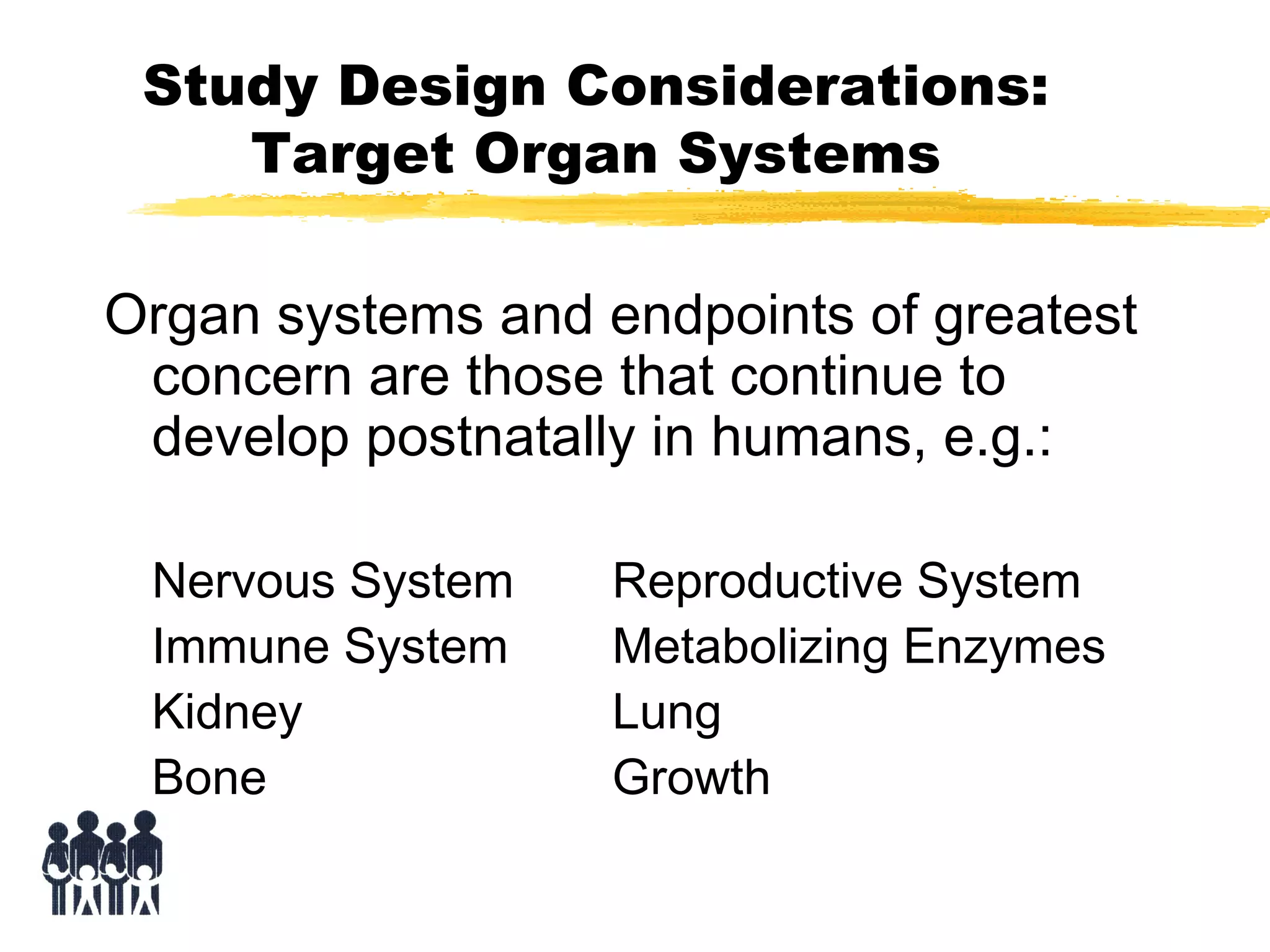
Study Design Considerations:
Target Organ Systems
Organ systems and endpoints of greatest
concern are those that continue to
develop postnatally in humans, e.g.:
Nervous System
Immune System
Kidney
Bone

Reproductive System
Metabolizing Enzymes
Lung
Growth
Study Design Considerations: Parental
or Maternal Exposure Studies
Chemicals:

Exposure periods and endpoints specified in
guidelines

Pharmaceuticals:

Standard sample sizes, exposure periods,
and reproductive and developmental
endpoints measured in the offspring
Occasionally include additional assessments
for target organ characterization
Study Design Considerations:
Basic Principles
Study design directly affects interpretation of
developmental outcome
Preliminary studies often very useful
Critical period(s) of exposure – TK/PK value
Critical period(s) for assessment of age- and
sex-specific expressions of toxicity
“Litter” is the largest contributor to outcome
Via maternal exposure and maintenance
Similarity among siblings increases with age
Study Design Considerations: Are
Direct Exposures Needed?
Rule #1: Talk to the FDA or EPA
Gaps in existing data and/or exposures

Pharmaceutical Considerations:
Medical condition
Target Population
Duration of treatment
Clinical trial schedule
Labeling for pediatric efficacy/safety
Outcome of standard nonclinical
reproductive and developmental studies
Study Design Considerations:
Pharmaceutical Direct-Exposure Studies
Therapeutic usage in children –

Primary or secondary therapeutic population
Treatment duration – acute vs. chronic
Probable age(s) at initiation of treatment

What and when to monitor –

Standard toxicity evaluations
Standard developmental evaluations
During and/or after exposure
Study Design Considerations:
Direct-Exposure Studies
Case-by-Case Decisions
Exposure period(s) – value of PK/TK information
Assessment period(s) – during/after treatment
One vs. two species
Within-litter vs. between litter designs
Feasibility of studies in animal model
Direct-dosing issues
Compound- and/or age-specific evaluations

Postnatal Evaluation in Developmental and Juvenile Toxicity Studies

  • 1.
    WIL Research Laboratories PostnatalEvaluation in Developmental and Juvenile Toxicity Studies Joseph F. Holson, Ph.D.
  • 2.
    Guideline Requirements for TestingChemicals Established and proposed guidelines for studies which include postnatal assessment Two-generation reproduction study OPPTS 870.3800; OECD 416; updating and/or harmonizing drafts Developmental Neurotoxicity study OPPTS 870.6300 and DCI for organophosphate pesticides; OECD 426; harmonizing drafts
  • 3.
    EPA vs. OECDHarmonization Issues Dosing schedule: Pre-weaning activity: Reflex ontogeny: Sample size: Neuropathology: Assignment to testing: Emerging request: to PND 10 vs. PND 21 3 vs. 1 assessment non vs. some 10 vs. 20/sex/group PND 11 vs. PND 21; some morphometry vs. tiered 1/litter for each test vs. 1/sex/litter for all behavior kinetics/biomarker effects
  • 4.
    Guideline Requirements for TestingPharmaceuticals 1994 ICH guidelines for medicinal products Evaluation of postnatal survival, growth, development, behavior and reproductive performance following parental exposure (usually Segment II/III or I/II/III) FDA, 1998 – possible direct neonatal exposure to support pediatric use of medicinal products Exposure period(s) and endpoints determined on a case-by-case basis
  • 5.
    Segments Defined byParental Exposure Period(s) Exposure Conventions Reproductive and Developmental Toxicity Studies Segment I II Gestation III Lactation Mating  Sexual maturity (F0  Conception  Birth  Weaning  Implantation adults)  Closure of hard palate
  • 6.
    Manifestations of Developmental Disruption FunctionalDeficits Growth Alterations Malformations Death
  • 7.
    FDA-Defined Pediatric Populations Pre-Term Neonate TermNeonate Infant/Toddler Child Adolescent Born at < 38 weeks Birth to 1 month 1 month to 2 years 2 to 12 years 12 to 16 (or 18) years Comparable stage/age categories for animal species dependent on individual organ or system
  • 8.
    Comparative Age Categories Human Rat Dog Primate Minipig (days) (wks) (months) (wks) <=9 <=0.5 pre-term pre-term 10 <3 <0.5 <2 Infant/Toddler 10-21 3-6 0.5-6 2-4 Child 21-45 6-20 6-36 4-14 Adolescent 45-90 20-28 26-48 14-26 Pre-Term Neonate TermNeonate Estimates are based on combined general developmental events occurring in both sexes, and represent only the overall schedule for CNS and reproductive development in these species. Note that the end age of the comparative category to human Infant/Toddler corresponds roughly to the usual age at weaning for laboratory species.
  • 9.
    Study Design Considerations: TargetOrgan Systems Organ systems and endpoints of greatest concern are those that continue to develop postnatally in humans, e.g.: Nervous System Immune System Kidney Bone Reproductive System Metabolizing Enzymes Lung Growth
  • 10.
    Study Design Considerations:Parental or Maternal Exposure Studies Chemicals: Exposure periods and endpoints specified in guidelines Pharmaceuticals: Standard sample sizes, exposure periods, and reproductive and developmental endpoints measured in the offspring Occasionally include additional assessments for target organ characterization
  • 11.
    Study Design Considerations: BasicPrinciples Study design directly affects interpretation of developmental outcome Preliminary studies often very useful Critical period(s) of exposure – TK/PK value Critical period(s) for assessment of age- and sex-specific expressions of toxicity “Litter” is the largest contributor to outcome Via maternal exposure and maintenance Similarity among siblings increases with age
  • 12.
    Study Design Considerations:Are Direct Exposures Needed? Rule #1: Talk to the FDA or EPA Gaps in existing data and/or exposures Pharmaceutical Considerations: Medical condition Target Population Duration of treatment Clinical trial schedule Labeling for pediatric efficacy/safety Outcome of standard nonclinical reproductive and developmental studies
  • 13.
    Study Design Considerations: PharmaceuticalDirect-Exposure Studies Therapeutic usage in children – Primary or secondary therapeutic population Treatment duration – acute vs. chronic Probable age(s) at initiation of treatment What and when to monitor – Standard toxicity evaluations Standard developmental evaluations During and/or after exposure
  • 14.
    Study Design Considerations: Direct-ExposureStudies Case-by-Case Decisions Exposure period(s) – value of PK/TK information Assessment period(s) – during/after treatment One vs. two species Within-litter vs. between litter designs Feasibility of studies in animal model Direct-dosing issues Compound- and/or age-specific evaluations