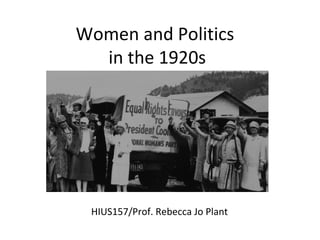
In the 1920s following women's suffrage, there were expectations of women voting as a bloc to advance policies supporting women. Some successes occurred such as the establishment of the Women's Bureau and the Cable Act granting citizenship rights to married women. However, a conservative backlash arose in response to perceived threats from socialism. The Sheppard-Towner Act which provided health services for mothers and infants was repealed in 1929. Meanwhile, divisions grew between those supporting an Equal Rights Amendment for full legal equality and those wanting to protect policies recognizing women's traditional roles.