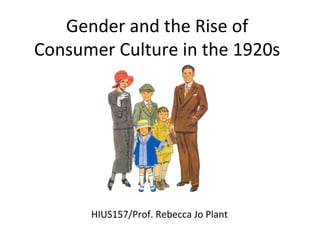
The document discusses how consumer culture rose in the 1920s and its impact on gender roles and women. Specifically, it summarizes that (1) women became the primary consumers and shopping shifted to department stores that catered to female customers, (2) new technologies like appliances made domestic work easier but did not reduce women's workload, and (3) advertising and consumerism both empowered women through new opportunities while also placing new pressures on them to adhere to narrow beauty standards.