PHOTOGRAPHY SHOOT RISK ASSESSMENT 
This document is intended as a basic template to assist in the completion of a risk assessment for film production activities. 
Detailed information is available from a variety of risk management and risk assessment specialists. Useful information can also be obtained 
from the Health & Safety Executive www.hse.gov.uk 
When conducting a risk assessment, consider all the likely hazards; who may be harmed, property which may be damaged, and the controls 
already in place. Then, for each likely hazard, bearing in mind the controls already in place, record the ‘risk assessment’ level. The further 
action(s) to be considered will be determined by the level of risk assessment. 
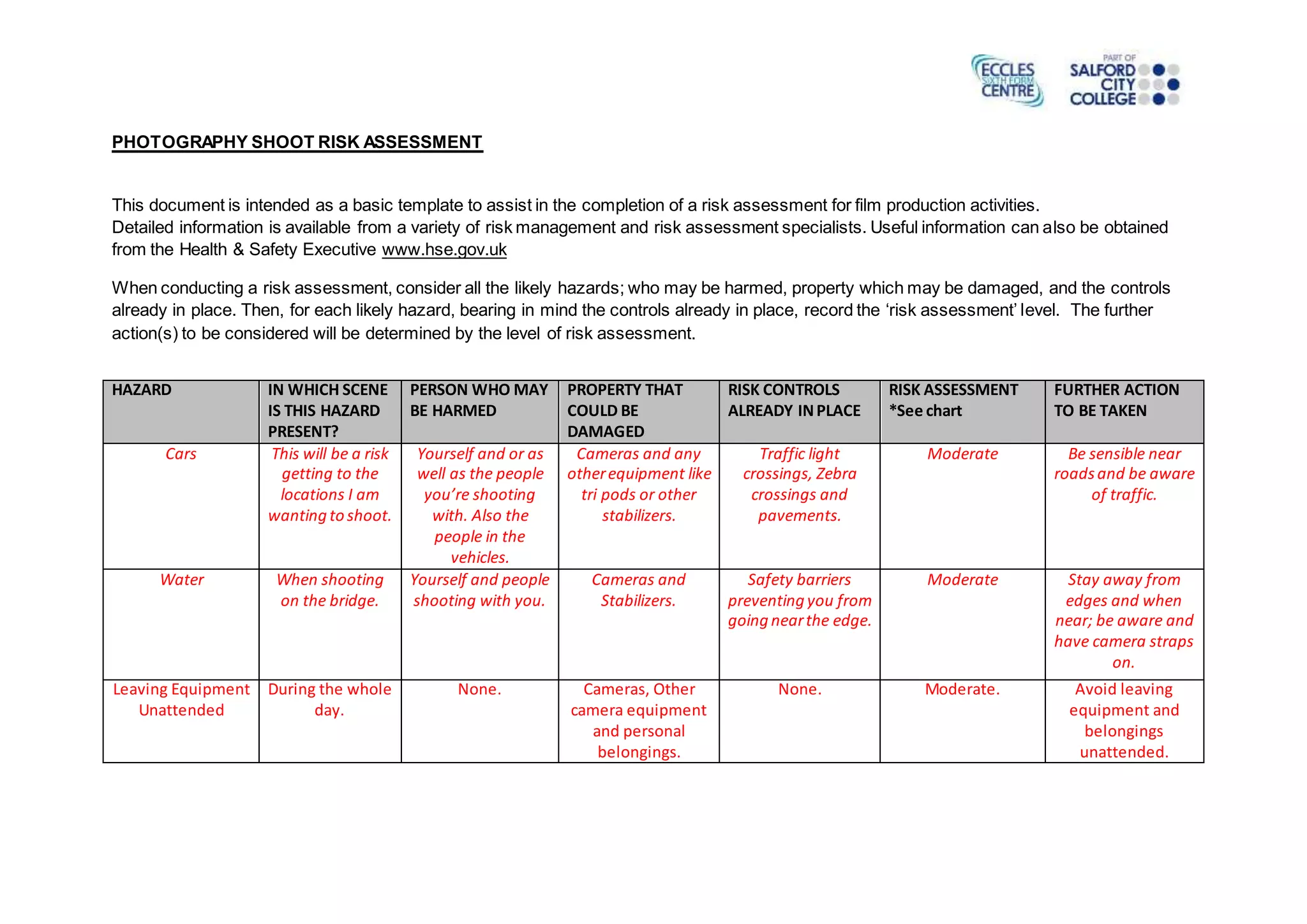
HAZARD IN WHICH SCENE 
IS THIS HAZARD 
PRESENT? 
PERSON WHO MAY 
BE HARMED 
PROPERTY THAT 
COULD BE 
DAMAGED 
RISK CONTROLS 
ALREADY IN PLACE 
RISK ASSESSMENT 
*See chart 
FURTHER ACTION 
TO BE TAKEN 
Cars This will be a risk 
getting to the 
locations I am 
wanting to shoot. 
Yourself and or as 
well as the people 
you’re shooting 
with. Also the 
people in the 
vehicles. 
Cameras and any 
other equipment like 
tri pods or other 
stabilizers. 
Traffic light 
crossings, Zebra 
crossings and 
pavements. 
Moderate Be sensible near 
roads and be aware 
of traffic. 
Water When shooting 
on the bridge. 
Yourself and people 
shooting with you. 
Cameras and 
Stabilizers. 
Safety barriers 
preventing you from 
going near the edge. 
Moderate Stay away from 
edges and when 
near; be aware and 
have camera straps 
on. 
Leaving Equipment 
Unattended 
During the whole 
day. 
None. Cameras, Other 
camera equipment 
and personal 
belongings. 
None. Moderate. Avoid leaving 
equipment and 
belongings 
unattended.
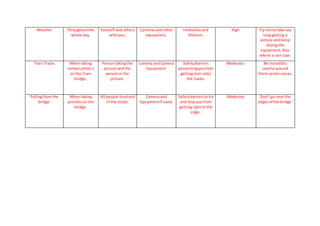
Weather Throughout the 
whole day. 
Yourself and others 
with you. 
Cameras and other 
equipment. 
Umbrellas and 
Shelters. 
High Try not to take too 
long getting a 
picture and keep 
drying the 
equipment. Also 
where a rain coat. 
Train Tracks When taking 
certain photo’s 
on the Train 
bridge. 
Person taking the 
picture and the 
person in the 
picture. 
Camera and Camera 
Equipment. 
Safety Barriers 
preventing you from 
getting over onto 
the tracks. 
Moderate. Be incredibly 
careful around 
them certain areas. 
Falling from the 
bridge. 
When taking 
pictures on the 
bridge. 
All people involved 
in the shoot. 
Camera and 
Equipment if used. 
Safety barriers to try 
and stop you from 
getting right to the 
edge. 
Moderate Don’t go near the 
edges of the bridge.
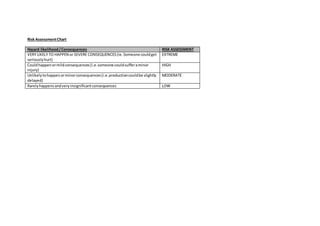
Risk Assessment Chart 
Hazard likelihood / Consequences RISK ASSESSMENT 
VERY LIKELY TO HAPPEN or SEVERE CONSEQUENCES (ie. Someone could get 
EXTREME 
seriously hurt) 
Could happen or mild consequences (i.e. someone could suffer a minor 
injury) 
HIGH 
Unlikely to happen or minor consequences (i.e. production could be slightly 
delayed) 
MODERATE 
Rarely happens and very insignificant consequences LOW

Portrait risk assessment

  • 1.
    PHOTOGRAPHY SHOOT RISKASSESSMENT This document is intended as a basic template to assist in the completion of a risk assessment for film production activities. Detailed information is available from a variety of risk management and risk assessment specialists. Useful information can also be obtained from the Health & Safety Executive www.hse.gov.uk When conducting a risk assessment, consider all the likely hazards; who may be harmed, property which may be damaged, and the controls already in place. Then, for each likely hazard, bearing in mind the controls already in place, record the ‘risk assessment’ level. The further action(s) to be considered will be determined by the level of risk assessment. HAZARD IN WHICH SCENE IS THIS HAZARD PRESENT? PERSON WHO MAY BE HARMED PROPERTY THAT COULD BE DAMAGED RISK CONTROLS ALREADY IN PLACE RISK ASSESSMENT *See chart FURTHER ACTION TO BE TAKEN Cars This will be a risk getting to the locations I am wanting to shoot. Yourself and or as well as the people you’re shooting with. Also the people in the vehicles. Cameras and any other equipment like tri pods or other stabilizers. Traffic light crossings, Zebra crossings and pavements. Moderate Be sensible near roads and be aware of traffic. Water When shooting on the bridge. Yourself and people shooting with you. Cameras and Stabilizers. Safety barriers preventing you from going near the edge. Moderate Stay away from edges and when near; be aware and have camera straps on. Leaving Equipment Unattended During the whole day. None. Cameras, Other camera equipment and personal belongings. None. Moderate. Avoid leaving equipment and belongings unattended.
  • 2.
    Weather Throughout the whole day. Yourself and others with you. Cameras and other equipment. Umbrellas and Shelters. High Try not to take too long getting a picture and keep drying the equipment. Also where a rain coat. Train Tracks When taking certain photo’s on the Train bridge. Person taking the picture and the person in the picture. Camera and Camera Equipment. Safety Barriers preventing you from getting over onto the tracks. Moderate. Be incredibly careful around them certain areas. Falling from the bridge. When taking pictures on the bridge. All people involved in the shoot. Camera and Equipment if used. Safety barriers to try and stop you from getting right to the edge. Moderate Don’t go near the edges of the bridge.
  • 4.
    Risk Assessment Chart Hazard likelihood / Consequences RISK ASSESSMENT VERY LIKELY TO HAPPEN or SEVERE CONSEQUENCES (ie. Someone could get EXTREME seriously hurt) Could happen or mild consequences (i.e. someone could suffer a minor injury) HIGH Unlikely to happen or minor consequences (i.e. production could be slightly delayed) MODERATE Rarely happens and very insignificant consequences LOW