PHOTOGRAPHY SHOOT RISK ASSESSMENT 
This document is intended as a basic template to assist in the completion of a risk assessment for film production activities. 
Detailed information is available from a variety of risk management and risk assessment specialists. Useful information can also be obtained 
from the Health & Safety Executive www.hse.gov.uk 
When conducting a risk assessment, consider all the likely hazards; who may be harmed, property which may be damaged, and the controls 
already in place. Then, for each likely hazard, bearing in mind the controls already in place, record the ‘risk assessment’ level. The further 
action(s) to be considered will be determined by the level of risk assessment. 
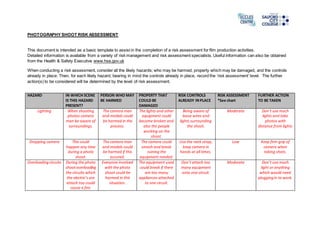
HAZARD IN WHICH SCENE 
IS THIS HAZARD 
PRESENT? 
PERSON WHO MAY 
BE HARMED 
PROPERTY THAT 
COULD BE 
DAMAGED 
RISK CONTROLS 
ALREADY IN PLACE 
RISK ASSESSMENT 
*See chart 
FURTHER ACTION 
TO BE TAKEN 
Lighting When shooting 
photos camera 
man be aware of 
surroundings. 
The camera man 
and models could 
be harmed in the 
process. 
The lights and other 
equipment could 
become broken and 
also the people 
working on the 
shoot. 
Being aware of 
loose wires and 
lights surrounding 
the shoot. 
Moderate Don’t use much 
lights and take 
photos with 
distance from lights 
Dropping camera This could 
happen any time 
during a photo 
shoot. 
The camera man 
and models could 
be harmed if this 
accured. 
The camera could 
smash and break 
ruining the 
equipment needed. 
Use the neck strap, 
keep camera in 
hands at all times. 
Low Keep firm grip of 
camera when 
taking shots. 
Overloading circuits During the photo 
shoot overloading 
the circuits which 
the electric’s are 
attach too could 
cause a fire. 
Everyone involved 
with the photo 
shoot could be 
harmed in this 
situation. 
The equipment used 
could break if there 
are too many 
appliances attached 
to one circuit. 
Don’t attach too 
many equipment 
onto one circuit. 
Moderate Don’t use much 
light or anything 
which would need 
plugging in to work.
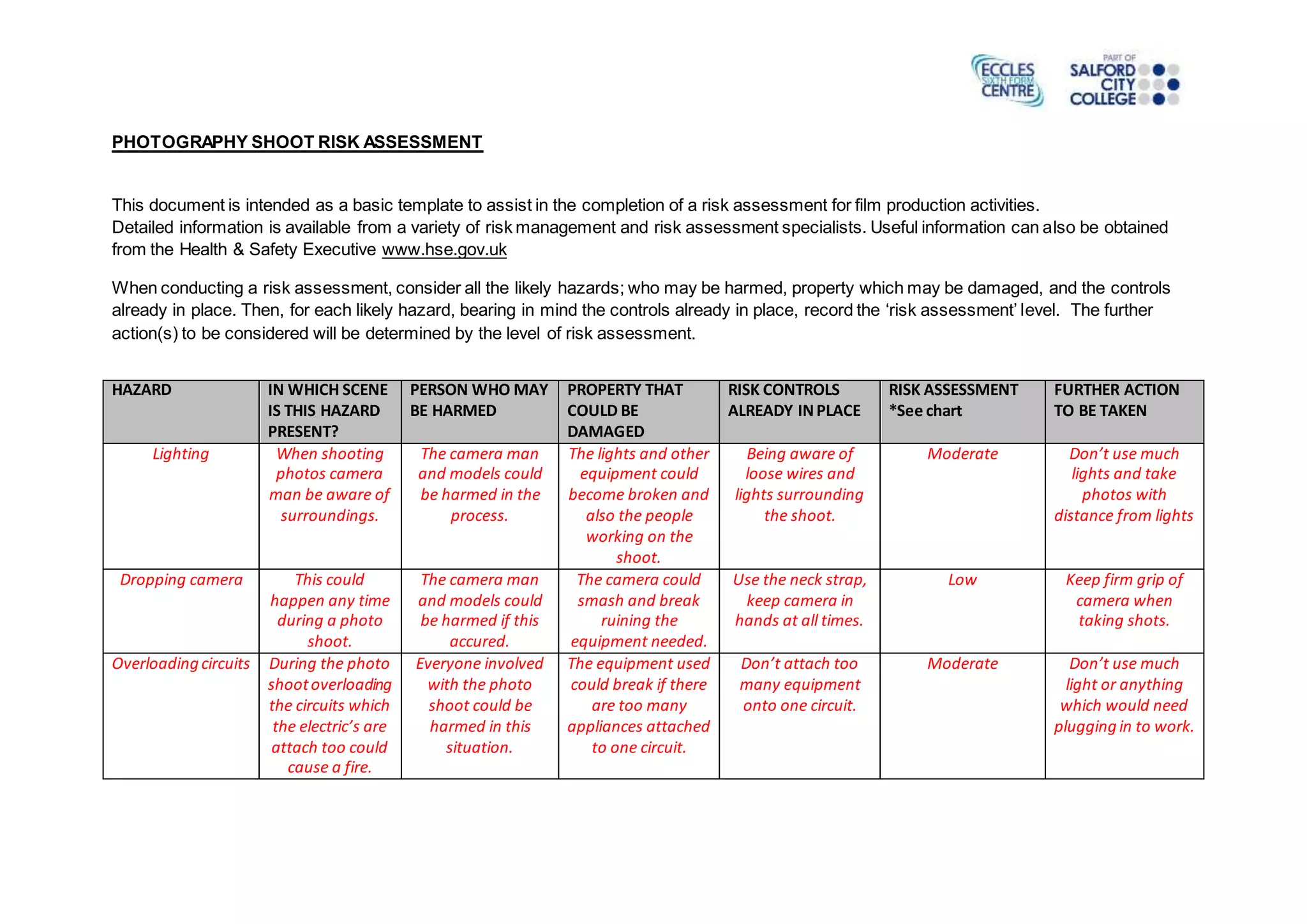
Tripod Tripods are big 
things and could 
easily be a hazard 
the models or 
photographer 
could trip and 
fall. 
The models for the 
shoot and the 
photographer could 
potentially be 
harmed during this 
situation 
The tripod could 
bend or break if hit, 
camera equipment 
could smash or 
break if dropped. 
Be aware of the 
tripod when 
shooting photos, 
look out for your 
surroundings. 
Low Don’t use a tripod, 
be very careful 
when moving 
around when the 
tripod is in place. 
Weather on the day The weather on 
the day could be 
raining or storms 
making the shoot 
impossible to do. 
They could be 
harmed depending 
on how bad the 
weather is. 
The equipment 
could break from 
water damage or 
severe weather 
could break the 
equipment. 
Plan the shoot on a 
day which the 
weather is good 
enough to shoot in. 
low Check weather 
forecast before 
going out to shoot, 
don’t shoot outside 
at all. 
Models don’t show At last minute the 
models for the 
shoot could 
decide not to 
show up. 
Nobody could be 
harmed besides the 
camera man who is 
left with nobody to 
shoot. 
No equipment could 
be damaged in this 
process. 
Make sure the 
model is prepared 
and is sure to come 
before setting up for 
the shoot. 
Moderate Find a back up 
model in case the 
first model becomes 
ill or decides not to 
do it anymore.
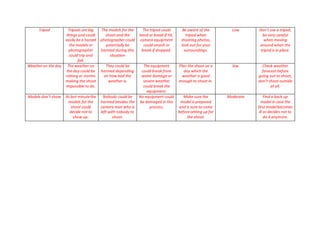
Risk Assessment Chart 
Hazard likelihood / Consequences RISK ASSESSMENT 
VERY LIKELY TO HAPPEN or SEVERE CONSEQUENCES (ie. Someone could get 
EXTREME 
seriously hurt) 
Could happen or mild consequences (i.e. someone could suffer a minor 
injury) 
HIGH 
Unlikely to happen or minor consequences (i.e. production could be slightly 
delayed) 
MODERATE 
Rarely happens and very insignificant consequences LOW

Photography risk assessment portrait

  • 1.
    PHOTOGRAPHY SHOOT RISKASSESSMENT This document is intended as a basic template to assist in the completion of a risk assessment for film production activities. Detailed information is available from a variety of risk management and risk assessment specialists. Useful information can also be obtained from the Health & Safety Executive www.hse.gov.uk When conducting a risk assessment, consider all the likely hazards; who may be harmed, property which may be damaged, and the controls already in place. Then, for each likely hazard, bearing in mind the controls already in place, record the ‘risk assessment’ level. The further action(s) to be considered will be determined by the level of risk assessment. HAZARD IN WHICH SCENE IS THIS HAZARD PRESENT? PERSON WHO MAY BE HARMED PROPERTY THAT COULD BE DAMAGED RISK CONTROLS ALREADY IN PLACE RISK ASSESSMENT *See chart FURTHER ACTION TO BE TAKEN Lighting When shooting photos camera man be aware of surroundings. The camera man and models could be harmed in the process. The lights and other equipment could become broken and also the people working on the shoot. Being aware of loose wires and lights surrounding the shoot. Moderate Don’t use much lights and take photos with distance from lights Dropping camera This could happen any time during a photo shoot. The camera man and models could be harmed if this accured. The camera could smash and break ruining the equipment needed. Use the neck strap, keep camera in hands at all times. Low Keep firm grip of camera when taking shots. Overloading circuits During the photo shoot overloading the circuits which the electric’s are attach too could cause a fire. Everyone involved with the photo shoot could be harmed in this situation. The equipment used could break if there are too many appliances attached to one circuit. Don’t attach too many equipment onto one circuit. Moderate Don’t use much light or anything which would need plugging in to work.
  • 2.
    Tripod Tripods arebig things and could easily be a hazard the models or photographer could trip and fall. The models for the shoot and the photographer could potentially be harmed during this situation The tripod could bend or break if hit, camera equipment could smash or break if dropped. Be aware of the tripod when shooting photos, look out for your surroundings. Low Don’t use a tripod, be very careful when moving around when the tripod is in place. Weather on the day The weather on the day could be raining or storms making the shoot impossible to do. They could be harmed depending on how bad the weather is. The equipment could break from water damage or severe weather could break the equipment. Plan the shoot on a day which the weather is good enough to shoot in. low Check weather forecast before going out to shoot, don’t shoot outside at all. Models don’t show At last minute the models for the shoot could decide not to show up. Nobody could be harmed besides the camera man who is left with nobody to shoot. No equipment could be damaged in this process. Make sure the model is prepared and is sure to come before setting up for the shoot. Moderate Find a back up model in case the first model becomes ill or decides not to do it anymore.
  • 3.
    Risk Assessment Chart Hazard likelihood / Consequences RISK ASSESSMENT VERY LIKELY TO HAPPEN or SEVERE CONSEQUENCES (ie. Someone could get EXTREME seriously hurt) Could happen or mild consequences (i.e. someone could suffer a minor injury) HIGH Unlikely to happen or minor consequences (i.e. production could be slightly delayed) MODERATE Rarely happens and very insignificant consequences LOW