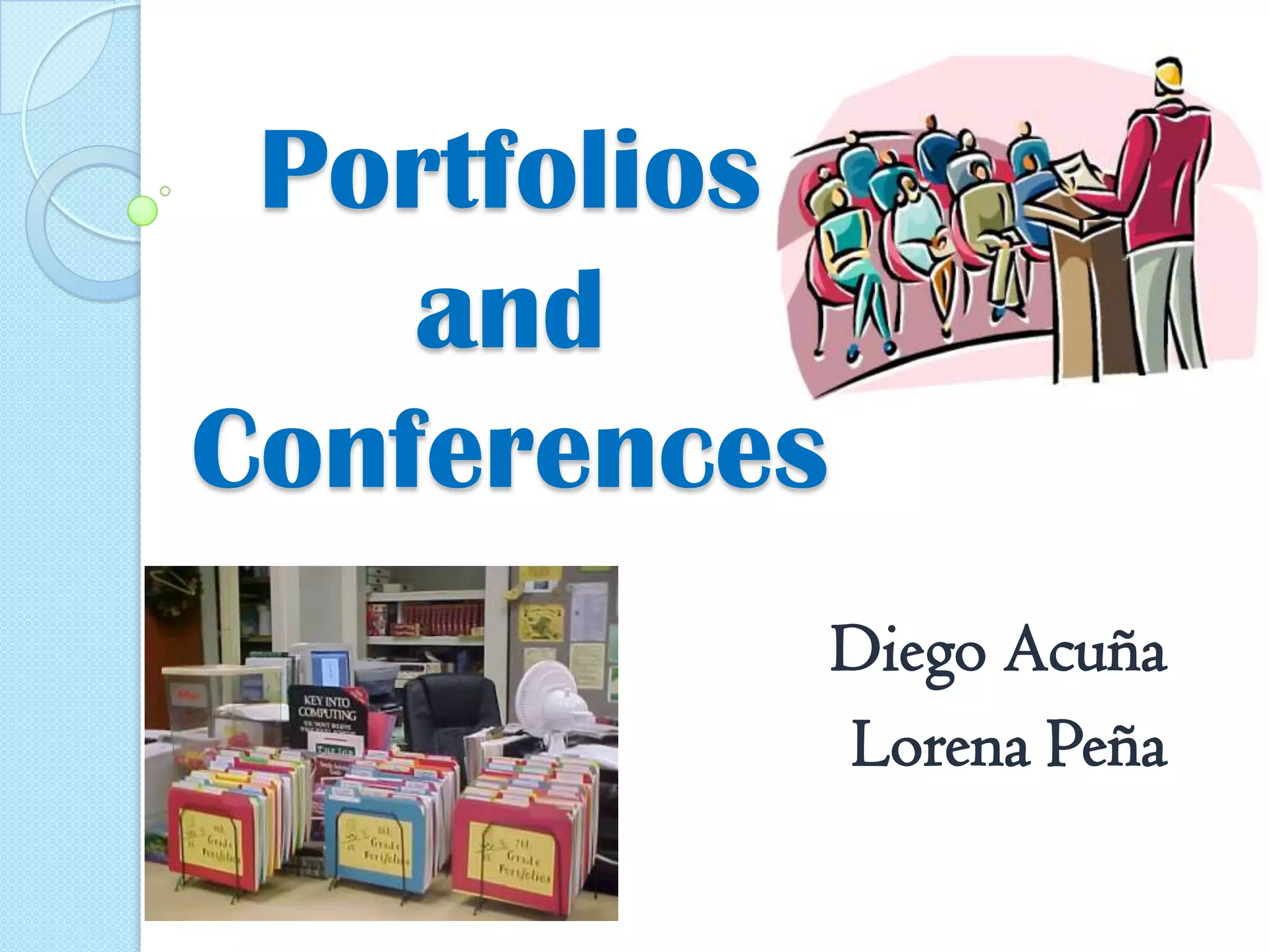
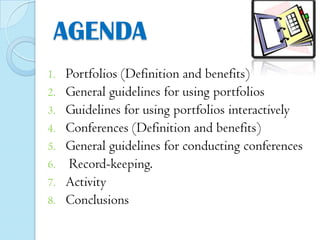



Portfolios
and
Conferences
Diego Acuña
Lorena Peña
AGENDA
1.
2.

3.
4.
5.

6.
7.
8.

Portfolios (Definition and benefits)
General guidelines for using portfolios
Guidelines for using portfolios interactively
Conferences (Definition and benefits)
General guidelines for conducting conferences
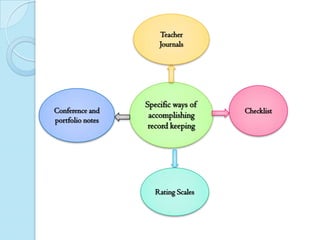
Record-keeping.
Activity
Conclusions
Portfolios
A

portfolio is a purposeful collection of students´
work that demonstrates to their peers and others their
efforts, progress, and achievements in given areas.
 The primary value of portfolios is in the assessment
of students achievement.
 Classrooms in which portfolio assessment plays a
major roles are more student-centered, collaborative
and holistic.
Benefits of

Portfolios
Portfolios provide
A continuous, cumulative record of language development
A holistic view of students learning
Insights about progress of individual students
Opportunities for collaborative assessment and goalsetting with students

Tangible evidence of student learning to be shared with
parents, other educators and other students
Opportunities to use metalanguage to talk about language.
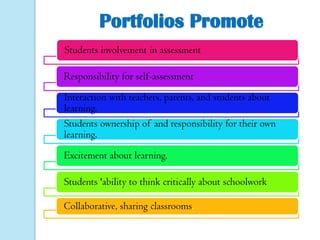
Portfolios Promote
Students involvement in assessment

Responsibility for self-assessment
Interaction with teachers, parents, and students about
learning.
Students ownership of and responsibility for their own
learning.
Excitement about learning.
Students 'ability to think critically about schoolwork
Collaborative, sharing classrooms.
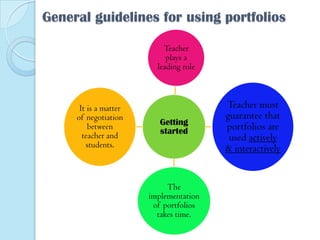
General guidelines for using portfolios
Teacher
plays a
leading role

It is a matter
of negotiation
between
teacher and
students.

Getting
started

The
implementation
of portfolios
takes time.

Teacher must
guarantee that
portfolios are
used actively
& interactively
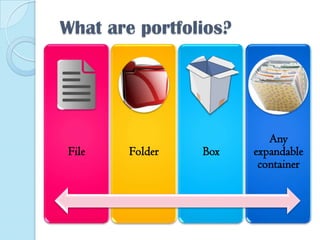
What are portfolios?

File

Folder

Box

Any
expandable
container
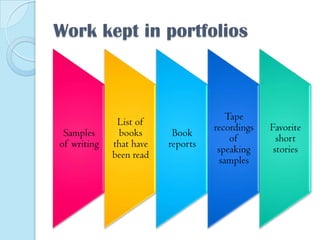
Work kept in portfolios

Samples
of writing

List of
books
that have
been read

Book
reports

Tape
recordings
of
speaking
samples

Favorite
short
stories
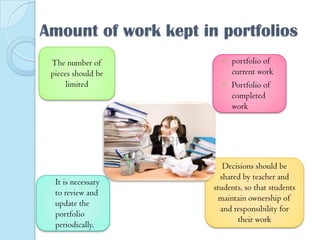
Amount of work kept in portfolios
The number of
pieces should be
limited

It is necessary
to review and
update the
portfolio
periodically.




portfolio of
current work
Portfolio of
completed
work

Decisions should be
shared by teacher and
students, so that students
maintain ownership of
and responsibility for
their work
Systematic review
and analysis of
portfolios should
be carried out on
regular basis

Teacher
Students
Parents
Other teachers
Educational
professionals
have access to
portfolios.

Keep the
portfolios in a
common readily
accessible area to
which students
have easy access.
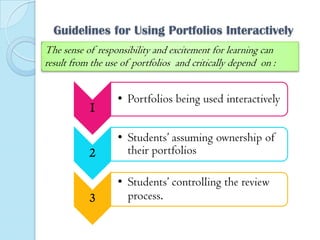
Guidelines for Using Portfolios Interactively
The sense of responsibility and excitement for learning can
result from the use of portfolios and critically depend on :

1

• Portfolios being used interactively

2

• Students’ assuming ownership of
their portfolios

3

• Students’ controlling the review
process.
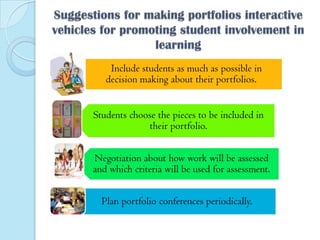
Suggestions for making portfolios interactive
vehicles for promoting student involvement in
learning
Include students as much as possible in
decision making about their portfolios.
Students choose the pieces to be included in
their portfolio.
Negotiation about how work will be assessed
and which criteria will be used for assessment.
Plan portfolio conferences periodically.
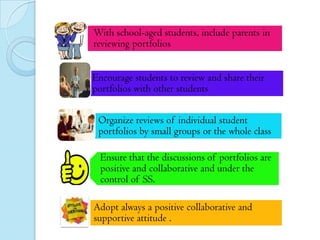
With school-aged students, include parents in
reviewing portfolios
Encourage students to review and share their
portfolios with other students
Organize reviews of individual student
portfolios by small groups or the whole class
Ensure that the discussions of portfolios are
positive and collaborative and under the
control of SS.
Adopt always a positive collaborative and
supportive attitude .
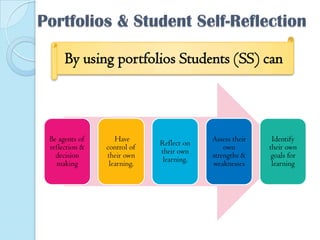
Portfolios & Student Self-Reflection
By using portfolios Students (SS) can

Be agents of
reflection &
decision
making

Have
control of
their own
learning.

Reflect on
their own
learning.

Assess their
own
strengths &
weaknesses

Identify
their own
goals for
learning
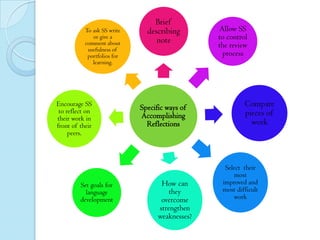
To ask SS write
or give a
comment about
usefulness of
portfolios for
learning.

Encourage SS
to reflect on
their work in
front of their
peers.

Set goals for
language
development

Brief
describing
note

Specific ways of
Accomplishing
Reflections

How can
they
overcome
strengthen
weaknesses?

Allow SS
to control
the review
process

Compare
pieces of
work

Select their
most
improved and
most difficult
work
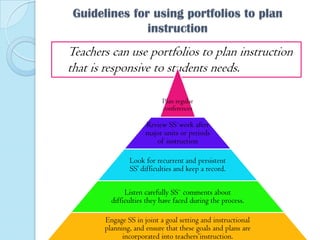
Guidelines for using portfolios to plan
instruction

Teachers can use portfolios to plan instruction
that is responsive to students needs.
Plan regular
conferences

Review SS´work after
major units or periods
of instruction
Look for recurrent and persistent
SS’ difficulties and keep a record.
Listen carefully SS´ comments about
difficulties they have faced during the process.
Engage SS in joint a goal setting and instructional
planning, and ensure that these goals and plans are
incorporated into teachers’instruction.
CONFERENCES
Are

used to review the content of portfolios
Conferences can be used more widely as part
of evaluation, and generally take the form of a
conversation or discussion between teachers
and students about school work.
Conferences can include individual students,
several students, or even the whole class
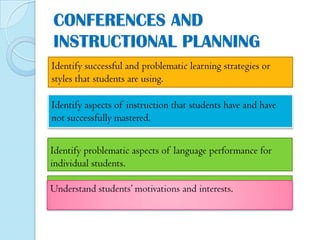
CONFERENCES AND
INSTRUCTIONAL PLANNING
Identify successful and problematic learning strategies or
styles that students are using.
Identify aspects of instruction that students have and have
not successfully mastered.

Identify problematic aspects of language performance for
individual students.
Understand students’ motivations and interests.
Benefits of

Conferences
Teachers direct questions to their SS
to gain insights about:
1.
2.
3.
4.
5.

6.

Their application of skills and knowledge taught in
class.
Specific difficulties they have when doing schoolwork
and how they resolve them .
The processes or strategies they use in the performance
of certain language-based tasks.
Their understanding of or beliefs about certain aspects
of language, such as reading and writing.
Their interestand goals with respect to language.
Their understanding of and responses to intructional
activities.
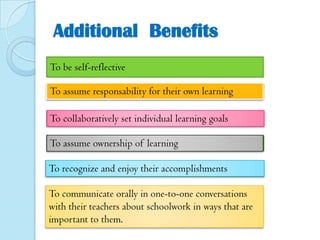
Additional Benefits
To be self-reflective

To assume responsability for their own learning
To collaboratively set individual learning goals
To assume ownership of learning
To recognize and enjoy their accomplishments
To communicate orally in one-to-one conversations
with their teachers about schoolwork in ways that are
important to them.
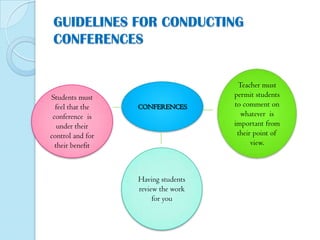
GUIDELINES FOR CONDUCTING
CONFERENCES

Students must
feel that the
conference is
under their
control and for
their benefit

CONFERENCES

Having students
review the work
for you

Teacher must
permit students
to comment on
whatever is
important from
their point of
view.
WHEN TO CONFERENCE?
 Conduct

the conferences with each student on a
regular basis throughtout the year or course in
order to monitor progress.
 When the conference is used at the end of a
major unit, conferencing can help assess learning.
 Conferences that are conducted irregularly and
infrequently are not useful for instructional
planning, nor does this allow students to become
familiar so that it is maximally beneficial.
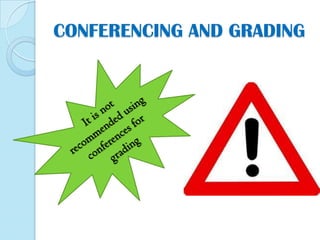
CONFERENCING AND GRADING
RECORD KEEPING
It

is also useful to record observations and
insights arising from the review.

Recording

comments about conferences is
especially useful and important because the
conferences do not provide a written record.
Teacher
Journals

Conference and
portfolio notes

Specific ways of
accomplishing
record keeping

Rating Scales

Checklist
Activity
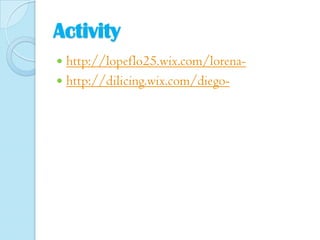
http://lopeflo25.wix.com/lorena http://dilicing.wix.com/diego
CONCLUSIONS
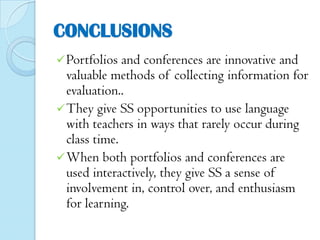
 Portfolios

and conferences are innovative and
valuable methods of collecting information for
evaluation..
 They give SS opportunities to use language
with teachers in ways that rarely occur during
class time.
 When both portfolios and conferences are
used interactively, they give SS a sense of
involvement in, control over, and enthusiasm
for learning.
Bibliography
Geneese & Upshur (1996) Classroom-based
evaluation in second language acquisition. p.
98-117
Portfolios and conferences (1)

Portfolios and conferences (1)

  • 1.
  • 2.
    AGENDA 1. 2. 3. 4. 5. 6. 7. 8. Portfolios (Definition andbenefits) General guidelines for using portfolios Guidelines for using portfolios interactively Conferences (Definition and benefits) General guidelines for conducting conferences Record-keeping. Activity Conclusions
  • 3.
    Portfolios A portfolio is apurposeful collection of students´ work that demonstrates to their peers and others their efforts, progress, and achievements in given areas.  The primary value of portfolios is in the assessment of students achievement.  Classrooms in which portfolio assessment plays a major roles are more student-centered, collaborative and holistic.
  • 4.
  • 5.
    Portfolios provide A continuous,cumulative record of language development A holistic view of students learning Insights about progress of individual students Opportunities for collaborative assessment and goalsetting with students Tangible evidence of student learning to be shared with parents, other educators and other students Opportunities to use metalanguage to talk about language.
  • 6.
    Portfolios Promote Students involvementin assessment Responsibility for self-assessment Interaction with teachers, parents, and students about learning. Students ownership of and responsibility for their own learning. Excitement about learning. Students 'ability to think critically about schoolwork Collaborative, sharing classrooms.
  • 7.
    General guidelines forusing portfolios Teacher plays a leading role It is a matter of negotiation between teacher and students. Getting started The implementation of portfolios takes time. Teacher must guarantee that portfolios are used actively & interactively
  • 8.
  • 9.
    Work kept inportfolios Samples of writing List of books that have been read Book reports Tape recordings of speaking samples Favorite short stories
  • 10.
    Amount of workkept in portfolios The number of pieces should be limited It is necessary to review and update the portfolio periodically.   portfolio of current work Portfolio of completed work Decisions should be shared by teacher and students, so that students maintain ownership of and responsibility for their work
  • 11.
    Systematic review and analysisof portfolios should be carried out on regular basis Teacher Students Parents Other teachers Educational professionals have access to portfolios. Keep the portfolios in a common readily accessible area to which students have easy access.
  • 12.
    Guidelines for UsingPortfolios Interactively The sense of responsibility and excitement for learning can result from the use of portfolios and critically depend on : 1 • Portfolios being used interactively 2 • Students’ assuming ownership of their portfolios 3 • Students’ controlling the review process.
  • 13.
    Suggestions for makingportfolios interactive vehicles for promoting student involvement in learning Include students as much as possible in decision making about their portfolios. Students choose the pieces to be included in their portfolio. Negotiation about how work will be assessed and which criteria will be used for assessment. Plan portfolio conferences periodically.
  • 14.
    With school-aged students,include parents in reviewing portfolios Encourage students to review and share their portfolios with other students Organize reviews of individual student portfolios by small groups or the whole class Ensure that the discussions of portfolios are positive and collaborative and under the control of SS. Adopt always a positive collaborative and supportive attitude .
  • 15.
    Portfolios & StudentSelf-Reflection By using portfolios Students (SS) can Be agents of reflection & decision making Have control of their own learning. Reflect on their own learning. Assess their own strengths & weaknesses Identify their own goals for learning
  • 16.
    To ask SSwrite or give a comment about usefulness of portfolios for learning. Encourage SS to reflect on their work in front of their peers. Set goals for language development Brief describing note Specific ways of Accomplishing Reflections How can they overcome strengthen weaknesses? Allow SS to control the review process Compare pieces of work Select their most improved and most difficult work
  • 17.
    Guidelines for usingportfolios to plan instruction Teachers can use portfolios to plan instruction that is responsive to students needs. Plan regular conferences Review SS´work after major units or periods of instruction Look for recurrent and persistent SS’ difficulties and keep a record. Listen carefully SS´ comments about difficulties they have faced during the process. Engage SS in joint a goal setting and instructional planning, and ensure that these goals and plans are incorporated into teachers’instruction.
  • 18.
    CONFERENCES Are used to reviewthe content of portfolios Conferences can be used more widely as part of evaluation, and generally take the form of a conversation or discussion between teachers and students about school work. Conferences can include individual students, several students, or even the whole class
  • 19.
    CONFERENCES AND INSTRUCTIONAL PLANNING Identifysuccessful and problematic learning strategies or styles that students are using. Identify aspects of instruction that students have and have not successfully mastered. Identify problematic aspects of language performance for individual students. Understand students’ motivations and interests.
  • 20.
  • 21.
    Teachers direct questionsto their SS to gain insights about: 1. 2. 3. 4. 5. 6. Their application of skills and knowledge taught in class. Specific difficulties they have when doing schoolwork and how they resolve them . The processes or strategies they use in the performance of certain language-based tasks. Their understanding of or beliefs about certain aspects of language, such as reading and writing. Their interestand goals with respect to language. Their understanding of and responses to intructional activities.
  • 22.
    Additional Benefits To beself-reflective To assume responsability for their own learning To collaboratively set individual learning goals To assume ownership of learning To recognize and enjoy their accomplishments To communicate orally in one-to-one conversations with their teachers about schoolwork in ways that are important to them.
  • 23.
    GUIDELINES FOR CONDUCTING CONFERENCES Studentsmust feel that the conference is under their control and for their benefit CONFERENCES Having students review the work for you Teacher must permit students to comment on whatever is important from their point of view.
  • 24.
    WHEN TO CONFERENCE? Conduct the conferences with each student on a regular basis throughtout the year or course in order to monitor progress.  When the conference is used at the end of a major unit, conferencing can help assess learning.  Conferences that are conducted irregularly and infrequently are not useful for instructional planning, nor does this allow students to become familiar so that it is maximally beneficial.
  • 25.
  • 26.
    RECORD KEEPING It is alsouseful to record observations and insights arising from the review. Recording comments about conferences is especially useful and important because the conferences do not provide a written record.
  • 27.
    Teacher Journals Conference and portfolio notes Specificways of accomplishing record keeping Rating Scales Checklist
  • 28.
  • 29.
    CONCLUSIONS  Portfolios and conferencesare innovative and valuable methods of collecting information for evaluation..  They give SS opportunities to use language with teachers in ways that rarely occur during class time.  When both portfolios and conferences are used interactively, they give SS a sense of involvement in, control over, and enthusiasm for learning.
  • 30.
    Bibliography Geneese & Upshur(1996) Classroom-based evaluation in second language acquisition. p. 98-117