Pop Art "Pop Art is: popular, transient, expendable, low-cost, mass-produced, young, witty, sexy, gimmicky, glamorous, and big business.”-Richard Hamilton
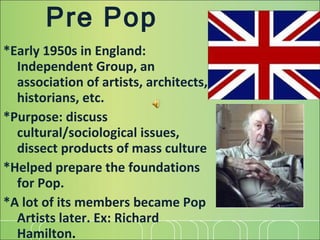
Pre Pop *Early 1950s in England: Independent Group, an association of artists, architects, historians, etc. *Purpose: discuss cultural/sociological issues, dissect products of mass culture *Helped prepare the foundations for Pop. *A lot of its members became Pop Artists later. Ex: Richard Hamilton .
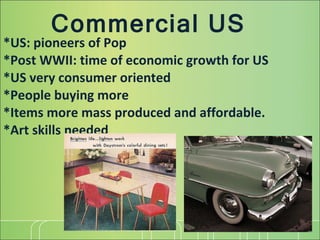
Commercial US *US: pioneers of Pop *Post WWII: time of economic growth for US *US very consumer oriented *People buying more *Items more mass produced and affordable. *Art skills needed
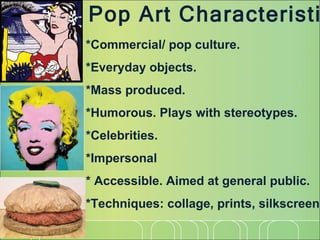
Pop Art Characteristics *Commercial/ pop culture. *Everyday objects.  *Mass produced. *Humorous. Plays with stereotypes. *Celebrities. *Impersonal  * Accessible. Aimed at general public. *Techniques: collage, prints, silkscreen
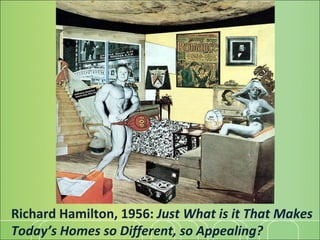
Richard Hamilton, 1956:  Just What is it That Makes Today’s Homes so Different, so Appealing?
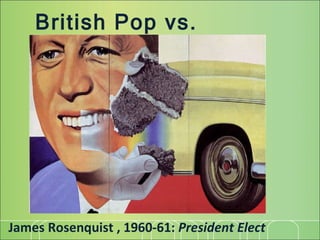
British Pop vs. American Pop James Rosenquist , 1960-61:  President Elect
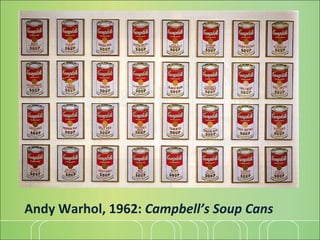
Andy Warhol, 1962:  Campbell’s Soup Cans
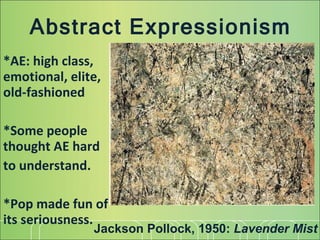
Abstract Expressionism *AE: high class, emotional, elite, old-fashioned  *Some people thought AE hard to understand. *Pop made fun of its seriousness. Jackson Pollock, 1950:  Lavender Mist
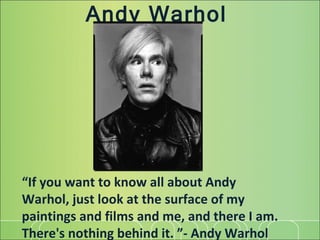
Andy Warhol “ If you want to know all about Andy Warhol, just look at the surface of my paintings and films and me, and there I am. There's nothing behind it. ”- Andy Warhol
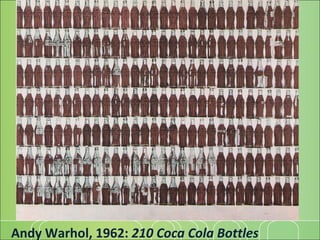
Andy Warhol, 1962:  210 Coca Cola Bottles
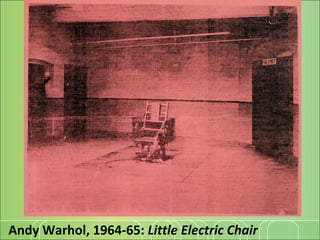
Andy Warhol, 1964-65:  Little Electric Chair
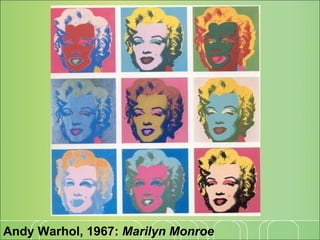
Andy Warhol, 1967:  Marilyn Monroe
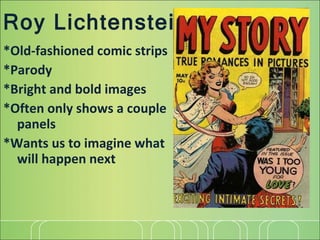
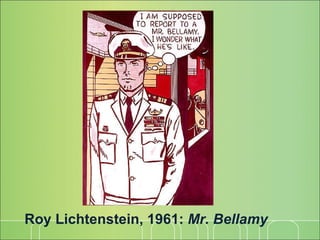
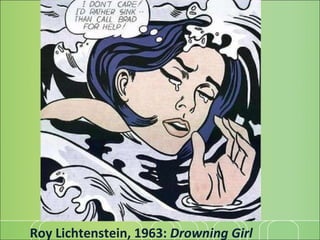
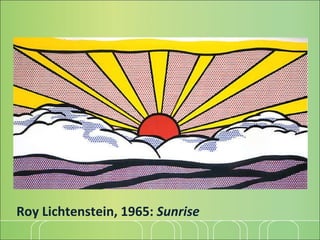
Roy Lichtenstein *Old-fashioned comic strips *Parody *Bright and bold images *Often only shows a couple panels *Wants us to imagine what will happen next
Roy Lichtenstein, 1961:  Mr. Bellamy
Roy Lichtenstein, 1963:  Drowning Girl
Roy Lichtenstein, 1965:  Sunrise
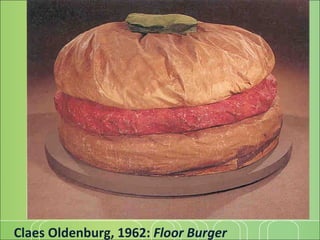
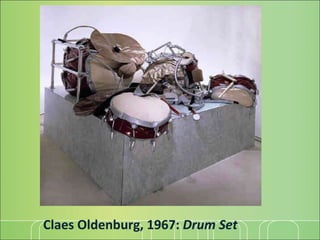
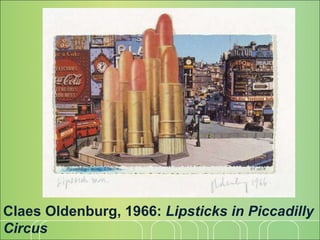
Claes Oldenburg *Actually American artist *Sculptor *Played with the mind *Foods, common items as subjects *Oversized
Claes Oldenburg, 1962:  Floor Burger
Claes Oldenburg, 1967:  Drum Set
Claes Oldenburg, 1966:  Lipsticks in Piccadilly Circus
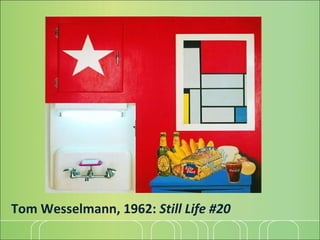
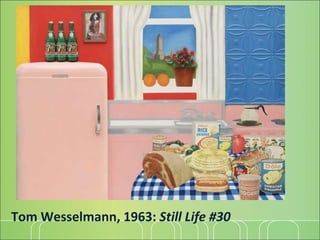
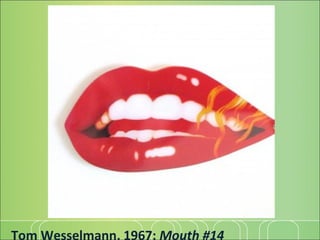
Tom Wesselmann *Worked in series *Used real objects *Still life *Collages *Brand names
Tom Wesselmann, 1962:  Still Life #20
Tom Wesselmann, 1963:  Still Life #30
Tom Wesselmann, 1967:  Mouth #14
Criticism “… like a joke without humour told over and over again until it begins to sound like a threat… Advertising art which advertises itself as art that hates advertising.”-Harold Rauschenberg *Insult to public intelligence: use of common objects. *Artists meant to create new ideas within art world
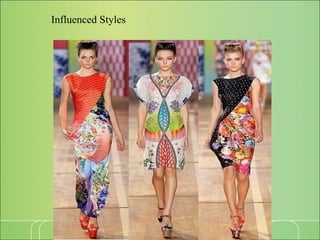
Pop Art Today Has influenced fashion…during the 1950’s helped create a radical change in how fashion was made. Artists today use many techniques that started when pop art came to be. Movies have been filmed using many elements of pop art and what it stands for.
Influenced Styles
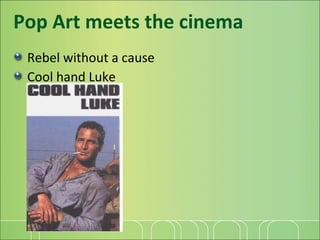
Pop Art meets the cinema Rebel without a cause Cool hand Luke

Pop Art

  • 1.
    Pop Art "PopArt is: popular, transient, expendable, low-cost, mass-produced, young, witty, sexy, gimmicky, glamorous, and big business.”-Richard Hamilton
  • 2.
    Pre Pop *Early1950s in England: Independent Group, an association of artists, architects, historians, etc. *Purpose: discuss cultural/sociological issues, dissect products of mass culture *Helped prepare the foundations for Pop. *A lot of its members became Pop Artists later. Ex: Richard Hamilton .
  • 3.
    Commercial US *US:pioneers of Pop *Post WWII: time of economic growth for US *US very consumer oriented *People buying more *Items more mass produced and affordable. *Art skills needed
  • 4.
    Pop Art Characteristics*Commercial/ pop culture. *Everyday objects. *Mass produced. *Humorous. Plays with stereotypes. *Celebrities. *Impersonal * Accessible. Aimed at general public. *Techniques: collage, prints, silkscreen
  • 5.
    Richard Hamilton, 1956: Just What is it That Makes Today’s Homes so Different, so Appealing?
  • 6.
    British Pop vs.American Pop James Rosenquist , 1960-61: President Elect
  • 7.
    Andy Warhol, 1962: Campbell’s Soup Cans
  • 8.
    Abstract Expressionism *AE:high class, emotional, elite, old-fashioned *Some people thought AE hard to understand. *Pop made fun of its seriousness. Jackson Pollock, 1950: Lavender Mist
  • 9.
    Andy Warhol “If you want to know all about Andy Warhol, just look at the surface of my paintings and films and me, and there I am. There's nothing behind it. ”- Andy Warhol
  • 10.
    Andy Warhol, 1962: 210 Coca Cola Bottles
  • 11.
    Andy Warhol, 1964-65: Little Electric Chair
  • 12.
    Andy Warhol, 1967: Marilyn Monroe
  • 13.
    Roy Lichtenstein *Old-fashionedcomic strips *Parody *Bright and bold images *Often only shows a couple panels *Wants us to imagine what will happen next
  • 14.
  • 15.
  • 16.
  • 17.
    Claes Oldenburg *ActuallyAmerican artist *Sculptor *Played with the mind *Foods, common items as subjects *Oversized
  • 18.
  • 19.
  • 20.
    Claes Oldenburg, 1966: Lipsticks in Piccadilly Circus
  • 21.
    Tom Wesselmann *Workedin series *Used real objects *Still life *Collages *Brand names
  • 22.
    Tom Wesselmann, 1962: Still Life #20
  • 23.
    Tom Wesselmann, 1963: Still Life #30
  • 24.
  • 25.
    Criticism “… likea joke without humour told over and over again until it begins to sound like a threat… Advertising art which advertises itself as art that hates advertising.”-Harold Rauschenberg *Insult to public intelligence: use of common objects. *Artists meant to create new ideas within art world
  • 26.
    Pop Art TodayHas influenced fashion…during the 1950’s helped create a radical change in how fashion was made. Artists today use many techniques that started when pop art came to be. Movies have been filmed using many elements of pop art and what it stands for.
  • 27.
  • 28.
    Pop Art meetsthe cinema Rebel without a cause Cool hand Luke