








“The story of humankind and 
our relationship to the earth 
may seen as a continuing 
advents are tragedy shrouded 
in mystery, the choice is ours”
The Earth as an ecosystem is changing, attributable in great 
part to the effects of globalization and man. More carbon 
dioxide is now in the atmosphere than has been in the past 
650,000 years. We’ve overloaded the atmosphere with heat-trapping 
gasses from our cars and factories and power plants. 
If we don’t start fixing the problem now, we’re in for 
devastating changes to our environment. We will experience 
extreme temperatures, rises in sea levels, and storms of 
unimaginable destructive fury. Recently, alarming events that 
are consistent with scientific predictions about the effects of 
climate change have become more and more commonplace.
Pollution is the introduction 
of contaminants into the natural environment 
that cause adverse change. Pollution can take 
the form of chemical substances or energy, such 
as noise, heat or light. Pollutants, the 
components of pollution, can be either foreign 
substances/energies or naturally occurring 
contaminants. Pollution is often classed as point 
source or nonpoint source pollution.
Air pollution is the introduction 
of particulates, biological molecules, or other harmful 
materials into the Earth's atmosphere possibly causing 
disease, death to humans, damage to other living 
organisms such as food crops, or the natural or built 
environment. 
The atmosphere is a complex natural gaseous system 
that is essential to support life on planet Earth.
Water pollution is the contamination of water bodies 
(e.g. lakes, rivers, oceans, aquifers and groundwater). 
Water pollution occurs when pollutants are directly or 
indirectly discharged into water bodies without 
adequate treatment to remove harmful compounds. 
Water pollution affects plants and organisms living in 
these bodies of water. In almost all cases the effect is 
damaging not only to individual species and 
populations, but also to the natural biological 
communities.
Soil contamination or soil pollution is caused by the 
presence of xenobiotic (human-made) chemicals or 
other alteration in the natural soil environment. It is 
typically caused by industrial activity, agricultural 
chemicals, or improper disposal of waste. The most 
common chemicals involved are 
petroleum hydrocarbons, polynuclear aromatic 
hydrocarbons (such as naphthalene and benzo a 
pyrene), solvents, pesticides, lead, and other heavy 
metals.
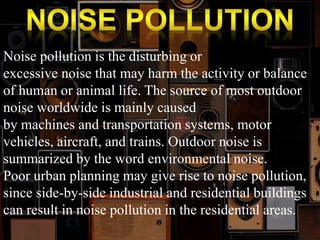
Noise pollution is the disturbing or 
excessive noise that may harm the activity or balance 
of human or animal life. The source of most outdoor 
noise worldwide is mainly caused 
by machines and transportation systems, motor 
vehicles, aircraft, and trains. Outdoor noise is 
summarized by the word environmental noise. 
Poor urban planning may give rise to noise pollution, 
since side-by-side industrial and residential buildings 
can result in noise pollution in the residential areas.
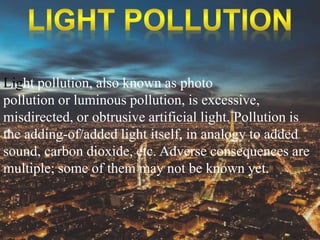
Light pollution, also known as photo 
pollution or luminous pollution, is excessive, 
misdirected, or obtrusive artificial light. Pollution is 
the adding-of/added light itself, in analogy to added 
sound, carbon dioxide, etc. Adverse consequences are 
multiple; some of them may not be known yet.
There are many environmental issues in India. Air 
pollution, water pollution, garbage, and pollution of 
the natural environment are all challenges for India. 
The situation was worse between 1947 through 1995. 
According to data collection and environment 
assessment studies ofWorld Bank experts, between 
1995 through 2010, India has made one of the fastest 
progress in the world, in addressing its environmental 
issues and improving its environmental quality.
India has major water pollution issues. Discharge of 
untreated sewage is the single most important cause 
for pollution of surface and ground water in the India. 
There is a large gap between generation and treatment 
of domestic waste water in the India. The problem is 
not only that India lacks sufficient treatment capacity 
but also that the sewage treatment plants that exist do 
not operate and are not maintained.
The Supreme Court of India gave a significant verdict 
on noise pollution in 2005.Unnecessary honking of 
vehicles makes for a high decibel level of noise in 
cities. The use of loudspeakers for political purposes 
and for sermons by temples and mosques makes noise 
pollution in residential areas worse. 
In January 2010, Government of India published 
norms of permissible noise levels in urban and rural 
areas.
In March 2009, the issue of Uranium poisoning in 
Punjab attracted press coverage. It was alleged to be 
caused by fly ash ponds of thermal power stations, 
which reportedly lead to severe birth defects in 
children in the Faridkot and Bhatinda districts 
of Punjab. The uranium levels were more than 60 
times the maximum safe limit. In 2012, the 
Government of India confirmed that the ground water 
in Malwa belt of Punjab has uranium metal that is 
50% above the trace limits set by the United Nations' 
World Health Organization.
Air pollution in UAE is mainly caused by around 2 
million road users and factories in Emirates of 
Sharjah, Dubai, Ajman and Umm Al Quwain. The rise 
in UAE’s economy showed a rise in migrants mainly 
from. The rise in population also showed rise in all 
kind of vehicle and fuel sale. The high use of fuel 
caused Air pollution in Urban and Industrial areas. But 
comparing to other countries UAE’s air pollution 
index is moderate.
The road users in UAE also cause noise pollution in 
residential and urban areas. Also the machineries used 
for construction in residential areas distract people of 
their sleep and daily activities. The construction 
machineries and industrial machineries used for 
production cause very high noise disrupting people of 
their activities. Many organizations in UAE have taken 
measures to curb noise pollution.
The water usage in UAE has increased during the last 
5 years. The UAE government takes measures to clean 
the water bodies and protect them. The water bodies in 
UAE are maintained clean with help and co-operation 
of the residents of UAE. The government also 
punishes those who pollute the water bodies. The UAE 
government and many organizations have taken steps 
to curb wastage of water.
With the development of urban areas and residential 
areas, the government setup street lights for the 
residents and road users comfort. The large no. of 
street lights saw a rise in light pollution in many parts 
of UAE. The light pollution in UAE is high comparing 
to many countries. The government encourage the 
practice of using green energy. For this the Masdar 
city in Abu Dhabi which only uses green energy.
POLLUTION: INDIA AND UAE LAST 5 YEARS

POLLUTION: INDIA AND UAE LAST 5 YEARS

  • 1.
    “The story ofhumankind and our relationship to the earth may seen as a continuing advents are tragedy shrouded in mystery, the choice is ours”
  • 5.
    The Earth asan ecosystem is changing, attributable in great part to the effects of globalization and man. More carbon dioxide is now in the atmosphere than has been in the past 650,000 years. We’ve overloaded the atmosphere with heat-trapping gasses from our cars and factories and power plants. If we don’t start fixing the problem now, we’re in for devastating changes to our environment. We will experience extreme temperatures, rises in sea levels, and storms of unimaginable destructive fury. Recently, alarming events that are consistent with scientific predictions about the effects of climate change have become more and more commonplace.
  • 6.
    Pollution is theintroduction of contaminants into the natural environment that cause adverse change. Pollution can take the form of chemical substances or energy, such as noise, heat or light. Pollutants, the components of pollution, can be either foreign substances/energies or naturally occurring contaminants. Pollution is often classed as point source or nonpoint source pollution.
  • 8.
    Air pollution isthe introduction of particulates, biological molecules, or other harmful materials into the Earth's atmosphere possibly causing disease, death to humans, damage to other living organisms such as food crops, or the natural or built environment. The atmosphere is a complex natural gaseous system that is essential to support life on planet Earth.
  • 9.
    Water pollution isthe contamination of water bodies (e.g. lakes, rivers, oceans, aquifers and groundwater). Water pollution occurs when pollutants are directly or indirectly discharged into water bodies without adequate treatment to remove harmful compounds. Water pollution affects plants and organisms living in these bodies of water. In almost all cases the effect is damaging not only to individual species and populations, but also to the natural biological communities.
  • 10.
    Soil contamination orsoil pollution is caused by the presence of xenobiotic (human-made) chemicals or other alteration in the natural soil environment. It is typically caused by industrial activity, agricultural chemicals, or improper disposal of waste. The most common chemicals involved are petroleum hydrocarbons, polynuclear aromatic hydrocarbons (such as naphthalene and benzo a pyrene), solvents, pesticides, lead, and other heavy metals.
  • 11.
    Noise pollution isthe disturbing or excessive noise that may harm the activity or balance of human or animal life. The source of most outdoor noise worldwide is mainly caused by machines and transportation systems, motor vehicles, aircraft, and trains. Outdoor noise is summarized by the word environmental noise. Poor urban planning may give rise to noise pollution, since side-by-side industrial and residential buildings can result in noise pollution in the residential areas.
  • 12.
    Light pollution, alsoknown as photo pollution or luminous pollution, is excessive, misdirected, or obtrusive artificial light. Pollution is the adding-of/added light itself, in analogy to added sound, carbon dioxide, etc. Adverse consequences are multiple; some of them may not be known yet.
  • 14.
    There are manyenvironmental issues in India. Air pollution, water pollution, garbage, and pollution of the natural environment are all challenges for India. The situation was worse between 1947 through 1995. According to data collection and environment assessment studies ofWorld Bank experts, between 1995 through 2010, India has made one of the fastest progress in the world, in addressing its environmental issues and improving its environmental quality.
  • 15.
    India has majorwater pollution issues. Discharge of untreated sewage is the single most important cause for pollution of surface and ground water in the India. There is a large gap between generation and treatment of domestic waste water in the India. The problem is not only that India lacks sufficient treatment capacity but also that the sewage treatment plants that exist do not operate and are not maintained.
  • 16.
    The Supreme Courtof India gave a significant verdict on noise pollution in 2005.Unnecessary honking of vehicles makes for a high decibel level of noise in cities. The use of loudspeakers for political purposes and for sermons by temples and mosques makes noise pollution in residential areas worse. In January 2010, Government of India published norms of permissible noise levels in urban and rural areas.
  • 17.
    In March 2009,the issue of Uranium poisoning in Punjab attracted press coverage. It was alleged to be caused by fly ash ponds of thermal power stations, which reportedly lead to severe birth defects in children in the Faridkot and Bhatinda districts of Punjab. The uranium levels were more than 60 times the maximum safe limit. In 2012, the Government of India confirmed that the ground water in Malwa belt of Punjab has uranium metal that is 50% above the trace limits set by the United Nations' World Health Organization.
  • 19.
    Air pollution inUAE is mainly caused by around 2 million road users and factories in Emirates of Sharjah, Dubai, Ajman and Umm Al Quwain. The rise in UAE’s economy showed a rise in migrants mainly from. The rise in population also showed rise in all kind of vehicle and fuel sale. The high use of fuel caused Air pollution in Urban and Industrial areas. But comparing to other countries UAE’s air pollution index is moderate.
  • 20.
    The road usersin UAE also cause noise pollution in residential and urban areas. Also the machineries used for construction in residential areas distract people of their sleep and daily activities. The construction machineries and industrial machineries used for production cause very high noise disrupting people of their activities. Many organizations in UAE have taken measures to curb noise pollution.
  • 21.
    The water usagein UAE has increased during the last 5 years. The UAE government takes measures to clean the water bodies and protect them. The water bodies in UAE are maintained clean with help and co-operation of the residents of UAE. The government also punishes those who pollute the water bodies. The UAE government and many organizations have taken steps to curb wastage of water.
  • 22.
    With the developmentof urban areas and residential areas, the government setup street lights for the residents and road users comfort. The large no. of street lights saw a rise in light pollution in many parts of UAE. The light pollution in UAE is high comparing to many countries. The government encourage the practice of using green energy. For this the Masdar city in Abu Dhabi which only uses green energy.