Policy Integration:
Policy-Making Perspectives and
Institutional Challenges on
Forestry Sector in Indonesia
Yogi Suwarno
yogi@stialan.ac.id | yosuno@yahoo.com
Yogyakarta, 9-10 August 2017
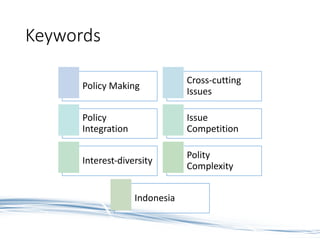
Keywords
Policy Making
Cross-cutting
Issues
Policy
Integration
Issue
Competition
Interest-diversity
Polity
Complexity
Indonesia
Introduction
• Policy making to reveal opportunities and barriers
for policy integration
• Different starting points and questions from each
perspective:
• view policy-making as a process of stages, taking rational
decisions; emphasise the critical role of how policy
agendas are set; are step-by-step or random; focus on
the role of actors and interests; and, acknowledge the
range of institutions involved in policy-making
• Cross-cutting vs domestic issues
Rationalist/stagist model
Contributions
Implications for Policy
Integration
1. Simplification of policy-
making process
2. Problem solving
3. An ideal conception of
policy-making
4. Actors are goal oriented
5. Decision maker as a
satisfier
1. Problems are treated in
isolation
2. Process does not allow for
integration
3. Process does not allow for
diversity of interests
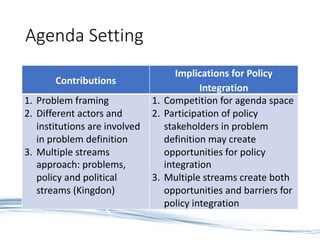
Agenda Setting
Contributions
Implications for Policy
Integration
1. Problem framing
2. Different actors and
institutions are involved
in problem definition
3. Multiple streams
approach: problems,
policy and political
streams (Kingdon)
1. Competition for agenda space
2. Participation of policy
stakeholders in problem
definition may create
opportunities for policy
integration
3. Multiple streams create both
opportunities and barriers for
policy integration
Incrementalist and Garbage Can
Contributions
Implications for Policy
Integration
1. Policy-making is not linear as
suggested by the stages model.
2. Policy-making is a political result of
interactions between actors where
negotiation takes place.
3. The garbage can emphasise that
policy-making and decisions do not
follow an orderly process from
problem to solution
4. These approaches disconnect
problems, solutions and decision-
makers from each other
1. Opportunity for a fair and
objective consideration of
what should be prioritised
2. Competition of random
interests and actors can create
both barriers and
opportunities for policy
integration
3. May result in compromising
policy(s)
4. Complexity of policy process
may create barriers to policy
integration
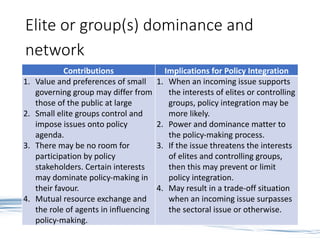
Elite or group(s) dominance and
network
Contributions Implications for Policy Integration
1. Value and preferences of small
governing group may differ from
those of the public at large
2. Small elite groups control and
impose issues onto policy
agenda.
3. There may be no room for
participation by policy
stakeholders. Certain interests
may dominate policy-making in
their favour.
4. Mutual resource exchange and
the role of agents in influencing
policy-making.
1. When an incoming issue supports
the interests of elites or controlling
groups, policy integration may be
more likely.
2. Power and dominance matter to
the policy-making process.
3. If the issue threatens the interests
of elites and controlling groups,
then this may prevent or limit
policy integration.
4. May result in a trade-off situation
when an incoming issue surpasses
the sectoral issue or otherwise.
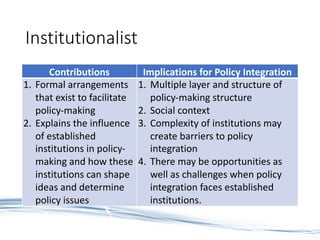
Institutionalist
Contributions Implications for Policy Integration
1. Formal arrangements
that exist to facilitate
policy-making
2. Explains the influence
of established
institutions in policy-
making and how these
institutions can shape
ideas and determine
policy issues
1. Multiple layer and structure of
policy-making structure
2. Social context
3. Complexity of institutions may
create barriers to policy
integration
4. There may be opportunities as
well as challenges when policy
integration faces established
institutions.
Recurring Themes
Competition
of Issues
Diversity
of
Interests
Polity
Complexity
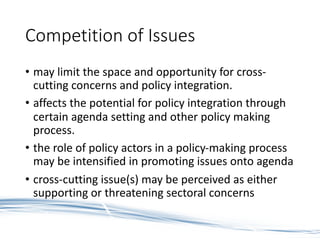
Competition of Issues
• may limit the space and opportunity for cross-
cutting concerns and policy integration.
• affects the potential for policy integration through
certain agenda setting and other policy making
process.
• the role of policy actors in a policy-making process
may be intensified in promoting issues onto agenda
• cross-cutting issue(s) may be perceived as either
supporting or threatening sectoral concerns
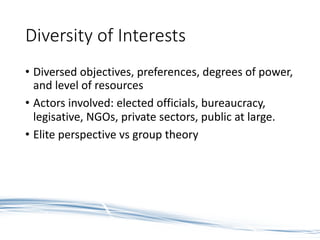
Diversity of Interests
• Diversed objectives, preferences, degrees of power,
and level of resources
• Actors involved: elected officials, bureaucracy,
legisative, NGOs, private sectors, public at large.
• Elite perspective vs group theory
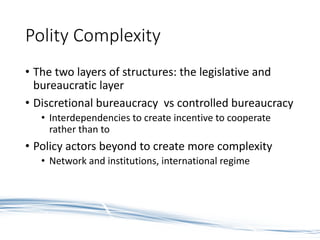
Polity Complexity
• The two layers of structures: the legislative and
bureaucratic layer
• Discretional bureaucracy vs controlled bureaucracy
• Interdependencies to create incentive to cooperate
rather than to
• Policy actors beyond to create more complexity
• Network and institutions, international regime
Institutional Challenges on
Forestry Sector
• Ministerial organisational setting at national level
• Sub-ministry or ad-hoc organisational arrangement
• The existing law(s) and regulation(s)
• The decentralisation context
• Central-local coordination, financial mechanisms,
accountability
• Institutional coherence
The New Administration in 2014
• Contrasting approaches applied: abolishment and
merger
• Coordinating roles played by relevant ministry, not
by a separate agency
• Forestry sector dealing with climate change issue
Policy integration

Policy integration

  • 1.
    Policy Integration: Policy-Making Perspectivesand Institutional Challenges on Forestry Sector in Indonesia Yogi Suwarno yogi@stialan.ac.id | yosuno@yahoo.com Yogyakarta, 9-10 August 2017
  • 2.
  • 3.
    Introduction • Policy makingto reveal opportunities and barriers for policy integration • Different starting points and questions from each perspective: • view policy-making as a process of stages, taking rational decisions; emphasise the critical role of how policy agendas are set; are step-by-step or random; focus on the role of actors and interests; and, acknowledge the range of institutions involved in policy-making • Cross-cutting vs domestic issues
  • 4.
    Rationalist/stagist model Contributions Implications forPolicy Integration 1. Simplification of policy- making process 2. Problem solving 3. An ideal conception of policy-making 4. Actors are goal oriented 5. Decision maker as a satisfier 1. Problems are treated in isolation 2. Process does not allow for integration 3. Process does not allow for diversity of interests
  • 5.
    Agenda Setting Contributions Implications forPolicy Integration 1. Problem framing 2. Different actors and institutions are involved in problem definition 3. Multiple streams approach: problems, policy and political streams (Kingdon) 1. Competition for agenda space 2. Participation of policy stakeholders in problem definition may create opportunities for policy integration 3. Multiple streams create both opportunities and barriers for policy integration
  • 6.
    Incrementalist and GarbageCan Contributions Implications for Policy Integration 1. Policy-making is not linear as suggested by the stages model. 2. Policy-making is a political result of interactions between actors where negotiation takes place. 3. The garbage can emphasise that policy-making and decisions do not follow an orderly process from problem to solution 4. These approaches disconnect problems, solutions and decision- makers from each other 1. Opportunity for a fair and objective consideration of what should be prioritised 2. Competition of random interests and actors can create both barriers and opportunities for policy integration 3. May result in compromising policy(s) 4. Complexity of policy process may create barriers to policy integration
  • 7.
    Elite or group(s)dominance and network Contributions Implications for Policy Integration 1. Value and preferences of small governing group may differ from those of the public at large 2. Small elite groups control and impose issues onto policy agenda. 3. There may be no room for participation by policy stakeholders. Certain interests may dominate policy-making in their favour. 4. Mutual resource exchange and the role of agents in influencing policy-making. 1. When an incoming issue supports the interests of elites or controlling groups, policy integration may be more likely. 2. Power and dominance matter to the policy-making process. 3. If the issue threatens the interests of elites and controlling groups, then this may prevent or limit policy integration. 4. May result in a trade-off situation when an incoming issue surpasses the sectoral issue or otherwise.
  • 8.
    Institutionalist Contributions Implications forPolicy Integration 1. Formal arrangements that exist to facilitate policy-making 2. Explains the influence of established institutions in policy- making and how these institutions can shape ideas and determine policy issues 1. Multiple layer and structure of policy-making structure 2. Social context 3. Complexity of institutions may create barriers to policy integration 4. There may be opportunities as well as challenges when policy integration faces established institutions.
  • 9.
  • 10.
    Competition of Issues •may limit the space and opportunity for cross- cutting concerns and policy integration. • affects the potential for policy integration through certain agenda setting and other policy making process. • the role of policy actors in a policy-making process may be intensified in promoting issues onto agenda • cross-cutting issue(s) may be perceived as either supporting or threatening sectoral concerns
  • 11.
    Diversity of Interests •Diversed objectives, preferences, degrees of power, and level of resources • Actors involved: elected officials, bureaucracy, legisative, NGOs, private sectors, public at large. • Elite perspective vs group theory
  • 12.
    Polity Complexity • Thetwo layers of structures: the legislative and bureaucratic layer • Discretional bureaucracy vs controlled bureaucracy • Interdependencies to create incentive to cooperate rather than to • Policy actors beyond to create more complexity • Network and institutions, international regime
  • 13.
    Institutional Challenges on ForestrySector • Ministerial organisational setting at national level • Sub-ministry or ad-hoc organisational arrangement • The existing law(s) and regulation(s) • The decentralisation context • Central-local coordination, financial mechanisms, accountability • Institutional coherence
  • 14.
    The New Administrationin 2014 • Contrasting approaches applied: abolishment and merger • Coordinating roles played by relevant ministry, not by a separate agency • Forestry sector dealing with climate change issue