Polarizing brands
A Harvard business study
A POWERPOINT PRESENTATION BY
DEBANGITA GHOSH
CHAITANYA BHARATHI INSTITUTE OF
TECHNOLOGY(CBIT), HYDERABAD
Every brand
wants to become
numero Uno
hence its
important to play
strategic role in
its market
In the market polarizing
brands has always been
able to hold a good
promising business
career for marketers
To thrive in this environment, brand
managers need new strategies.
These start
with understanding and using a new
metric,
which we call brand dispersion, that
measures polarization. Managers
also need
to realize that having a group of
consumers
who hate your brand can be a good
thing:
Some companies have boosted sales
From the
business review
this is the list of
some selected
companies which
has its bigger
share of lovers
and haters
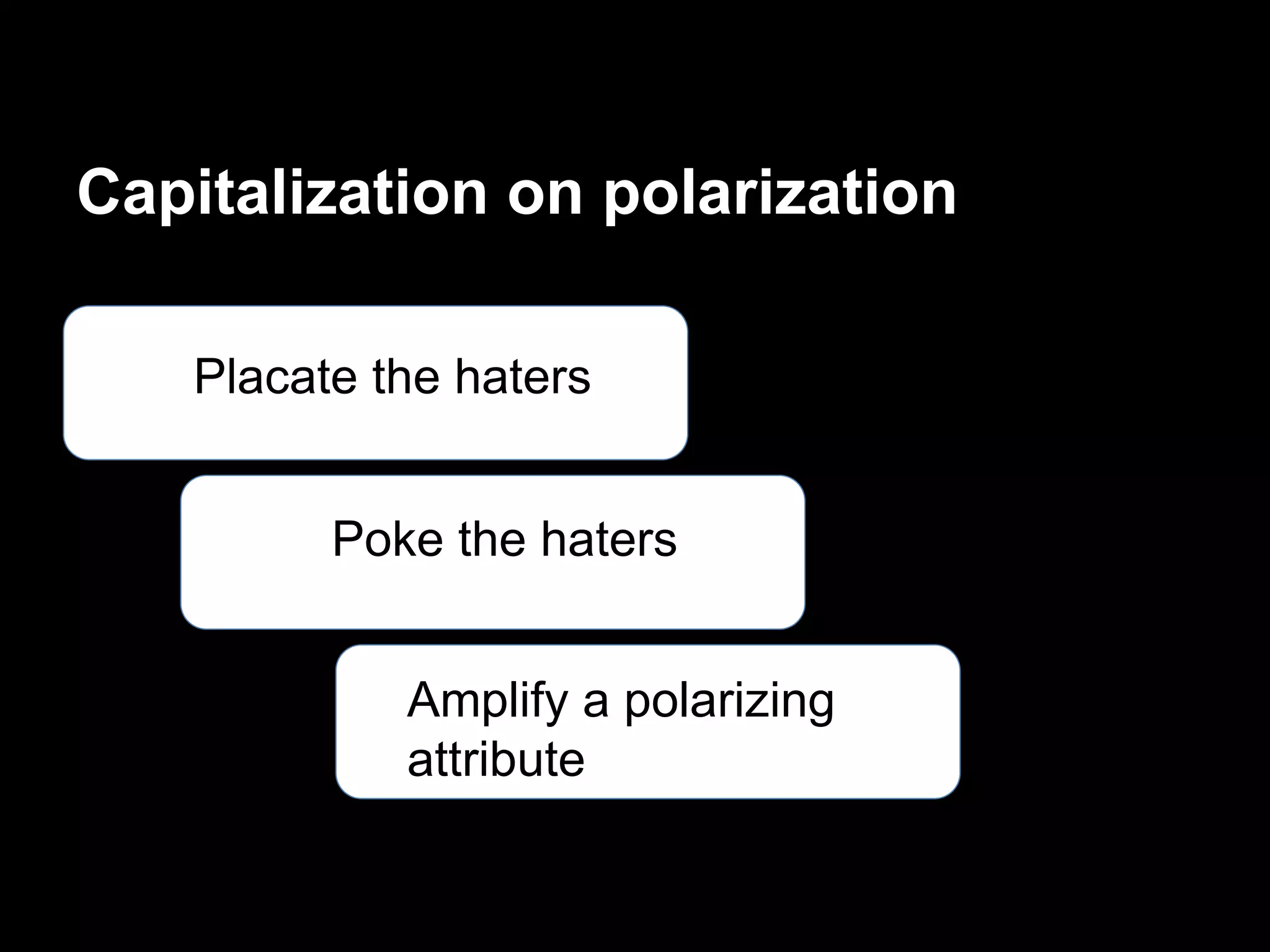
Capitalization on polarization
Placate the haters
Poke the haters
Amplify a polarizing
attribute
One way to reduce polarization is to do
what most of us do when confronted
with people
who dislike us: try to change the haters’
minds.
Betty Crocker brand, best
known for cake mixes, icing, and other
cook-at-home dessert products, was
suffering
because of rising concern about obesity, a
consumer shift toward low-carb products,
and
criticism of food industry marketing
techniques. At the beginning of 2008, 4.5%
of
consumers could be classified as Betty
Crocker haters.
General Mills took several steps to assuage the brand’s
critics. In April 2009 it started a
social network, MyBlogSpark, to promote Betty Crocker
That year Betty Crocker became
the first major brand to develop a gluten-free baking
mix. It soon partnered with celiac
disease foundations and started a website for
consumers, liveglutenfreely.com.
By May
2011 (the most recent period for which we have data)
the share of Betty Crocker brand
haters had dropped to 2.8%. That’s a significant drop,
but any reduction in haters
matters, because even a small number can do damage:
Some companies succeed by intentionally
antagonizing brand detractors
Ryanair, a pioneering European discount
airline announced
that it would begin charging for access to
toilets on board, remove two toilets from
each
plane (leaving just one), create a standing-
room-only section, and impose a “fat tax”
on
overweight passengers. The only change
it actually made was the removal of some
toilets
—but each provocative announcement put
the company in the headlines and
Amplify a polarizing attribute
Marmite, the distinctive salty British condiment. Ever
since its inception, in
1902, it has been a polarizing product because of its
strong taste; indeed, its tagline is
“Love it or hate it.” To amp up enthusiasm among its
most ardent fans, in 2010 Marmite
debuted Marmite XO—an extra-strength version.
Using social media, the company
identified 30 consumers who were especially devoted
to the brand, invited them to taste
testing's (complete with Marmite-flavored cocktails),
and set up a Facebook group. The
promotion generated more than 54,000 visits to the
company’s website and 300,000
Facebook page views, and retailers sold out of
Marmite XO as soon as it arrived on their
shelves.
In 2006
sales of Magners, a popular brand, soared after a
promotional campaign touted it as a
refreshing iced summer beverage. The ads helped
turn Magners into a hip drink for
young upscale professionals, a demographic that
hadn’t consumed much cider in the
past.
The serve-it-over-ice campaign had
turned Magners
into a seasonal drink, and as a result,
its sales dropped sharply during cooler
months. In
addition, the brand’s trendiness had
distanced working-class consumers
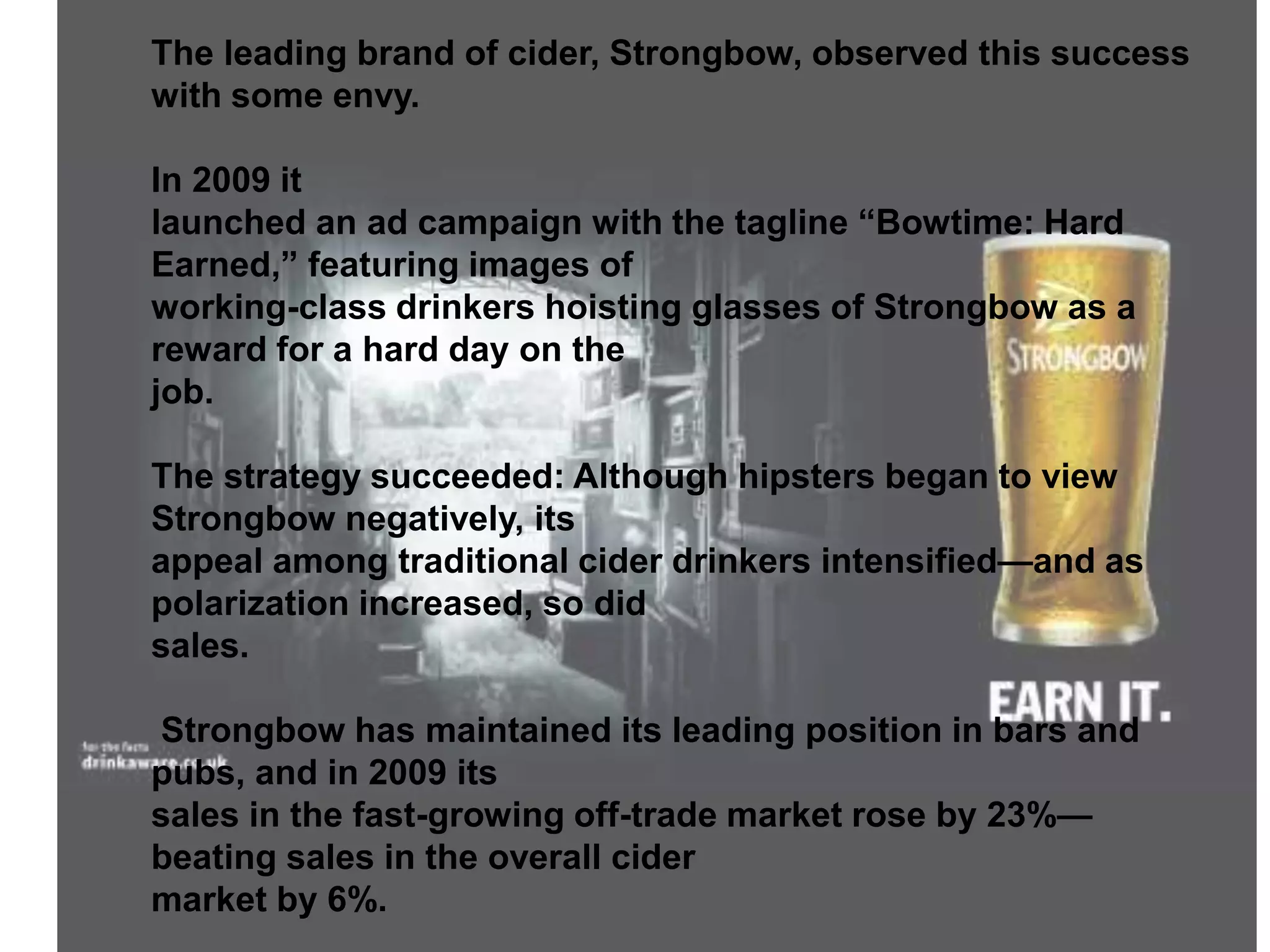
The leading brand of cider, Strongbow, observed this success
with some envy.
In 2009 it
launched an ad campaign with the tagline “Bowtime: Hard
Earned,” featuring images of
working-class drinkers hoisting glasses of Strongbow as a
reward for a hard day on the
job.
The strategy succeeded: Although hipsters began to view
Strongbow negatively, its
appeal among traditional cider drinkers intensified—and as
polarization increased, so did
sales.
Strongbow has maintained its leading position in bars and
pubs, and in 2009 its
sales in the fast-growing off-trade market rose by 23%—
beating sales in the overall cider
market by 6%.
And SOME fame comes
with negative publicity ..
SOCIAL MEDIA HELPS
IN PLAYING A REFREE
FOR POLARIZING
BRANDS
Animal rights “peta”
organization pulled
down KFC for its daily
slaughter on birds yet
KFC emerged as a
leading chicken loving
fast food brand
Some companies gain good publicity
from negative brand-cat-fights…
EXAMPLE..
BRAND FIGHTS HAVE BROUGHT LOVERS AND
HATERS BOTH OUT TO BUY THEIR PRODUCTS IN A
WAY TO SUPPORT THEIR BELIEF ON THAT PRODUCT
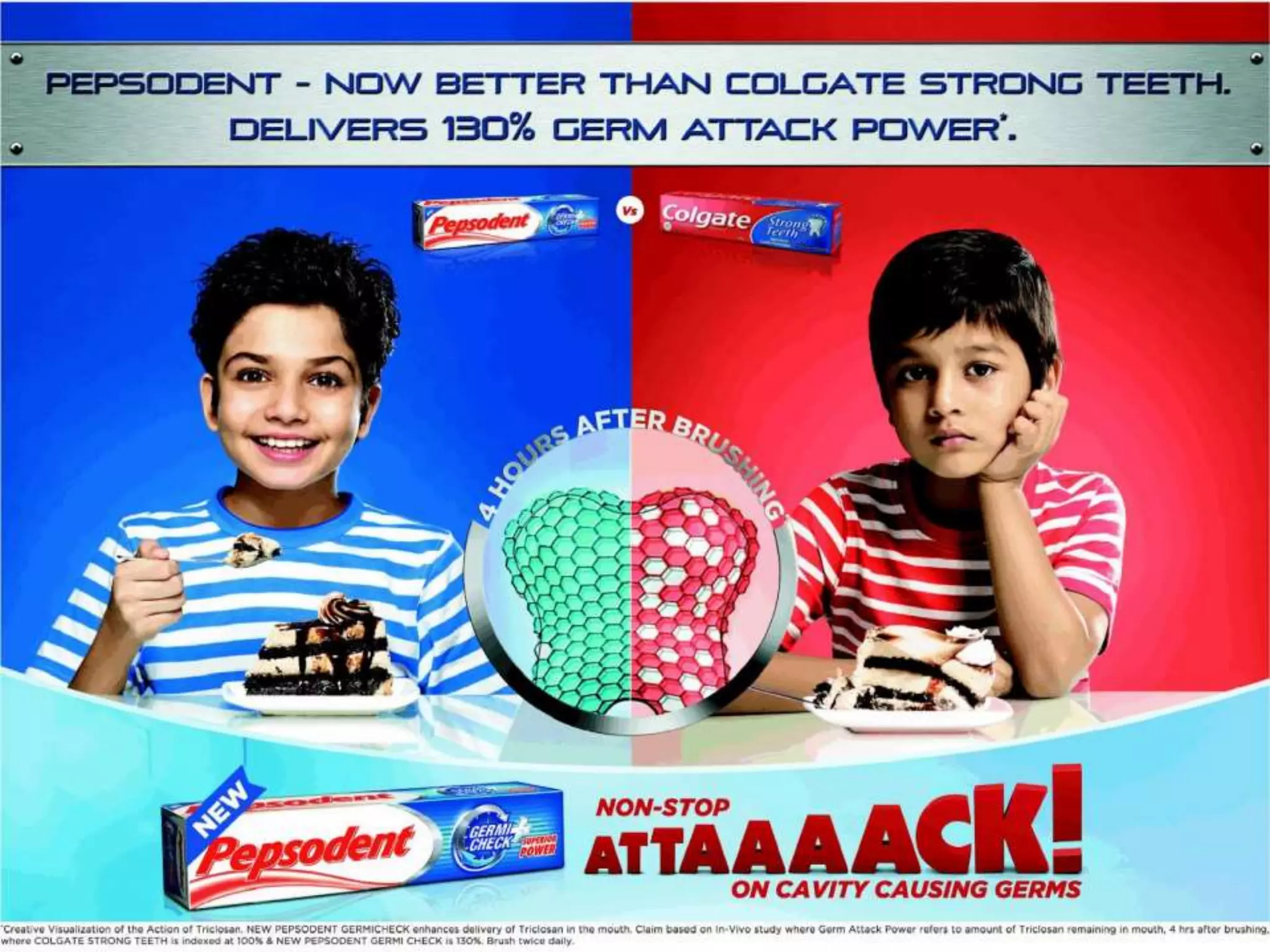
LAUNCHING A PROVOCATIVE AD OR
FEATURINGA TOON CHARACTER
FOR ENDORSING A BRAND IS THE
BEST IDEA TO CREATE POLARIZING
EFFECT
AND THE BEST BRAND IS IN INDIA
ITS NONE OTHER THAN….
Polarizing brands
Polarizing brands
Polarizing brands

Polarizing brands

  • 1.
  • 2.
    A POWERPOINT PRESENTATIONBY DEBANGITA GHOSH CHAITANYA BHARATHI INSTITUTE OF TECHNOLOGY(CBIT), HYDERABAD
  • 3.
    Every brand wants tobecome numero Uno hence its important to play strategic role in its market
  • 4.
    In the marketpolarizing brands has always been able to hold a good promising business career for marketers
  • 5.
    To thrive inthis environment, brand managers need new strategies. These start with understanding and using a new metric, which we call brand dispersion, that measures polarization. Managers also need to realize that having a group of consumers who hate your brand can be a good thing: Some companies have boosted sales
  • 7.
    From the business review thisis the list of some selected companies which has its bigger share of lovers and haters
  • 8.
    Capitalization on polarization Placatethe haters Poke the haters Amplify a polarizing attribute
  • 9.
    One way toreduce polarization is to do what most of us do when confronted with people who dislike us: try to change the haters’ minds. Betty Crocker brand, best known for cake mixes, icing, and other cook-at-home dessert products, was suffering because of rising concern about obesity, a consumer shift toward low-carb products, and criticism of food industry marketing techniques. At the beginning of 2008, 4.5% of consumers could be classified as Betty Crocker haters.
  • 10.
    General Mills tookseveral steps to assuage the brand’s critics. In April 2009 it started a social network, MyBlogSpark, to promote Betty Crocker That year Betty Crocker became the first major brand to develop a gluten-free baking mix. It soon partnered with celiac disease foundations and started a website for consumers, liveglutenfreely.com. By May 2011 (the most recent period for which we have data) the share of Betty Crocker brand haters had dropped to 2.8%. That’s a significant drop, but any reduction in haters matters, because even a small number can do damage:
  • 11.
    Some companies succeedby intentionally antagonizing brand detractors Ryanair, a pioneering European discount airline announced that it would begin charging for access to toilets on board, remove two toilets from each plane (leaving just one), create a standing- room-only section, and impose a “fat tax” on overweight passengers. The only change it actually made was the removal of some toilets —but each provocative announcement put the company in the headlines and
  • 12.
    Amplify a polarizingattribute Marmite, the distinctive salty British condiment. Ever since its inception, in 1902, it has been a polarizing product because of its strong taste; indeed, its tagline is “Love it or hate it.” To amp up enthusiasm among its most ardent fans, in 2010 Marmite debuted Marmite XO—an extra-strength version. Using social media, the company identified 30 consumers who were especially devoted to the brand, invited them to taste testing's (complete with Marmite-flavored cocktails), and set up a Facebook group. The promotion generated more than 54,000 visits to the company’s website and 300,000 Facebook page views, and retailers sold out of Marmite XO as soon as it arrived on their shelves.
  • 14.
    In 2006 sales ofMagners, a popular brand, soared after a promotional campaign touted it as a refreshing iced summer beverage. The ads helped turn Magners into a hip drink for young upscale professionals, a demographic that hadn’t consumed much cider in the past. The serve-it-over-ice campaign had turned Magners into a seasonal drink, and as a result, its sales dropped sharply during cooler months. In addition, the brand’s trendiness had distanced working-class consumers
  • 15.
    The leading brandof cider, Strongbow, observed this success with some envy. In 2009 it launched an ad campaign with the tagline “Bowtime: Hard Earned,” featuring images of working-class drinkers hoisting glasses of Strongbow as a reward for a hard day on the job. The strategy succeeded: Although hipsters began to view Strongbow negatively, its appeal among traditional cider drinkers intensified—and as polarization increased, so did sales. Strongbow has maintained its leading position in bars and pubs, and in 2009 its sales in the fast-growing off-trade market rose by 23%— beating sales in the overall cider market by 6%.
  • 17.
    And SOME famecomes with negative publicity .. SOCIAL MEDIA HELPS IN PLAYING A REFREE FOR POLARIZING BRANDS
  • 19.
    Animal rights “peta” organizationpulled down KFC for its daily slaughter on birds yet KFC emerged as a leading chicken loving fast food brand
  • 21.
    Some companies gaingood publicity from negative brand-cat-fights… EXAMPLE..
  • 24.
    BRAND FIGHTS HAVEBROUGHT LOVERS AND HATERS BOTH OUT TO BUY THEIR PRODUCTS IN A WAY TO SUPPORT THEIR BELIEF ON THAT PRODUCT
  • 25.
    LAUNCHING A PROVOCATIVEAD OR FEATURINGA TOON CHARACTER FOR ENDORSING A BRAND IS THE BEST IDEA TO CREATE POLARIZING EFFECT AND THE BEST BRAND IS IN INDIA ITS NONE OTHER THAN….

Editor's Notes