STARTING A PMO
February, 2014
Eric Mukiri
www.fintech-group.com
a member of Loita Group
Agenda
•
•
•
•
•
•

Identify the need
Learning phase
Develop/adopt a methodology
Improve the methodology
Automation
Common problems & best practices

a member of Loita Group
Defin:
PMO is group or department within a business, agency or enterprise that
defines and maintains standards for project management within the
organization.
Using established project management approaches and operating an
established PMO increases chances of project success

Some signs of the need
• A lack of project transparency
• Significant discrepancies in project results
• Poor customer-satisfaction rates
• An inability to cost projects accurately
• A high percentage of delayed or canceled projects
• High failure rates.

a member of Loita Group
Why need PMO?
• Consistent pjm across organization including processes, templates and
best practices.
• Efficiency to deliver faster, cheaper by way of focus and problem-solving
techniques
• Builds the methodology and updates it as needed to account for
improvements and best practices. Improve the methodology
• improved project team communications by having common processes,
deliverables, and terminology
• Provides training (internal or outsourced) to build core project
management competencies and a common set of experiences
• Delivers project management coaching services to keep projects from
getting into trouble
• Tracks basic information on the current status of all projects in the
organization, and provides project visibility to management in a common
and consistent manner.
• Measuring projects performance metrics as source information for
continuous improvement
a member of Loita Group
Learning experience
• This is major change: buy-in must come from the top and appoint the
responsible change agent.
• Have a mix of functional and project management knowledge
• What are we doing right? Don’t discard it (organization process assets)
• Whom do we want to benchmark: ie. Competition, partners, customers,
respectable organisations
• Learn from the benchmarked organisations ie. Seek the training, seminars,
etc.
• Decide which methodology to use by way of one of:
-build afresh?
-Buy an existing one
-buy and customize to your need

a member of Loita Group
Implementing the methodology
•
•
•
•

Have dedicated owner
Control the staff cost, e.g. part-time projects staff from functional units**
Customise or adopt few but core templates and processes to use
Decide which methodology to use by way of one of:
a)build afresh?
b)Buy an existing one ie. outsource the implementation
c)buy and customize to your need
** we chose c. by borrowing ideas from various partners)
• Have few but adequate templates for each of the process groups ie.
Initiation, planning, executing, monitoring-controlling and closing
e.g. initiating: project initiation doc
Planning: schedule, test plan, training plan
Executing: issues log, change requests, impact analysis
M&C: Minutes, weekly status report, meetings (physical/conference call)
Closing: sign-offs, hand-over report, post-live tracking, financial closure (very
key)
a member of Loita Group
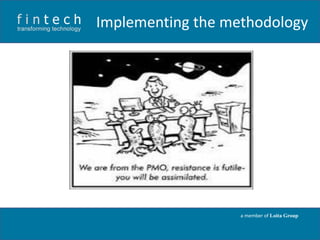
Implementing the methodology

a member of Loita Group
Improving the methodology
•
•
•
•
•

Training and individuals certifications e.g. PMP
Specialised staff e.g. project managers, project admin
Organisational certification e.g. ISO 9001:2008
Review what doesn’t work and change it
Empowering the PMO to make decisions e.g. resources selection,
staff motivation costs
• Set and measure against performance targets e.g.
monthly/quarterly
• Automation of PMO e.g MS Projects Central as single repository of
projects records

a member of Loita Group
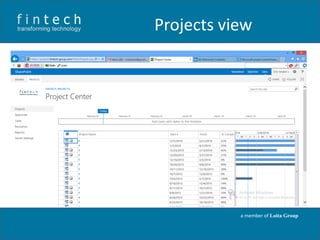
Automation with MS Projects Central
Key features
• Quick snapshot dashboard of all projects
• Status Reporting : Possible to design status reports templates
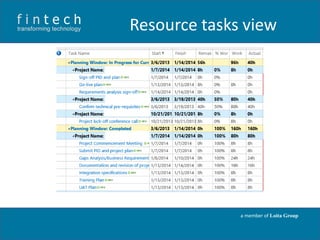
• Task creation: Allows project resources to add new tasks, hence bottom-up
scheduling possible.
• Task progress updates: Users update the task hours/% work done, e-mail is
sent to the project manager.
• Task delegation: When feature enabled, resource can assign another a task,
with auto e-mail notification to project manager.
• Presentation features : Quick one-stop-shop view of the projects including
upcoming tasks.
• Integration with Microsoft Outlook- combining projects tasks with Outlook for
single calendar view
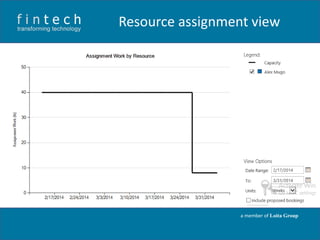
• Can see the staff assigned/available hours in a period.

a member of Loita Group
Projects view

a member of Loita Group
Resource tasks view

a member of Loita Group
Resource assignment view

a member of Loita Group
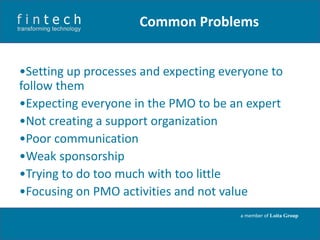
Common Problems
•Setting up processes and expecting everyone to
follow them
•Expecting everyone in the PMO to be an expert
•Not creating a support organization
•Poor communication
•Weak sponsorship
•Trying to do too much with too little
•Focusing on PMO activities and not value
a member of Loita Group
Best practices
• Treat as a culture change initiative
• Resistance to change is normal
• Be aware of logical and emotional resistance
• Show some results as quickly as possible
• Treat implementation as a process and a
project(s)
• Sponsor at highest level
• Be open to new ideas from the organization
a member of Loita Group
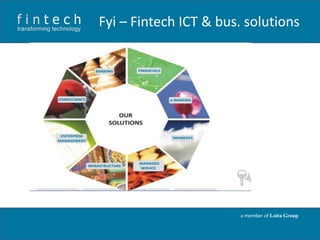
Fyi – Fintech ICT & bus. solutions

a member of Loita Group
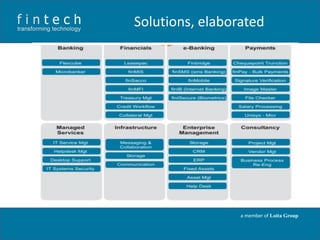
Solutions, elaborated

a member of Loita Group

Pmi kenya starting a pmo

  • 1.
    STARTING A PMO February,2014 Eric Mukiri www.fintech-group.com a member of Loita Group
  • 2.
    Agenda • • • • • • Identify the need Learningphase Develop/adopt a methodology Improve the methodology Automation Common problems & best practices a member of Loita Group
  • 3.
    Defin: PMO is groupor department within a business, agency or enterprise that defines and maintains standards for project management within the organization. Using established project management approaches and operating an established PMO increases chances of project success Some signs of the need • A lack of project transparency • Significant discrepancies in project results • Poor customer-satisfaction rates • An inability to cost projects accurately • A high percentage of delayed or canceled projects • High failure rates. a member of Loita Group
  • 4.
    Why need PMO? •Consistent pjm across organization including processes, templates and best practices. • Efficiency to deliver faster, cheaper by way of focus and problem-solving techniques • Builds the methodology and updates it as needed to account for improvements and best practices. Improve the methodology • improved project team communications by having common processes, deliverables, and terminology • Provides training (internal or outsourced) to build core project management competencies and a common set of experiences • Delivers project management coaching services to keep projects from getting into trouble • Tracks basic information on the current status of all projects in the organization, and provides project visibility to management in a common and consistent manner. • Measuring projects performance metrics as source information for continuous improvement a member of Loita Group
  • 5.
    Learning experience • Thisis major change: buy-in must come from the top and appoint the responsible change agent. • Have a mix of functional and project management knowledge • What are we doing right? Don’t discard it (organization process assets) • Whom do we want to benchmark: ie. Competition, partners, customers, respectable organisations • Learn from the benchmarked organisations ie. Seek the training, seminars, etc. • Decide which methodology to use by way of one of: -build afresh? -Buy an existing one -buy and customize to your need a member of Loita Group
  • 6.
    Implementing the methodology • • • • Havededicated owner Control the staff cost, e.g. part-time projects staff from functional units** Customise or adopt few but core templates and processes to use Decide which methodology to use by way of one of: a)build afresh? b)Buy an existing one ie. outsource the implementation c)buy and customize to your need ** we chose c. by borrowing ideas from various partners) • Have few but adequate templates for each of the process groups ie. Initiation, planning, executing, monitoring-controlling and closing e.g. initiating: project initiation doc Planning: schedule, test plan, training plan Executing: issues log, change requests, impact analysis M&C: Minutes, weekly status report, meetings (physical/conference call) Closing: sign-offs, hand-over report, post-live tracking, financial closure (very key) a member of Loita Group
  • 7.
    Implementing the methodology amember of Loita Group
  • 8.
    Improving the methodology • • • • • Trainingand individuals certifications e.g. PMP Specialised staff e.g. project managers, project admin Organisational certification e.g. ISO 9001:2008 Review what doesn’t work and change it Empowering the PMO to make decisions e.g. resources selection, staff motivation costs • Set and measure against performance targets e.g. monthly/quarterly • Automation of PMO e.g MS Projects Central as single repository of projects records a member of Loita Group
  • 9.
    Automation with MSProjects Central Key features • Quick snapshot dashboard of all projects • Status Reporting : Possible to design status reports templates • Task creation: Allows project resources to add new tasks, hence bottom-up scheduling possible. • Task progress updates: Users update the task hours/% work done, e-mail is sent to the project manager. • Task delegation: When feature enabled, resource can assign another a task, with auto e-mail notification to project manager. • Presentation features : Quick one-stop-shop view of the projects including upcoming tasks. • Integration with Microsoft Outlook- combining projects tasks with Outlook for single calendar view • Can see the staff assigned/available hours in a period. a member of Loita Group
  • 10.
    Projects view a memberof Loita Group
  • 11.
    Resource tasks view amember of Loita Group
  • 12.
    Resource assignment view amember of Loita Group
  • 13.
    Common Problems •Setting upprocesses and expecting everyone to follow them •Expecting everyone in the PMO to be an expert •Not creating a support organization •Poor communication •Weak sponsorship •Trying to do too much with too little •Focusing on PMO activities and not value a member of Loita Group
  • 14.
    Best practices • Treatas a culture change initiative • Resistance to change is normal • Be aware of logical and emotional resistance • Show some results as quickly as possible • Treat implementation as a process and a project(s) • Sponsor at highest level • Be open to new ideas from the organization a member of Loita Group
  • 15.
    Fyi – FintechICT & bus. solutions a member of Loita Group
  • 16.