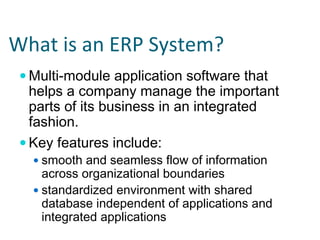
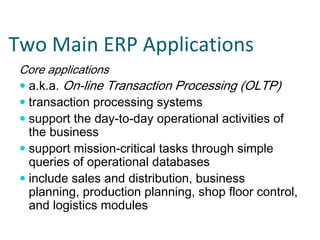
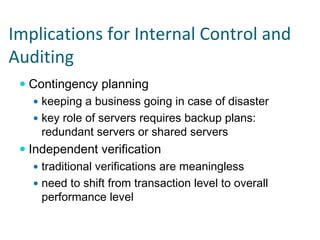
ERP systems integrate core business functions like sales, distribution, planning, production, and logistics into a single system with a shared database. This allows seamless information flow across the organization. However, ERP implementation risks include choosing the wrong system, cost overruns, disruptions to operations, and user resistance to change. ERPs also impact internal controls and auditing by changing transaction authorization, segregation of duties, and access controls. Contingency planning and independent verification are also important audit considerations for ERP systems.
![ERP System Business Enterprise
Legacy
Data Warehouse Systems
ERP System
On-Line Analytical Processing Bolt-On Applications
(OLAP) (Industry Specific Functions)
Customers Suppliers
Core Functions [On-Line Transaction Processing (OLTP)]
Sales
Business Shop Floor
& Logistics
Planning Control
Distribution
Operational Database
Customers, Production,
Vendor, Inventory, etc.](https://image.slidesharecdn.com/plugin-ch11edited-ok-110810033424-phpapp02/85/Plugin-ch11edited-ok-7-320.jpg)


![ERP [Compatibility Mode]](https://cdn.slidesharecdn.com/ss_thumbnails/9e609fac-18ef-4bef-8964-585346d38d70-141230014456-conversion-gate01-thumbnail.jpg?width=640&height=640&fit=bounds)


