Introductio
n
This presentation delvesinto Plato's vision of an
ideal state as outlined in his works, primarily the
'Republic'. Plato proposes that a just society is
governed by philosopher-kings who possess wisdom and
knowledge of the Forms, particularly the Form of the
Good. He critiques other political systems,
emphasizing the importance of education and the moral
character of citizens to achieve harmony and justice
within the state, presenting a blueprint for an ideal
society.
Theory of
Forms
Plato's Theoryof Forms posits that non-material
abstract forms, more real than physical objects,
form the basis of reality. These ideal forms
represent the true essence of things, transcending
their physical manifestations. For instance, while
many tangible examples of beauty exist, they are
mere reflections of the singular Form of Beauty.
Understanding these forms is crucial for grasping
Plato's philosophical views, as they inform concepts
of knowledge, truth, and the nature of existence.
5.
The Role ofthe Philosopher-King
In Plato's ideal state, the philosopher-king is
the ultimate ruler, as he possesses knowledge of
the forms and can govern wisely for the common
good. Unlike typical rulers who may be swayed by
personal ambition or popular opinion, the
philosopher-king is committed to justice and the
well-being of the state. This ideal leader
understands the nature of truth and morality,
allowing him to make decisions that promote
harmony and virtue, creating a society where
wisdom guides governance.
6.
The Allegory ofthe Cave
The Allegory of the Cave illustrates how most people live in ignorance, perceiving
shadows of reality instead of seeing the truth. In this metaphor, prisoners are
chained inside a dark cave, seeing only shadows cast on a wall by objects behind
them, mistaking these illusions for reality. When one prisoner escapes and
discovers the outside world, he realizes the limitations of his previous
understanding. This allegory emphasizes the transformative power of education and
enlightenment in achieving a just society by encouraging individuals to seek
deeper truths.
Justice in theState
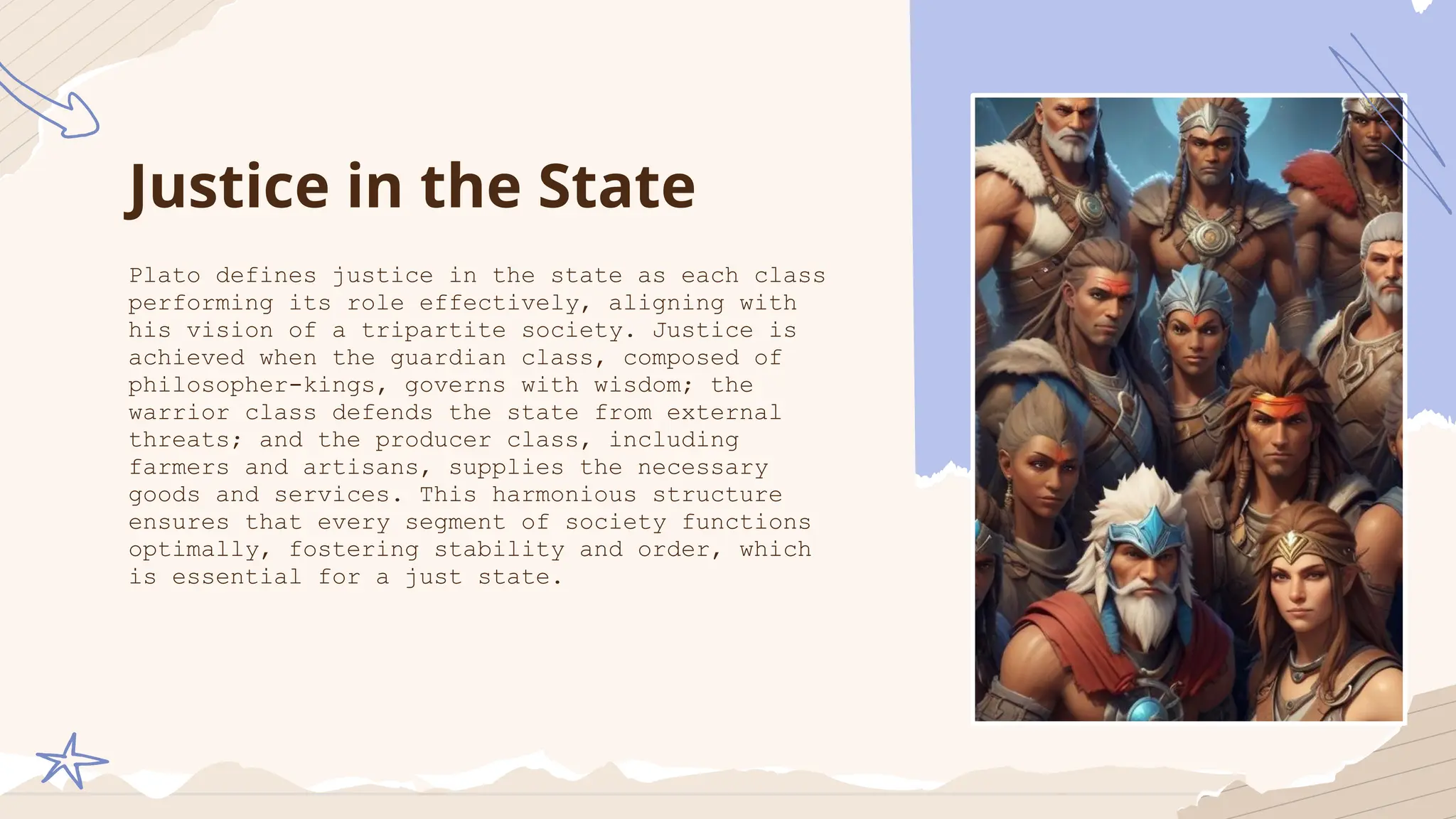
Plato defines justice in the state as each class
performing its role effectively, aligning with
his vision of a tripartite society. Justice is
achieved when the guardian class, composed of
philosopher-kings, governs with wisdom; the
warrior class defends the state from external
threats; and the producer class, including
farmers and artisans, supplies the necessary
goods and services. This harmonious structure
ensures that every segment of society functions
optimally, fostering stability and order, which
is essential for a just state.
9.
Social Classes
Plato dividessociety into three classes: the Rulers (philosophers), the Guardians
(warriors), and the Producers (workers). Each class has its own distinct role,
with Rulers being responsible for governance and wisdom, Guardians ensuring
protection and enforcing laws, and Producers providing for the society's material
needs. This tripartite structure is essential for ensuring stability and justice
within the state, as each class contributes to the overall function and harmony of
society, maintaining a balanced and well-ordered community.
10.
Education and
Censorship
Plato emphasizesthe significance of education in his
ideal state, proposing a rigorous curriculum that
includes mathematics, philosophy, and physical training
to cultivate not just knowledge but also virtue among
citizens. This education is aimed at shaping moral
character and preparing individuals for their respective
roles in society. Censorship is equally vital, as it
controls the stories and information citizens are
exposed to, ensuring that these narratives support the
state's values and prevent the corruption of public
thought that might undermine social harmony.
Impact on WesternPolitical Thought
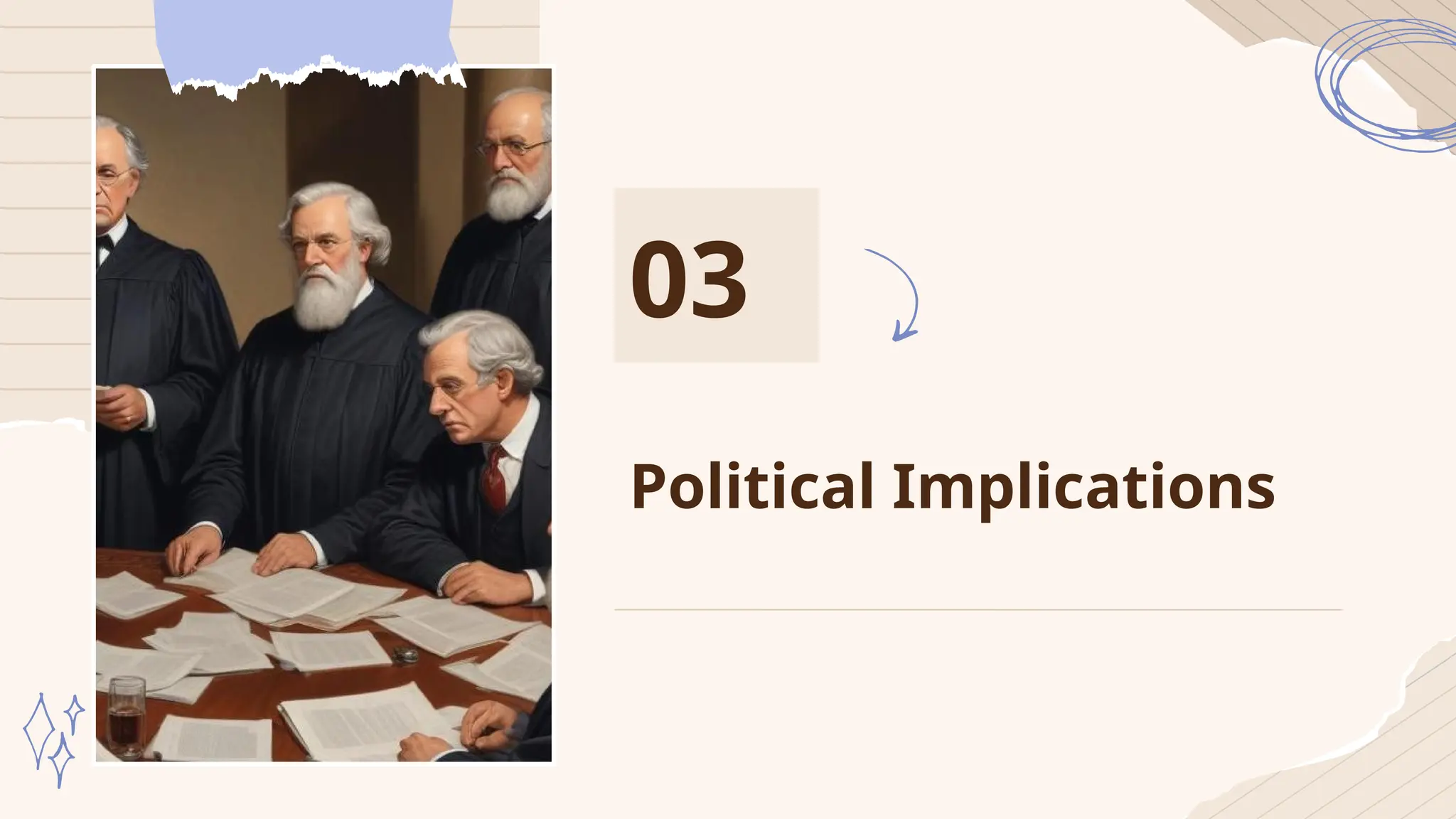
Plato's ideas on governance and justice have profoundly shaped Western political
philosophy, establishing foundational principles for future thinkers. His concept
of the ideal state, where philosopher-kings represent wisdom and virtue,
influenced various utopian models of governance, such as those proposed by Thomas
More and later social theorists. Additionally, his critiques of democracy and
promotion of informed leadership resonate in modern political discourse,
underscoring the importance of ethics in public life and the necessity for
knowledgeable governance.
13.
Critiques of Plato'sIdeas
Plato’s vision of an ideal state has faced criticism for being overly
idealistic and impractical, as it often seems detached from the realities of
political life. Critics argue that his reliance on philosopher-kings could lead
to authoritarianism, as such rulers might impose their vision of the good life
while disregarding the voices of the populace. Additionally, the rigid class
structure he advocates is seen as potentially oppressive, limiting individual
freedoms and stifling diversity of thought and expression within society.
14.
Relevance in ModernPolitics
Plato's themes of justice, governance, and the
responsibility of rulers find relevance in
contemporary political discourse as modern
leaders grapple with ethical dilemmas and the
complexities of governance. His emphasis on the
importance of wise and virtuous leadership
challenges politicians to consider the moral
implications of their policies and decisions,
prompting discussions about the nature of justice
in a diverse society. This reflection is crucial
in addressing issues such as inequality,
corruption, and the need for a more enlightened
public discourse.
Comparison with
Other Thinkers
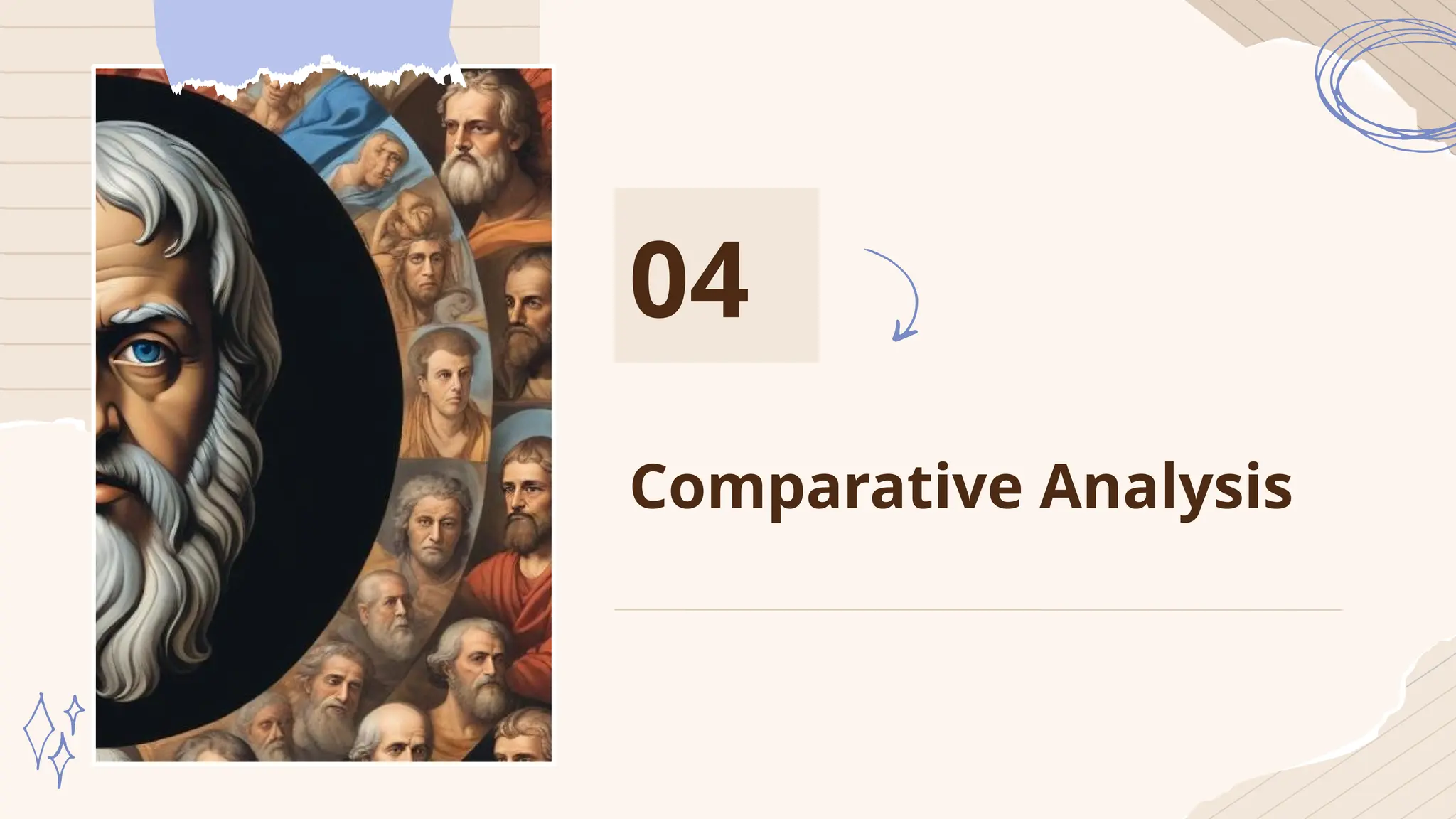
Plato'sphilosophical outlook offers a stark contrast to
other political theorists like Machiavelli and Hobbes,
who emphasize realpolitik and human nature over
idealism. While Machiavelli advocates for pragmatic and
sometimes ruthless tactics in governance, and Hobbes
views human beings as inherently self-interested,
Plato's emphasis is on the pursuit of higher ideals and
the role of virtue in leadership. This comparison
highlights the diversity of thought in political
philosophy, showing how differing views on human nature
shape governance approaches.
17.
Contrast with Democracy
Plato'sskepticism towards democracy stems from
his belief that the masses are often guided by
emotion rather than reason, leading to decisions
that may not align with the common good. He
argued that fluctuations in public opinion could
result in erratic governance, where uninformed
choices dominate. This belief sets the stage for
broader debates regarding the effectiveness and
virtues of democratic governance, raising
questions about how to ensure that leadership
remains accountable while fostering informed
civic participation.
18.
Influence on Republicanism
Plato’sideas about civic virtue and the role of education in governance have left
a mark on the development of republican ideals, influencing thinkers like
Machiavelli and Montesquieu. He emphasized that an educated and morally upright
citizenry is crucial for the stability of the state. This underscores the belief
that a successful republic relies on active citizen participation, informed
decision-making, and a commitment to civic responsibility, reinforcing the notion
that democracy thrives when individuals are empowered and accountable.
19.
Conclusions
Plato's investigation intothe concept of an ideal state
offers enduring perspectives on governance, justice, and
education's significance. By analyzing his work, we gain
insights into the interdependence of moral leadership
and civic responsibility. His contributions prompt us to
reflect on how to balance lofty ideals with the
realities of effective governance in today's world,
encouraging modern leaders to adopt ethical frameworks
that prioritize the welfare of society and cultivate
informed citizenry for a harmonious community.
20.
CREDITS: This presentationtemplate was created by Slidesgo, and
includes icons by Flaticon, and infographics & images by Freepik
Thank you!
Do you have any questions?