A PRESENTATION BY
SUOLLO, GEORGE
SBAHS, UG.
 What it is
 Classification
 Types
 Diseases
 Life cycle
 Lab diagnosis
 Prevention and control
OUTLINE
Plasmodium is a parasitic protozoan
that is popularly known for causing
a wide range of malaria
WHAT IT IS
CLASSIFICATION
PHYLUM
SUB PHYLUM
CLASS
SUB-CLASS
ORDER
SUB ORDER
FAMILY
GENUS
Apicomplexa
Sporozoa
Aconoidasida
Coccidia
Hemosporida
Hamosporidiidea
Plasmodidae
plasmodium
SPECIES OF
PLASMODIUM
 Plasmodium malariae
 Plasmodium vivax
 Plasmodium knowlesi
 Plasmodium ovale
 Plasmodium falciparum
DISEASES CAUSED BY PLASMODIUM
Involves various stages and phases
1. Infection stage
2. Asexual reproduction
a. Pre-erythrocytic/exoerythrocytic (liver ) occurs in
b. Erythrocytic( occur in RBC) man
i. Schizogony
ii. gametogony
3. Sexual reproduction
a. Fertilisation occurs in mosquito
b. Sporogony
LIFE CYCLE OF MALARIA PARASITE
INFECTION STAGE
Infective stage is the sporozoite
Transmitted primarily by the bite of
infected anopheline mosquito
It can also be transmitted by
inoculation of infected blood and
congenitally
PRE-ERYTHROCYTIC CYCLE
 Sporozoites from mosquito
bite are transported to
hepatocytes
 They then develop into
schizonts
 Schizonts develop into
merozoites
 Liver cells get ruptured and
merozoites are released
Note: some sporozoites may
develop into a resting stage
hypnozoites and get reactivated
to form schizonts within 2 years.
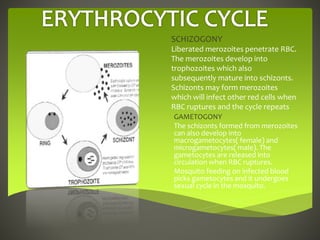
SCHIZOGONY
Liberated merozoites penetrate RBC.
The merozoites develop into
trophozoites which also
subsequently mature into schizonts.
Schizonts may form merozoites
which will infect other red cells when
RBC ruptures and the cycle repeats
GAMETOGONY
The schizonts formed from merozoites
can also develop into
macrogametocytes( female) and
microgametocytes( male). The
gametocytes are released into
circulation when RBC ruptures.
Mosquito feeding on infected blood
picks gametocytes and it undergoes
sexual cycle in the mosquito.
SEXUAL REPRODUCTION
FERTILIZATION
 Fertilization occurs when a
microgametocyte penetrate
into macrogametocyte
 Fertilized macrogametocyte is
known as zygote
 Zygote matures into ookinete
and then to oocyst
SPOROGONY
 Oocyst matures into large
number of sporozoites
 Oocyst ruptures and releases
sporozoites into the body
cavity of mosquito
 Sporozoites have predilection
for salivary glands
LIFE CYCLE OF PLASMODIUM
 Light microscopy
 Antigen detection – Rapid malaria diagnosis test(RDT)
 Serology
 PCR
LABORATORY DIAGNOSIS
 Creating awareness of risk factors
 Destruction of definitive hosts
 Use of repellants
 Weeding
 Draining stagnant water
 Preventing mosquito bite
 Sleeping in treated and intact mosquito nets
 No vaccines available so take medication when
infected.
PREVENTION AND CONTROL
Plasmodium

Plasmodium

  • 1.
    A PRESENTATION BY SUOLLO,GEORGE SBAHS, UG.
  • 2.
     What itis  Classification  Types  Diseases  Life cycle  Lab diagnosis  Prevention and control OUTLINE
  • 3.
    Plasmodium is aparasitic protozoan that is popularly known for causing a wide range of malaria WHAT IT IS
  • 4.
  • 5.
    SPECIES OF PLASMODIUM  Plasmodiummalariae  Plasmodium vivax  Plasmodium knowlesi  Plasmodium ovale  Plasmodium falciparum
  • 6.
  • 8.
    Involves various stagesand phases 1. Infection stage 2. Asexual reproduction a. Pre-erythrocytic/exoerythrocytic (liver ) occurs in b. Erythrocytic( occur in RBC) man i. Schizogony ii. gametogony 3. Sexual reproduction a. Fertilisation occurs in mosquito b. Sporogony LIFE CYCLE OF MALARIA PARASITE
  • 9.
    INFECTION STAGE Infective stageis the sporozoite Transmitted primarily by the bite of infected anopheline mosquito It can also be transmitted by inoculation of infected blood and congenitally
  • 10.
    PRE-ERYTHROCYTIC CYCLE  Sporozoitesfrom mosquito bite are transported to hepatocytes  They then develop into schizonts  Schizonts develop into merozoites  Liver cells get ruptured and merozoites are released Note: some sporozoites may develop into a resting stage hypnozoites and get reactivated to form schizonts within 2 years.
  • 11.
    SCHIZOGONY Liberated merozoites penetrateRBC. The merozoites develop into trophozoites which also subsequently mature into schizonts. Schizonts may form merozoites which will infect other red cells when RBC ruptures and the cycle repeats GAMETOGONY The schizonts formed from merozoites can also develop into macrogametocytes( female) and microgametocytes( male). The gametocytes are released into circulation when RBC ruptures. Mosquito feeding on infected blood picks gametocytes and it undergoes sexual cycle in the mosquito.
  • 12.
    SEXUAL REPRODUCTION FERTILIZATION  Fertilizationoccurs when a microgametocyte penetrate into macrogametocyte  Fertilized macrogametocyte is known as zygote  Zygote matures into ookinete and then to oocyst SPOROGONY  Oocyst matures into large number of sporozoites  Oocyst ruptures and releases sporozoites into the body cavity of mosquito  Sporozoites have predilection for salivary glands
  • 14.
    LIFE CYCLE OFPLASMODIUM
  • 15.
     Light microscopy Antigen detection – Rapid malaria diagnosis test(RDT)  Serology  PCR LABORATORY DIAGNOSIS
  • 16.
     Creating awarenessof risk factors  Destruction of definitive hosts  Use of repellants  Weeding  Draining stagnant water  Preventing mosquito bite  Sleeping in treated and intact mosquito nets  No vaccines available so take medication when infected. PREVENTION AND CONTROL