S. Stubbs

 The multimix principle is a guideline for combining
foods from complementary food groups to ensure
nutritional balance.
 The multimix principle is based on the use of the
Caribbean food groups.
The Multimix Principle

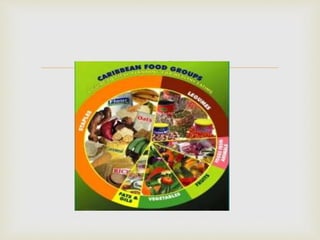
 The Caribbean food group consists of six food
groups. These include:
 Staples
 Legumes and nuts
 Food from animal
 Fats and oils
 Vegetables
 Fruits.
Caribbean Food Groups


Only four of the six food groups are used in the
multimix principle.
 These groups are: legumes and nuts, food from
animals, vegetables and staples.
 These groups were chosen due to the fact that they
will provide the highest nutritional content. From
the these groups, the meal planned will contain the
highest content of nutrient
Food groups and the
Multimix Principle

 The four foundation groups are used in different
combinations to create the multi-mix principle.
 The multi-mix principle is based on the premise that a
mixture of foods eaten together will complement each
other to ensure an adequate intake of essential nutrients.

The four foundation groups can be used in different
combinations to form three types of multi-mixes. These are:
 Double mix or two-mix – two food groups are
represented
 Triple mix or three mix – three of the food groups are
represented
 Quadri-mix or four mix – all four of the foundation food
groups are represented
Regardless of the mix, the Staples group should always be
used at each meal
Types of Mixes

The double mix is the most economical meal plan. The
right mix must be ensured so that it contains all the
essential amino acids in the correct proportions. For
example:
 Staples – Cereal + Legumes e.g. Rice and Peas or
Toast and Baked Beans
 Cereal + Food from Animals e.g. Macaroni and
Cheese; Rice and Baked Fish
 Staples – Provision + Food from Animals e.g.
Mackerel Rundown and Green Bananas
The Double mix(2 Mix
combination)

 Provision staple must be mixed with food from
animals for the meal to contain protein of high
biological value.
 A meal of a starchy staple food with a dark green leafy
or orange vegetable does not give enough nourishment
for growth. It is not good enough for babies, young
children, or pregnant or breast-feeding women

The following are examples of triple mix
 Staples-Cereal + Legumes + Vegetable e.g. Rice and
Peas with Glazed Carrots
 Staples-Provision + Food from Animals + Vegetable
e.g. Ripe Plantain with Salt Fish and Callaloo
 Staple + Food from Animals + Legumes e.g. Stewed
Beef and Pigeon Peas and Rice
Triple mix (three mixes)
combinations

All four foundation groups are included; therefore this
meal is of the highest nutrient value.
 Cereal +Legume + Food from Animals + Vegetable
 Boiled Dumplings + Stewed Beef + Broad Beans +
Carrots
 Ground Provision + Legume + Food from Animals +
Vegetables
 Boiled Yam + Stewed + Oxtail + Pumpkin
Quadri-mix (four mixes)
combination

 The multimix principle equip individuals to
effectively plan cost-effective meals for self and your
family

THANK YOU!

Planning meals with the multimix principle

  • 1.
  • 2.
      The multimixprinciple is a guideline for combining foods from complementary food groups to ensure nutritional balance.  The multimix principle is based on the use of the Caribbean food groups. The Multimix Principle
  • 3.
      The Caribbeanfood group consists of six food groups. These include:  Staples  Legumes and nuts  Food from animal  Fats and oils  Vegetables  Fruits. Caribbean Food Groups
  • 4.
  • 5.
     Only four ofthe six food groups are used in the multimix principle.  These groups are: legumes and nuts, food from animals, vegetables and staples.  These groups were chosen due to the fact that they will provide the highest nutritional content. From the these groups, the meal planned will contain the highest content of nutrient Food groups and the Multimix Principle
  • 6.
      The fourfoundation groups are used in different combinations to create the multi-mix principle.  The multi-mix principle is based on the premise that a mixture of foods eaten together will complement each other to ensure an adequate intake of essential nutrients.
  • 7.
     The four foundationgroups can be used in different combinations to form three types of multi-mixes. These are:  Double mix or two-mix – two food groups are represented  Triple mix or three mix – three of the food groups are represented  Quadri-mix or four mix – all four of the foundation food groups are represented Regardless of the mix, the Staples group should always be used at each meal Types of Mixes
  • 8.
     The double mixis the most economical meal plan. The right mix must be ensured so that it contains all the essential amino acids in the correct proportions. For example:  Staples – Cereal + Legumes e.g. Rice and Peas or Toast and Baked Beans  Cereal + Food from Animals e.g. Macaroni and Cheese; Rice and Baked Fish  Staples – Provision + Food from Animals e.g. Mackerel Rundown and Green Bananas The Double mix(2 Mix combination)
  • 9.
      Provision staplemust be mixed with food from animals for the meal to contain protein of high biological value.  A meal of a starchy staple food with a dark green leafy or orange vegetable does not give enough nourishment for growth. It is not good enough for babies, young children, or pregnant or breast-feeding women
  • 10.
     The following areexamples of triple mix  Staples-Cereal + Legumes + Vegetable e.g. Rice and Peas with Glazed Carrots  Staples-Provision + Food from Animals + Vegetable e.g. Ripe Plantain with Salt Fish and Callaloo  Staple + Food from Animals + Legumes e.g. Stewed Beef and Pigeon Peas and Rice Triple mix (three mixes) combinations
  • 11.
     All four foundationgroups are included; therefore this meal is of the highest nutrient value.  Cereal +Legume + Food from Animals + Vegetable  Boiled Dumplings + Stewed Beef + Broad Beans + Carrots  Ground Provision + Legume + Food from Animals + Vegetables  Boiled Yam + Stewed + Oxtail + Pumpkin Quadri-mix (four mixes) combination
  • 12.
      The multimixprinciple equip individuals to effectively plan cost-effective meals for self and your family
  • 13.