PLACING OF
REINFORCEMENT
INTRODUCTION
The proper placement of reinforcement is a critical aspect of
construction that directly affects the structural integrity and safety of
buildings, bridges, and other infrastructure. Failure to correctly
position reinforcement can lead to catastrophic consequences,
jeopardizing the lives of people and causing extensive financial
losses. This article explores the various ways in which improper
placement of reinforcement can result in structural failure and
underscores the importance of adhering to established construction
standards and guidelines.
HOW TO HOLD YOUR REBAR
IN POSITION
What structure designers want What structure designers get
EFFECT OF IMPROPER
PLACEMENT OF REBAR
a) Insufficient Load-Bearing Capacity
b) Reduced Structural Stability
c) Increased Vulnerability to Corrosion
d) Cracking and Structural Degradation
e) Compliance with Building Codes
SOME STRUCTURE FAILUR
PLACING OF
REINFORCEMENT
• Rough handling, shock loading (prior to embedment) and the
dropping of reinforcement from a height should be avoided.
• Reinforcement should he secured against displacement outside the
specified limits.
TOLERANCES ON PLACING
Unless otherwise specified by engineer-in-charge, the reinforcement
shall he placed within the following
tolerances:
a) for effective depth 200 nun or less = ± 10mm
b) for effective depth more than 200 mm = ± 15mm
ELEMENT OF REBAR
PLACING
Hook
Bends
Bent up bar or curtail bar
Chair bar
Concrete cover
HOOK
Providing hooks in reinforcement, particularly in the form of bent rebar's,
offers several advantages in reinforced concrete structures. These bent
rebar's are designed to enhance the bond between the reinforcement
and the concrete, improve structural integrity, and contribute to the
overall durability of the construction.
EFFECT OF HOOK
Improved Bond Strength
Enhanced Ductility
Mitigation of Stress Concentrations
Improved Anchorage
Compliance with Building Codes:
Simplified Construction
CODAL PROVISION
Provision given in IS 2502-1963 (2013 Pg. No. 5-7)
Value of K
K = 2 For Mild Steel
K = 3 For Midium Tensile Steel
K = 4 For Cold Worked Steel
By Diameter
K = 2 For Dia. < 25 mm
K = 3 For 25 mm Dia. Of bar
K = 4 For 32 mm Dia. of bar
K = 6 For 40 mm Dia. of bar
H = Hook allowance taken as 9d, 11d, 13d and 17d
for k values 2. 3, 4 and 6 respectively and rounded
off to the nearest 5 mm, but not less than 75 mm.
BENDS
Providing bends in reinforcement, particularly in the form of bent rebar's, offers
several advantages in reinforced concrete structures. These bent rebar's are
designed to enhance the bond between the reinforcement and the concrete,
improve structural integrity, and contribute to the overall durability of the
construction.
EFFECT OF BENDS
Improved Bond Strength
Enhanced Ductility
Mitigation of Stress Concentrations
Improved Anchorage
Compliance with Building Codes:
Simplified Construction
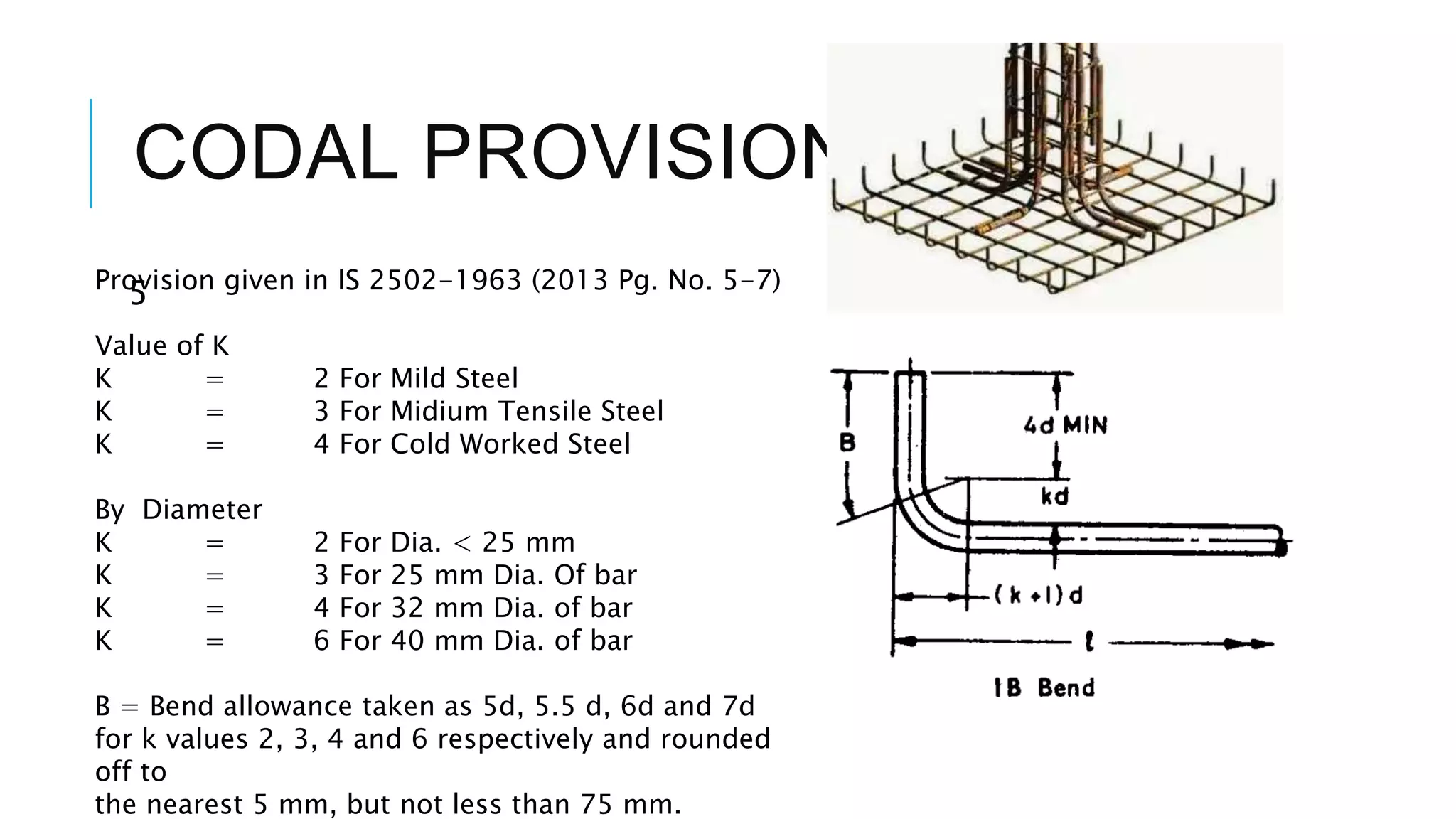
CODAL PROVISION
Provision given in IS 2502-1963 (2013 Pg. No. 5-7)
Value of K
K = 2 For Mild Steel
K = 3 For Midium Tensile Steel
K = 4 For Cold Worked Steel
By Diameter
K = 2 For Dia. < 25 mm
K = 3 For 25 mm Dia. Of bar
K = 4 For 32 mm Dia. of bar
K = 6 For 40 mm Dia. of bar
B = Bend allowance taken as 5d, 5.5 d, 6d and 7d
for k values 2, 3, 4 and 6 respectively and rounded
off to
the nearest 5 mm, but not less than 75 mm.
5
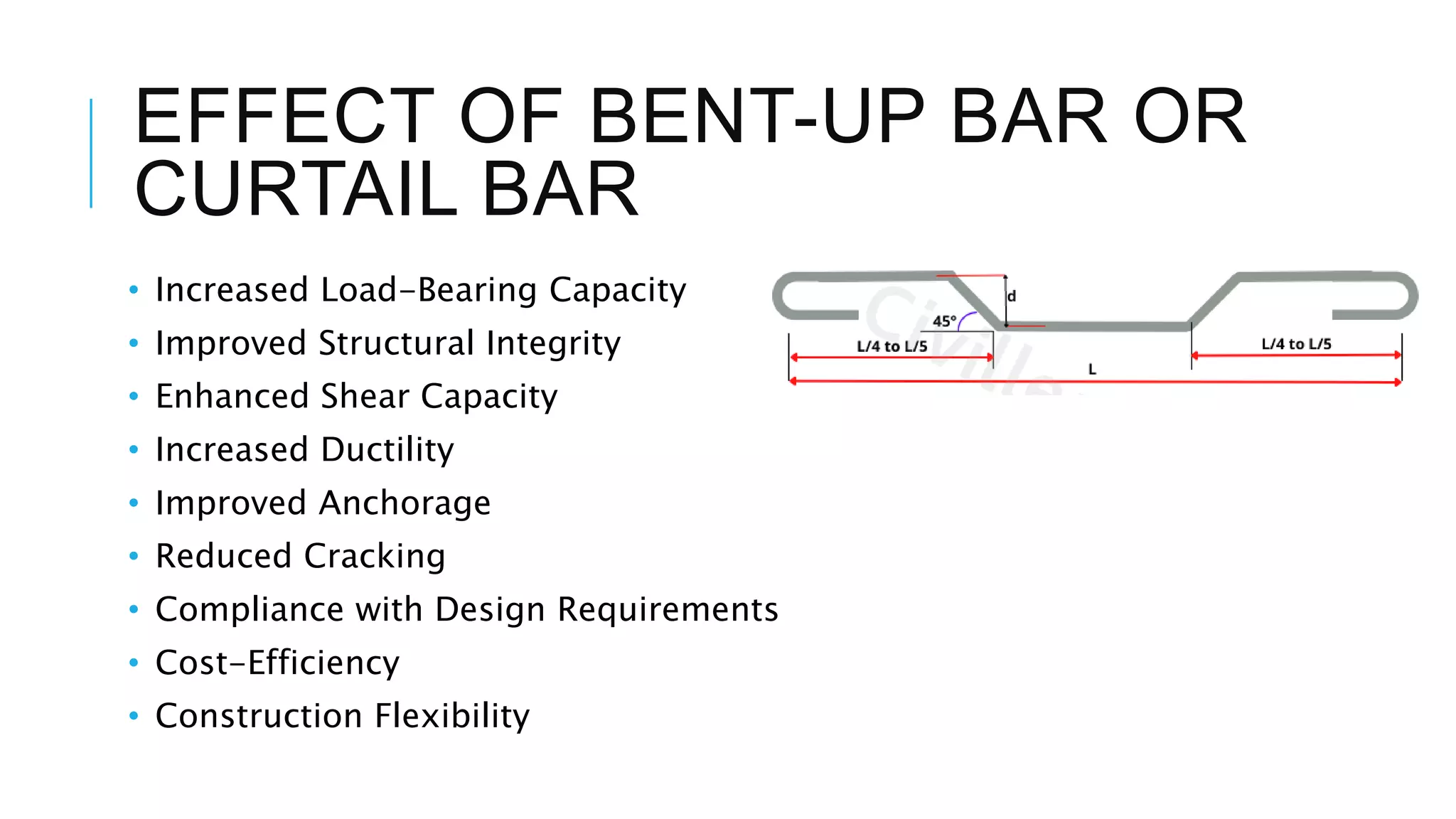
BENT-UP BAR OR CURTAIL
BAR
Providing bent-up bars or curtailing bars in reinforced concrete structures offers
several advantages, primarily related to reinforcing the concrete and improving the
structural performance and safety of the construction. Here are the key advantages
of using bent-up or curtailed bars:
EFFECT OF BENT-UP BAR OR
CURTAIL BAR
• Increased Load-Bearing Capacity
• Improved Structural Integrity
• Enhanced Shear Capacity
• Increased Ductility
• Improved Anchorage
• Reduced Cracking
• Compliance with Design Requirements
• Cost-Efficiency
• Construction Flexibility
LAPPING OF REBAR
CRITERIA FOR LAPPING
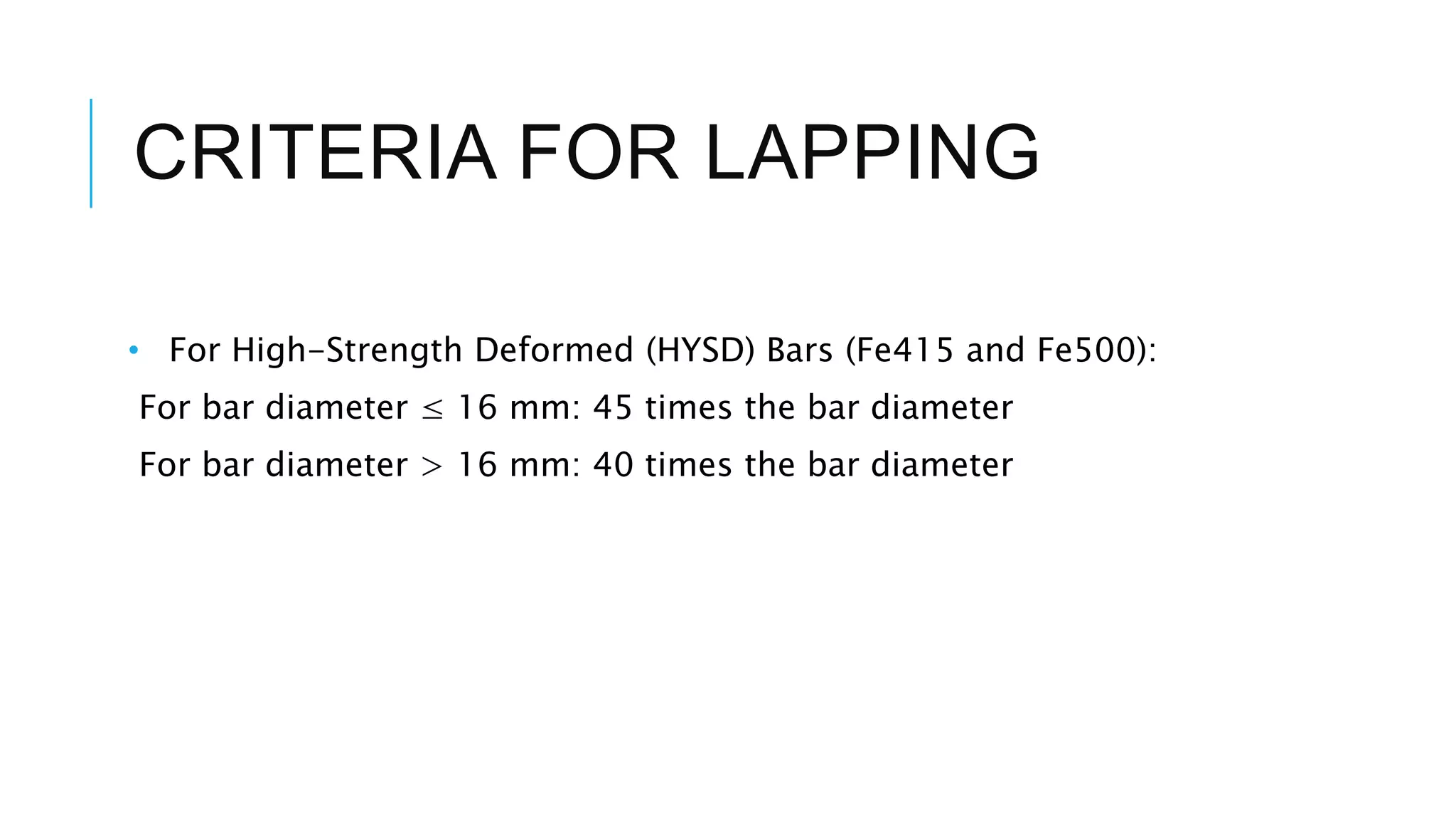
• For High-Strength Deformed (HYSD) Bars (Fe415 and Fe500):
For bar diameter ≤ 16 mm: 45 times the bar diameter
For bar diameter > 16 mm: 40 times the bar diameter
COVER TO REINFORCEMENT
Cover in reinforced concrete refers to the distance between the outer
surface of the concrete and the surface of the reinforcing steel bars
(rebars) within the concrete. It is a crucial aspect of reinforced
concrete construction and is typically specified in building codes and
engineering standards.
ADVANTAGES OF COVER
• Corrosion Protection
• Durability
• Safety and Structural Integrity
• Fire Resistance
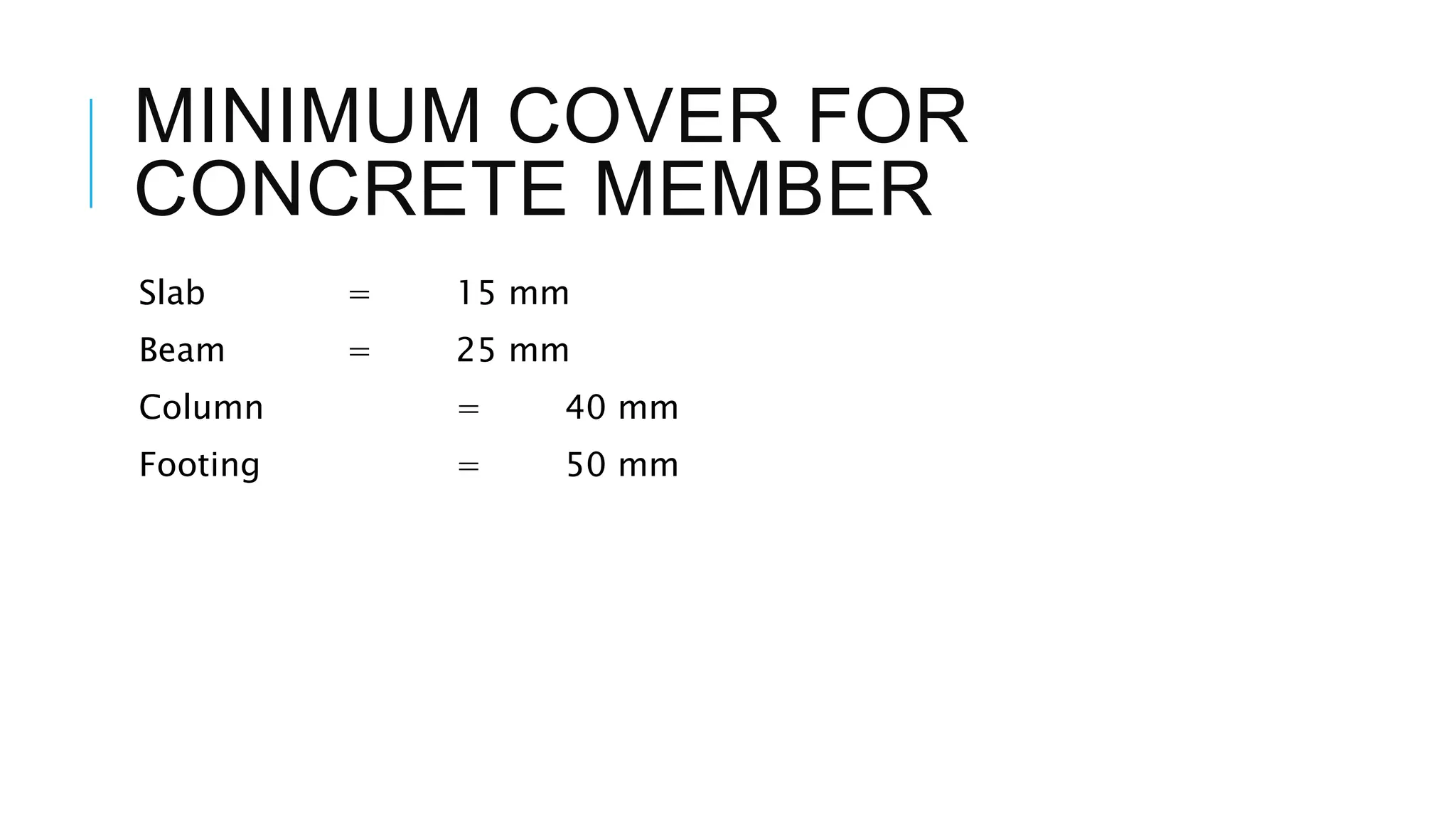
MINIMUM COVER FOR
CONCRETE MEMBER
Slab = 15 mm
Beam = 25 mm
Column = 40 mm
Footing = 50 mm
TOLERANCE FOR COVER
Unless specified otherwise, actual concrete cover should not deviate
from the required nominal cover by +10 mm
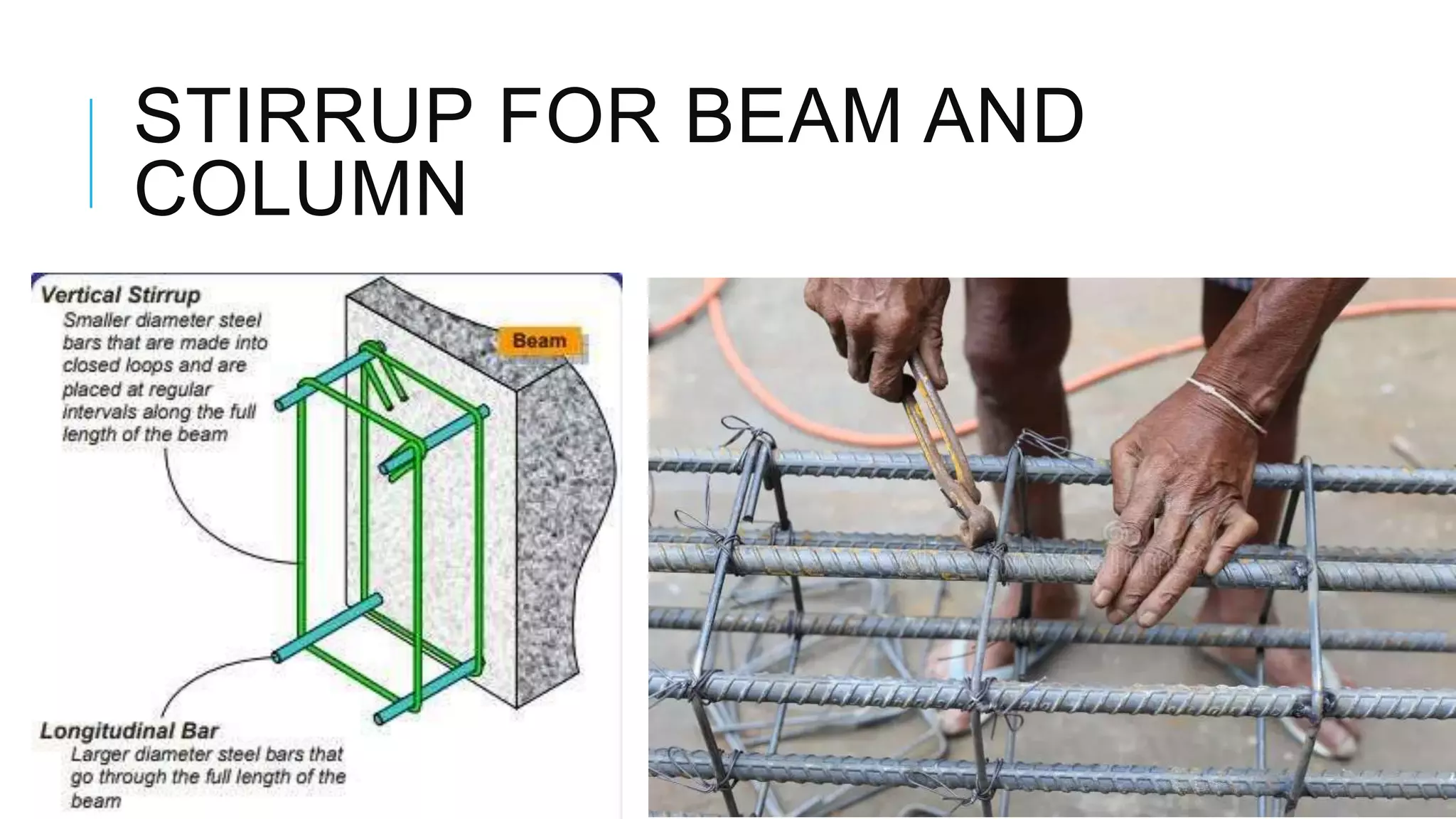
STIRRUP FOR BEAM AND
COLUMN
THANK YOU

placing of Rebar.pptx

  • 1.
  • 2.
    INTRODUCTION The proper placementof reinforcement is a critical aspect of construction that directly affects the structural integrity and safety of buildings, bridges, and other infrastructure. Failure to correctly position reinforcement can lead to catastrophic consequences, jeopardizing the lives of people and causing extensive financial losses. This article explores the various ways in which improper placement of reinforcement can result in structural failure and underscores the importance of adhering to established construction standards and guidelines.
  • 3.
    HOW TO HOLDYOUR REBAR IN POSITION What structure designers want What structure designers get
  • 4.
    EFFECT OF IMPROPER PLACEMENTOF REBAR a) Insufficient Load-Bearing Capacity b) Reduced Structural Stability c) Increased Vulnerability to Corrosion d) Cracking and Structural Degradation e) Compliance with Building Codes
  • 5.
  • 11.
    PLACING OF REINFORCEMENT • Roughhandling, shock loading (prior to embedment) and the dropping of reinforcement from a height should be avoided. • Reinforcement should he secured against displacement outside the specified limits.
  • 12.
    TOLERANCES ON PLACING Unlessotherwise specified by engineer-in-charge, the reinforcement shall he placed within the following tolerances: a) for effective depth 200 nun or less = ± 10mm b) for effective depth more than 200 mm = ± 15mm
  • 13.
    ELEMENT OF REBAR PLACING Hook Bends Bentup bar or curtail bar Chair bar Concrete cover
  • 14.
    HOOK Providing hooks inreinforcement, particularly in the form of bent rebar's, offers several advantages in reinforced concrete structures. These bent rebar's are designed to enhance the bond between the reinforcement and the concrete, improve structural integrity, and contribute to the overall durability of the construction.
  • 15.
    EFFECT OF HOOK ImprovedBond Strength Enhanced Ductility Mitigation of Stress Concentrations Improved Anchorage Compliance with Building Codes: Simplified Construction
  • 16.
    CODAL PROVISION Provision givenin IS 2502-1963 (2013 Pg. No. 5-7) Value of K K = 2 For Mild Steel K = 3 For Midium Tensile Steel K = 4 For Cold Worked Steel By Diameter K = 2 For Dia. < 25 mm K = 3 For 25 mm Dia. Of bar K = 4 For 32 mm Dia. of bar K = 6 For 40 mm Dia. of bar H = Hook allowance taken as 9d, 11d, 13d and 17d for k values 2. 3, 4 and 6 respectively and rounded off to the nearest 5 mm, but not less than 75 mm.
  • 17.
    BENDS Providing bends inreinforcement, particularly in the form of bent rebar's, offers several advantages in reinforced concrete structures. These bent rebar's are designed to enhance the bond between the reinforcement and the concrete, improve structural integrity, and contribute to the overall durability of the construction.
  • 18.
    EFFECT OF BENDS ImprovedBond Strength Enhanced Ductility Mitigation of Stress Concentrations Improved Anchorage Compliance with Building Codes: Simplified Construction
  • 19.
    CODAL PROVISION Provision givenin IS 2502-1963 (2013 Pg. No. 5-7) Value of K K = 2 For Mild Steel K = 3 For Midium Tensile Steel K = 4 For Cold Worked Steel By Diameter K = 2 For Dia. < 25 mm K = 3 For 25 mm Dia. Of bar K = 4 For 32 mm Dia. of bar K = 6 For 40 mm Dia. of bar B = Bend allowance taken as 5d, 5.5 d, 6d and 7d for k values 2, 3, 4 and 6 respectively and rounded off to the nearest 5 mm, but not less than 75 mm. 5
  • 20.
    BENT-UP BAR ORCURTAIL BAR Providing bent-up bars or curtailing bars in reinforced concrete structures offers several advantages, primarily related to reinforcing the concrete and improving the structural performance and safety of the construction. Here are the key advantages of using bent-up or curtailed bars:
  • 21.
    EFFECT OF BENT-UPBAR OR CURTAIL BAR • Increased Load-Bearing Capacity • Improved Structural Integrity • Enhanced Shear Capacity • Increased Ductility • Improved Anchorage • Reduced Cracking • Compliance with Design Requirements • Cost-Efficiency • Construction Flexibility
  • 22.
  • 23.
    CRITERIA FOR LAPPING •For High-Strength Deformed (HYSD) Bars (Fe415 and Fe500): For bar diameter ≤ 16 mm: 45 times the bar diameter For bar diameter > 16 mm: 40 times the bar diameter
  • 24.
    COVER TO REINFORCEMENT Coverin reinforced concrete refers to the distance between the outer surface of the concrete and the surface of the reinforcing steel bars (rebars) within the concrete. It is a crucial aspect of reinforced concrete construction and is typically specified in building codes and engineering standards.
  • 25.
    ADVANTAGES OF COVER •Corrosion Protection • Durability • Safety and Structural Integrity • Fire Resistance
  • 26.
    MINIMUM COVER FOR CONCRETEMEMBER Slab = 15 mm Beam = 25 mm Column = 40 mm Footing = 50 mm
  • 27.
    TOLERANCE FOR COVER Unlessspecified otherwise, actual concrete cover should not deviate from the required nominal cover by +10 mm
  • 29.
    STIRRUP FOR BEAMAND COLUMN
  • 30.