Diseases of Pigeon
pea
Rani Lakshmi bai central agriculturaluniversity,jhansi
SUBMITTED TO:
Dr. VAIBHAV
Dr. ANITA PUYAM
SUBMITTED BY:
SHALINI SHUKLA
Ag/063/17
CONTENTS
PIGEON PEA WILT
IMPORTANCE:
CAUSAL ORGANISM: Fusarium udum (host specific)
Destructive in parts of Maharashtra, m.p., u.p.(8.2%) & Bihar (18.3%)
Incidence maximum at: flowering & pod formation
Nematode: Heterodera cajani & root knot nematodes
Fusarium
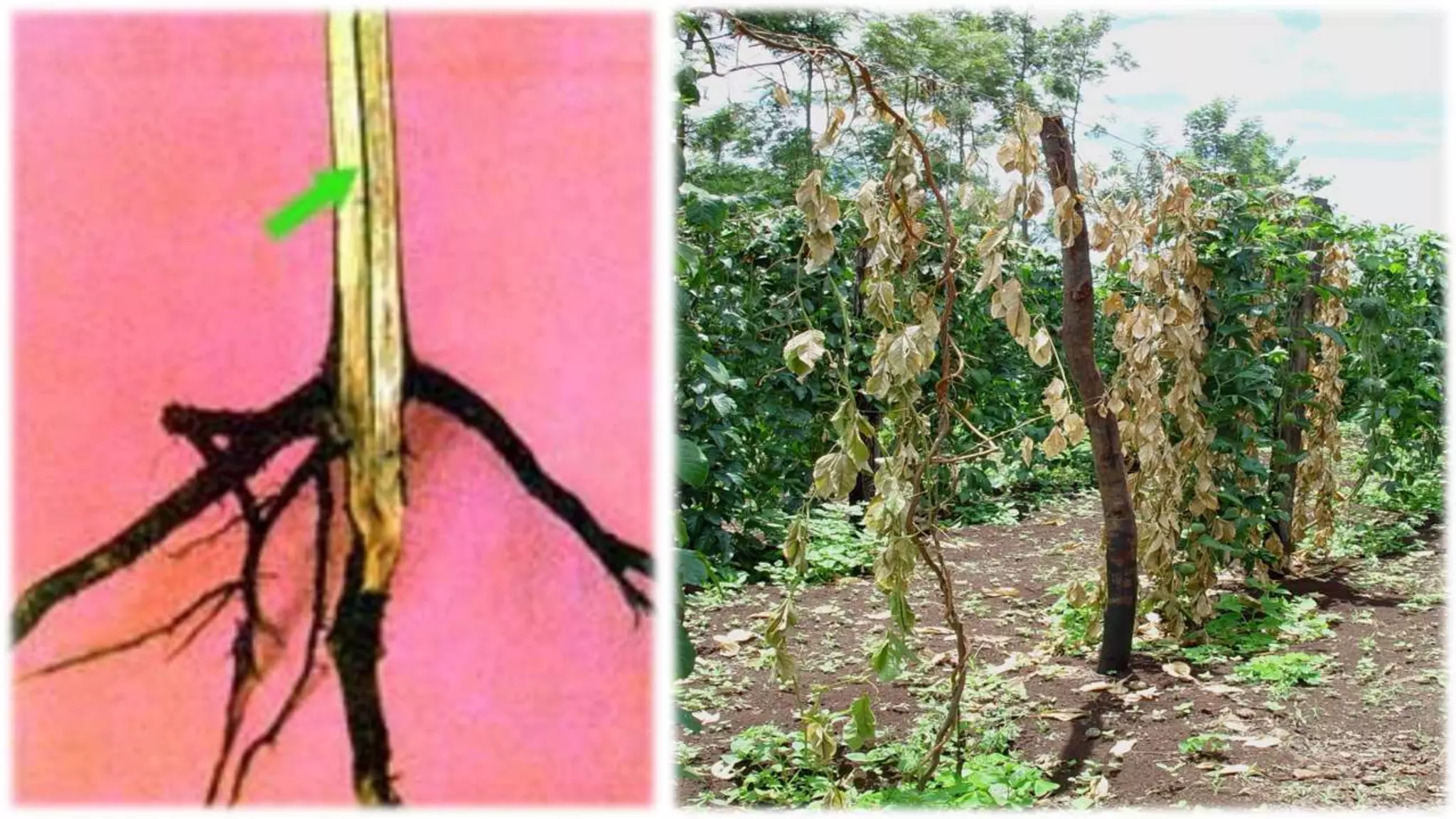
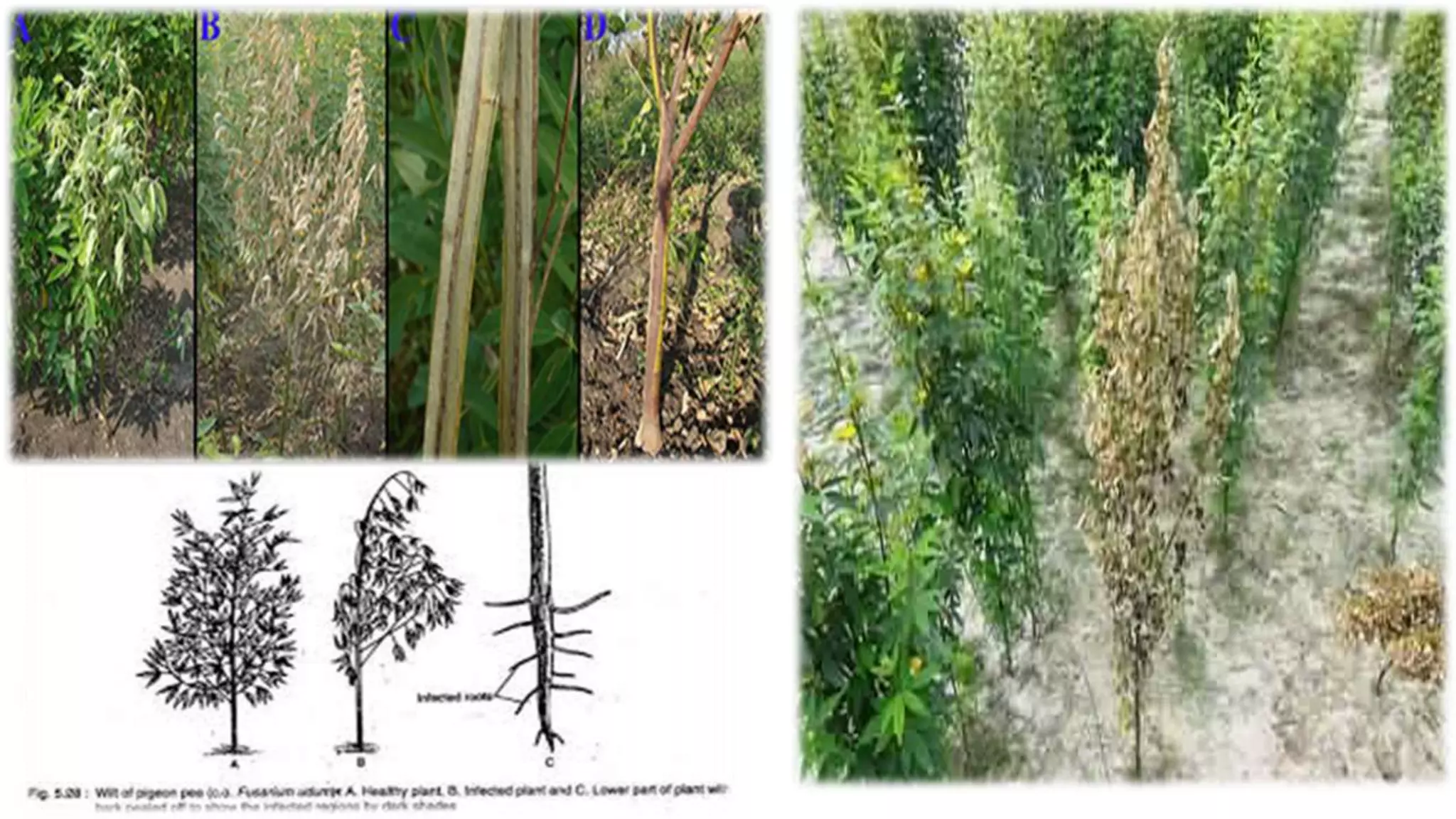
SYMPTO
MS
Wilting of
seedlings &
adult plants
Yellowing,
withering,
drying
Patches
(centrifugal
manner)
Blackening
of main
roots & base
of stem
Partial
wilting
White-
pinkish
cottony mass
on stem base
purple
bands
extending
upwards
from the
base of
main stem
Causal organism (etiology)
• Anamorph: Fusarium udum
• Teleomorph: Gibberella indica
• Confined to vascular tissues
• Inter & intra cellular
• Mycelium: hyaline, septate hyphae
• 3 types of spores: micro conidia, macro conidia, chlamydospores
Micro conidia
Macro conidia
chlamydospores
SPORES & SURVIVAL STRUCTURE
DISEASE CYCLE
FAVOURABLE CONDITIONS
 Soil borne
 Survival on: plant debris (3 yrs.)
 Primary inoculum: infected seeds
(Haware & Kannaiyan,1992)
 Secondary inoculum: conidia
 High biomass
MANAGEMENT PRACTICES
 Resistant cultivars: ICPL 87, C11 (wilt,
sterility mosaic & Phytophthora blight)
 Crop rotation
 Field sanitation
 Green manuring
 Bacillus subtillis (bulbiformin)
PIGEON PEA STERILITY MOSAIC
IMPORTANCE:
• 1st reported in 1931(Pusa, Bihar)
• GREEN PLAGUE
• More loss at early stages(95-100%)
• Max. infection in ratooned & perennial
pigeon pea
• SMD predisposes plants to powdery
mildew & infestation by spider mite
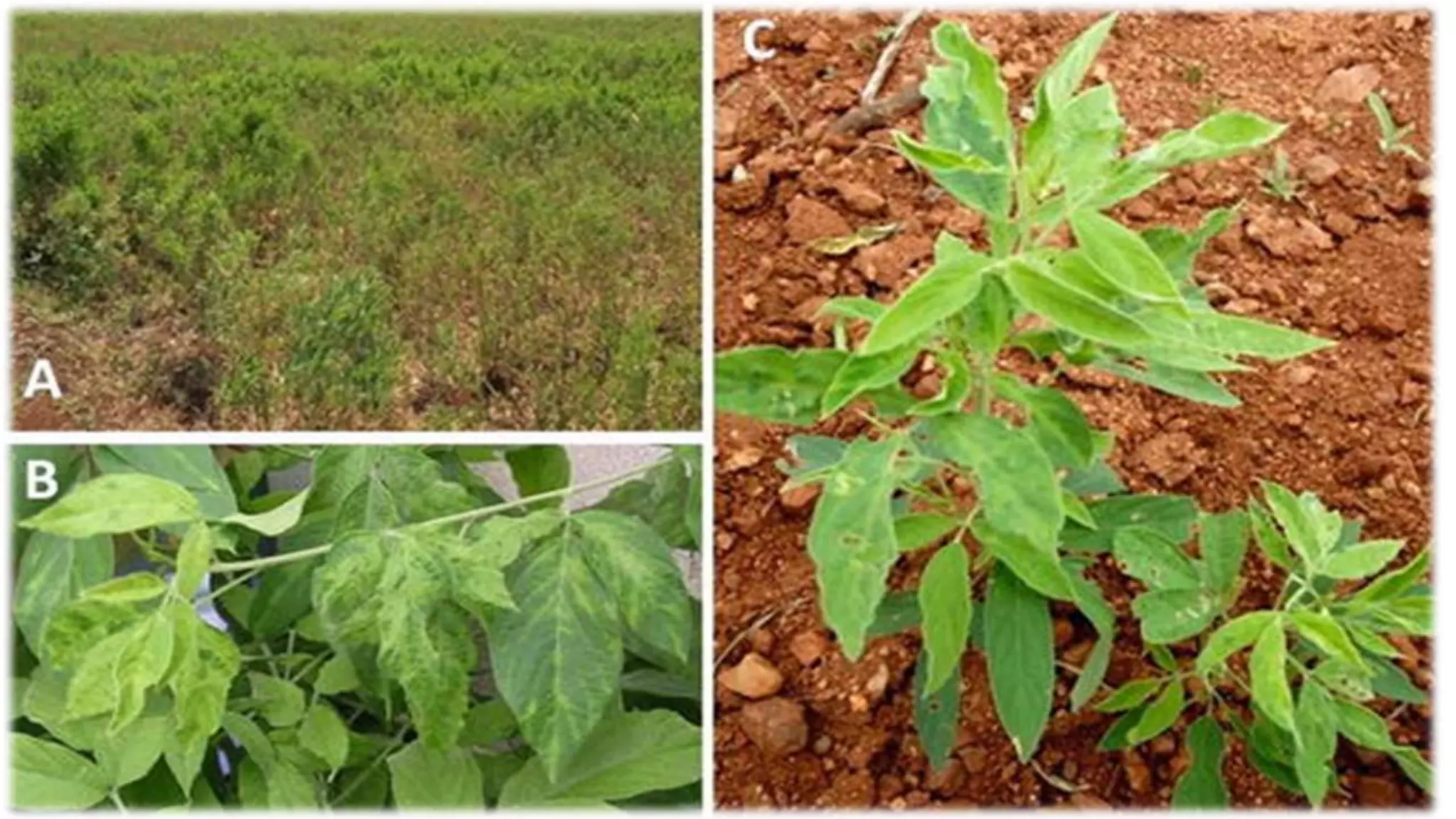
SYMPTOMS
Bushy &
pale green
Stunting
Complete
or partial
cessation of
flowering
Severe
mosaic &
sterility
Mild
mosaic &
partial
sterility
Chlorotic
ringspot
without any
noticeable
sterility
CAUSAL ORGANISM
• Pigeon pea sterility mosaic emaravirus1 & Pigeon pea sterility
mosaic emaravirus2
• Family: Fimoviridae
• Order: Bunyavirales
• Vector: eriophyid mite (Aceria cajani)- semi-persistent manner
• Highly specific (C.cajan, C.cajanifolius, C.scarabaeoides)
• Segmented, ssRNA,
• Not seed transmitted
Aceria cajani
(eriophyid mite)
Disease cycle
Not
transmitted
by sap
Aceria
cajani
Retention
pd. 12-
13hrs.
Eggs of
mite do not
transmit
FAVOURABLE CONDITIONS
Perennial,
volunteer &
ratooned
pigeon pea
Intermixing
with
sorghum or
millets
Temp:10
℃-35℃SHADE &
HUMIDITY
MANAGEMENT PRACTICES
 Resistant Cultivar: BSMR
736 (Gulbarga isolate),
Sabour 2E, ICPL-
146,PANT A-104, Sehore
367
 Tolerant: ICPL-151
 Avoid ratooning (destroy
perennial & ratoon crop)
 Rogue out infected plants.
 Spray acaricides (Kelthane,
Tedion @ 1ml/ Litre water)
REFERENCES
 ncbi.nlm.nih.gov
 https://apsjournals.apsnet.org
 Link.springer.com
 Agropedia.iitk.ac.in
 www.biologydiscussion.com
 https://www.plantwise.org>datasheet
 https://www.cabi.org>isc>datasheet
THANK YOU

Pigeon pea diseases RLBCAU