Physical
Fitness
T. Richard B. Casanos
Are You Fit?
What is Physical Fitness?
A general state of good
physical health
A result of physical activity,
proper diet and nutrition
and proper rest for physical
recovery
Physical Fitness Trainers
The ability to perform
daily task vigorously
and alertly,
With left over
energy to enjoy
leisure-time
activities and meet
emergency
demands
For Senior Citizens
The ability to
endure, bear up,
withstand stress
and carry on in
circumstances
where an unfit
person could not
continue
What is the IMPORTANCE of
Physical Fitness?
 A condition that helps
individual look, feel and
do their best
 Enables people to
perform up to their
potential
What Humans do with
their bodies directly
affects the state of
mind, fitness influences
to some degree
qualities such as
Mental Alertness
and
Emotional Expression.
Components of Physical
Fitness
1. Skill-Related
Components
- Form the basis for
successful sport activity
participation
2. Health-Related
Component
- How well the systems of
your body work
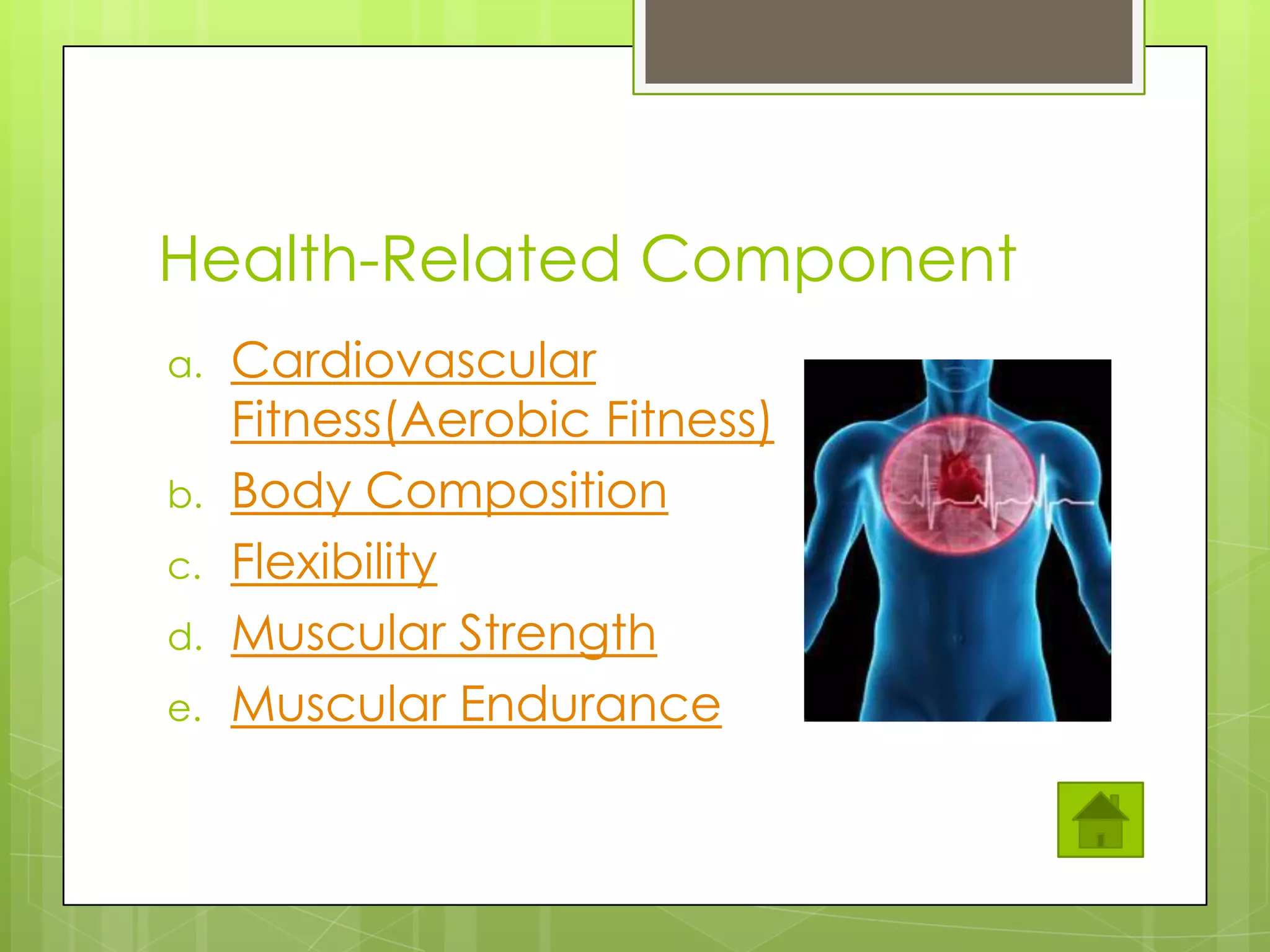
Health-Related Component
a. Cardiovascular
Fitness(Aerobic Fitness)
b. Body Composition
c. Flexibility
d. Muscular Strength
e. Muscular Endurance
Skill-Related Component
a. Speed
b. Agility
c. Balance
d. Coordination
e. Reaction Time
f. Power
Cardiovascular Fitness
 the ability of the heart
and lungs to work
together to provide
the needed oxygen
and fuel to the body
during sustained
workloads
Benefits of Cardiovascular
Fitness
 Helps;
 Fat metabolism
 Improved delivery of Oxygen
 Faster removal of waste products
 Decreased levels of stress
Body Composition
 The relative percentage
of body fat compared
to lean body mass
(muscle, bone,
water,etc)
 can be measured using
underwater weighing,
Skinfold readings, and
bioelectrical
impedance.
Importance to maintain a
healthy percentage of body
fat
 Excess body fat can contribute to
developing a number of health problems
such as heart disease and diabetes
 Places strains on the joints, muscles and
bones, increasing the risk of injury
Flexibility
The range of
movement
possible at various
joints
Helps
 Prevent injuries
 Improve posture
 Reduce low back pains
 Maintain healthy joints
 Imporve balance during movement
Muscle Strength
 The amount of force
that can be
produced by a single
contraction of a
muscle
Muscle Endurance
 The ability of a muscle
group to continue
muscle movement
over a length of time
Speed
 The ability to move
quickly from one
point to another in a
straight line
Agility
 The ability of the body to
change direction quickly
 Sports coach Brian Mac
as the ability to perform a
successive series of
powerful explosive
movements quickly in
opposing directions
Balance
 The ability to maintain an
upright posture while still
or moving
 Important in sports such
as dance, gymnastics,
ice hockey, figure skating
and other sports requiring
extreme control.
Coordination
 Integration with hand
and/or foot movements
with the input of the
senses
 juggling, hitting a baseball
with a bat and dribbling a
basketball are all
coordination skills.
 Hand-eye coordination
tests or foot-eye
coordination tests are
often used to assess
coordination.
Reaction Time
 a subcomponent of
speed and refers to
the time it takes for
the neuromuscular
system to produce
movement from
stimulus to reaction
Power
 A combination of
strength and speed,
power is the ability to
exert maximum force in
a quick, explosive burst
 a function of the amount
of work performed per
unit of time
Physical fitness is not only
one of the most important
keys to a healthy body, it is
the basis of dynamic and
creative intellectual
activity.
John F. Kennedy

Physical fitness

  • 1.
    Physical Fitness T. Richard B.Casanos Are You Fit?
  • 2.
    What is PhysicalFitness? A general state of good physical health A result of physical activity, proper diet and nutrition and proper rest for physical recovery
  • 3.
    Physical Fitness Trainers Theability to perform daily task vigorously and alertly, With left over energy to enjoy leisure-time activities and meet emergency demands
  • 4.
    For Senior Citizens Theability to endure, bear up, withstand stress and carry on in circumstances where an unfit person could not continue
  • 5.
    What is theIMPORTANCE of Physical Fitness?  A condition that helps individual look, feel and do their best  Enables people to perform up to their potential
  • 6.
    What Humans dowith their bodies directly affects the state of mind, fitness influences to some degree qualities such as Mental Alertness and Emotional Expression.
  • 7.
    Components of Physical Fitness 1.Skill-Related Components - Form the basis for successful sport activity participation 2. Health-Related Component - How well the systems of your body work
  • 8.
    Health-Related Component a. Cardiovascular Fitness(AerobicFitness) b. Body Composition c. Flexibility d. Muscular Strength e. Muscular Endurance
  • 9.
    Skill-Related Component a. Speed b.Agility c. Balance d. Coordination e. Reaction Time f. Power
  • 10.
    Cardiovascular Fitness  theability of the heart and lungs to work together to provide the needed oxygen and fuel to the body during sustained workloads
  • 11.
    Benefits of Cardiovascular Fitness Helps;  Fat metabolism  Improved delivery of Oxygen  Faster removal of waste products  Decreased levels of stress
  • 12.
    Body Composition  Therelative percentage of body fat compared to lean body mass (muscle, bone, water,etc)  can be measured using underwater weighing, Skinfold readings, and bioelectrical impedance.
  • 13.
    Importance to maintaina healthy percentage of body fat  Excess body fat can contribute to developing a number of health problems such as heart disease and diabetes  Places strains on the joints, muscles and bones, increasing the risk of injury
  • 14.
  • 15.
    Helps  Prevent injuries Improve posture  Reduce low back pains  Maintain healthy joints  Imporve balance during movement
  • 16.
    Muscle Strength  Theamount of force that can be produced by a single contraction of a muscle
  • 17.
    Muscle Endurance  Theability of a muscle group to continue muscle movement over a length of time
  • 18.
    Speed  The abilityto move quickly from one point to another in a straight line
  • 19.
    Agility  The abilityof the body to change direction quickly  Sports coach Brian Mac as the ability to perform a successive series of powerful explosive movements quickly in opposing directions
  • 20.
    Balance  The abilityto maintain an upright posture while still or moving  Important in sports such as dance, gymnastics, ice hockey, figure skating and other sports requiring extreme control.
  • 21.
    Coordination  Integration withhand and/or foot movements with the input of the senses  juggling, hitting a baseball with a bat and dribbling a basketball are all coordination skills.  Hand-eye coordination tests or foot-eye coordination tests are often used to assess coordination.
  • 22.
    Reaction Time  asubcomponent of speed and refers to the time it takes for the neuromuscular system to produce movement from stimulus to reaction
  • 23.
    Power  A combinationof strength and speed, power is the ability to exert maximum force in a quick, explosive burst  a function of the amount of work performed per unit of time
  • 24.
    Physical fitness isnot only one of the most important keys to a healthy body, it is the basis of dynamic and creative intellectual activity. John F. Kennedy