Latin America’s Physical
      Geography
         Unit 7 Notes
 Name: ___________________
Latin America is divided into three regions:
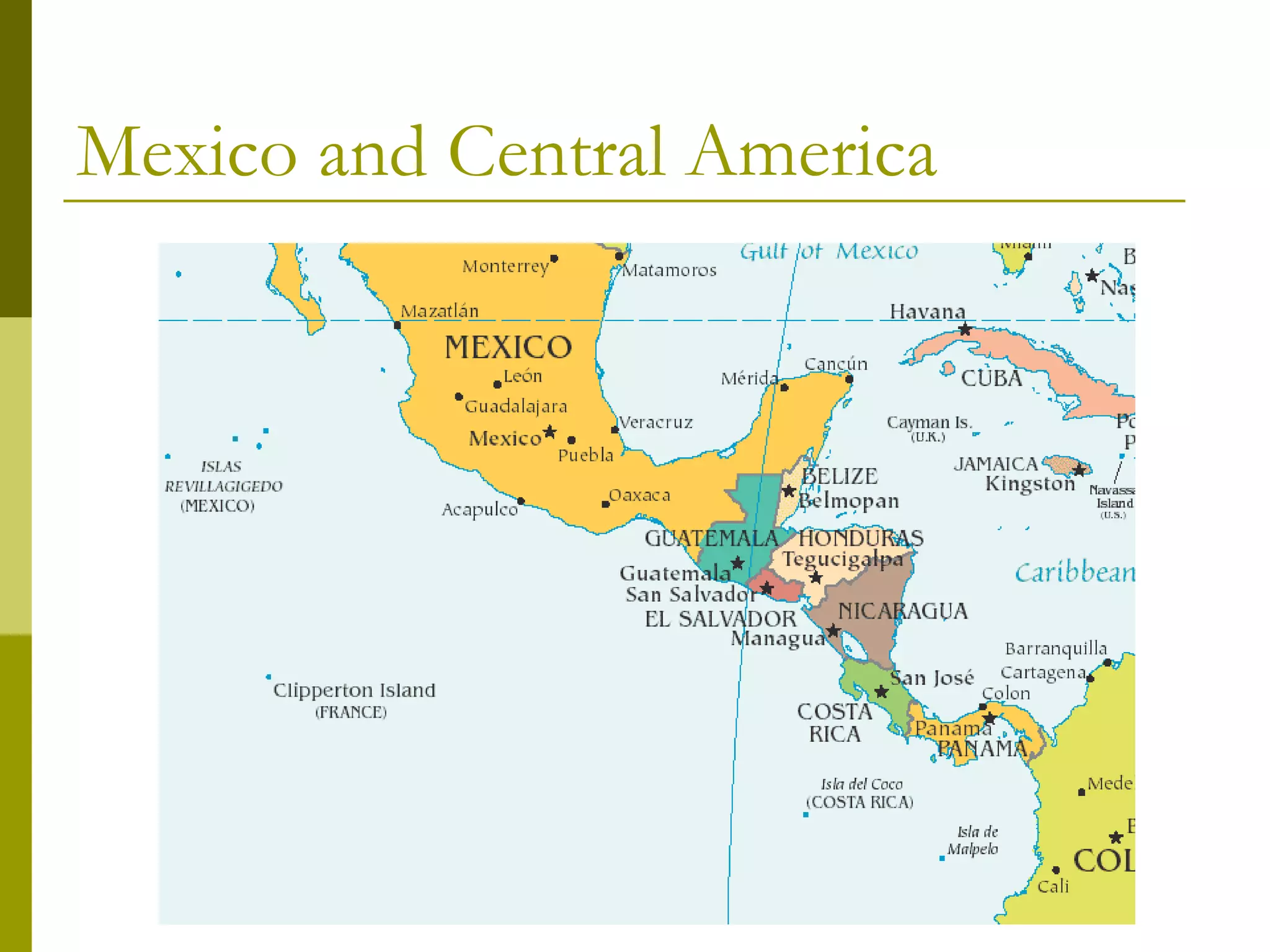
 Mexico and Central America
 Caribbean
 South America
Mexico and Central America
   2,500 miles (about as wide as the US)
   mountains dominate the region
       part of a huge system that extends from Canada,
        through the US, and all the way to the tip of South
        America
   central plateau in Mexico
       lies between Sierra Madre mountains and makes up
        more than half the country’s area
   Central America is an Isthmus.
       isthmus = a narrow strip of land that has water on both
        sides and joins two larger bodies of water
       many volcanoes in Central America, as a result, their
        soil is fertile and many people farm lands
Mexican Plateau
Gulf of Mexico

   bordered by the US
    to the north, five
    Mexican states to
    the south, and
    Cuba to the east
Sierra Madre Mountains
 mountain system in Mexico
 three major chains: the Sierra Madre
  Occidental in the west, the Sierra Madre
  Oriental in the east, and the Sierra Madre
  del Sur, which extends along the southern
  coast
       The Sierra Madre range contains some of the
        highest mountains and volcanoes in Mexico.
Sierra Madre Mountains
Mexico and Central America
Panama Canal
   canal across the isthmus of Panama in
    Central America
       allows vessels to travel between the Pacific and
        Atlantic oceans
   handles a large volume of world shipping and
    enables vessels to avoid traveling around
    South America, reducing their voyages by
    thousands of miles and many days.
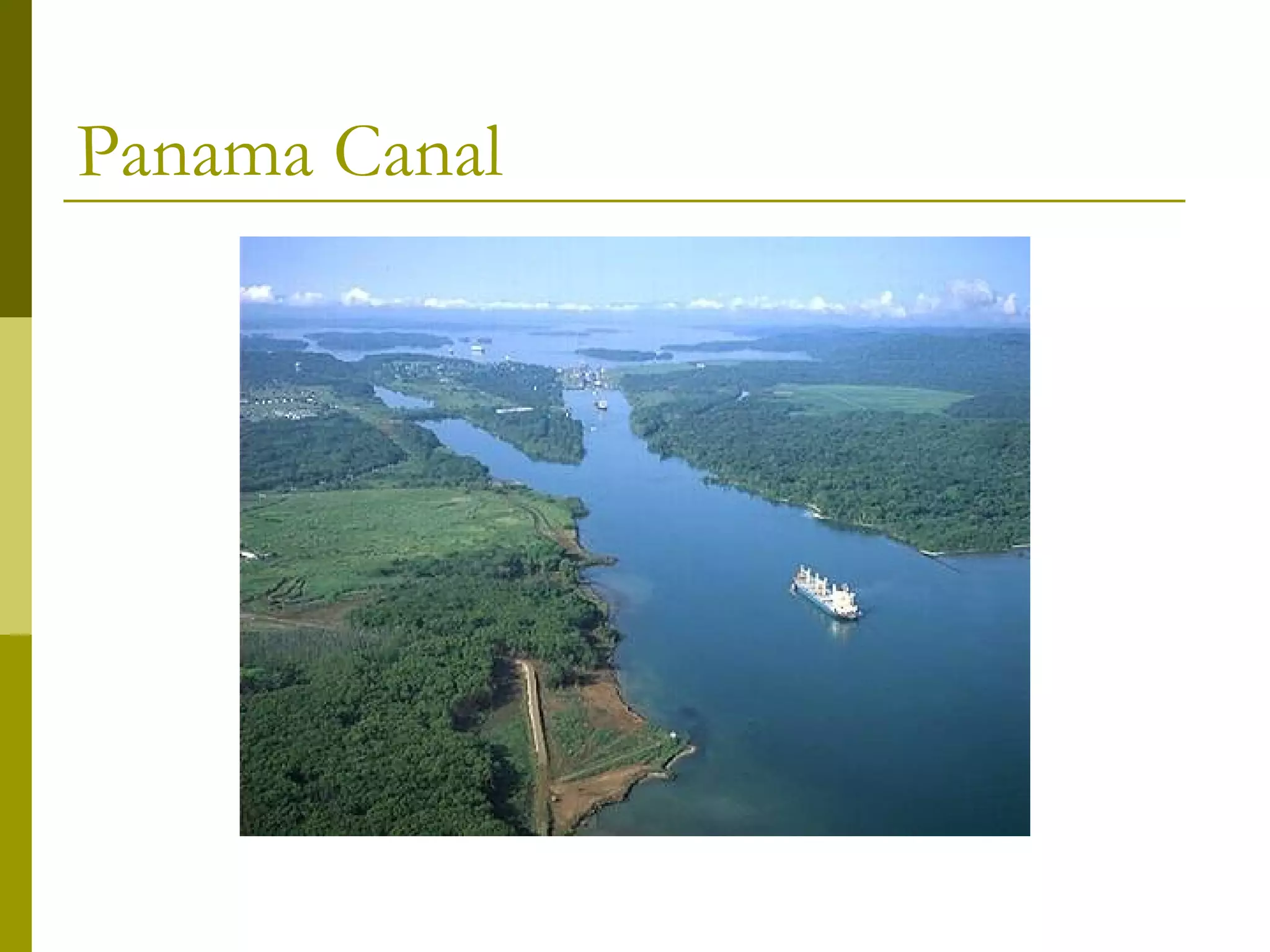
       consists of artificially created lakes, channels, and
        a series of locks, or water-filled chambers, that
        raise and lower ships through the mountainous
        terrain of central Panama
Panama Canal
Caribbean
   small islands are made of coral
       skeletons of tiny sea animals, rock-like
        substance
   larger islands are tops of underwater
    mountains
       examples: Cuba, Jamaica
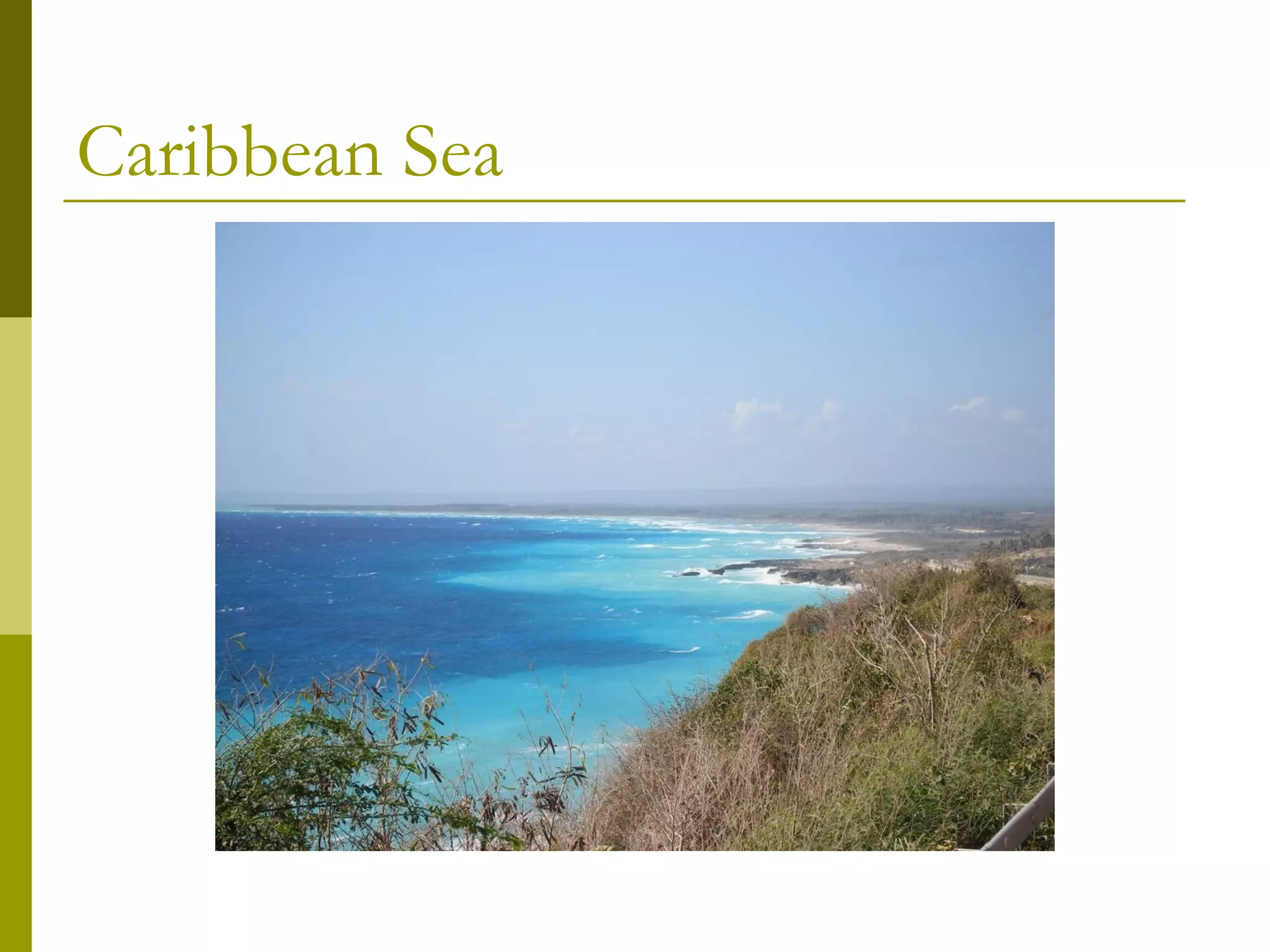
Caribbean Sea
 partially enclosed on the north and east by
  the islands of the West Indies, and
  bounded on the south by South America
  and Panama, and on the west by Central
  America
 a major trade route for Latin American
  countries
 a popular resort area—noted for its mild
  tropical climate and beautiful waters
Caribbean Sea
South America
   Andes Mountains—4,500 miles along west
    coast
       They rise at some points to 20,000 feet—same
        height as twenty 100 story buildings stacked
        on top of each other
       2nd largest mountains; Himalayas are the 1st
 highlands east of the Andes
 Amazon River Basin—contains the largest
  tropical rain forest (Amazon Rain Forest)
  in the world; covers 1/3 of the continent
Andes
Amazon Rain Forest
South America
   Atacama Desert (Chile)—one of the driest
    places on earth; very little rainfall
       between the Pacific Ocean and the Andes
        Mountains
Atacama Desert
South America—Water
   rivers serve as natural highways where it’s
    hard to build roads
       provide food and hydroelectric power

   Amazon River—2nd largest river in the
    world (1st--Nile River)
       4,000 miles from Peru across to Atlantic Ocean
       contains 20% of all fresh water in the world
Amazon River—view from space
Physical features of latin america

Physical features of latin america

  • 1.
    Latin America’s Physical Geography Unit 7 Notes Name: ___________________
  • 2.
    Latin America isdivided into three regions:  Mexico and Central America  Caribbean  South America
  • 3.
    Mexico and CentralAmerica  2,500 miles (about as wide as the US)  mountains dominate the region  part of a huge system that extends from Canada, through the US, and all the way to the tip of South America  central plateau in Mexico  lies between Sierra Madre mountains and makes up more than half the country’s area  Central America is an Isthmus.  isthmus = a narrow strip of land that has water on both sides and joins two larger bodies of water  many volcanoes in Central America, as a result, their soil is fertile and many people farm lands
  • 4.
  • 5.
    Gulf of Mexico  bordered by the US to the north, five Mexican states to the south, and Cuba to the east
  • 6.
    Sierra Madre Mountains mountain system in Mexico  three major chains: the Sierra Madre Occidental in the west, the Sierra Madre Oriental in the east, and the Sierra Madre del Sur, which extends along the southern coast  The Sierra Madre range contains some of the highest mountains and volcanoes in Mexico.
  • 7.
  • 8.
  • 9.
    Panama Canal  canal across the isthmus of Panama in Central America  allows vessels to travel between the Pacific and Atlantic oceans  handles a large volume of world shipping and enables vessels to avoid traveling around South America, reducing their voyages by thousands of miles and many days.  consists of artificially created lakes, channels, and a series of locks, or water-filled chambers, that raise and lower ships through the mountainous terrain of central Panama
  • 10.
  • 11.
    Caribbean  small islands are made of coral  skeletons of tiny sea animals, rock-like substance  larger islands are tops of underwater mountains  examples: Cuba, Jamaica
  • 12.
    Caribbean Sea  partiallyenclosed on the north and east by the islands of the West Indies, and bounded on the south by South America and Panama, and on the west by Central America  a major trade route for Latin American countries  a popular resort area—noted for its mild tropical climate and beautiful waters
  • 13.
  • 14.
    South America  Andes Mountains—4,500 miles along west coast  They rise at some points to 20,000 feet—same height as twenty 100 story buildings stacked on top of each other  2nd largest mountains; Himalayas are the 1st  highlands east of the Andes  Amazon River Basin—contains the largest tropical rain forest (Amazon Rain Forest) in the world; covers 1/3 of the continent
  • 15.
  • 16.
  • 17.
    South America  Atacama Desert (Chile)—one of the driest places on earth; very little rainfall  between the Pacific Ocean and the Andes Mountains
  • 18.
  • 19.
    South America—Water  rivers serve as natural highways where it’s hard to build roads  provide food and hydroelectric power  Amazon River—2nd largest river in the world (1st--Nile River)  4,000 miles from Peru across to Atlantic Ocean  contains 20% of all fresh water in the world
  • 20.