PHLEBOTOMY-RELATED
VASCULAR ANATOMY
Dr Ahmed Aboamer
MD Clinical pathology
PHLEBOTOMY-RELATED VASCULAR ANATOMY
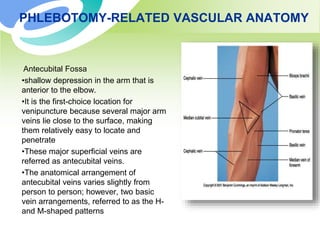
Antecubital Fossa
•shallow depression in the arm that is
anterior to the elbow.
•It is the first-choice location for
venipuncture because several major arm
veins lie close to the surface, making
them relatively easy to locate and
penetrate
•These major superficial veins are
referred as antecubital veins.
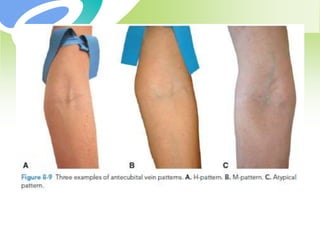
•The anatomical arrangement of
antecubital veins varies slightly from
person to person; however, two basic
vein arrangements, referred to as the H-
and M-shaped patterns
4
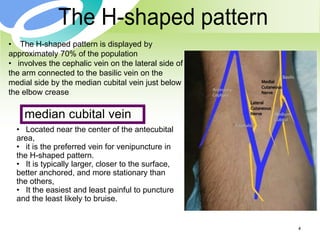
median cubital vein
• The H-shaped pattern is displayed by
approximately 70% of the population
• involves the cephalic vein on the lateral side of
the arm connected to the basilic vein on the
medial side by the median cubital vein just below
the elbow crease
• Located near the center of the antecubital
area,
• it is the preferred vein for venipuncture in
the H-shaped pattern.
• It is typically larger, closer to the surface,
better anchored, and more stationary than
the others,
• It the easiest and least painful to puncture
and the least likely to bruise.
5
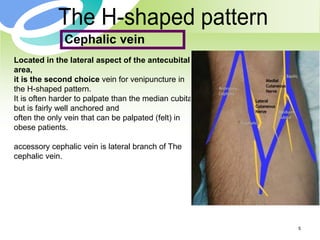
Cephalic vein
Located in the lateral aspect of the antecubital
area,
it is the second choice vein for venipuncture in
the H-shaped pattern.
It is often harder to palpate than the median cubital
but is fairly well anchored and
often the only vein that can be palpated (felt) in
obese patients.
accessory cephalic vein is lateral branch of The
cephalic vein.
6
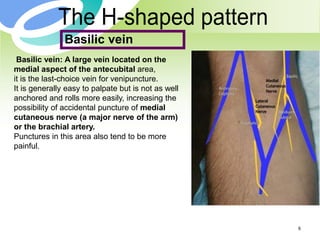
Basilic vein
Basilic vein: A large vein located on the
medial aspect of the antecubital area,
it is the last-choice vein for venipuncture.
It is generally easy to palpate but is not as well
anchored and rolls more easily, increasing the
possibility of accidental puncture of medial
cutaneous nerve (a major nerve of the arm)
or the brachial artery.
Punctures in this area also tend to be more
painful.
7
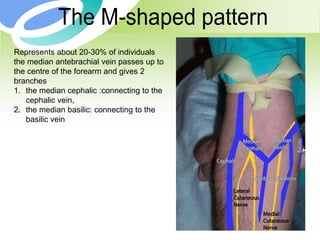
Represents about 20-30% of individuals
the median antebrachial vein passes up to
the centre of the forearm and gives 2
branches
1. the median cephalic :connecting to the
cephalic vein,
2. the median basilic: connecting to the
basilic vein
8
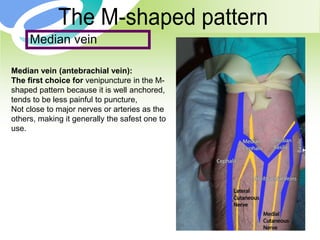
Median vein
Median vein (antebrachial vein):
The first choice for venipuncture in the M-
shaped pattern because it is well anchored,
tends to be less painful to puncture,
Not close to major nerves or arteries as the
others, making it generally the safest one to
use.
9
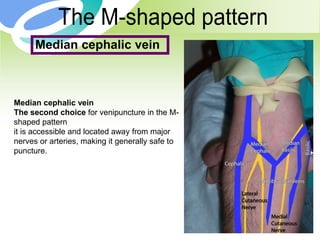
Median cephalic vein
The second choice for venipuncture in the M-
shaped pattern
it is accessible and located away from major
nerves or arteries, making it generally safe to
puncture.
10
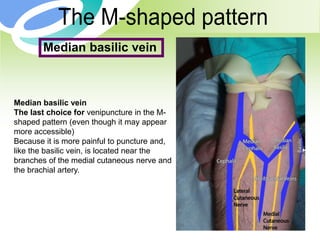
Median basilic vein
Median basilic vein
The last choice for venipuncture in the M-
shaped pattern (even though it may appear
more accessible)
Because it is more painful to puncture and,
like the basilic vein, is located near the
branches of the medial cutaneous nerve and
the brachial artery.
11
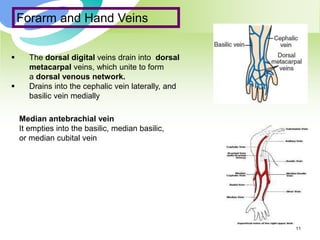
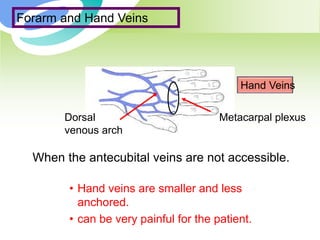
Forarm and Hand Veins
 The dorsal digital veins drain into dorsal
metacarpal veins, which unite to form
a dorsal venous network.
 Drains into the cephalic vein laterally, and
basilic vein medially
Median antebrachial vein
It empties into the basilic, median basilic,
or median cubital vein
Dorsal
venous arch
Metacarpal plexus
Hand Veins
When the antecubital veins are not accessible.
• Hand veins are smaller and less
anchored.
• can be very painful for the patient.
Forarm and Hand Veins
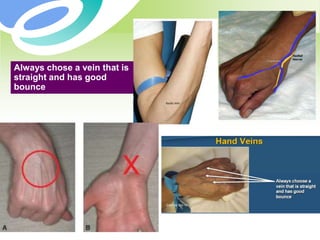
Always chose a vein that is
straight and has good
bounce
14
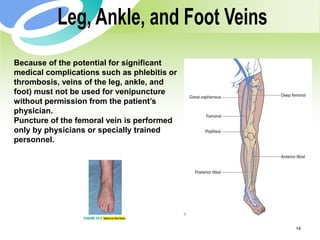
Because of the potential for significant
medical complications such as phlebitis or
thrombosis, veins of the leg, ankle, and
foot) must not be used for venipuncture
without permission from the patient’s
physician.
Puncture of the femoral vein is performed
only by physicians or specially trained
personnel.
15
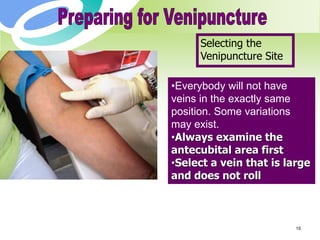
Selecting the
Venipuncture Site
•Everybody will not have
veins in the exactly same
position. Some variations
may exist.
•Always examine the
antecubital area first
•Select a vein that is large
and does not roll
Chapter 2 16
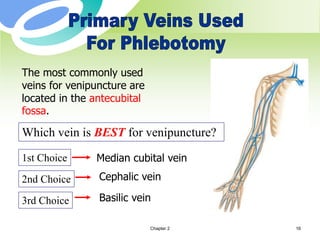
The most commonly used
veins for venipuncture are
located in the antecubital
fossa.
1st Choice Median cubital vein
2nd Choice Cephalic vein
3rd Choice Basilic vein
Which vein is BEST for venipuncture?
phlebotomy  related vascular anatomy

phlebotomy related vascular anatomy

  • 1.
    PHLEBOTOMY-RELATED VASCULAR ANATOMY Dr AhmedAboamer MD Clinical pathology
  • 2.
    PHLEBOTOMY-RELATED VASCULAR ANATOMY AntecubitalFossa •shallow depression in the arm that is anterior to the elbow. •It is the first-choice location for venipuncture because several major arm veins lie close to the surface, making them relatively easy to locate and penetrate •These major superficial veins are referred as antecubital veins. •The anatomical arrangement of antecubital veins varies slightly from person to person; however, two basic vein arrangements, referred to as the H- and M-shaped patterns
  • 4.
    4 median cubital vein •The H-shaped pattern is displayed by approximately 70% of the population • involves the cephalic vein on the lateral side of the arm connected to the basilic vein on the medial side by the median cubital vein just below the elbow crease • Located near the center of the antecubital area, • it is the preferred vein for venipuncture in the H-shaped pattern. • It is typically larger, closer to the surface, better anchored, and more stationary than the others, • It the easiest and least painful to puncture and the least likely to bruise.
  • 5.
    5 Cephalic vein Located inthe lateral aspect of the antecubital area, it is the second choice vein for venipuncture in the H-shaped pattern. It is often harder to palpate than the median cubital but is fairly well anchored and often the only vein that can be palpated (felt) in obese patients. accessory cephalic vein is lateral branch of The cephalic vein.
  • 6.
    6 Basilic vein Basilic vein:A large vein located on the medial aspect of the antecubital area, it is the last-choice vein for venipuncture. It is generally easy to palpate but is not as well anchored and rolls more easily, increasing the possibility of accidental puncture of medial cutaneous nerve (a major nerve of the arm) or the brachial artery. Punctures in this area also tend to be more painful.
  • 7.
    7 Represents about 20-30%of individuals the median antebrachial vein passes up to the centre of the forearm and gives 2 branches 1. the median cephalic :connecting to the cephalic vein, 2. the median basilic: connecting to the basilic vein
  • 8.
    8 Median vein Median vein(antebrachial vein): The first choice for venipuncture in the M- shaped pattern because it is well anchored, tends to be less painful to puncture, Not close to major nerves or arteries as the others, making it generally the safest one to use.
  • 9.
    9 Median cephalic vein Mediancephalic vein The second choice for venipuncture in the M- shaped pattern it is accessible and located away from major nerves or arteries, making it generally safe to puncture.
  • 10.
    10 Median basilic vein Medianbasilic vein The last choice for venipuncture in the M- shaped pattern (even though it may appear more accessible) Because it is more painful to puncture and, like the basilic vein, is located near the branches of the medial cutaneous nerve and the brachial artery.
  • 11.
    11 Forarm and HandVeins  The dorsal digital veins drain into dorsal metacarpal veins, which unite to form a dorsal venous network.  Drains into the cephalic vein laterally, and basilic vein medially Median antebrachial vein It empties into the basilic, median basilic, or median cubital vein
  • 12.
    Dorsal venous arch Metacarpal plexus HandVeins When the antecubital veins are not accessible. • Hand veins are smaller and less anchored. • can be very painful for the patient. Forarm and Hand Veins
  • 13.
    Always chose avein that is straight and has good bounce
  • 14.
    14 Because of thepotential for significant medical complications such as phlebitis or thrombosis, veins of the leg, ankle, and foot) must not be used for venipuncture without permission from the patient’s physician. Puncture of the femoral vein is performed only by physicians or specially trained personnel.
  • 15.
    15 Selecting the Venipuncture Site •Everybodywill not have veins in the exactly same position. Some variations may exist. •Always examine the antecubital area first •Select a vein that is large and does not roll
  • 16.
    Chapter 2 16 Themost commonly used veins for venipuncture are located in the antecubital fossa. 1st Choice Median cubital vein 2nd Choice Cephalic vein 3rd Choice Basilic vein Which vein is BEST for venipuncture?